| Feature | Apixaban (Eliquis) | Rivaroxaban (Xarelto) | Dabigatran (Pradaxa) |
|---|---|---|---|
| Dosing Frequency | Twice Daily | Once Daily (usually) | Twice Daily |
| Renal Clearance | 25% | 33% | 80% |
| GI Bleed Risk | Lower | Higher | Higher |
| Main Target | Factor Xa | Factor Xa | Thrombin (IIa) |
The Stomach Struggle: Gastrointestinal Bleeding
When people talk about the "danger" of blood thinners, they usually mean bleeding. But not all bleeding is created equal. For many, the biggest concern is the gut. This is where Apixaban really stands out. Multiple large-scale studies, including data from JAMA and the Annals of Internal Medicine, consistently show that Apixaban is gentler on the stomach than its competitors. To put some numbers on it, a JAMA 2022 study found that Rivaroxaban had about 35.2 GI bleeds per 1,000 person-years, while Apixaban only had 16.3. That's more than double the risk. For someone who already struggles with peptic ulcers or takes NSAIDs (like ibuprofen) for joint pain, this difference is massive. If your medical history includes a sensitive stomach or prior GI issues, the evidence suggests Apixaban is the more cautious choice.Kidney Function and Renal Clearance
Your kidneys are the primary exit ramp for these medications. If your kidneys aren't filtering efficiently, the drug builds up in your system, which spikes your risk of a major bleed. This is where Dabigatran becomes a bit more complex. Unlike the other two, Dabigatran relies heavily on the kidneys-about 80% of the drug is cleared renally. Compare that to Apixaban (25%) or Rivaroxaban (33%). Because of this, Dabigatran requires much tighter monitoring of kidney function. If your creatinine clearance drops too low, the risk of toxicity increases rapidly. For patients with chronic kidney disease, doctors often lean away from Dabigatran because the safety window is so much narrower.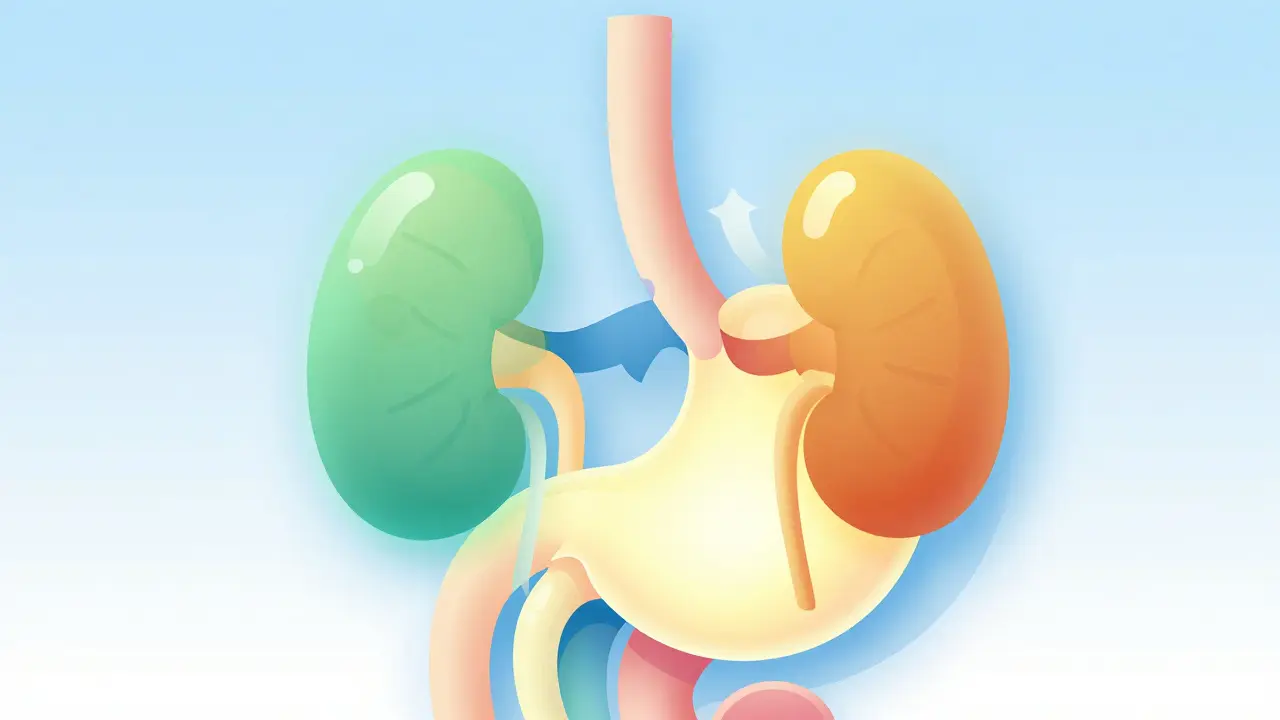
Major Bleeding and Brain Health
While GI bleeds are common, the "big ones"-major extracranial bleeds and intracranial hemorrhages (brain bleeds)-are what keep doctors up at night. Interestingly, the data on major bleeding is a bit of a mixed bag. Some reports suggest Rivaroxaban carries a higher risk of major extracranial bleeds compared to Apixaban. The JAMA Network data indicated Rivaroxaban had nearly 40 major bleeds per 1,000 person-years, while Apixaban stayed under 20. However, when it comes to the brain, the story changes. A 2022 study found that Rivaroxaban actually had a lower rate of intracranial hemorrhage compared to Apixaban. It's a strange trade-off: one might be safer for your stomach, while another might be slightly safer for your brain. This is why there is no "best" drug-only the best drug for your specific risk profile.The Heart Risk: Myocardial Infarction Concerns
Most people think of anticoagulants as a way to protect the heart, but some evidence suggests a paradox with Dabigatran. Several meta-analyses have flagged a potentially higher risk of myocardial infarction (heart attack) or acute coronary syndrome (ACS) when using Dabigatran compared to other DOACs. One analysis showed a statistically significant 48% relative increase in MI events. Researchers believe this might be due to how Dabigatran inhibits thrombin, which could potentially cause pro-inflammatory effects in the arteries. While this doesn't mean you'll have a heart attack, it does mean that for patients with a high risk of coronary artery disease, Dabigatran might not be the first choice.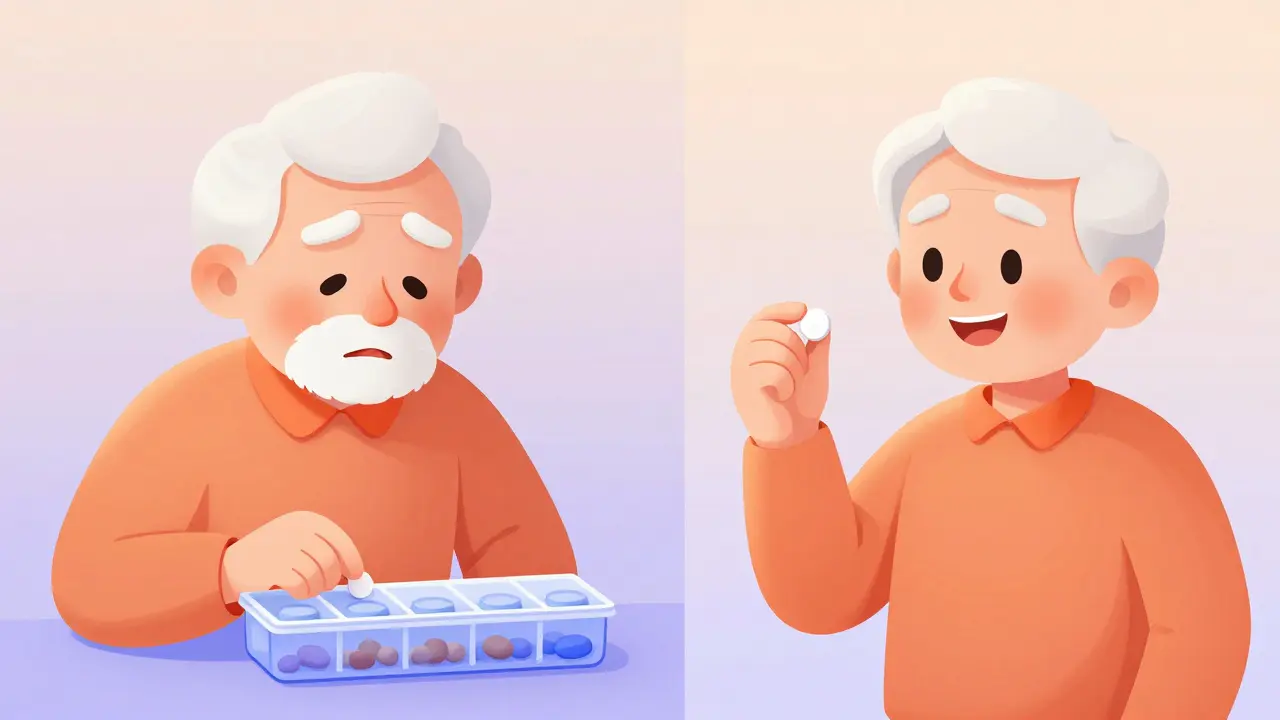
Daily Life: Dosing and Adherence
Side effects aren't just biological; they're practical. If you forget to take your pill, you're at risk for a stroke. This is the one area where Rivaroxaban has a clear advantage: once-daily dosing. Apixaban and Dabigatran both require two doses a day. For a healthy adult, that's no big deal. But for an 85-year-old taking ten other medications, one pill is vastly better than two. The "side effect" here is the mental load and the risk of missing a dose. Doctors often balance the higher GI bleed risk of Rivaroxaban against the fact that the patient is much more likely to actually take it every day.How to Choose the Right DOAC
Since all three drugs are generally effective at preventing strokes, the decision usually comes down to your personal "red flags." Use this logic to guide the conversation with your healthcare provider:- History of GI bleeds or ulcers? Apixaban is generally the safest bet.
- Poor kidney function? Avoid Dabigatran; look toward Apixaban or Rivaroxaban.
- High risk of forgetting meds? Rivaroxaban's once-daily dose is a huge win.
- Severe heart disease/prior MI? Discuss whether Dabigatran's potential cardiac risks are a concern.
- Over 80 years old? Apixaban is often preferred due to its lower bleeding rates in the elderly.
Which DOAC is safest for the stomach?
Apixaban is consistently shown to have the lowest risk of gastrointestinal bleeding compared to Rivaroxaban and Dabigatran across multiple large-scale observational studies.
Can I take these medications if I have kidney disease?
Yes, but it requires careful dosing. Dabigatran is the most sensitive to kidney function because 80% of it is cleared by the kidneys. Apixaban and Rivaroxaban are generally safer for those with moderate renal impairment, but are typically contraindicated if creatinine clearance falls below 15 mL/min.
Is once-daily dosing always better?
From a convenience and adherence standpoint, yes. However, Rivaroxaban (the primary once-daily option) is associated with higher rates of GI bleeding than twice-daily Apixaban. The choice depends on whether you prioritize convenience or a lower bleeding risk.
Does Dabigatran increase the risk of heart attack?
Some meta-analyses suggest an increased risk of myocardial infarction (MI) or acute coronary syndrome with Dabigatran compared to other DOACs, potentially due to pro-inflammatory effects. This is a key consideration for patients with existing coronary artery disease.
Are generic versions as safe as brand names?
Yes. Generic formulations of these DOACs are designed to have identical efficacy and safety profiles to the brand-name versions (Eliquis, Xarelto, and Pradaxa).