

Gastroparesis isn’t just feeling full after a big meal. It’s when your stomach can’t move food into your small intestine like it should - even when there’s no blockage. Imagine eating a small bowl of soup, then hours later still feeling bloated, nauseous, and uncomfortable. That’s the daily reality for millions of people with this condition. Unlike simple indigestion, gastroparesis is a chronic disorder rooted in nerve or muscle damage that slows or stops stomach contractions. Without proper management, it can lead to malnutrition, dangerous food masses called bezoars, and wild blood sugar swings - especially if you have diabetes.
What Really Causes Gastroparesis?
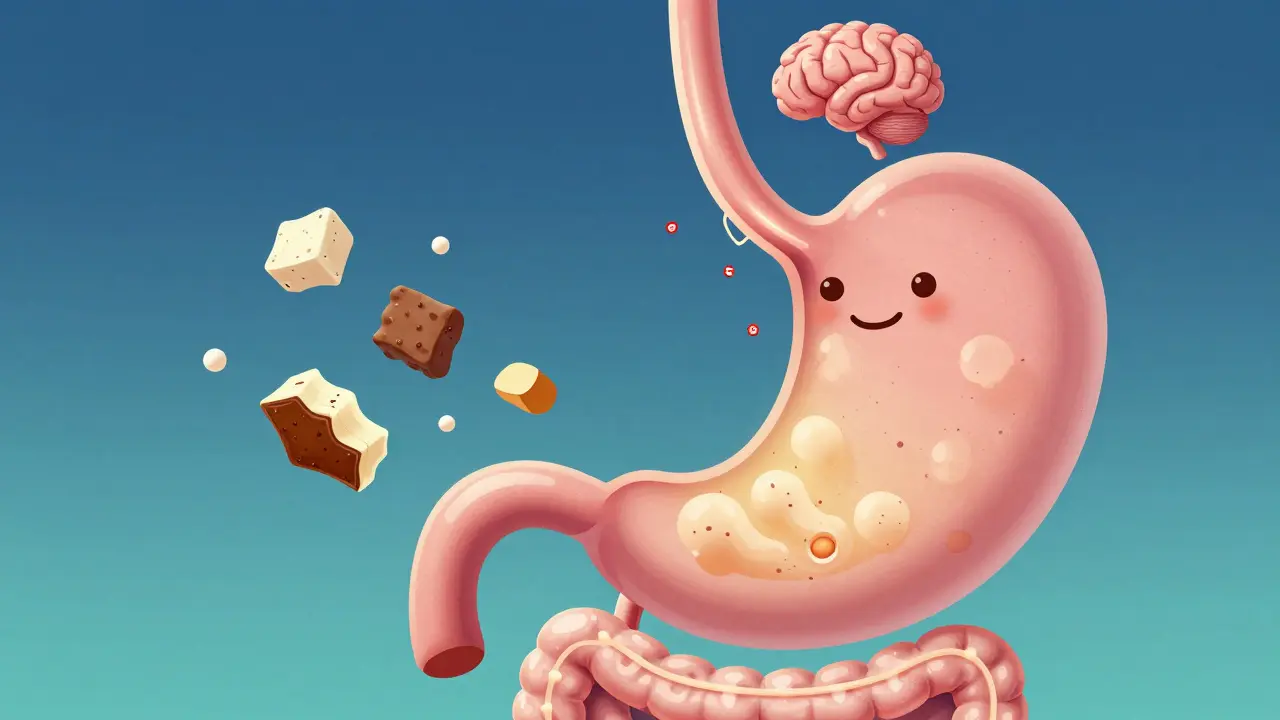
The stomach doesn’t just sit there waiting to digest. It’s a muscular organ that contracts rhythmically to grind food into a liquid slurry. That process relies heavily on the vagus nerve - the main signal line between your brain and gut. When that nerve gets damaged, the stomach doesn’t get the message to churn. In about 70% of cases, that damage comes from diabetes. High blood sugar over time nips the nerve fibers like a frayed wire. Type 1 diabetics have up to a 50% chance of developing gastroparesis; type 2 diabetics aren’t far behind, with around 30% affected after many years. But diabetes isn’t the only culprit. Around 35% of cases are tied to diabetes, 30% have no clear cause (called idiopathic), and 13% follow surgery - especially gastric bypass or esophageal procedures. Some autoimmune conditions like scleroderma can also attack the stomach muscles. In rare cases, viral infections or certain medications like opioids or antidepressants can trigger it. The result is always the same: food lingers, ferments, and causes distress.How Do You Know If It’s Gastroparesis?
Symptoms don’t show up overnight. They creep in over weeks or months. The big four signs are nausea (90% of patients), vomiting (75-80%), feeling full after just a few bites (85%), and lingering fullness after meals (70%). But it doesn’t stop there. Bloating hits 60%, abdominal pain 65%, and belching or heartburn aren’t uncommon. These symptoms last for at least three months before doctors will confirm a diagnosis. Diagnosis isn’t just based on how you feel. Doctors need proof that food is moving too slowly. The gold standard is a gastric emptying scan - you eat a meal with a tiny bit of radioactive tracer, then they track how fast it leaves your stomach. If less than 40% is gone after two hours, that’s diagnostic. Some clinics use a breath test or wireless capsule, but scintigraphy is still the most reliable. It’s easy to mistake gastroparesis for other things - like functional dyspepsia, which causes similar bloating and pain but rarely leads to vomiting. Or worse, thinking it’s just a stomach bug. That’s why it often takes years for people to get a proper diagnosis. If you’ve had persistent nausea and early fullness for months, especially with diabetes, ask about a gastric emptying study.Diet Is the First Line of Defense
Here’s the hard truth: no pill fixes gastroparesis. Medications help, but diet changes are the foundation. Studies show 65% of people see major symptom relief just by adjusting what and how they eat. The goal? Reduce the workload on your stomach. Less bulk, less fiber, less fat, smaller bites. Start with these rules:- Eat 5-6 tiny meals a day instead of 3 big ones. Each meal should be no more than 1-1.5 cups total.
- Avoid anything with more than 3 grams of fat per serving. Fat slows emptying by 30-50%.
- Keep fiber under 15 grams per meal. Skip raw veggies, whole grains, nuts, seeds, and skins.
- Blend or puree foods until they’re smooth - particle size should be under 2mm. Think soups, mashed potatoes, smoothies.
- Never drink with meals. Wait 30 minutes after eating before sipping water or tea. Liquids with solids increase stomach volume by 40%.
- Avoid carbonated drinks. Bubbles stretch the stomach and worsen bloating.
- Chew everything until it’s almost liquid. Don’t swallow anything that requires real chewing.
What If Diet Isn’t Enough?
For many, diet alone isn’t enough. That’s when medications come in. The most common is metoclopramide - it stimulates stomach contractions and improves emptying by 20-25%. But here’s the catch: it carries a black box warning. Long-term use can cause tardive dyskinesia - involuntary face and body movements that might be permanent. Doctors usually limit it to 12 weeks. Another option is erythromycin, an antibiotic that also acts as a prokinetic. It works fast but can lose effectiveness over time and cause nausea itself. Neither is perfect. For severe cases that don’t respond, there are advanced tools. Gastric electrical stimulation (GES) is a pacemaker-like device implanted in the abdomen. It sends mild pulses to the stomach muscles. FDA-approved since 2000, it helps 70% of patients cut vomiting by over half. It’s not a cure, but it gives back control. Newer options are emerging. Per-oral pyloromyotomy (POP) is a minimally invasive procedure that cuts the muscle at the stomach’s exit. It reduces resistance by 80% and helps 60-70% of patients. Clinical trials are also testing new drugs like relamorelin, which mimics a natural gut hormone and improved emptying by 35% in trials.What Happens If You Ignore It?
Leaving gastroparesis untreated isn’t just about discomfort. It’s risky. Food sitting too long ferments, leading to bacterial overgrowth. It can clump into hard masses called bezoars - sometimes requiring surgery to remove. About 6% of people develop them; 2% need intervention. Vomiting often leads to dehydration. One in four moderate-to-severe cases ends up in the hospital for IV fluids. Electrolytes like potassium drop dangerously low. Malnutrition hits 30-40% of chronic patients. Some lose more than 10% of their body weight. For diabetics, it’s worse. Food sitting in the stomach means unpredictable spikes and drops in blood sugar. Insulin doses become a guessing game. That’s why managing gastroparesis is part of diabetes care - not separate from it. Hospital stays average 5.2 days per admission. The annual cost per patient in the U.S. is nearly $20,000. And while death from gastroparesis is rare (2-3% in severe cases), the toll on daily life is huge. Three out of four patients say it limits their ability to work, socialize, or even enjoy meals.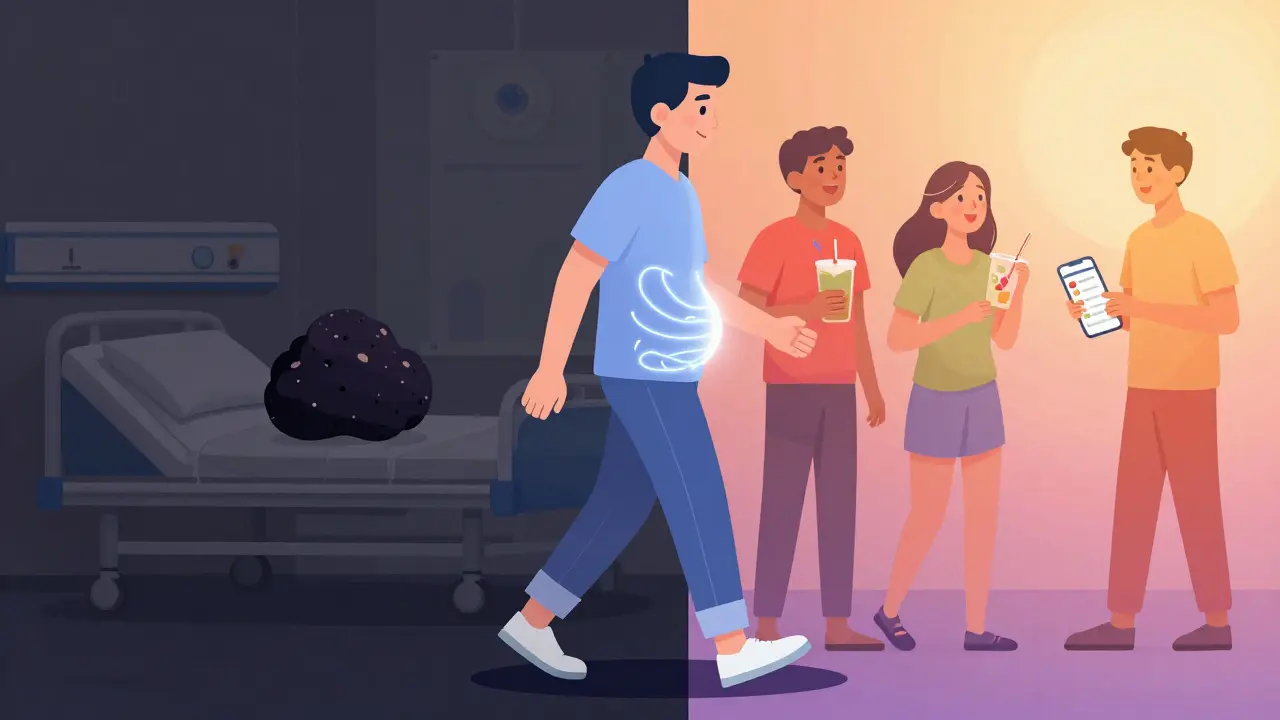
Living Better With Gastroparesis
It’s not about giving up food. It’s about changing how you eat. People who stick to the diet report 50% symptom reduction within 8-12 weeks. That’s life-changing. Keep a food and symptom diary. Write down everything you eat and how you feel two hours later. Most people discover their personal triggers - maybe it’s a specific brand of yogurt, or a type of broth. You can’t guess them. You have to track them. Hydration matters too. Don’t chug water. Sip small amounts - 1-2 ounces every 15 minutes - all day. Big gulps swell your stomach and make bloating worse. Exercise after meals helps. A 10-minute walk encourages stomach movement. Don’t lie down right after eating. And don’t ignore the mental side. Sixty-five percent of patients feel anxious before meals. Half say they avoid social events because they can’t predict how they’ll feel. That’s real. Counseling or support groups help. You’re not alone.What’s Next for Gastroparesis?
The field is moving fast. Researchers are using AI to analyze gastric scans more accurately. They’re testing probiotics to rebalance gut bacteria - early results show 30% symptom improvement. And they’re looking at genetic markers to predict who responds to which drug. One day, treatment might be personalized. Instead of trial-and-error, your doctor could match you to the best therapy based on your symptoms, nerve health, and even your microbiome. Clinical trials are already testing stem cells to repair damaged nerves - early results show modest but real improvements in motility. For now, the best thing you can do is start with diet. It’s not glamorous. It’s not quick. But it works. And it’s the only thing that’s been proven to help the most people, for the longest time.Can gastroparesis be cured?
No, there is no cure for gastroparesis. It’s a chronic condition caused by nerve or muscle damage that doesn’t reverse on its own. But symptoms can be managed effectively in most cases through diet, medication, and sometimes procedures. Many people live full, active lives with proper treatment.
Is gastroparesis linked to diabetes?
Yes, diabetes is the most common cause. Up to 50% of people with type 1 diabetes and about 30% of those with long-term type 2 diabetes develop gastroparesis. High blood sugar damages the vagus nerve over time, which controls stomach contractions. Managing blood sugar closely can slow or prevent progression.
What foods should I avoid with gastroparesis?
Avoid high-fat foods like fried chicken, cheese, and butter; high-fiber foods like raw veggies, whole grains, nuts, and beans; carbonated drinks; tough meats; and foods with skins or seeds. These slow emptying or are hard to digest. Stick to low-fat, low-fiber, soft, or blended foods like eggs, mashed potatoes, applesauce, and lean ground meats.
Can I still eat fruits and vegetables?
Yes - but only cooked, peeled, and blended. Raw fruits and vegetables are too fibrous. Try applesauce, well-cooked carrots, squash purée, or tomato soup with the skins removed. Blending reduces particle size to under 2mm, making them easier for your stomach to handle.
How long does it take to see improvement with diet changes?
Most people notice improvement within 4-8 weeks of strictly following a gastroparesis-friendly diet. Significant symptom reduction - like less nausea and vomiting - often happens by 8-12 weeks. Consistency is key. Skipping the rules, even once in a while, can trigger symptoms.
Does gastroparesis get worse over time?
It can, especially if blood sugar isn’t controlled in diabetics or if dietary rules are ignored. Some people progress from mild to severe over years. But many stabilize with proper management. About 5-10% of cases become severe enough to need feeding tubes or surgery. Early intervention is the best way to prevent worsening.
Should I see a dietitian for gastroparesis?
Yes. Working with a registered dietitian who specializes in gastroparesis improves outcomes by 40% compared to self-managing. They help you get enough calories, protein, and nutrients while avoiding triggers. Many hospitals have dietitians trained in this area - ask your doctor for a referral.





Bennett Ryynanen on 30 December 2025, AT 13:17 PM
Bro. I had this for 3 years. No one believed me. Thought I was just being dramatic. Then I started eating mashed sweet potatoes and egg whites like my life depended on it. Guess what? I stopped vomiting at work. No meds. Just food that doesn’t fight me. You’re not broken. Your stomach just needs a nap.
Stop eating like a normal person. Eat like your gut is on life support. It is.