
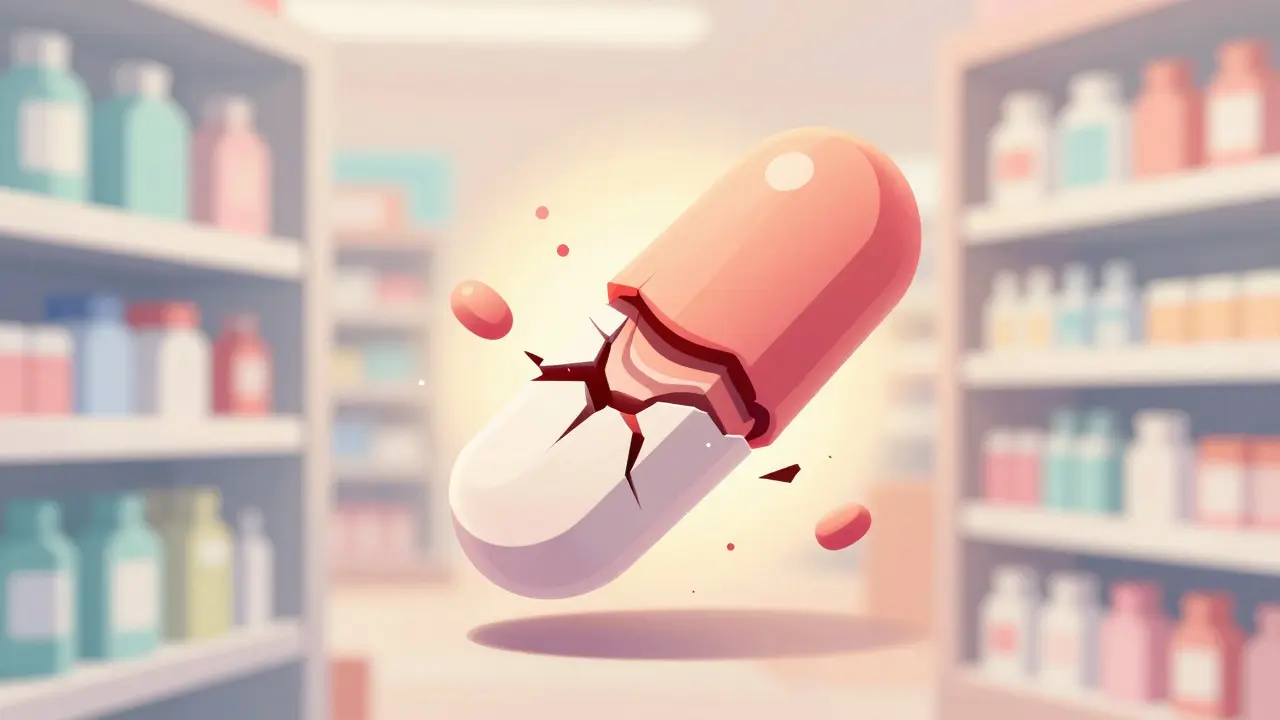
When you pick up a generic pill from the pharmacy, you expect it to work just like the brand-name version. But behind that simple tablet is a complex, high-pressure manufacturing process where tiny mistakes can lead to serious health risks. Quality defects in generics aren’t rare glitches-they’re systemic problems rooted in outdated equipment, cost-cutting pressures, and thin margins. These aren’t just cosmetic flaws. They can mean a patient gets too much or too little medicine, or worse, a contaminated dose that makes them sick.
What Exactly Are These Defects?
Generic drugs aren’t defective because they’re different from brand-name versions. They’re supposed to be bioequivalent-same active ingredient, same dose, same effect. The problem comes when the manufacturing process breaks down. Common defects include:- Capping: The top or bottom of a tablet splits off. This happens when compression force is too high and the tablet’s moisture content is too low-especially in dry, hydrophobic formulations. A tablet that crumbles in your hand isn’t just inconvenient; it might deliver half the intended dose.
- Lamination: The tablet layers separate, like a poorly glued book. This often occurs when tablet presses run too fast-over 40 rotations per minute-with insufficient pre-compression. It’s a hidden defect, sometimes only visible after the pill hits moisture in the stomach.
- Sticking: The drug material clings to the metal punch that shapes the tablet. This is common with APIs (active pharmaceutical ingredients) that melt easily, especially when moisture levels creep above 4% during long production runs. The result? Inconsistent dosing and machine downtime.
- Mottling: Uneven color patches on the tablet surface. While it might look like a paint job gone wrong, mottling can signal poor mixing of ingredients, leading to dose variability across the batch.
- Weight variation: Tablets that are too heavy or too light. The USP standard allows no more than 5% deviation from target weight. But when granule flow rates drop below 0.5 grams per second, up to 12.7% of batches fail this test. A single batch of metformin ER with this flaw could mean some patients get 10% less medicine-enough to throw off blood sugar control.
- Particulate contamination: Tiny particles in injectables. This is especially dangerous. A speck of metal or glass in an IV bag can trigger an immune response, block small blood vessels, or cause infection. Sterile injectables have an 8.7% defect rate, far higher than oral solids, and are responsible for the majority of drug shortages.
Why Do These Problems Happen?
The root cause isn’t incompetence-it’s economics. Generic drug manufacturers operate under extreme pressure. These drugs make up 90% of U.S. prescriptions but only 23% of total drug spending. That means every pill must be sold for pennies. To survive, manufacturers cut corners.- Low quality investment: Branded drug companies spend 15-18% of production costs on quality control. Generics average 8-10%. That gap means less training, fewer inspections, and older machines.
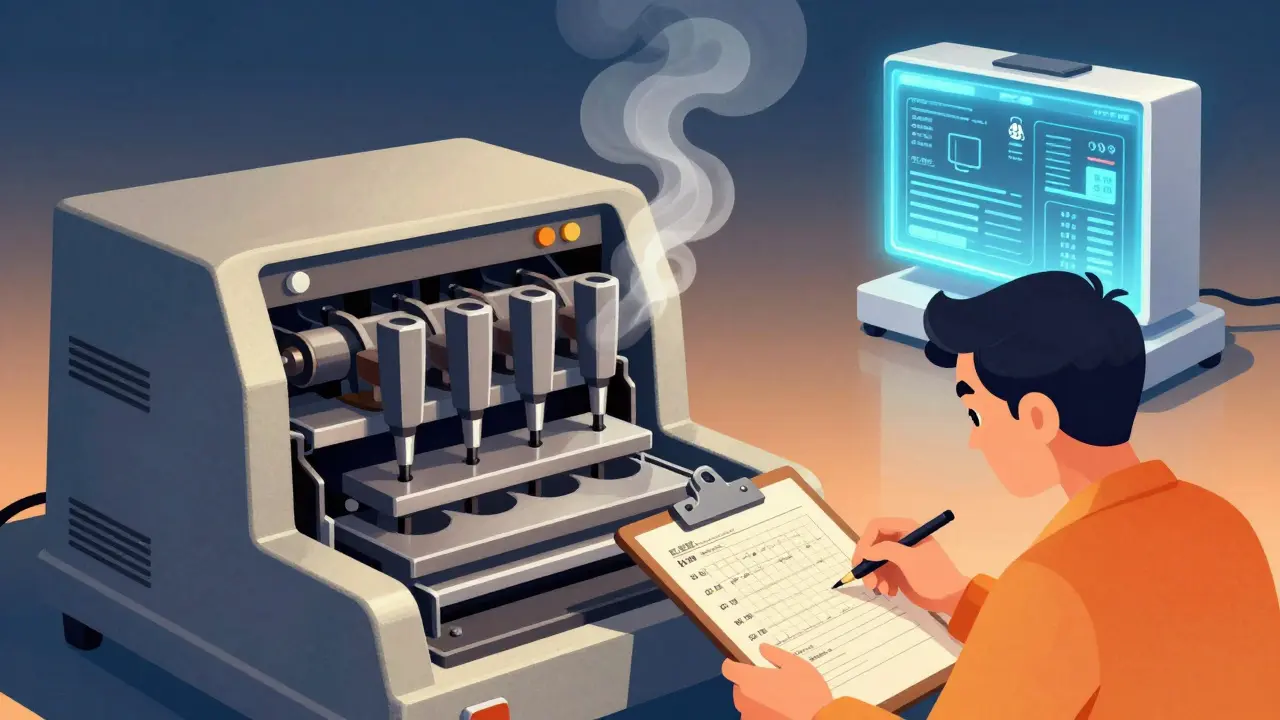
- Aging infrastructure: Many generic factories still use equipment from the 1980s. Modern tablet presses have real-time sensors that monitor compression force within ±10% of target. Older machines? They’re lucky if they’re within ±25%. Calibration? Done weekly instead of daily. Punch tolerances? ±0.1 mm instead of the required ±0.05 mm.
- Shared facilities: The same production line might make three different generics in one week. Cross-contamination is a real threat. A trace of a potent steroid left behind could affect a patient taking a blood pressure pill.
- Pressure to scale: When a brand-name drug loses patent protection, dozens of generic makers rush in. The race to be first to market means skipping proper validation. One manufacturer might skip stability testing because they’re “sure” the formula works. That’s how recalls happen.
FDA inspection data from 2019-2023 shows generic facilities fail at more than twice the rate of branded ones-57% versus 28%. In 2023, 42% of all FDA Warning Letters to drugmakers cited manufacturing quality defects, and most went to generic producers.
Who’s Getting Hurt?
Patients don’t always know when they’ve received a defective drug. But healthcare workers do.- A 2023 survey of 1,247 U.S. pharmacists found 68% had seen quality issues in the past year. 42% reported patients complaining about tablets that crumbled, cracked, or looked discolored.
- On pharmacy forums, pharmacists describe batches of levothyroxine where patients suddenly felt fatigued or anxious-despite no change in dose. Some switched back to brand-name versions because they “just didn’t feel right.”
- The FDA’s MedWatch system logged 1,842 adverse events in 2023 tied directly to generic drug quality. Over 300 involved visible defects like chipped tablets or foreign particles.
- Hospitals recorded that 17.3% of generic substitution requests included quality concerns. Nearly 10% of those led to permanent switches back to brand-name drugs.
These aren’t isolated complaints. They’re warning signs. A patient on a narrow-therapeutic-index drug-like warfarin, lithium, or levothyroxine-can’t afford even a 5% dose variation. That’s why the FDA classifies weight variation over 5% as a critical defect. A single batch of faulty generic could send multiple patients to the ER.
How Are Some Manufacturers Getting It Right?
Not all generic makers are cutting corners. The best ones treat quality like a competitive advantage.- Continuous manufacturing: The FDA’s Emerging Technology Program has helped 47 generic manufacturers switch from batch processing to continuous production. This reduces defects by 65%. Instead of making a batch of 100,000 pills at once, they make them steadily-like a conveyor belt. If something goes wrong, it affects just a few pills, not the whole batch.
- AI-powered inspection: Companies like Sandoz and Dr. Reddy’s now use AI systems to scan tablets at 600 per minute. These systems detect defects as small as 0.1 mm with 92% accuracy-far better than human inspectors, who miss about 30% of flaws.
- Real-time monitoring: Leading manufacturers now track compression force, tablet weight, and moisture levels every 15 minutes. If a trend starts to drift, the line shuts down before a single bad tablet leaves the machine.
- Training and culture: Staff at top facilities get 40+ hours of GMP training per year. Annual requalification tests show 85%+ proficiency. Quality isn’t a department-it’s everyone’s job.
These practices aren’t magic. They’re investments. Teva, one of the largest generic makers, reported a 0.8% batch rejection rate in 2023. Smaller competitors? Up to 3.2%. That difference comes down to money, technology, and discipline.
What’s Being Done?
Regulators are waking up. The FDA’s 2024-2027 plan targets a 30% reduction in quality-related drug shortages. The 2024 Drug Supply Chain Security Act now requires track-and-trace systems for high-risk generics. Early results? A 22% drop in counterfeit-related issues.But the gap is wide. Experts estimate it would take $28.7 billion to modernize all U.S. generic manufacturing facilities. Current annual investment? Just $1.2 billion. Without a major shift, McKinsey & Company predicts 15-20% of generic manufacturers could exit the market within five years-not because they’re failing, but because they can’t afford to fix their quality.
What Should Patients and Providers Do?
You can’t control the factory. But you can take smart steps:- Watch for changes: If your generic pill looks different-color, shape, markings-ask your pharmacist. It might be a legitimate switch, or it might be a quality issue.
- Report anomalies: If you notice a tablet crumbling, has an odd taste, or you feel different after switching, report it to the FDA’s MedWatch system. These reports drive inspections.
- Know your options: For critical drugs (thyroid, epilepsy, blood thinners), talk to your doctor about whether a brand-name version is worth the cost. Sometimes, the price difference is worth the peace of mind.
- Trust your pharmacist: They’re on the front lines. If they recommend sticking with a brand or switching to a different generic, listen.
Generics saved billions in healthcare costs. But they can’t keep saving money if they’re putting patients at risk. The system is broken-not because of bad people, but because of bad incentives. Fixing it won’t be cheap. But doing nothing is costlier-in lives, in trust, and in the long-term stability of our drug supply.



Mike Dubes on 4 March 2026, AT 06:12 AM
I work in a pharmacy and see this stuff all the time. A batch of metformin last month had tablets that crumbled if you looked at them wrong. Patients were calling in saying they felt dizzy or their blood sugar spiked. We switched them to a different generic and everything went back to normal. It’s not about brand loyalty-it’s about safety. The system’s broken but at least we’re catching it before it kills someone.