
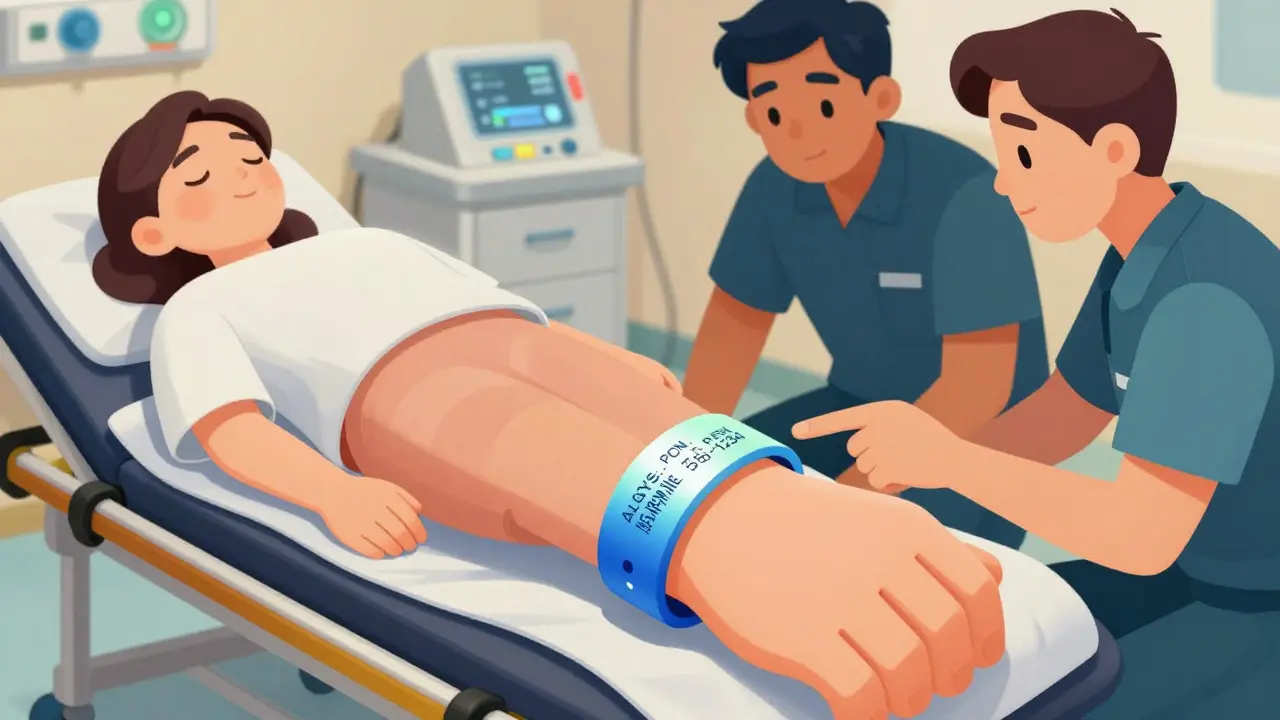
If you have a severe drug allergy, your life could depend on what’s on your wrist-or around your neck. It’s not just about avoiding the medicine you’re allergic to. It’s about making sure emergency responders know instantly what’s wrong when you can’t speak for yourself.
Why a Medical Alert Bracelet Isn’t Optional
Imagine you’re in a car crash. You’re unconscious. Your phone is broken. Your wallet is lost. The paramedics rush you to the ER. They need to know what drugs you can’t take-fast. If you’re allergic to penicillin, morphine, or sulfa, giving you the wrong medication could trigger anaphylaxis. That’s a life-threatening reaction. One in three people with severe drug allergies have been given the wrong drug in an emergency because no one knew their history. Medical alert jewelry-bracelets or necklaces with engraved information-is the most reliable way to prevent that. According to the American College of Allergy, Asthma, and Immunology, wearing one is a standard part of managing severe drug allergies. Emergency staff check for it in 95% of cases. And they look at the wrist first. That’s why a bracelet is better than a necklace in most emergencies.What to Engrave on Your Medical Alert
The engraving needs to be clear, short, and use medical abbreviations that responders recognize. Space is limited. You can’t write a novel. Here’s what works:- Your name (optional but helpful)
- Primary allergy: ALGYS: PCN (for penicillin)
- Other drug allergies: MORPHINE, SULFA
- If you carry an epinephrine auto-injector: EPI PEN
- Emergency contacts: ICE: MOM 555-1234
Choosing the Right Jewelry
Not all medical alert jewelry is made the same. You need something durable, hypoallergenic, and easy to read.- Material: Surgical steel, titanium, or medical-grade silicone. Avoid nickel. Some people are allergic to it.
- Size: Bracelets should be 6-8 inches long. Width: 0.5 to 1.25 inches. Thick enough to engrave clearly.
- Engraving: Deep, laser-engraved text. Avoid stamped or painted letters-they wear off.
- Style: Simple. No fancy designs that hide the text. You want it visible, not decorative.

Where and How to Wear It
Wear it 24/7. Even when you’re sleeping, showering, or exercising. Don’t take it off because it’s “inconvenient.”- Bracelet: Wear it on your dominant wrist. If you’re right-handed, wear it on your right wrist. That’s where paramedics look first.
- Necklace: If you choose a necklace, make sure it’s visible above your shirt collar. Tuck it under your clothes if you want to hide it-but make sure it’s not buried under layers.
- Check it: Every few months, look at the engraving. Is it still clear? If it’s fading, replace it.
What to Avoid
People make mistakes that cost time-and sometimes lives.- Don’t use vague terms: “Drug allergy” isn’t enough. Name the drugs.
- Don’t forget to update it: If you develop a new allergy, replace the bracelet. Outdated info is dangerous.
- Don’t rely on digital apps alone: Your phone can die. A QR code won’t help if you’re unconscious and your phone is in your pocket.
- Don’t hide it: No one will find it if it’s under a watch or a sleeve.
Digital vs. Physical: Why the Bracelet Still Wins
There are new gadgets: NFC chips, QR codes, apps that sync with your medical record. Some bracelets now have scannable codes. But here’s the truth: the physical engraving is still the most reliable part. In a power outage, during a crash, or when your phone is dead, the metal or silicone band with laser-engraved text? It still works. Emergency responders are trained to look for it. They don’t always have time to scan a code. They don’t always have a phone to read a QR code. But they’ll always check your wrist. The 2024 Medical ID Industry Association report shows 87% of people with severe allergies still choose physical jewelry. Why? Because in an emergency, seconds matter. And a bracelet doesn’t need a battery.
How to Get One
You don’t need a prescription. You can buy one online from trusted providers like MedicAlert Foundation, American Medical ID, or Lauren’s Hope. Prices range from $20 to $60. Some insurance plans cover them if you have a documented history of anaphylaxis. When ordering:- Double-check the engraving before you pay.
- Ask for a proof image.
- Make sure the company uses FDA-compliant materials.
Real Stories
One Reddit user, u/EpiPenSurvivor, posted in March 2024: “I was unconscious during an appendectomy. The nurses were about to give me penicillin. My bracelet said ‘NO PCN, EPI PEN.’ They stopped. Saved my life.” Another user, a 42-year-old woman with a sulfa allergy, was brought in for a diabetic emergency. She was confused. Her bracelet said “ALGYS: SULFA.” The doctor skipped the sulfa-based antibiotic. She woke up safe. These aren’t rare cases. They happen every day.Final Rule: Wear It Like a Seatbelt
You don’t wear a seatbelt because you think you’ll crash. You wear it because you might. Same with your medical alert bracelet. You don’t wear it because you expect to collapse. You wear it because you might. It’s not a fashion accessory. It’s a lifeline. And it costs less than a monthly coffee subscription. If you have a severe drug allergy, get one. Wear it every day. Make sure the engraving is clear. Update it when your allergies change. And tell your family what it says. Because when you can’t speak, your bracelet will.Can I just use a medical alert app instead of a bracelet?
No. Apps can help, but they’re not reliable in emergencies. Your phone can die, get lost, or be locked. Emergency responders don’t have time to ask for your password or scan a QR code. The engraved bracelet is the only thing they’re trained to look for-and it works even if there’s no power. Use a digital profile as a backup, not a replacement.
What if I’m allergic to metal?
You can still wear a medical alert bracelet. Look for silicone bands made from medical-grade materials. These are completely hypoallergenic and don’t contain nickel or other common irritants. Brands like Lauren’s Hope and MedicAlert offer silicone options that are durable, waterproof, and safe for sensitive skin.
Do I need to wear it while swimming or showering?
Yes. Most medical alert bracelets are waterproof. Silicone and surgical steel won’t rust or fade. Taking it off increases your risk. If you’re in the shower and suddenly have a reaction, no one will know why. Wear it all the time-even when you’re sleeping.
Can children wear medical alert jewelry?
Absolutely. Kids with severe drug allergies should wear them too. There are smaller, child-safe designs with secure clasps. Some even come with fun colors or characters to make kids more comfortable wearing them. Parents of children with anaphylaxis to antibiotics or anesthesia are strongly advised to use one.
How often should I replace my medical alert bracelet?
Replace it every 2-3 years, or sooner if the engraving fades. Even high-quality metal can wear down over time. If you can’t read your own bracelet clearly, others won’t be able to either. Also replace it immediately if you develop a new allergy or stop taking a medication that was listed.


Steve Hesketh on 20 January 2026, AT 17:39 PM
Man, this is one of those things that seems obvious until you realize half the population ignores it. I’ve seen too many people shrug off medical alerts like they’re optional jewelry. But if your life depends on it-why wouldn’t you wear it? I’ve got a cousin with a penicillin allergy who waited 3 years to get one because she thought ‘it’s not that bad.’ Then she ended up in the ER with a reaction because the nurse didn’t know. She’s fine now, but it was a close one. Wear the damn bracelet. It’s cheaper than a latte and saves your life.