
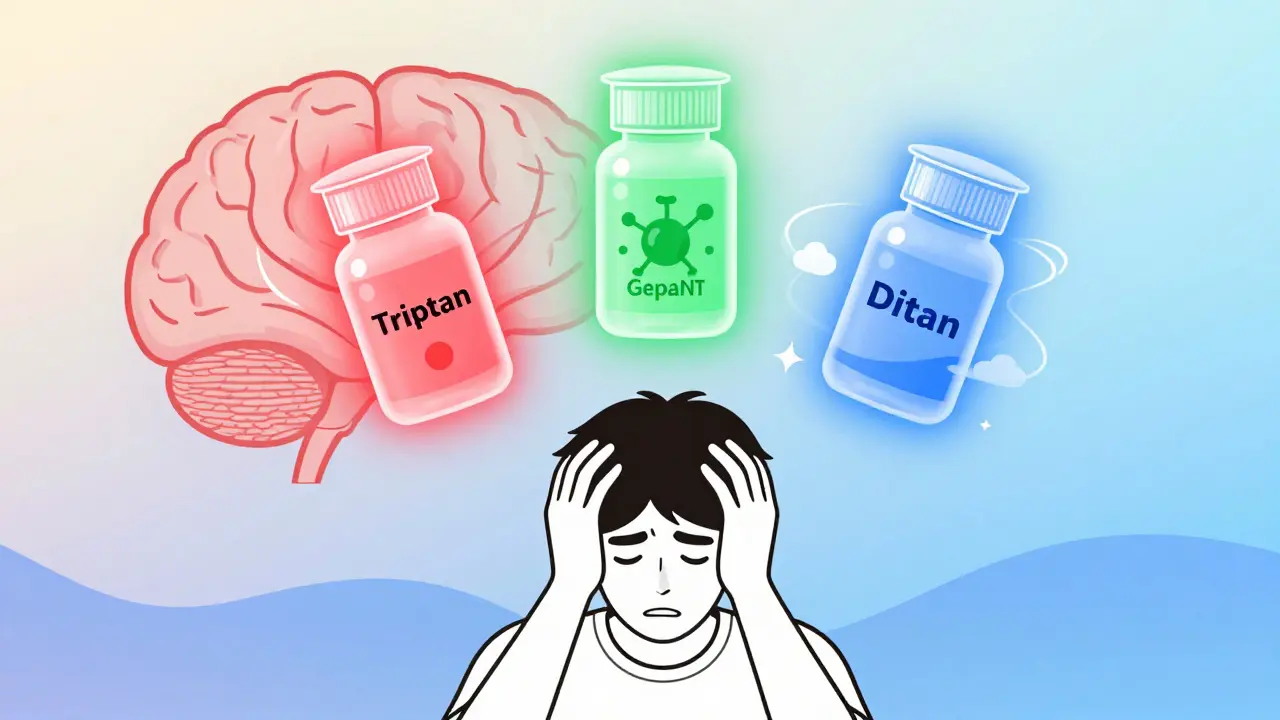
When a migraine hits, you don’t just want relief-you want it fast, safely, and without making things worse. For decades, triptans like sumatriptan were the go-to. But today, new options like gepants and ditans are changing the game. The question isn’t just which works-it’s which is safest for you. And the answer depends on your health, your lifestyle, and what side effects you can tolerate.
Triptans: Fast, But Not Always Safe
Triptans have been the standard since the 1990s. They work by narrowing blood vessels around the brain and blocking pain signals. That’s why they often kick in within 30 minutes. But that same mechanism is also their biggest risk. Triptans activate 5-HT1B receptors, which cause blood vessels to tighten. For someone with heart disease, high blood pressure, or a history of stroke, that’s dangerous.
Common side effects? Tingling, flushing, dizziness, and fatigue. But the one that scares people most? Chest tightness. Around 3-8% of users report a feeling like a heavy weight on their chest. It’s not a heart attack-studies show no increase in heart attacks with triptans-but it’s terrifying enough to make people stop using them. One user on Drugs.com wrote: "Experienced severe chest pressure with first dose of Imitrex-never using it again."
Some triptans are safer than others. Almotriptan and frovatriptan have fewer side effects overall. But even the "milder" ones still carry the same cardiovascular warnings. The American Academy of Family Physicians says to avoid triptans entirely if you have any heart-related conditions. And you can’t take them within 24 hours of dihydroergotamine-it’s like stacking two vasoconstrictors and hoping for the best.
Gepants: The Quiet Contender
Gepants-like ubrogepant (Ubrelvy) and rimegepant (Nurtec ODT)-work differently. Instead of squeezing blood vessels, they block CGRP, a molecule that triggers migraine pain. No vasoconstriction means no heart risk. That’s why they’re now recommended as a first choice for people with cardiovascular issues.
The side effects? Mild. Nausea affects only 4-6% of users. Somnolence? Just 2-4%. One rare reaction: hypersensitivity with rimegepant, at 0.1%. That’s less than one in a thousand. No chest pressure. No dizziness that knocks you out. No warnings against driving.
Here’s the trade-off: they’re slower. Triptans often work in 30 minutes. Gepants take 1-2 hours. But they last longer. Rimegepant’s half-life is 10-12 hours. That means fewer headaches coming back by midnight. Users on Drugs.com rate it 7.1/10. "No chest pressure like with triptans, just takes longer to work," said one person.
There’s one catch: drug interactions. Rimegepant can’t be taken with strong CYP3A4 inhibitors like ketoconazole or grapefruit juice. It can spike levels in your blood. But for most people, that’s not an issue.
Ditans: Effective, But Too Sedating
Lasmiditan (Reyvow) is the only ditan on the market. It targets 5-HT1F receptors, which means no vasoconstriction. So it’s safe for heart patients. But it comes with a heavy price: sedation.
In clinical trials, 18.8% of people taking lasmiditan 100mg had dizziness. Compare that to 8.5% on placebo. Paresthesia? 9.4% vs 2.8%. Sedation? 7.8% vs 2.3%. Muscle weakness? 2.8% vs 0.4%. One Reddit user summed it up: "Reyvow made me feel drunk without alcohol."
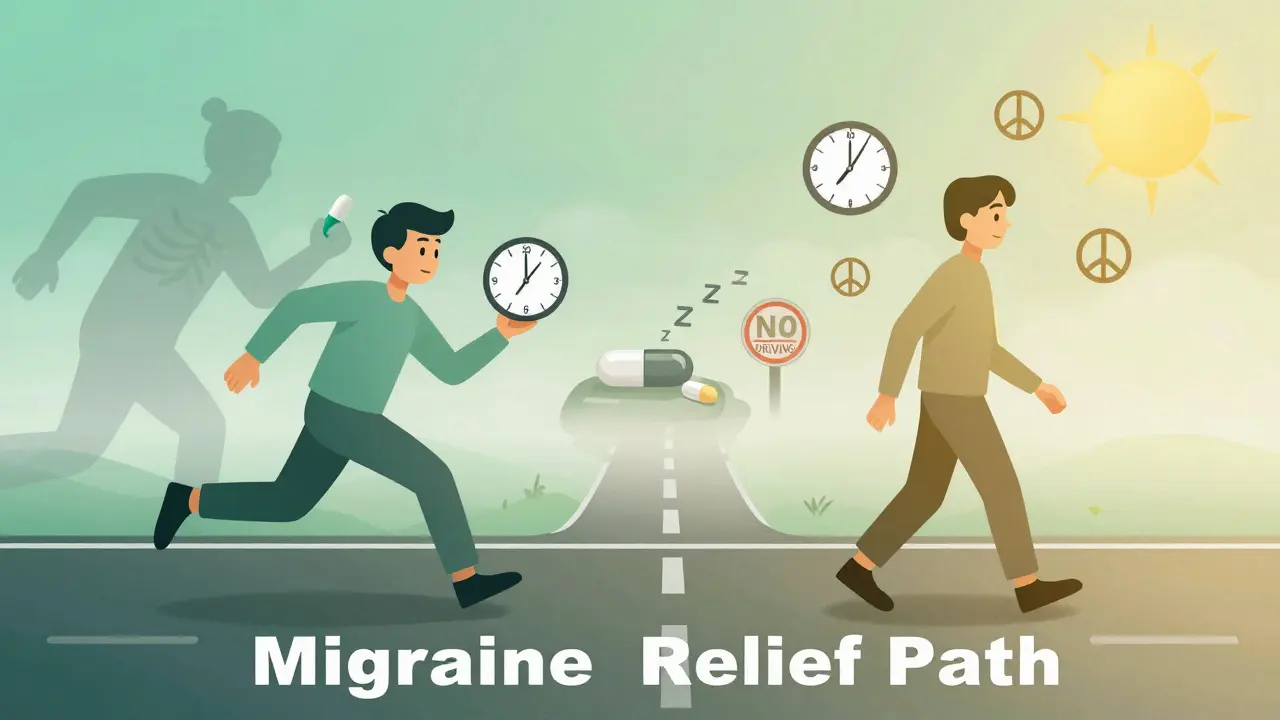
The FDA label says: "Do not drive or operate machinery for at least 8 hours after taking Reyvow." A 2021 study showed people were still impaired at 5 hours. That’s not just inconvenient-it’s risky. If you work, care for kids, or need to be sharp after a migraine, this isn’t the drug for you.
It’s also the most likely to cause side effects overall. A 2021 meta-analysis in JAMA Network Open found ditans had 2.87 times higher odds of side effects than placebo. Triptans? 1.4 times. Gepants? Barely above placebo.
And there’s a hidden warning: avoid lasmiditan if you have a seizure history or take other drugs that lower the seizure threshold. The risk isn’t proven, but the caution is real.
Head-to-Head: Safety Scores
Here’s what the data says when you compare all three:
| Side Effect | Triptans | Gepants | Ditans (Lasmiditan) |
|---|---|---|---|
| Cardiovascular Risk | High (contraindicated in heart disease) | Very Low | Very Low |
| Dizziness | 7-14% | 2-4% | 18.8% |
| Sedation | 6-10% | 2-4% | 7.8% |
| Chest Tightness | 3-8% | 0% | 0% |
| Nausea | 5-12% | 3-6% | 5.0% |
| Time to Work | 30 min | 60-120 min | 60-90 min |
| Driving Warning | No | No | Yes (8+ hours) |
| Overall Adverse Event Risk (vs Placebo) | 1.4x | 1.1x | 2.9x |
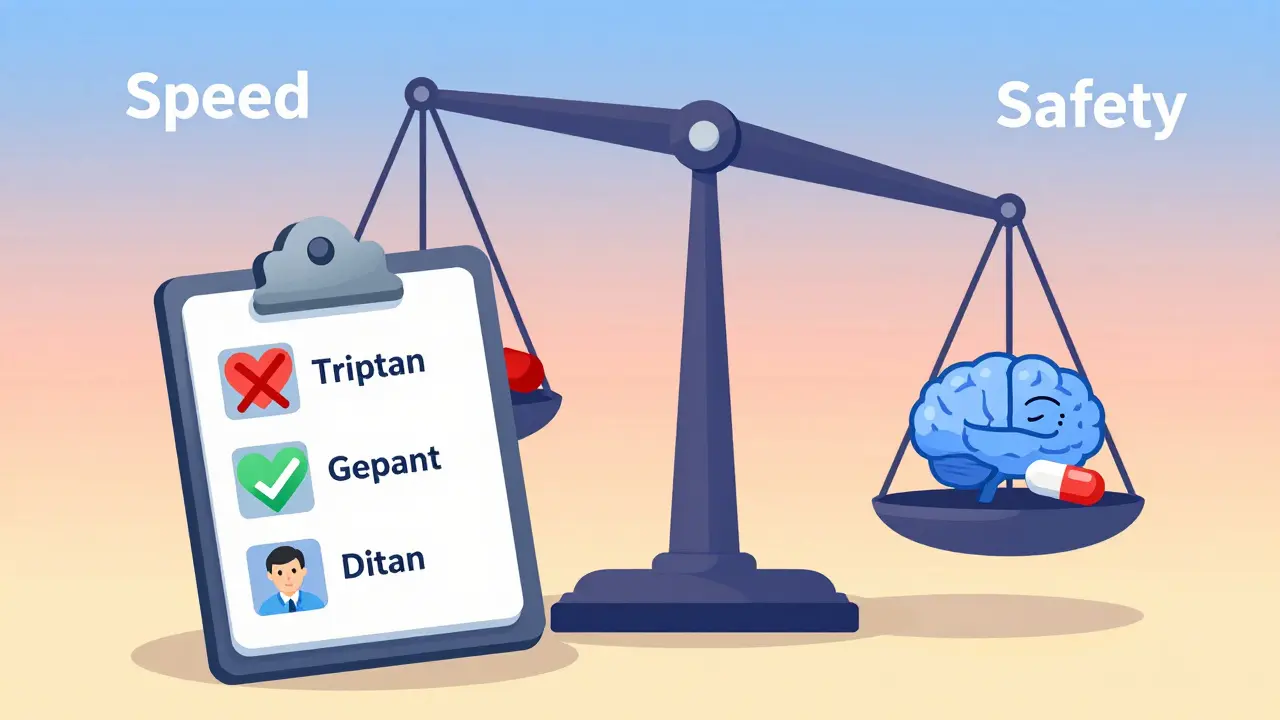
The numbers don’t lie. Gepants win on safety. Ditans win on no heart risk-but lose on function. Triptans are still the fastest, but their side effects push many people to quit.
What Do Real Users Say?
On Drugs.com:
- Triptans: 6.4/10 (52% positive)
- Gepants (Nurtec): 7.1/10 (683 reviews)
- Ditans (Reyvow): 5.8/10 (63% negative-mostly dizziness)
On Reddit’s r/Migraine:
- Triptan side effects mentioned in 78 posts last month
- Gepants discussed in 42
- Lasmiditan’s sedation in 31
One common theme: people switch from triptans to gepants because they’re tired of the chest pressure. But few stick with ditans-they can’t function afterward.
What Should You Choose?
Here’s how to decide:
- If you have heart disease, high blood pressure, or stroke risk → Skip triptans. Go with a gepant. It’s your safest bet.
- If you need fast relief and no heart issues → Triptans still win. They’re the most effective and fastest.
- If you’re okay with being out of commission for hours → Lasmiditan works, but only if you’re not driving, working, or caring for kids.
- If nausea or drug interactions are a concern → Rimegepant (Nurtec) is your best gepant-it’s also approved for prevention, so one pill does double duty.
Dr. Elizabeth Loder from Harvard says: "I don’t think any of these drugs do a lot better than triptans." But she’s talking about overall benefit. For safety? The new drugs have clear advantages.
And here’s something else: some side effects aren’t side effects at all. The Medical Letter points out that fatigue, dizziness, or weakness after taking a migraine drug might just be the migraine itself. That’s why it’s hard to tell what’s the drug and what’s the attack. Always track your symptoms before and after.
What’s Next?
Gepants are rising fast. In 2020, they made up 2% of migraine prescriptions. By Q3 2023, they were 28%. Triptans still lead at 62%, but they’re losing ground. The American Headache Society now recommends gepants over triptans for people with cardiovascular risks.
One new gepant-zavegepant-is coming. It’s nasal spray, works fast, and has a safety profile similar to oral gepants. No heart risk. No sedation. No driving warning. It could be the next game-changer.
Long-term safety? Gepants still have limited data beyond two years. But rimegepant’s 2-year data from the PROGRESS trial shows no new red flags. That’s reassuring.
Final Thoughts
Migraine treatment isn’t one-size-fits-all. What works for your friend might wreck your day. Triptans are fast and effective, but their side effects push people away. Gepants are safer, especially for your heart, and they’re getting better. Ditans? They’re a backup for people who can’t use triptans-but you’ll pay for it with brain fog.
The best choice isn’t the newest drug. It’s the one that gives you relief without stealing your life away.
Are triptans safe if I have high blood pressure?
No. Triptans can cause blood vessels to tighten, which raises blood pressure and increases the risk of heart attack or stroke. If you have uncontrolled high blood pressure, heart disease, or a history of stroke, you should avoid triptans entirely. Gepants are a safer alternative because they don’t affect blood vessels.
Can I drive after taking Reyvow (lasmiditan)?
No. The FDA requires a warning: do not drive or operate machinery for at least 8 hours after taking lasmiditan. Clinical studies show people have impaired coordination, dizziness, and sedation for that long. Even if you feel fine, your reaction time and judgment may still be affected. Plan ahead-don’t take it if you need to be alert.
Why are gepants considered safer than triptans?
Gepants block CGRP, a molecule involved in migraine pain, without affecting blood vessels. Triptans activate receptors that cause blood vessels to narrow, which can be dangerous for people with heart conditions. Because gepants don’t cause vasoconstriction, they’re safe for people with heart disease, high blood pressure, or stroke risk-where triptans are banned.
Do gepants cause chest tightness like triptans?
No. Chest tightness is a well-known side effect of triptans, affecting 3-8% of users. Gepants don’t cause this because they don’t constrict blood vessels. In clinical trials, chest pressure was not reported as a side effect with ubrogepant or rimegepant. This is one of the main reasons people switch from triptans to gepants.
Is lasmiditan better than triptans for migraine relief?
Not really. While lasmiditan works well at reducing pain at 2 hours, most triptans are more effective. A 2021 analysis of 64 trials found triptans reduced pain more than ditans. Plus, lasmiditan causes dizziness, sedation, and impaired function in over 18% of users. If you need to get back to work or care for kids, it’s not better-it’s worse.
Can I take a gepant and a triptan together?
No. There’s no approved combination of gepants and triptans. Even though they work differently, combining them hasn’t been studied for safety. The American Headache Society recommends using one or the other, not both. If one doesn’t work, wait for the next attack instead of layering medications.
How long do gepants last compared to triptans?
Gepants last longer. Ubrogepant lasts 5-7 hours, and rimegepant lasts 10-12 hours. Most triptans last 2-14 hours, depending on the type. The longer half-life of gepants means fewer headaches returning within 24 hours. That’s why some people prefer them-even if they take longer to kick in.




Jack Havard on 12 February 2026, AT 04:03 AM
Triptans aren't dangerous. They're just misunderstood. The chest tightness? That's your body screaming at you to stop ignoring your health. Everyone thinks they're invincible until their arteries start acting like they're in a bad action movie. The data says one thing. Your gut says another. I've seen too many people ignore warnings until they're in the ER.