
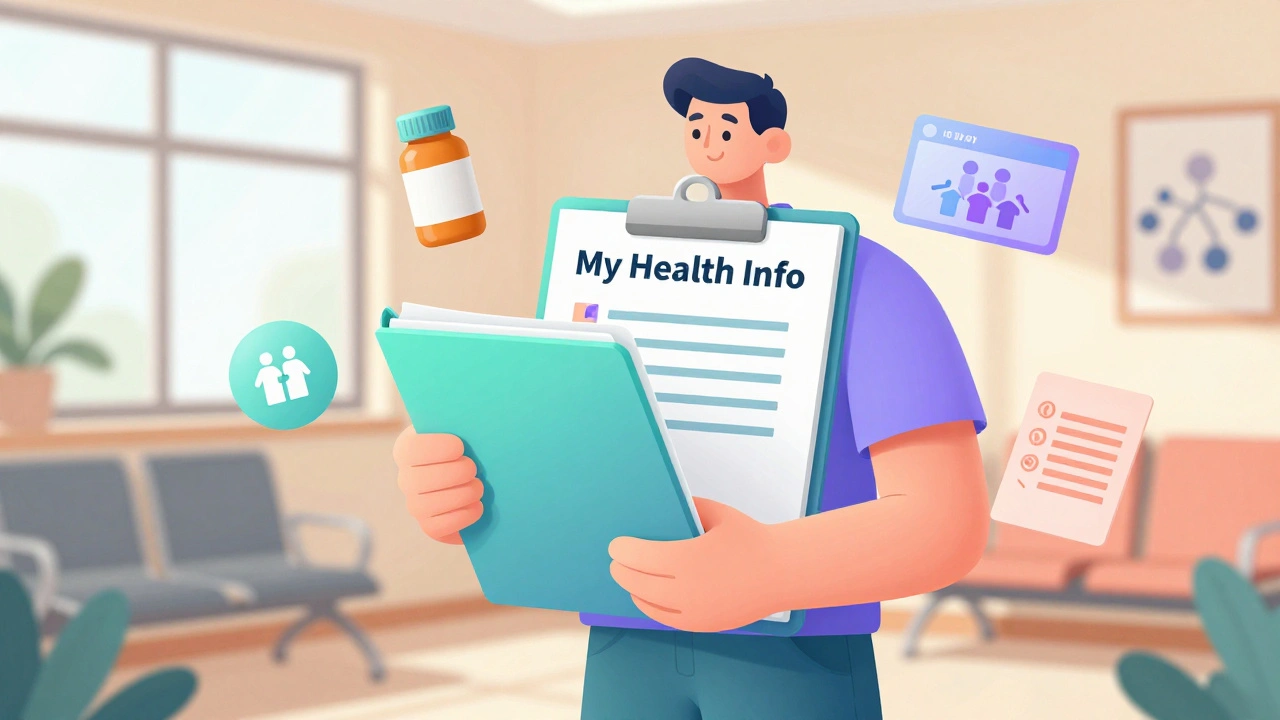
Walking into a doctor’s office without being prepared is like showing up to a job interview without a resume. You might still get through it, but you’re leaving valuable time, clarity, and even safety on the table. Too many people leave appointments feeling confused, unheard, or worse - like something was missed. The good news? A little preparation changes everything.
What to Bring: The Non-Negotiables
You don’t need to bring your whole life to the appointment, but you do need to bring the right things. Missing one key item can delay care, cause misdiagnosis, or even lead to dangerous drug interactions. Start with the basics: your health insurance card and a government-issued photo ID. These aren’t just bureaucracy - they’re your gateway to getting care covered and verified. Many clinics now require both before they can even check you in. Next, bring your medication list. Not a mental list. Not a scribbled note on a napkin. A real, updated list with every substance you take. That includes:- Prescription drugs (name, strength, how often you take it)
- Over-the-counter meds (like ibuprofen or antacids)
- Vitamins and supplements (even the ones you only take once a week)
- Herbal remedies or CBD products
What to Discuss: The 12 Topics That Matter
You only have 15 to 25 minutes. Make them count. Don’t wait for your doctor to ask. Bring your own list of concerns - even if they seem small. Start with symptoms. Don’t say, “I’ve been tired.” Say: “I’ve felt exhausted every afternoon since October. It’s worse after meals. I sleep 8 hours but still feel drained. On a scale of 1 to 10, it’s an 8.” Add triggers: “It gets worse when I eat sugar.” Add relief: “Coffee helps a little.” This level of detail turns vague complaints into diagnostic clues. Discuss your lifestyle honestly - no judgment, no shame. Your doctor needs to know:- How many alcoholic drinks you have per week (not “a few” - say “three on weekends”)
- How much you move daily (not “I try to walk” - say “I walk 20 minutes after dinner”)
- Whether you smoke, vape, or use tobacco (even if you quit 5 years ago)
- If you use any recreational drugs, even once
- Why are you recommending this test or treatment?
- What are the side effects?
- Are there cheaper or simpler options?
- What happens if I don’t do this?
- What would you recommend if I were your mother or child?
- How will I know if this is working?
- What symptoms should make me call you before my next visit?
Use Digital Tools - But Don’t Rely on Them
Technology helps, but it’s not magic. Mayo Clinic’s app lets you sync pharmacy records from 27 major chains and pull data from Apple Health or Google Fit. That’s great - but only if you actually check the imported data. Sometimes apps mislabel supplements as medications or miss doses. Cleveland Clinic’s AppointmentPass® system now includes a symptom checker that builds a clinical summary for your doctor before you even walk in. Ambetter Health auto-updates your meds when you refill prescriptions. These tools are powerful, but they’re only as good as the data you feed them. Don’t skip the manual review. Open the app. Look at the list. Fix any mistakes. Add anything the system missed. Your phone can’t know you started taking melatonin last week because you couldn’t sleep.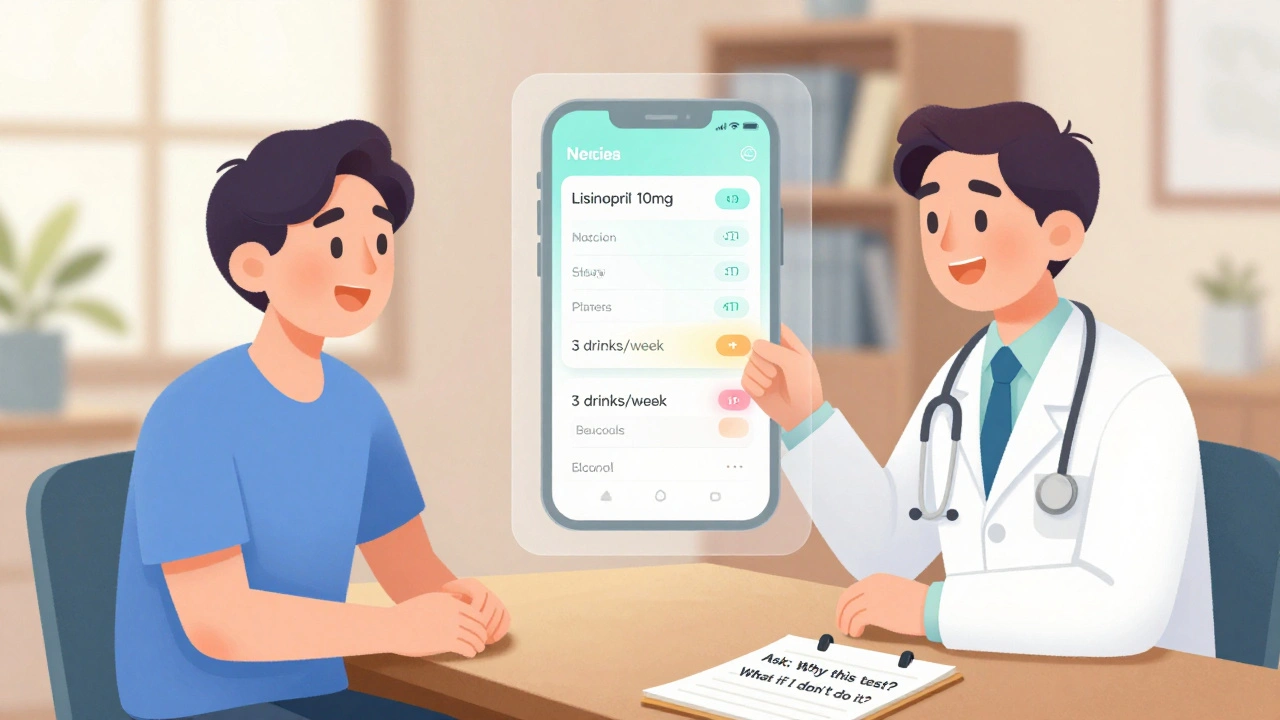
What to Do After the Appointment
The appointment isn’t over when you leave the office. In fact, that’s when the real work begins. Write down the next steps. Not just “take medicine.” Write: “Take metformin 500mg twice daily with food. Call if I feel dizzy or nauseous. Follow-up in 6 weeks for blood sugar test.” Ask for written instructions if anything is unclear. If you’re told to lose weight, ask: “How much? By when? What’s the plan?” Vague advice leads to inaction. Schedule follow-ups before you leave. Don’t wait for a reminder. If you need a referral, ask for the name of the specialist and the reason they’re being recommended. Get the contact info. If you’re given a prescription, check the label. Does it match what your doctor said? Does the dosage make sense? If not, call the pharmacy or your doctor’s office before taking it.Common Mistakes and How to Avoid Them
Here’s what most people get wrong:- Bringing a mental list - You’ll forget half of it. Write it down.
- Only talking about the main issue - If you’ve had headaches, chest tightness, and trouble sleeping, list them all. One might be the real clue.
- Not asking questions - Doctors assume you understand. You don’t always.
- Ignoring “minor” symptoms - A change in bowel habits, unexplained bruising, or sudden weight loss? Mention them. They’re red flags.
- Not following up - If you’re told to get a test, don’t wait for a call. Call them.
Why This Matters Beyond Convenience
This isn’t just about being “organized.” It’s about safety. Medication errors are the third leading cause of death in U.S. hospitals. Many happen because doctors don’t know what you’re really taking. A patient on blood thinners who also takes St. John’s Wort - without telling anyone - could bleed internally. A diabetic who hides their alcohol use might get the wrong insulin dose. The system isn’t perfect. But you have more power than you think. You’re not just a patient. You’re the CEO of your own health. The more accurate, detailed, and honest you are, the less likely you are to be misdiagnosed, overmedicated, or sent down the wrong path. Preparation turns a rushed visit into a partnership.Final Checklist: Before You Walk In
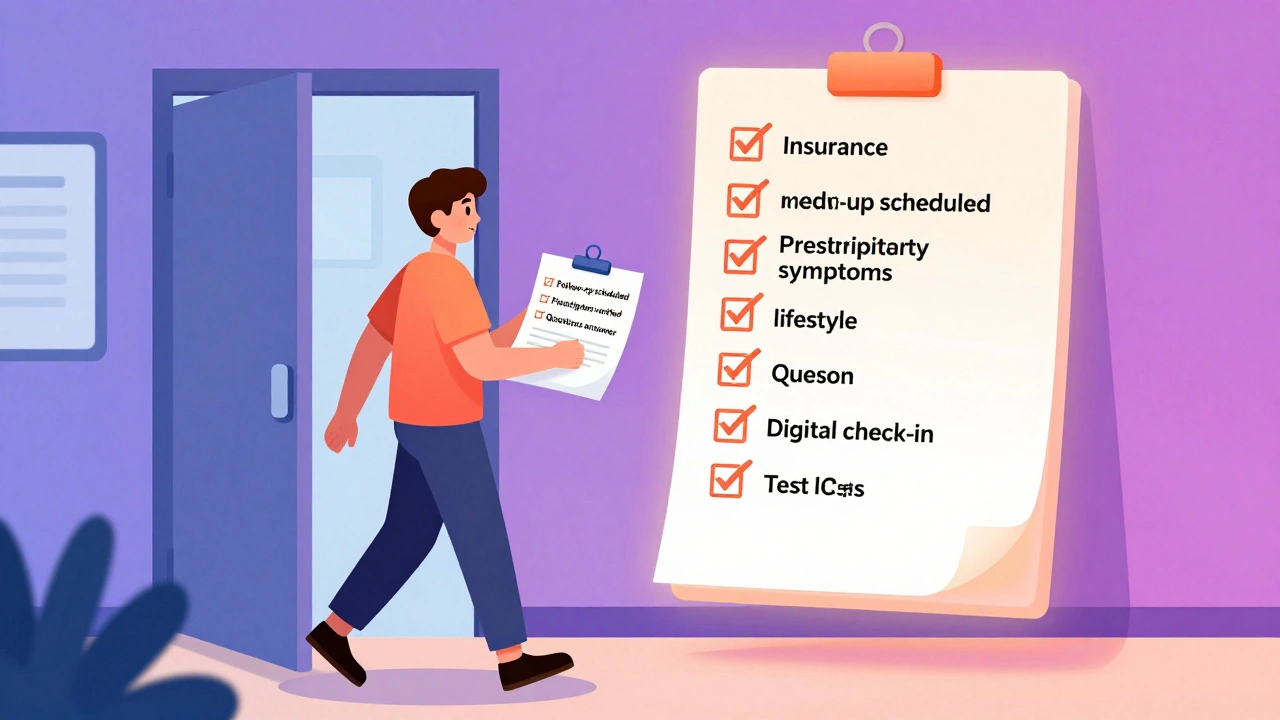
Use this before every appointment:- ✅ Updated medication list (name, dose, frequency, purpose, prescriber)
- ✅ Insurance card and ID
- ✅ Family health history (2 generations, major conditions)
- ✅ List of symptoms with timing, intensity, triggers, relief
- ✅ Lifestyle facts (alcohol, smoking, exercise, sleep)
- ✅ List of 3-5 questions you want answered
- ✅ Digital check-in completed (if your clinic uses a portal)
- ✅ Any recent test results or records you’ve been given
What if I forget something during the appointment?
It happens. Don’t panic. Most clinics let you send a secure message through their patient portal after your visit. You can also call the nurse line. Write down what you forgot right after leaving, then follow up within 24-48 hours. Don’t wait until your next appointment.
Should I bring a friend or family member?
Yes - especially for complex visits or if you’re feeling overwhelmed. One person can take notes, ask questions you forget, and help you remember what was said. Make sure the clinic has your permission to speak with them. Many now have forms for this.
What if my doctor dismisses my concerns?
You have the right to be heard. If you feel dismissed, say: “I understand you may think this isn’t serious, but it’s affecting my daily life. Can we explore this further?” If that doesn’t work, ask for a referral to another provider. Your health isn’t negotiable.
Do I need to bring my pill bottles?
Not always, but it helps. If your list is messy or you’re unsure of the dosage, bringing the actual bottles can prevent mistakes. Many clinics ask for them during medication reconciliation. It’s faster than guessing.
How far in advance should I prepare?
Start 2-3 days before. Gather your meds, write down symptoms, and review your family history. Don’t wait until the night before. Rushed prep leads to missing details. The more time you give yourself, the more accurate your list will be.



Noah Raines on 10 December 2025, AT 13:10 PM
This is the kind of post I wish every doctor’s office handed out. I used to wing it and leave confused. Now I bring my meds list, symptoms written out, and even a coffee. Life changed. 🙌