

Prescription Transfer Checker
Check Your Prescription Transfer
Enter your prescription details to see if it can be transferred between pharmacies.
Switching pharmacies shouldn’t be a hassle-but too often, it is. You move houses, change doctors, or just want a pharmacy closer to work. But when you walk into a new pharmacy with your prescription in hand, they ask for more than just your name and the script. Why? Because federal rules, especially for controlled medications, are strict. And if you don’t give them the right info, your transfer gets stuck-or worse, denied.
What You Must Give the New Pharmacy
The basics are simple: full legal name, date of birth, and current address. That’s non-negotiable. Pharmacies need this to match your profile in their system and avoid dangerous mix-ups. But beyond that, what you provide depends on what’s in your prescription.If you’re taking something like ibuprofen, insulin, or high blood pressure meds-non-controlled substances-you’re in the clear. Just give the new pharmacy the name of the medication, the prescriber’s name, and the original pharmacy’s contact info. Most will call the old pharmacy directly. No fuss. Refills transfer automatically as long as there are any left.
But if you’re on something like oxycodone, Adderall, or Xanax? That’s a different story. These are controlled substances, and the rules changed in August 2023. The DEA now allows one-time-only electronic transfers for Schedule III-V drugs. That means once it moves, it can’t move again-even if you switch back to your old pharmacy later. Schedule II drugs like fentanyl or methadone? No transfers at all. You need a new prescription from your doctor.
Why Controlled Substances Have Limits
Before 2023, if you switched pharmacies and had a controlled prescription, you had to go back to your doctor, get them to cancel the old one, and write a new one. That took days. Sometimes weeks. Patients missed doses. Some even turned to unsafe sources to fill gaps.The DEA’s new rule fixed that-for electronic prescriptions. Now, you can transfer them directly between pharmacies without involving your doctor. But they capped it at one transfer per script. Why? To stop people from “pharmacy shopping”-going to multiple pharmacies to get more pills than prescribed. Pharmacists are trained to spot this. If you try to transfer the same Schedule IV painkiller to three different stores, they’ll flag it.
It’s not about distrust. It’s about safety. The DEA estimates over 70% of opioid misuse starts with diverted prescriptions. One-time transfers reduce that risk while still giving patients flexibility. It’s a balance: convenience, but with guardrails.
What the Pharmacist Needs to Document
You might not think about it, but the pharmacist has to fill out paperwork for every transfer. Even if you just call in, they’re required to log:- The name and DEA number of the pharmacy sending the script
- The full name of the pharmacist who sent it
- The date the transfer was requested
- The original prescription number and fill dates
- How many refills were left
- The prescriber’s DEA number
That’s a lot. And if any piece is missing, the transfer gets held up. That’s why some people say their transfer took three days-it’s not the pharmacy being slow. It’s that the old pharmacy didn’t send the DEA number, or the new one didn’t write “TRANSFER” on the record.
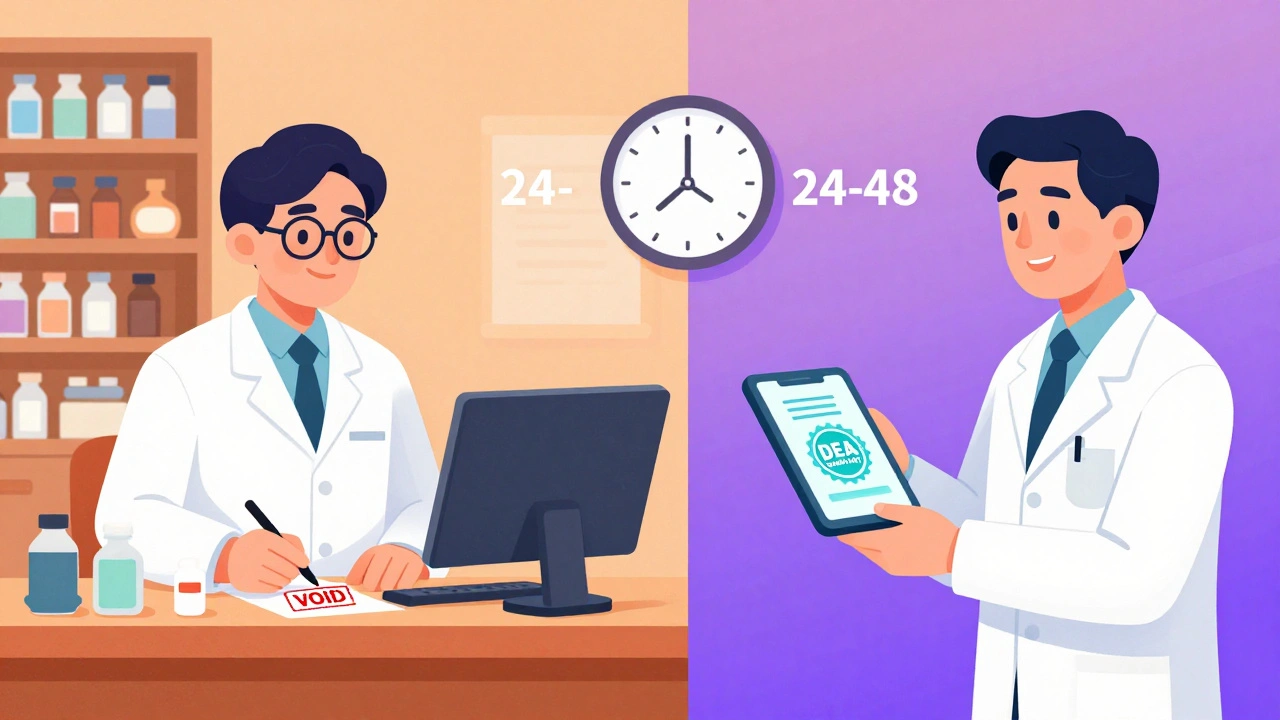
And here’s something most patients don’t know: the old pharmacy must mark the original prescription as “VOID” after the transfer. That’s federal law. If you go back to your old pharmacy and ask for a refill, they’ll say, “Sorry, it’s been transferred.” No exceptions.
State Laws Can Make It Worse
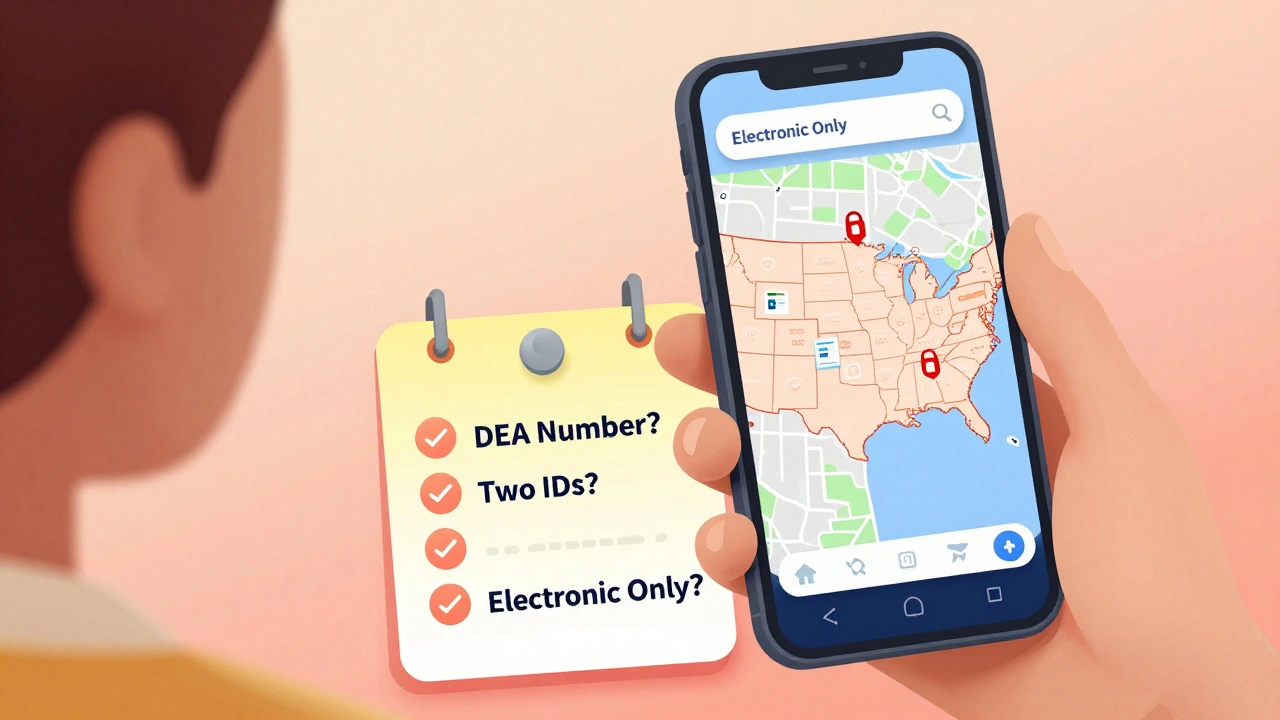
Federal rules are the floor, not the ceiling. Some states have tighter rules. California, for example, requires pharmacists to confirm the patient’s identity with two forms of ID before accepting a controlled substance transfer. New York demands written consent forms. Texas has special rules for Schedule IV benzodiazepines.That’s why a transfer that works in Perth might fail in Sydney-even if both pharmacies are part of the same chain. Always ask your new pharmacy: “Do you accept transfers for controlled substances under Western Australian law?” If they hesitate, they might not be set up for it.
And if you’re crossing state lines? It gets messy. Some states have reciprocity agreements. Others don’t. If you’re moving from Victoria to Queensland with a Schedule III prescription, call both pharmacies ahead of time. Don’t assume the system will just work.
What to Do If Your Transfer Gets Denied
It happens. More than you think. A Consumer Reports survey in 2023 found 68% of people who tried to transfer prescriptions ran into problems. The top two reasons? Missing info (31%) and controlled substance rules (42%).If your transfer is denied, don’t just walk away. Ask for the reason in writing. Pharmacies are legally required to give you one. They might say, “We can’t accept transfers from that pharmacy.” That’s not enough. Dig deeper: “Is it because the DEA number is missing? Or because this is a Schedule II drug?”
If it’s a Schedule II drug? You need a new script. No workaround. Call your doctor. Explain you’re switching pharmacies. Most will send a new electronic prescription right away.
If it’s a Schedule III-V drug and they say “no transfers allowed”? Ask if they’re using a DEA-compliant system. Some small, independent pharmacies still use paper-only systems. They can’t transfer electronically, and federal rules don’t let them fax or call in controlled substance transfers anymore. That’s a system issue-not your fault.
How Long Does It Take?
For non-controlled meds? Usually same day. Pharmacies can transfer those via secure messaging systems instantly. If you call in the morning, it’s often ready by afternoon.For controlled substances? Plan for 24-48 hours. Why? Because the transfer has to go directly between two licensed pharmacists. It can’t be handled by a technician. If the old pharmacy is closed, or the pharmacist is on break, it waits. Also, if the new pharmacy needs to verify DEA numbers or state compliance, that adds time.
And if you’re transferring five scripts? Don’t expect it all in one day. Each one is processed separately. Controlled scripts take longer to verify. Give yourself at least three business days for a full switch.
Pro Tips to Avoid Delays
- Know your drug’s schedule. Check the label: “CIII” means Schedule III. “CII” means no transfer possible.
- Call the new pharmacy first. Ask: “Do you accept electronic transfers for controlled substances?”
- Have your old pharmacy’s name, address, and phone number ready. Don’t rely on memory.
- Bring your physical prescription bottle-even if you’re transferring electronically. It has the prescriber’s info and refill count.
- Don’t wait until your last refill. Start the transfer when you have 3-5 days left.
- If you’re switching chains (like from Chemist Warehouse to Pharmacy Direct), ask if they use the same software. If not, the transfer might take longer.
What You Can’t Transfer
There are hard limits:- Schedule II drugs: No transfers. Ever. You need a new prescription.
- Zero refills left: No transfer, even for non-controlled meds. You need a new script.
- Paper prescriptions for controlled substances: Can’t be transferred electronically anymore. The DEA requires electronic formats only.
- Partial fills of Schedule II drugs: If you only got half your oxycodone prescription, you can’t transfer the remaining half. You need a new full script.
These aren’t arbitrary. They’re designed to prevent abuse. A 2023 IQVIA report showed 92% of controlled substance prescriptions in the U.S. are now electronic. That’s up from 56% in 2018. The system is getting smarter. And it’s working.
What Happens After the Transfer?
Once it’s done, your new pharmacy will have your full history: all past fills, refills, prescriber info, and dates. They’ll see if you’ve been filling early or getting scripts from multiple places. That’s how they catch misuse.And if you need another refill? You can only get it from this pharmacy now. The old one can’t refill it anymore-it’s voided. So if you change your mind and want to go back? Too late. You’ll need a new script.
That’s why it’s called a one-time transfer. Think of it like moving your Netflix account. You can switch once, but you can’t keep bouncing between two accounts.
Looking Ahead
The DEA is watching. They’re collecting data on how often transfers happen, where delays occur, and if misuse increases. Their first review is due in late 2024. Some experts think they might allow multiple transfers for controlled substances in the next few years-but only if the data shows no rise in abuse.For now, the rule is clear: one transfer. One chance. Get it right the first time.
Can I transfer my prescription if I have no refills left?
No. If your prescription has used up all its refills, the pharmacy can’t transfer it-whether it’s controlled or not. You need a new prescription from your doctor. This rule exists to prevent patients from stockpiling or reusing old scripts. Always plan ahead and request a refill or new script before you run out.
Can I transfer a Schedule II drug like oxycodone to a new pharmacy?
No. Federal law prohibits transferring Schedule II controlled substances between pharmacies under any circumstances. You must get a new prescription from your doctor. This applies even if you’re switching to a pharmacy owned by the same company. The DEA considers these drugs high-risk for misuse, so no transfers are allowed-even electronically.
How long does a prescription transfer take?
Non-controlled prescriptions usually transfer within the same day. Controlled substances (Schedule III-V) typically take 24-48 hours because they require direct pharmacist-to-pharmacist communication and additional documentation. Delays happen if the old pharmacy is closed, missing information is provided, or state laws require extra steps.
Why did my pharmacy refuse to transfer my prescription?
There are several common reasons: the prescription is for a Schedule II drug, all refills are used, the old pharmacy didn’t send the required DEA number or pharmacist details, or your state has stricter rules than federal law. Ask for a written explanation-pharmacies are required to provide one. If it’s a system issue, you may need to try a different pharmacy.
Can I transfer prescriptions across state lines?
Yes, but it’s complicated. Federal law allows it, but state laws vary. Some states have reciprocity agreements with others; some don’t. If you’re moving from Western Australia to Queensland, for example, check with both pharmacies. Some states require extra documentation or ID verification. Always confirm with the receiving pharmacy before initiating the transfer.
Do I need to bring my old prescription bottle to the new pharmacy?
It’s not required, but it’s smart. The bottle has the prescriber’s name, dosage, original fill date, and refill count-information that helps the new pharmacy process your transfer faster. If you’re transferring a controlled substance, having this on hand can prevent delays caused by missing data.
What if my new pharmacy says they don’t accept transfers?
Some independent pharmacies, especially in rural areas, still use older systems that can’t handle electronic transfers for controlled substances. Ask if they’re DEA-compliant and use electronic prescribing systems. If not, you may need to go to a larger chain like Chemist Warehouse or TerryWhite Chemmart, which updated their systems by August 2023 to comply with federal rules.



Kurt Russell on 7 December 2025, AT 03:18 AM
Just transferred my Adderall script last week and it took 36 hours because the old pharmacy didn't include the DEA number. Seriously? I had to call them three times. Pharmacies need to train their techs better. This isn't 2010 anymore.