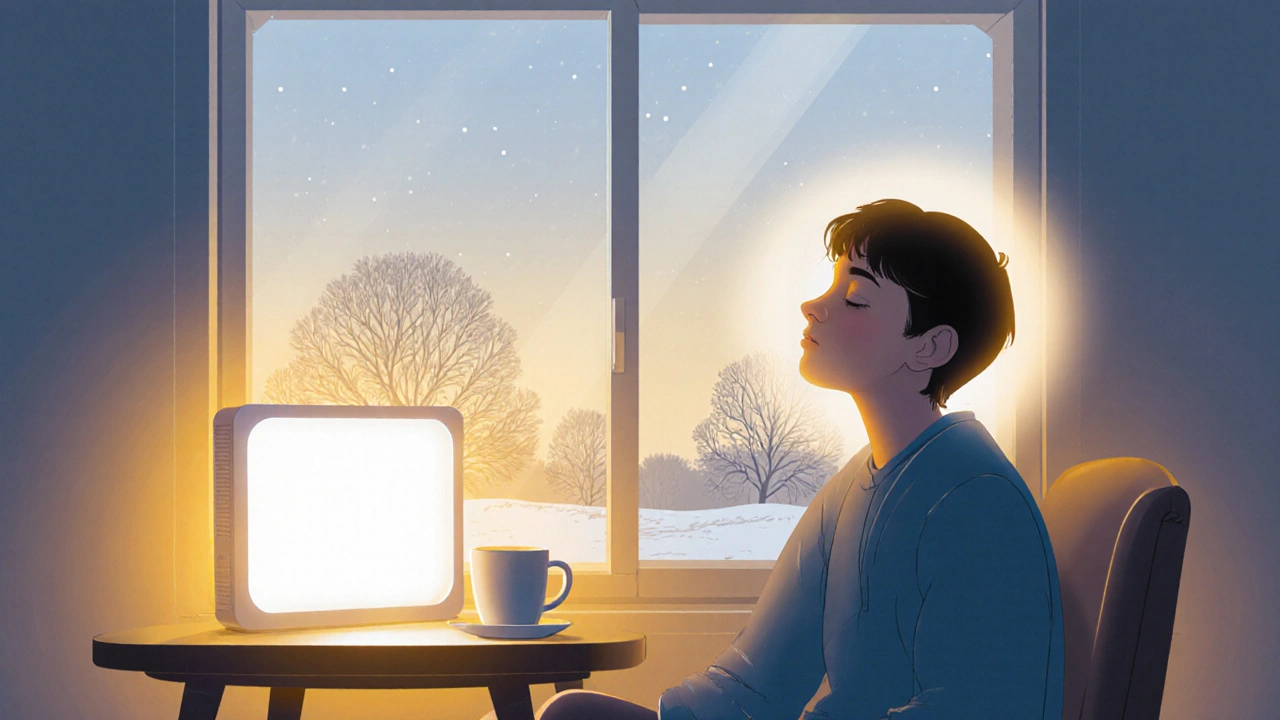
When you hear light therapy, a treatment that uses artificial light to mimic natural sunlight and regulate biological rhythms. Also known as phototherapy, it’s not just for winter blues—it’s a science-backed tool used for sleep disorders, depression, and even skin conditions. Unlike regular room lighting, light therapy devices deliver specific wavelengths and brightness levels—usually 10,000 lux—that your body recognizes like morning sun. This isn’t about brightness alone; it’s about timing. Your brain uses light cues to control melatonin and cortisol, which shape your sleep-wake cycle. Skip the morning sun? Your internal clock gets confused. Light therapy steps in to reset it.
One of the most common uses is for seasonal depression, a type of depression that occurs during darker months when daylight fades. Studies show that daily 30-minute sessions with a light box can improve mood as effectively as antidepressants for some people, with fewer side effects. But it’s not just about mood. circadian rhythm, your body’s 24-hour internal clock that regulates sleep, hunger, and hormone release can be thrown off by shift work, jet lag, or even screen time at night. Light therapy helps realign it—by exposing you to bright light in the morning, you signal your brain to stop producing sleep hormones and start waking up. For night owls or early risers who can’t sync with the day, this isn’t magic—it’s biology.
Not all light is the same. Blue light, which peaks in the morning sun, is the most effective for resetting your clock. That’s why many light therapy boxes filter out UV rays and focus on safe blue wavelengths. You don’t need to stare at the light—just sit nearby while you have coffee or read. And it’s not just for adults. Teens with delayed sleep phase disorder, older adults with insomnia, and even people with dementia have seen improvements. But it’s not a cure-all. If you have eye conditions, bipolar disorder, or take light-sensitive meds, talk to a doctor first. The posts below cover real-world applications: how to pick a device, when to use it, what to avoid, and how it connects to other health factors like medication timing and skin protection. You’ll find practical advice from people who’ve tried it, not just theory. Whether you’re struggling with winter fatigue, jet lag after travel, or just can’t fall asleep at a normal hour, there’s something here that can help.
Learn how to prevent seasonal depression using proven methods: morning light therapy, vitamin D supplementation, and daily routine. Science-backed tips to beat winter blues before they start.