
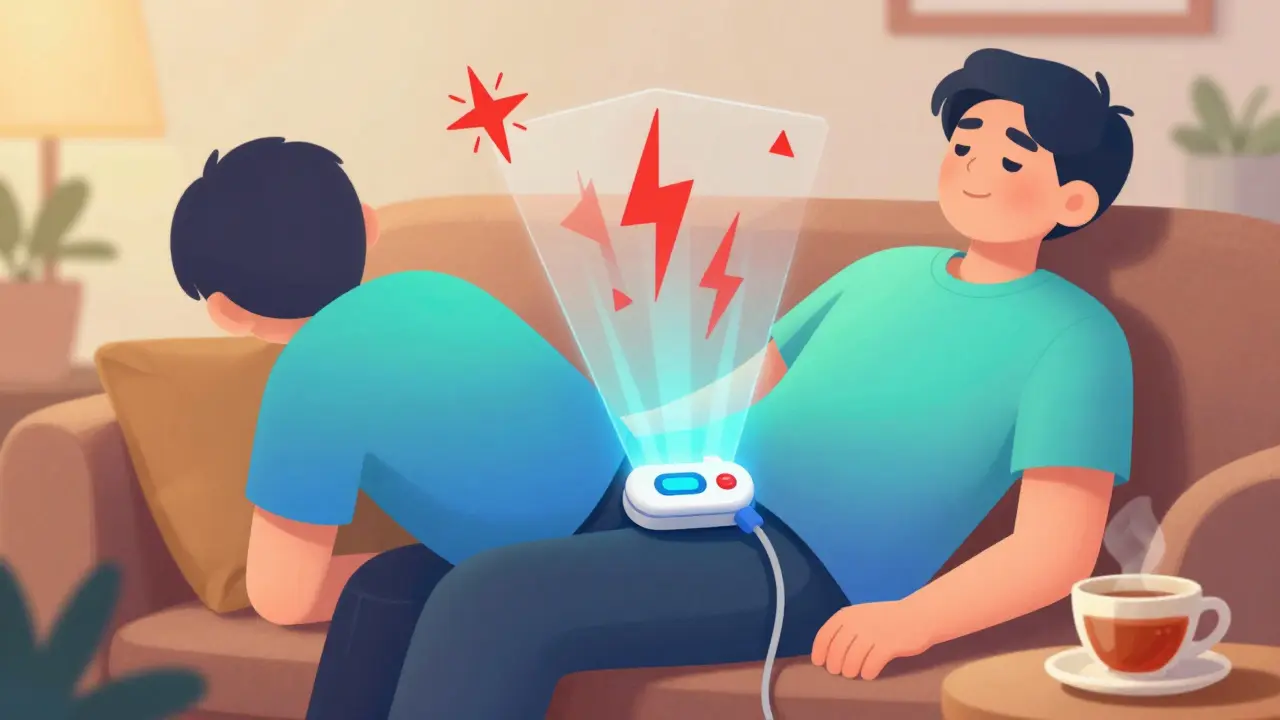
TENS therapy isn’t magic. It doesn’t cure arthritis, fix a herniated disc, or erase chronic back pain forever. But for millions of people struggling with pain that won’t quit, it gives back control-without pills, without needles, without the fog of opioids. If you’ve ever sat through a doctor’s visit wondering, "Is there another way?"-TENS might be that way.
What Exactly Is TENS Therapy?
Transcutaneous Electrical Nerve Stimulation, or TENS, is a small device that sends tiny electrical pulses through your skin to your nerves. These pulses don’t heal anything. Instead, they interrupt pain signals before they reach your brain. Think of it like noise-canceling headphones for your nervous system.
The science behind it dates back to 1965, when researchers Ronald Melzack and Patrick Wall proposed the "Gate Control Theory"-the idea that non-painful input (like tingling or buzzing) can close the "gate" to painful signals in your spinal cord. Modern TENS units use this principle. When you turn it on, you feel a mild buzzing or tingling. That’s not the pain going away-it’s your nerves being distracted.
There are three main ways TENS works:
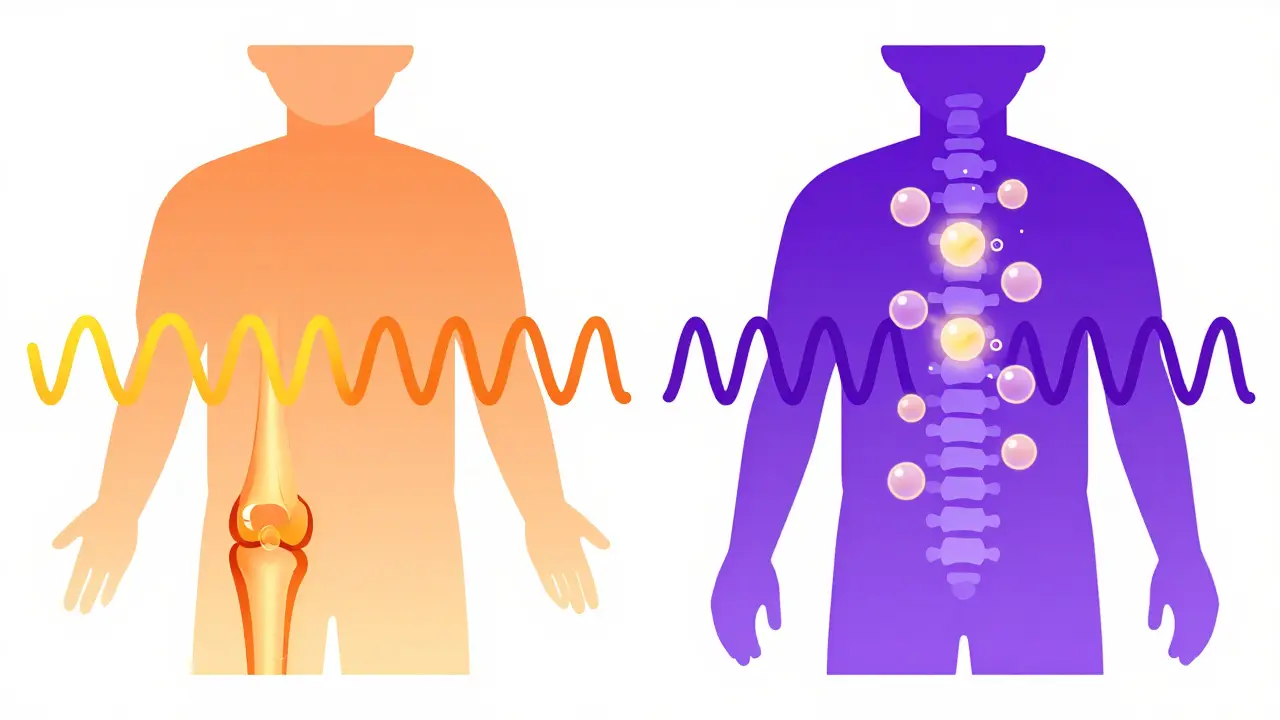
- High-frequency TENS (50-100 Hz): Quick pulses that flood your nerves with non-pain signals. This is the classic "gate control" method. Used for sharp, acute pain like after surgery or during labor.
- Low-frequency TENS (2-5 Hz): Slower, stronger pulses that trigger your body to release natural painkillers-endorphins and enkephalins. Better for deep, dull, chronic pain like osteoarthritis or lower back pain.
- Burst mode: A mix of both. Short bursts of high-frequency pulses followed by pauses. It’s designed to hit both the gate and the opioid systems at once.
Most modern units let you switch between these modes. The key? You need to find what works for your pain-not what the manual says.
Who Benefits Most From TENS?
TENS isn’t a one-size-fits-all solution. It works best for localized pain, not widespread conditions.
Best candidates:
- Post-surgical pain (incisions, joint replacements)
- Muscle strains and sprains
- Osteoarthritis in knees, hands, or spine
- Chronic low back pain (when it’s localized, not radiating)
- Neuropathic pain like diabetic nerve pain or sciatica
- Labor pain during childbirth
Studies show TENS can reduce pain scores by 30-40% in these cases-sometimes faster than ibuprofen. A 2020 Cochrane Review found women using TENS during labor reported 31% more pain relief than those using a placebo device.
Where it struggles:
- Fibromyalgia (only about 38% of users get meaningful relief)
- Generalized chronic pain with no clear source
- Pain that moves around or changes location frequently
Why? Because TENS needs a target. If your pain is all over, it’s hard to zap the right spot. And if your nerves are already overworked, the signals might not get through.
How to Use a TENS Unit Correctly
Most people buy a TENS unit online and expect instant relief. They don’t get it. Why? Because they’re using it wrong.
Here’s what actually works:
- Place electrodes near the pain. Put them within 2-3 cm of the sore area. For lower back pain, place one on each side of the spine, just above the hips. For knee pain, place them above and below the kneecap. If you’re unsure, trace the path of the nerve-like the sciatic nerve running down the leg.
- Start low, go slow. Turn the intensity up until you feel a strong, comfortable tingling-not pain. If it hurts, it’s too high. Most failures happen because people set it too low. Research shows 68% of ineffective TENS use is due to intensity below the therapeutic level.
- Choose the right mode. For sharp, recent pain? Use high frequency (80-100 Hz). For dull, long-term pain? Use low frequency (2-5 Hz). Burst mode is a good middle ground if you’re unsure.
- Use it for 20-30 minutes at a time. Longer doesn’t mean better. Most units last 8-10 hours on a full charge, but your body adapts. Take breaks.
- Reposition electrodes daily. Skin gets used to the same spot. Move them slightly each time to avoid irritation and keep the signal strong.
Pro tip: Use conductive gel under the electrodes. It cuts signal loss by over 60%. Most people skip this-and wonder why the device feels weak.
What the Research Really Says
There’s a lot of noise out there. Some websites claim TENS is a miracle cure. Others say it’s a placebo.
The truth? It’s somewhere in between.
A 2015 review in Pain Medicine found TENS reduced osteoarthritis pain by 35.7%-compared to just 12.3% with a fake device. That’s real. But for chronic low back pain, a 2022 clinical guideline from the American Physical Therapy Association gave it a "weak recommendation"-because results vary wildly between people.
Here’s what’s consistent:
- TENS reduces opioid use after surgery. One study showed a 27% drop in opioid consumption and fewer side effects like nausea and drowsiness.
- It’s safe. No drug interactions. No addiction risk.
- It works fast. Most people feel relief within minutes.
But here’s the catch: if you don’t use it right, it won’t work. And if your pain is too diffuse, or you’re already on opioids, the effect can be weaker. One 2021 study found TENS was less effective in people taking morphine or oxycodone-the drugs compete with your body’s natural painkillers.
Real People, Real Results
On Amazon, over 1,200 reviews show 78% of users praise TENS for "immediate relief." On Reddit’s r/ChronicPain, users say things like:
"TENS saved me during my sciatica flare-up. I could finally walk to the kitchen without screaming. But I have to crank it to 85%. Battery dies in 90 minutes, though. Worth it."
A Cleveland Clinic case study followed a 54-year-old woman with chronic low back pain. Her pain score dropped from 7.8/10 to 3.2/10 in 20 minutes of TENS use. She cut her oxycodone dose by 60% within two weeks.
But not everyone wins. On Drugs.com, 34% of negative reviews mention skin irritation. On PainScale.com, 27% say they couldn’t figure out how to turn it up enough. And 29% complain the pain comes back as soon as they turn it off.
That’s normal. TENS doesn’t fix the cause-it masks the signal. Like turning off an alarm clock. The problem’s still there. But you can sleep.
Choosing a TENS Device
You don’t need a $500 machine. But you also shouldn’t buy the $20 gadget from a discount store.
What to look for:
- Adjustable intensity (0-80 mA): Essential. You need to go high enough.
- Multiple modes: High, low, burst. Avoid single-mode units.
- Dual channels: Lets you treat two areas at once (e.g., both knees or both sides of your back).
- Rechargeable battery: Avoid units that need AA batteries. They die fast under load.
- Clear instructions: Professional units (like Omron Max Power) come with 140+ page manuals. Cheap ones? 8 pages and a blurry diagram.
Top brands in 2026: Omron, Chattanooga, and TechCare. Omron holds about 31% of the market. Many now include Bluetooth and apps that guide you through settings based on your pain type.
And yes-some are FDA-cleared as medical devices. That doesn’t mean they’re better. But it does mean they’ve been tested for safety and output accuracy.
When Not to Use TENS
TENS is safe for most people. But not all.
Avoid TENS if you:
- Have a pacemaker or implanted defibrillator
- Are pregnant (unless under medical supervision-especially avoid the abdomen or lower back)
- Have epilepsy
- Have open wounds or broken skin where electrodes would go
- Have cancer in the area you want to treat
- Are unsure about the source of your pain
If you’re on blood thinners or have sensitive skin, test a small patch first. Skin irritation is the most common side effect-and it’s preventable.
The Future of TENS
The next wave of TENS isn’t just about electricity anymore.
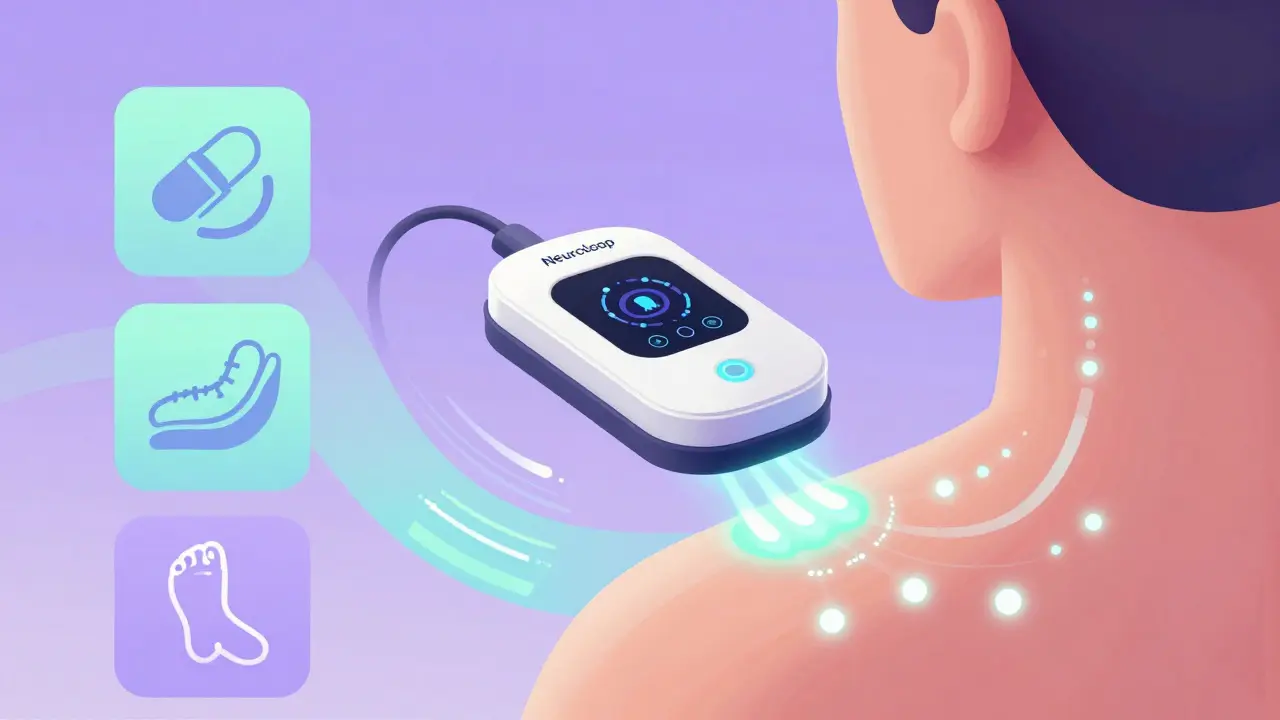
In May 2023, the FDA cleared the first AI-powered TENS device: NeuroLoop AI. It uses sensors to detect your nerve response in real time and adjusts the pulse automatically. In trials, it improved pain relief by 43% over traditional units.
Researchers at NIH are developing "smart electrodes" with embedded sensors that monitor skin resistance and auto-adjust current to maintain the right signal-even if you move.
And with the CDC now recommending TENS as a first-line treatment for chronic pain (to cut opioid use), adoption is rising. Hospitals, physical therapy clinics, and even companies like Amazon are handing out TENS units to employees with work-related back pain.
By 2028, the global TENS market is expected to hit $782 million. That’s not hype. That’s demand.
Final Thoughts: Is TENS Worth It?
Yes-if you’re realistic.
TENS won’t fix your spine. It won’t make your arthritis disappear. But if you’re tired of popping pills, dealing with side effects, or waiting weeks for physical therapy to kick in-it’s one of the few tools that gives you power right now.
It’s cheap. It’s safe. It’s portable. You can use it at work, on the couch, or while watching TV.
Try it for two weeks. Use it correctly. Don’t expect miracles. But if you feel even 20% less pain? That’s 20% more walking, 20% more sleep, 20% more life.
That’s not placebo. That’s progress.



Coral Bosley on 20 January 2026, AT 13:42 PM
TENS didn't save me, but it kept me from screaming in the grocery store when my sciatica flared up. I crank it to 85% like everyone says, and yeah, the battery dies in 90 minutes. But I'd rather drain a battery than a bottle of oxycodone.
It's not magic. It's just enough to make the world stop burning for a little while.