

That stubborn patch of pale skin on your back that never seems to tan? Or maybe a few discolored spots on your chest that look nothing like a sunburn? You aren't alone. Millions of people deal with these confusing marks every year. Often mistaken for a fungal infection you picked up in a shower or pool, tinea versicolor is actually caused by a type of yeast living naturally on your skin that has multiplied too much. The good news is it isn't dangerous, and you didn't catch it from someone else. The bad news is it has a nasty habit of returning.
If you've tried washing the spots off with scrubbing brushes or random soaps, stop. Aggressive cleaning often makes it worse. Understanding exactly what triggers this growth and how to manage the environment on your skin is the only way to beat the cycle. By sticking to proven medical strategies, you can clear the rash and keep it away longer than most patients expect.
The Real Culprit: Malassezia Yeast
To fix the problem, you have to know the enemy. For years, doctors debated whether this was truly a "tinea" infection, similar to athlete's foot. We now know the trigger is a specific group of fungi called Malassezia Malassezia furfur, Malassezia globosa yeasts that thrive on sebum, the natural oil produced by your skin glands. These organisms live on the skin of almost every adult. They usually coexist peacefully.
Trouble starts when the population explodes. Several factors act as accelerants for this growth. High heat and humidity are the biggest triggers, explaining why outbreaks often happen during the summer months. If you have oily skin, you are providing more food for the yeast. Interestingly, the age range of 15 to 30 sees the highest incidence. This is because teenagers and young adults produce more sebum. While the condition is often called a fungal infection, it is technically a superficial overgrowth of normal flora, which changes how we treat it long-term.
Some experts point to genetics playing a role. Certain individuals' skin chemistry may simply encourage the yeast to grow faster than others. However, hygiene isn't usually the cause. In fact, using harsh scrubs can damage your skin barrier, giving the yeast more room to operate. The goal isn't to sterilize your skin, but to reset the balance.
Identifying the Rash: Beyond Discoloration
Most people don't realize they have it until they compare their skin to their tan lines in the sun. This is because the yeast affects melanin production. The infected skin cannot tan, leaving lighter patches against sunned skin. Conversely, some people see pink, brown, or red spots. It depends entirely on your baseline skin tone.
- Hypopigmented Patches: Pale white or light tan areas that stand out after sun exposure.
- Hyperpigmented Patches: Darker spots that appear on darker skin tones.
- Texture: Unlike acne or eczema, these spots often have a fine scale. You can sometimes scratch off a flake-like texture.
The pattern is rarely uniform. It creates a mottled map. While the trunk, shoulders, and neck are the usual suspects, faces can be involved, particularly in children. If you notice a "ringworm" shape, it can be confusing. But remember, ringworm is circular; tinea versicolor tends to create irregular islands of color. The diagnostic gold standard remains the doctor's office. A simple potassium hydroxide (KOH) microscopy exam takes minutes. Doctors scrape the skin and look for the classic "spaghetti and meatballs" appearance-strands of hyphae mixed with yeast cells. This confirms the diagnosis with high accuracy, ruling out other causes like vitiligo or eczema.
Effective Medical Treatments
Clearing the infection requires killing the excess yeast. You won't succeed with plain soap. You need antifungals. The choice between topical solutions and oral medication depends on the severity and speed you need results.
| Treatment Options | |
|---|---|
| Type | Details & Efficacy |
| Selenium Sulfide Shampoo | Apply to affected areas for 10 minutes daily for 14 days. Achieves ~78% clearance. Available over-the-counter. |
| Ketoconazole Cream/Shampoo | Applied twice daily for two weeks. Highly effective for targeted spots. Reduces itchiness. |
| Oral Fluconazole | Pills taken weekly for 2-4 weeks. Best for widespread cases. Requires prescription. ~92% efficacy rate. |
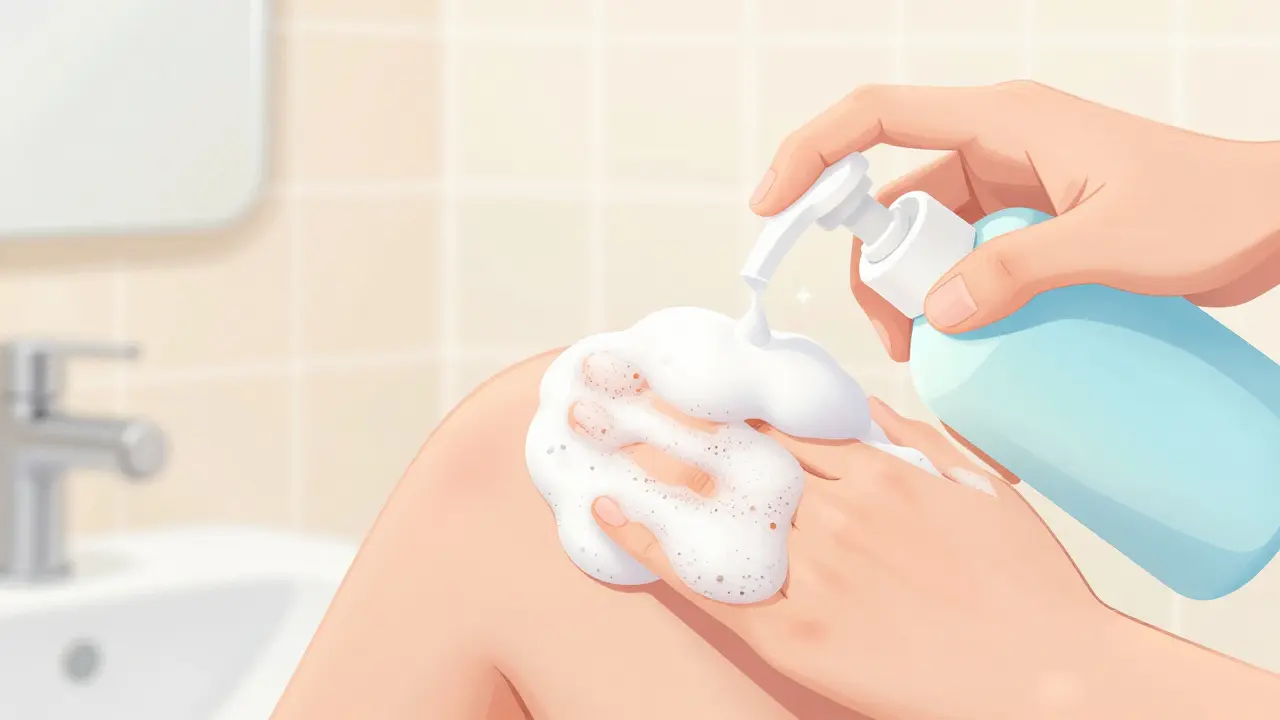
Topical shampoos like selenium sulfide work well for large areas because you can lather them over your entire back without needing to rub cream into every spot. Just let it sit for at least ten minutes before rinsing. If the infection is widespread or resistant to creams, oral medications like fluconazole are the next step. They are powerful but must be monitored by a doctor due to potential liver strain. Even with 90% success rates, the fungus is gone-but the color change often lingers. This is because the pigment hasn't recovered yet. It can take months for the skin to re-tan evenly.
The Recurrence Challenge
This is where most people fail. They see the rash disappear and stop treatment immediately. Without ongoing care, the yeast returns within a year for up to 80% of patients. It is biologically programmed to come back if conditions favor it again. Heat, sweat, and humidity bring it back faster. Even pregnancy or immunosuppressive drugs can lower your body's defenses enough for the yeast to rebound.
A study by UCLA Health highlighted that recurrence rates drop significantly when patients adopt a maintenance routine rather than waiting for symptoms to return. The goal shifts from "cure" to "management." Think of it like acne or dandruff; you can control it, but you need to maintain the routine.

Battling Recurrence: The Maintenance Plan
Once your skin is clear, switch to monthly maintenance. Using an antifungal shampoo once a month acts as a preventative shield. During warm months, you might increase this to every two weeks. Dr. Mona Gohara, noted in JAMA Dermatology reviews, emphasizes that stopping treatment prematurely is the #1 cause of relapse. Patients need to continue preventive therapy for 6 to 12 months after clearance to solidify results.
Beyond medicine, lifestyle tweaks matter. Avoid oil-based moisturizers or heavy body oils. These feed the yeast directly. Switch to water-based lotions instead. Clothing choice plays a part too. Tight synthetic fabrics trap moisture and heat. Opt for moisture-wicking fabrics, especially when working out. Some research indicates that wearing breathable clothes reduces recurrence risk by over 30%.
Don't overwash. Paradoxically, stripping your skin of all oils can damage the barrier, making it harder for your skin to regulate its own microbes. Use gentle, non-soap cleansers that maintain a balanced pH. Setting phone reminders helps, as consistency is more important than intensity.
Lifestyle and Triggers to Monitor
Your environment dictates the outcome. If you live in a tropical climate, or even a humid summer city, you are at higher risk. Humidity levels above 70% combined with temperatures between 25-28°C are ideal for Malassezia proliferation. Air conditioning helps, but sweating still triggers flare-ups. Shower immediately after exercise. Change out of damp swimwear instantly.
Dietary factors are less proven but worth watching. Some anecdotal evidence suggests that a diet low in sugar might help regulate overall inflammation, though this is not a substitute for antifungal treatment. More importantly, manage stress. Stress impacts hormones, which influences sebum production. If you are under high stress, pay closer attention to your skin hygiene routine.
Finally, address the cosmetic aspect. Since repigmentation takes time, many patients worry about swimming or beach visits. There is no harm in sunlight, although the rash might initially pop out more visibly until the skin heals. Sunscreen is essential, but avoid thick, oily barriers that smother pores. Look for lightweight gels or mineral-based options.
Is tinea versicolor contagious?
No. The yeast lives on everyone's skin. You cannot pass it to a partner or child through contact. It is an internal overgrowth issue related to your own body chemistry.
Why does the skin turn white after treatment?
The yeast produces azelaic acid, which inhibits melanin production. Once treated, your skin needs time to naturally produce pigment again. This can take 6 to 12 months. It is not permanent scarring.
Can I cure this permanently?
Because the yeast never fully leaves your skin, "permanent cure" means preventing recurrence. With consistent monthly maintenance and lifestyle adjustments, you can likely go years without visible symptoms.
Does sunscreen make it worse?
Oily sunscreens can. Choose oil-free or gel-based sunscreens. Regular sunscreen use protects healthy skin, allowing the discolored patches to eventually blend back in.
When should I see a specialist?
If over-the-counter shampoos fail after four weeks, or if the rash spreads rapidly despite treatment, see a dermatologist. You may need a stronger prescription or different medication class.




Dee McDonald on 2 April 2026, AT 08:34 AM
I have been dealing with this mess for five years straight now. Summer heat always makes it worse than anything else. You really think scrubbing your skin helps at all honestly. It actually damages the barrier and lets yeast grow faster. My dermatologist told me to stop using harsh brushes immediately. She said the goal is balance instead of sterilization. I tried the selenium sulfide shampoo method for a week. It took ten minutes to let the lather sit on my back. I saw clear results within just thirty six hours. But then I stopped too soon like most patients do. The spots faded quickly after a few applications. I thought the problem was solved for good finally. Two months later everything came rushing right back. Now I understand maintenance is the only way forward. Stopping treatment early guarantees failure in the end. Consistency is far more important than intensity. We need to accept the routine rather than expect a cure.