
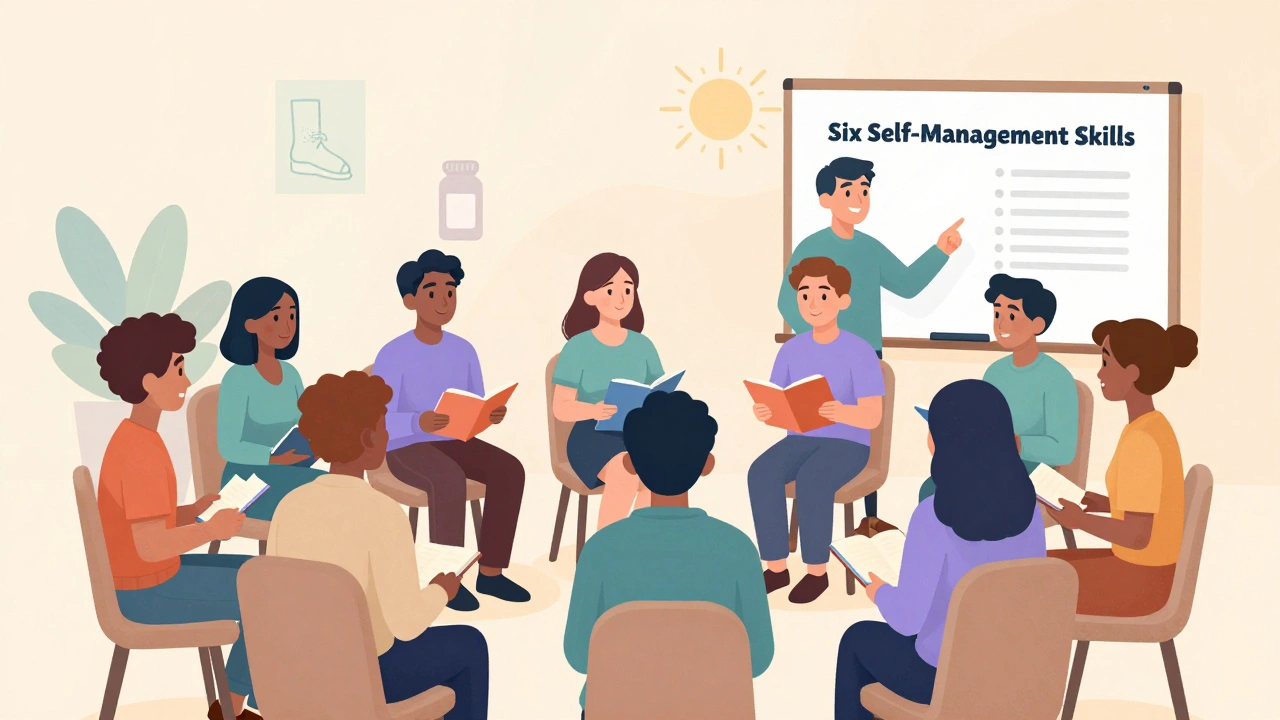
Living with a chronic disease doesn’t mean giving up on living well. Millions of people manage conditions like diabetes, arthritis, heart disease, and COPD every day-not by waiting for a cure, but by learning how to take charge of their own health. The key isn’t just medication or doctor visits. It’s what you do between appointments. Chronic disease self-management is about building skills that let you move better, feel less overwhelmed, and stay in control of your life-even on bad days.
What Exactly Is Chronic Disease Self-Management?
It’s not a magic fix. It’s a set of proven, practical skills taught in structured programs like the Chronic Disease Self-Management Program (CDSMP), developed at Stanford University in the 1990s. This isn’t just theory. It’s been tested with real people for over 30 years. The goal? To help you handle the everyday challenges of living with a long-term condition-whether it’s remembering to take pills, dealing with pain, talking to your doctor, or just getting through the day without feeling defeated.
Unlike generic advice like “eat better” or “exercise more,” CDSMP teaches six specific skills:
- Problem solving: Figuring out what’s really stopping you from doing what you want to do.
- Decision making: Knowing when to try something new and when to stick with what works.
- Using resources: Finding help-online, in your community, or through your care team.
- Working with your doctor: Asking the right questions and speaking up about your needs.
- Making action plans: Breaking big goals into tiny, doable steps.
- Tailoring to your life: Making changes that fit your schedule, energy, and preferences-not someone else’s.
These aren’t just tips. They’re tools backed by data. People who complete the program show, on average, a 23% improvement in managing their symptoms compared to those who don’t. And those gains stick around-even a year later.
The Two Main Ways to Learn: In-Person vs. Online
You’ve got two solid options to get started: group workshops or digital programs. Both work, but they serve different needs.
In-person CDSMP workshops run for six weeks, one 2.5-hour session per week. They’re led by trained peer leaders-people who also live with chronic conditions. No medical degrees needed. Just real-life experience. You’ll get a workbook, watch videos, and do group activities. The magic? You’re not alone. People share what’s worked for them: how they got out of bed on a rainy morning, how they convinced their spouse to help with meals, how they figured out which pain reliever actually worked without side effects. The completion rate? Around 72%. That’s high for any health program.
But what if you can’t get to a class? Maybe you live in a rural area, have trouble driving, or your symptoms flare up randomly. That’s where online programs like Better Choices, Better Health® come in. You log in 2-3 times a week, watch short videos, join discussion boards, and complete weekly lessons. It takes about two hours a week. The catch? Completion rates drop to about 58%. Why? Because it’s harder to stay motivated without face-to-face accountability.
Here’s the trade-off:
| Feature | In-Person CDSMP | Online CDSMP (Better Choices, Better Health®) |
|---|---|---|
| Completion Rate | 72% | 58% |
| Time Commitment | 2.5 hours/week for 6 weeks | 2 hours/week, flexible schedule |
| Best For | People who thrive on group support | People with mobility issues or rural access barriers |
| Social Connection | High-real people, real conversations | Moderate-discussion boards, no face-to-face |
| Medication Support | Strong-peer and facilitator help | Weaker-limited guidance on adjusting meds |
One study in rural Illinois found that COPD patients using a modified CDSMP program had a 28% drop in hospital visits-nearly three times better than standard care. That’s the kind of real impact these programs can have.
Digital Tools Are Changing the Game
There’s a new wave of tech tools popping up that go beyond basic online courses. Platforms like ProACT and Mun Health use apps, wearables, and even AI to help you track symptoms, remind you about meds, and give personalized feedback.
ProACT, for example, connects your smartwatch data to a dashboard your doctor can see. It doesn’t replace your care team-it helps them understand what’s really happening between visits. In trials, users improved their self-management behaviors by 28% over 12 months.
Mun Health’s AI companion doesn’t just track steps. It notices when you’ve been quiet for days, asks if you’re okay, and offers encouragement in a voice that feels human. Early users gave it an 85% satisfaction rating. That’s huge-because loneliness is a silent killer for people with chronic illness.
But here’s the catch: tech doesn’t work if you can’t use it. About 41% of adults with chronic conditions struggle to understand basic health info. If an app uses jargon like “glycemic control” or “non-adherence,” it’s not helping-it’s adding stress. The best tools keep language simple, use big buttons, and offer audio support.
And not all apps are equal. In a 2023 review, CDSMP’s workbook scored 4.7 out of 5 for clarity. Many commercial health apps? Only 3.2. Don’t assume the most popular app is the best one.
What You’ll Actually Do in the First Few Weeks
Starting can feel overwhelming. You’re juggling meds, doctor visits, diet, pain, fatigue, and maybe even work or family. The program doesn’t ask you to fix everything at once.
Here’s how it actually unfolds:
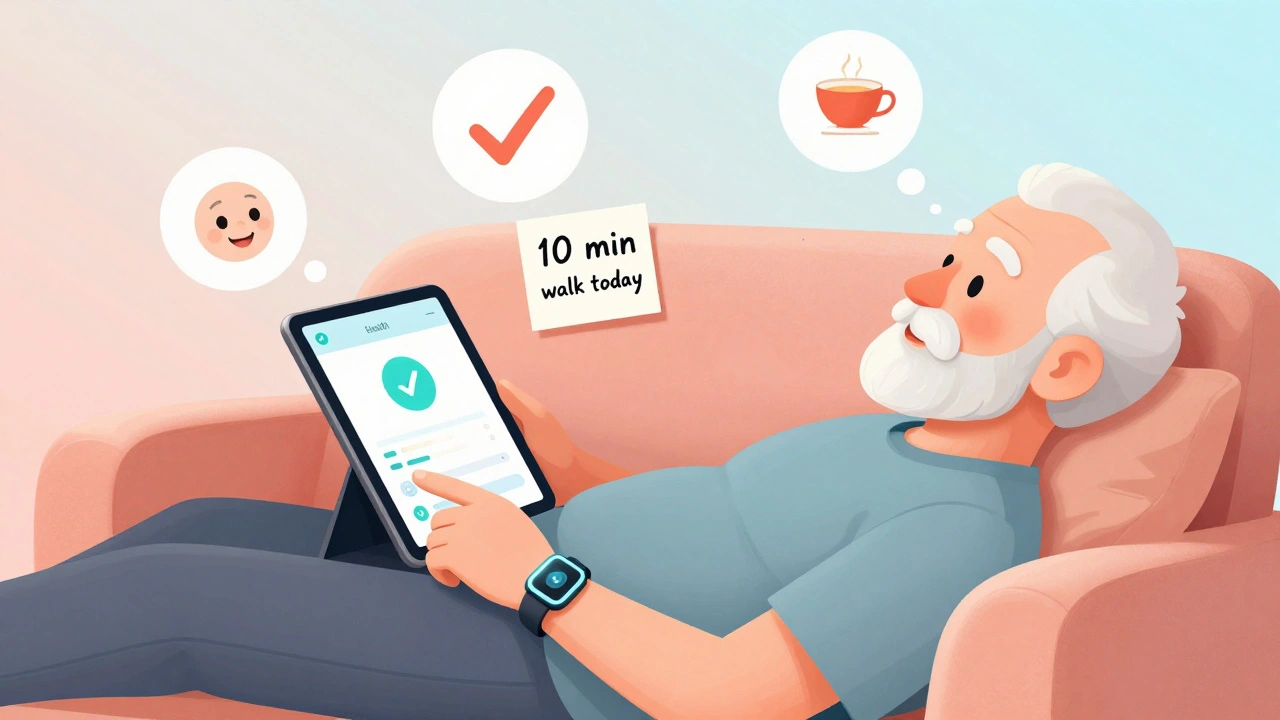
- Week 1: Pick One Thing-Not “get healthy.” Not “exercise more.” Pick one small, specific goal. Example: “I will walk for 10 minutes after breakfast, three days this week.”
- Track It-Use a notebook, phone note, or simple app. No fancy gadgets needed. Just write it down.
- Plan for Obstacles-What if it rains? What if you’re too tired? What if you forget? Write down your backup plan. “If I’m too sore, I’ll do seated leg lifts while watching TV.”
- Review Weekly-Did you do it? If not, why? Was the goal too big? Did something unexpected come up? Adjust next week’s plan.
One Reddit user shared that they went from 1,200 steps a day to 5,800 in eight weeks-not by running a marathon, but by adding 200 steps each week. They used their Fitbit to see the progress. Small wins add up.
Common Roadblocks (And How to Get Past Them)
Most people hit walls. Here’s what comes up again and again-and how to handle it.
- “I don’t have time.”-32% of participants in one program skipped sessions because symptoms flared. Solution: Talk to your group or facilitator. They’ll help you adjust the plan. Missed a week? Just start again next week. No shame.
- “I don’t know how to take my meds right.”-28% of users struggle with medication confusion. Many programs now offer “medication coaching” sessions. Ask your clinic if they have one. Or use a pill organizer with alarms.
- “It’s too much to track.”-45% of new users quit tracking symptoms in the first month. Start with one thing: pain level, sleep hours, or energy. Use a scale from 1 to 10. That’s it.
- “I feel guilty for not doing more.”-This is emotional burnout. Self-management isn’t about perfection. It’s about progress. Some days, just getting out of bed is the win.
One participant in Tennessee said: “Checking my blood sugar, adjusting meds, AND managing foot care felt impossible at first.” But she didn’t try to do it all. She picked one task. Then another. Now, she says, “I feel like I’m in charge-not my diabetes.”
Who Benefits the Most?
These programs work for almost everyone with a chronic condition-but they hit hardest for certain groups.
- Rural residents-37% more reach than in-person programs. For people miles from a clinic, online tools are lifelines.
- Older adults-Programs like Active Living Every Day are designed for mobility limits. You don’t need a gym. A chair and a hallway work.
- People with multiple conditions-ProACT and similar tools are built for this. Managing diabetes, arthritis, and heart disease at once? It’s exhausting. These platforms help you see the big picture.
- People feeling isolated-78% of rural participants said the group support reduced their loneliness. That’s not a side effect. It’s the point.
And here’s something surprising: cultural fit matters. Most programs used to be written for white, English-speaking adults. Now, tools like Mun Health are adding culturally specific content for Hispanic, Black, and Asian American communities. That’s a big step forward.
How to Get Started Today
You don’t need to wait for a referral. You can start now.
- Check if your insurance covers it. Medicare now pays for Diabetes Self-Management Training (DSMT). Many private insurers cover CDSMP too. Call your plan.
- Search for local programs. Go to the Self-Management Resource Center website (or ask your doctor). Type “CDSMP near me” or “Living Well with Chronic Conditions” into your browser.
- Try an online version. Better Choices, Better Health® is free through many health systems. Just search for the name + your state.
- Start small. Pick one skill. Practice it for a week. Don’t rush. This isn’t a race.
Remember: you’re not broken. You’re adapting. Every step you take to manage your condition-no matter how small-is a win.
Can I do self-management if I have more than one chronic condition?
Yes. In fact, programs like ProACT were designed for people with multiple conditions. The key is to focus on one skill at a time-like problem solving or action planning-and apply it to your biggest challenge. You don’t need to fix everything at once. Start with the condition that’s most limiting your daily life.
Do I need to be tech-savvy to use digital tools?
No. Many digital programs are designed for people who aren’t comfortable with technology. Look for tools with large buttons, voice prompts, and simple language. Some even offer phone-based support. If an app feels confusing, try a different one. There’s no one-size-fits-all.
What if I can’t afford a program?
Many evidence-based programs are free. Medicare and Medicaid cover certain ones. Local health departments, community centers, and libraries often host free CDSMP workshops. Online versions like Better Choices, Better Health® are also free. Don’t assume cost is a barrier-ask your doctor or call your state’s health agency.
How long until I see results?
Most people notice small changes within 2-4 weeks: better sleep, fewer bad days, more confidence talking to their doctor. Major improvements-like fewer hospital visits or increased activity-usually show up after 3-6 months. The program is designed to build habits, not quick fixes.
Can I join a program if I’m not sure what my diagnosis is?
Yes. CDSMP was designed for people with any chronic condition-even if they’re still figuring things out. The skills taught-like problem solving and action planning-work whether you have arthritis, fatigue, anxiety, or a mix of issues. You don’t need a perfect diagnosis to start managing your health better.
What if I’m too tired to participate?
Fatigue is a common symptom-and a common reason people delay starting. But the program is flexible. You can watch videos while lying down. You can join a group call from your bed. You can write your action plan in short bursts. The goal isn’t to do more. It’s to do what you can, without guilt. Even 10 minutes a day counts.
What Comes Next?
If you’ve made it this far, you’re already ahead. You’re not waiting for someone else to fix your health. You’re looking for tools that work in real life.
Start with one thing. Pick a program-online or in-person. Try the first week. Don’t aim for perfect. Aim for consistent. And remember: every person who’s walked this path before you started exactly where you are now. They didn’t know how to do it. They just started.



Genesis Rubi on 3 December 2025, AT 11:49 AM
this whole thing is just woke corporate fluff wrapped in a stanford sticker. who even has time for this? i got diabetes and a 9-5, not a life coach.they want me to track my sugar but my phone dies by 3pm. lol.