
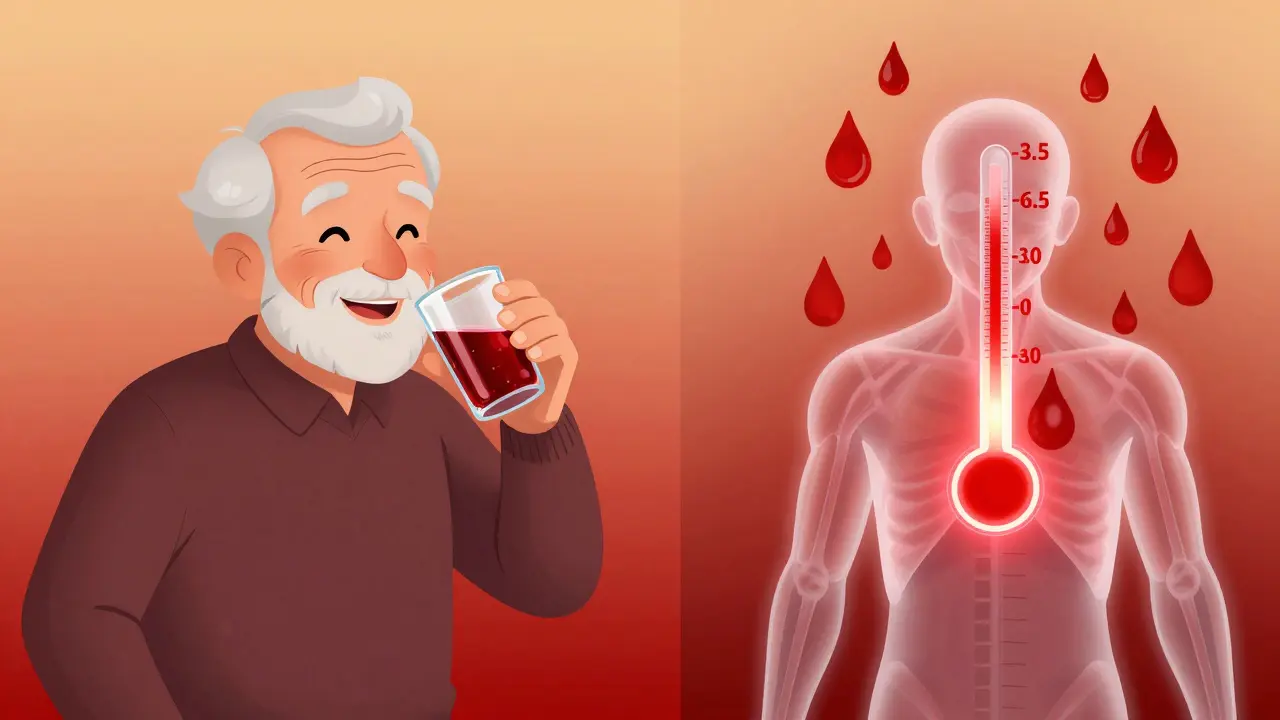
When you're on warfarin, even small changes in your diet can have big consequences. One of the most dangerous but often overlooked interactions involves something many people think is harmless: cranberry. Whether it’s juice, capsules, or even a cranberry-flavored snack, these products can push your INR levels into dangerous territory-raising your risk of serious bleeding. This isn’t a myth or a warning from an overcautious doctor. It’s backed by case reports, regulatory agencies, and decades of clinical data.
What Happens When Cranberry Meets Warfarin?
Warfarin works by slowing down blood clotting. It’s prescribed for conditions like atrial fibrillation, deep vein thrombosis, and after heart valve replacement. But it’s a tightrope walk: too little, and you risk clots; too much, and you risk bleeding. Your INR (International Normalized Ratio) measures how long your blood takes to clot. A normal range for most people on warfarin is 2.0 to 3.0. Anything above 4.5 is considered high risk. Above 6.0? That’s a red flag. Cranberry products-especially juice and concentrated extracts-can interfere with how your body breaks down warfarin. The key player here is an enzyme called CYP2C9, found in your liver. This enzyme is responsible for clearing the active form of warfarin from your bloodstream. Flavonoids in cranberries, like quercetin, block this enzyme. When that happens, warfarin builds up in your system. Your INR climbs. And suddenly, a minor cut or bump can turn into a serious bleed. Case reports tell the real story. One 78-year-old man on a stable warfarin dose of 45 mg per week saw his INR spike to 6.45 after drinking half a gallon of cranberry-apple juice every week. Another woman, taking warfarin for a blood clot, saw her INR jump from 2.5 to 8.3 after just two weeks of daily cranberry juice. She ended up with gastrointestinal bleeding. These aren’t rare outliers. They’re documented in medical journals and reported to health agencies worldwide.How Much Cranberry Is Too Much?
There’s no safe amount-according to most experts. The interaction doesn’t depend on how much you eat. It depends on your body, your genetics, and what’s in the product. Some people report no issues after years of daily cranberry pills. Others see their INR rise after just one glass of juice. Why the difference? Because cranberry products vary wildly. A bottle of sweetened cranberry juice cocktail might contain more active compounds than a capsule labeled “100% pure.” Some supplements are standardized for proanthocyanidins, others aren’t. Even the same brand can change its formula from batch to batch. Studies show that consuming as little as 150 mL (about half a cup) of cranberry juice per day has triggered INR spikes. The typical culprit? People drinking 240 mL to 1 liter daily-often because they believe cranberry helps prevent urinary tract infections (UTIs). That’s a dangerous assumption. The American Heart Association and the Merck Manual both state clearly: if you’re on warfarin, avoid cranberry products entirely.What Do Health Agencies Say?
This isn’t just a doctor’s opinion. Regulatory bodies have taken action. In 2005, the U.S. Food and Drug Administration (FDA) required all warfarin labels to include a warning about cranberry juice. That’s rare. Most food interactions don’t get this level of attention. The FDA didn’t just add a footnote-they mandated a clear statement: “Patients should be advised of foods and beverages that may interact with warfarin, including cranberry products.” New Zealand’s Medsafe updated its warning in December 2022, stating bluntly: “Patients should avoid cranberry products due to a possible interaction with warfarin.” They based this on 33 reports of warfarin interactions with food and supplements received in just one year. Canada and the European Medicines Agency have issued similar advisories. Even the Lexicomp Drug Interactions database, used by pharmacists worldwide, rates cranberry as a “C” level interaction-meaning “monitor therapy.” That’s the same risk level as antibiotics like trimethoprim-sulfamethoxazole, which are known to cause dangerous spikes in INR.
Why Do Some People Say It’s Fine?
You’ve probably heard someone say, “I’ve had cranberry juice for years and my INR’s fine.” Or maybe your doctor told you it’s okay in moderation. That’s where things get tricky. Some clinical trials haven’t found a significant interaction. But those studies often used small amounts, short durations, or highly controlled doses. Real-world use is messy. People drink different brands. They take supplements with unknown concentrations. They might drink juice one week, then stop for a month, then start again. That inconsistency is what makes INR unpredictable. Genetics also play a role. About 15% of people carry a genetic variant called CYP2C9*2 or CYP2C9*3. These variants make the enzyme less efficient at breaking down warfarin. Add cranberry on top, and their INR can spike 2 to 3 times more than someone without the variant. Right now, testing for these genes isn’t routine-but if you’ve had unexplained INR spikes before, it’s something to ask about. Reddit threads and patient forums are full of stories. One user wrote: “My INR went from 2.4 to 4.1 in one week after starting cranberry juice for UTIs. My hematologist told me to stop-immediately.” Another said: “I’ve taken cranberry pills for five years with no issues.” Both are true. But the first case shows the risk. The second shows luck-not safety.What Should You Do?
If you’re on warfarin, here’s what to do:- Avoid all cranberry products. That includes juice, dried cranberries, capsules, extracts, and even cranberry-flavored sodas or yogurt. The risk isn’t worth it.
- If you’ve been drinking cranberry juice regularly and want to stop, don’t stop suddenly. Talk to your doctor. Your INR may drop too fast, increasing clot risk.
- If you’ve had an unexplained INR spike, ask your doctor if cranberry could be the cause. Be honest about what you’ve been eating or drinking.
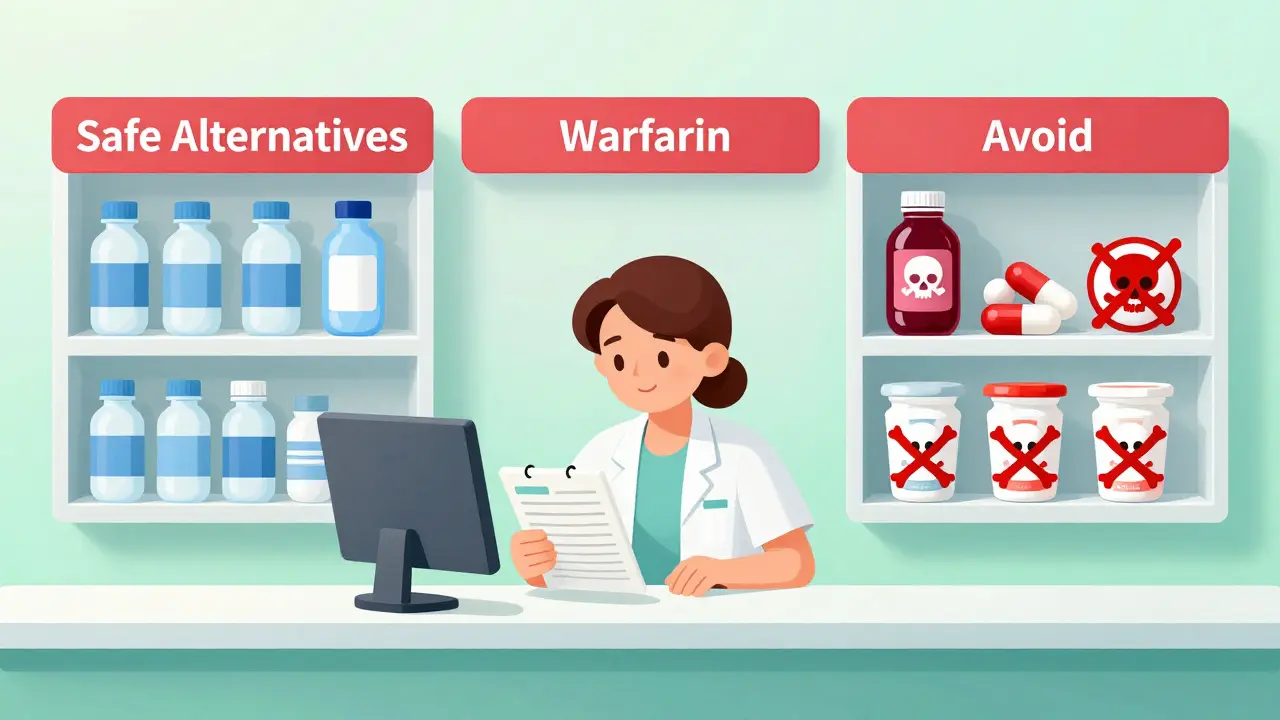
- For UTI prevention, talk to your doctor about alternatives. Methenamine hippurate or low-dose antibiotics are safer options if you’re on warfarin.
- Keep a food and supplement log. Write down everything you take-even “harmless” things like herbal teas or vitamins. Bring it to every appointment.



Ellie Stretshberry on 27 December 2025, AT 12:10 PM
i just drank cranberry juice yesterday and now i’m paranoid lol
my grandma always said it was good for your bladder
but now i’m wondering if i just made a bad call