
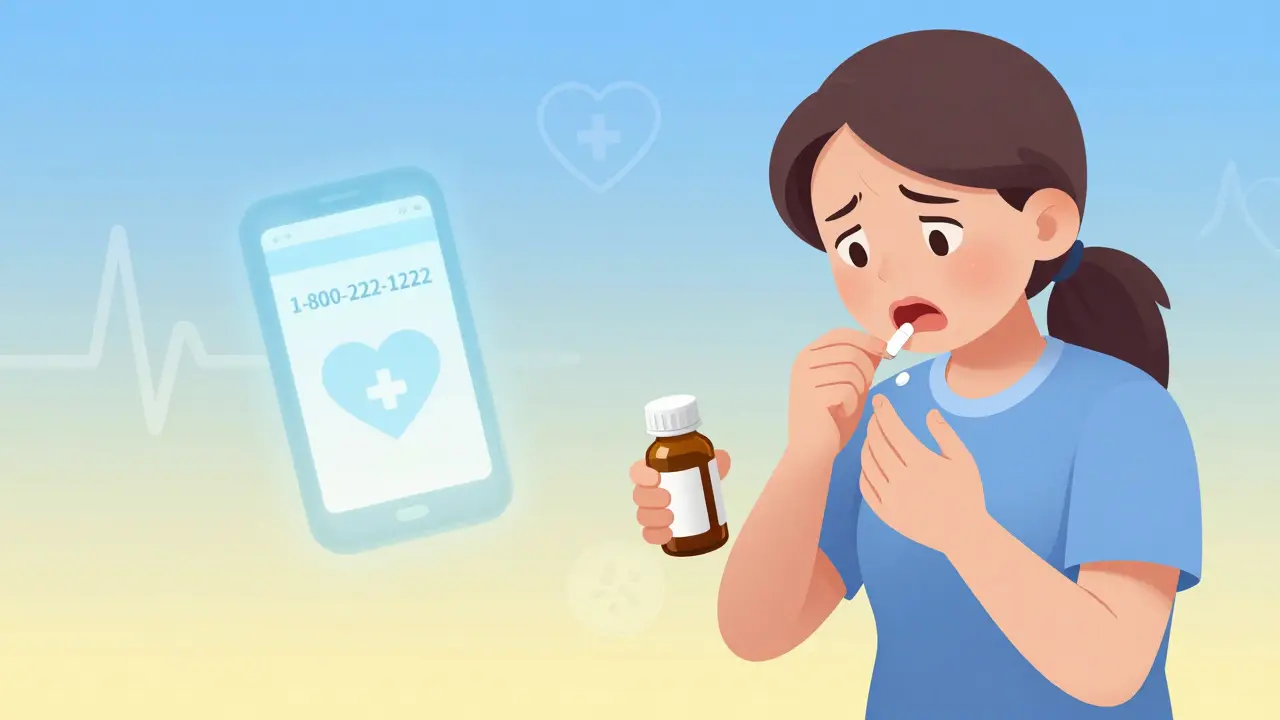
When a child swallows a handful of Benadryl, or an adult takes too much sleep aid thinking it’s harmless, the consequences can turn deadly within minutes. Antihistamine overdose isn’t rare-it’s one of the most common poisonings in kids under six, and it’s often mistaken for just being sleepy. But what looks like drowsiness could be the start of a cardiac emergency. The truth is, if you act fast, survival rates are near 100%. If you wait, the risk of seizures, heart rhythm failure, or even death rises sharply. This isn’t theoretical. In 2022, U.S. poison centers handled over 85,000 antihistamine exposures. Most were accidental. All of them needed clear, immediate action.
What Happens When You Take Too Much
Not all antihistamines are the same. There are two main types: first-generation and second-generation. First-generation ones-like diphenhydramine (Benadryl), chlorpheniramine, and promethazine-are the real danger. They cross into the brain easily, blocking acetylcholine and causing what doctors call anticholinergic toxicity. That means dry mouth, blurred vision, flushed skin, racing heart, trouble peeing, and confusion. In high doses, they also block sodium channels in the heart. That’s what causes the QRS complex on an EKG to widen past 100 milliseconds. When it hits 120 or more, you’re looking at a life-threatening arrhythmia risk. Second-generation antihistamines-like cetirizine (Zyrtec), loratadine (Claritin), and fexofenadine (Allegra)-are designed to stay out of the brain. They’re much safer. Even if someone takes 10 times the normal dose, they might just feel dizzy or have a fast heartbeat. Serious outcomes are rare. But here’s the catch: many over-the-counter products mix both types. A nighttime cold medicine might have diphenhydramine plus pseudoephedrine. A parent might think they’re giving a single dose, but the child gets a double hit. That’s why gathering the pill bottle matters more than you think.First Steps: What to Do Right Now
If you suspect an overdose, don’t wait for symptoms. Don’t Google it. Don’t call a friend. Don’t try to make them throw up. Here’s what you do:- Remove any remaining pills or liquid from the person’s mouth. Don’t induce vomiting. If they’re drowsy or confused, vomiting could cause them to choke.
- Call poison control immediately. In the U.S., it’s 1-800-222-1222. In Australia, it’s 13 11 26 (Poisons Information Centre). Have the medication container ready. Tell them the name of the drug, how much was taken, and the person’s weight and age. They’ll tell you if it’s safe to wait at home or if you need to go to the ER.
- If the person is unconscious, not breathing, or having seizures, call emergency services (000 in Australia, 911 in the U.S.) right away. Start CPR if trained. Don’t delay.
- For skin contact: Rinse the area with cool water for 15-20 minutes.
- For eye exposure: Flush with clean water for 20 minutes. Keep flushing until help arrives.
One parent on Reddit described her 2-year-old swallowing 50 mg of diphenhydramine-ten times the recommended dose. She called poison control, who said the dose was under the 7.5 mg/kg threshold for her child’s weight. They told her to watch for a racing heart, trouble urinating, or extreme drowsiness. She kept the child awake, monitored his breathing, and brought him to the ER anyway for an EKG. The QRS was normal. He went home after six hours. That’s the difference between panic and action.
What Happens in the Emergency Room
If the overdose is large-over 300 mg in adults or 7.5 mg/kg in children-you’re going to the hospital. The first thing they do is check your vital signs and run an EKG. If your QRS is wider than 100 milliseconds, they’ll monitor you closely. If it’s over 120, they’ll start sodium bicarbonate through an IV. This isn’t magic-it’s chemistry. Sodium bicarbonate helps fix the heart’s electrical timing by raising blood pH slightly, which counteracts the sodium channel blockade. Studies from the New England Journal of Medicine in 2022 showed this treatment can shorten QRS duration in under an hour. Activated charcoal is given within one to two hours of ingestion. It’s not a cure, but it traps the drug in the gut before it gets absorbed. For adults, that’s 50-100 grams. For kids, it’s 0.5-1 gram per kilogram of body weight. It’s messy. It’s not pleasant. But it works. If the person is agitated or having seizures, benzodiazepines like lorazepam or midazolam are the go-to. Not physostigmine. That’s an old treatment that used to be tried to reverse anticholinergic effects, but it can cause dangerous heart rhythms on its own. Today, medical toxicologists avoid it. Benzodiazepines calm the brain without stressing the heart.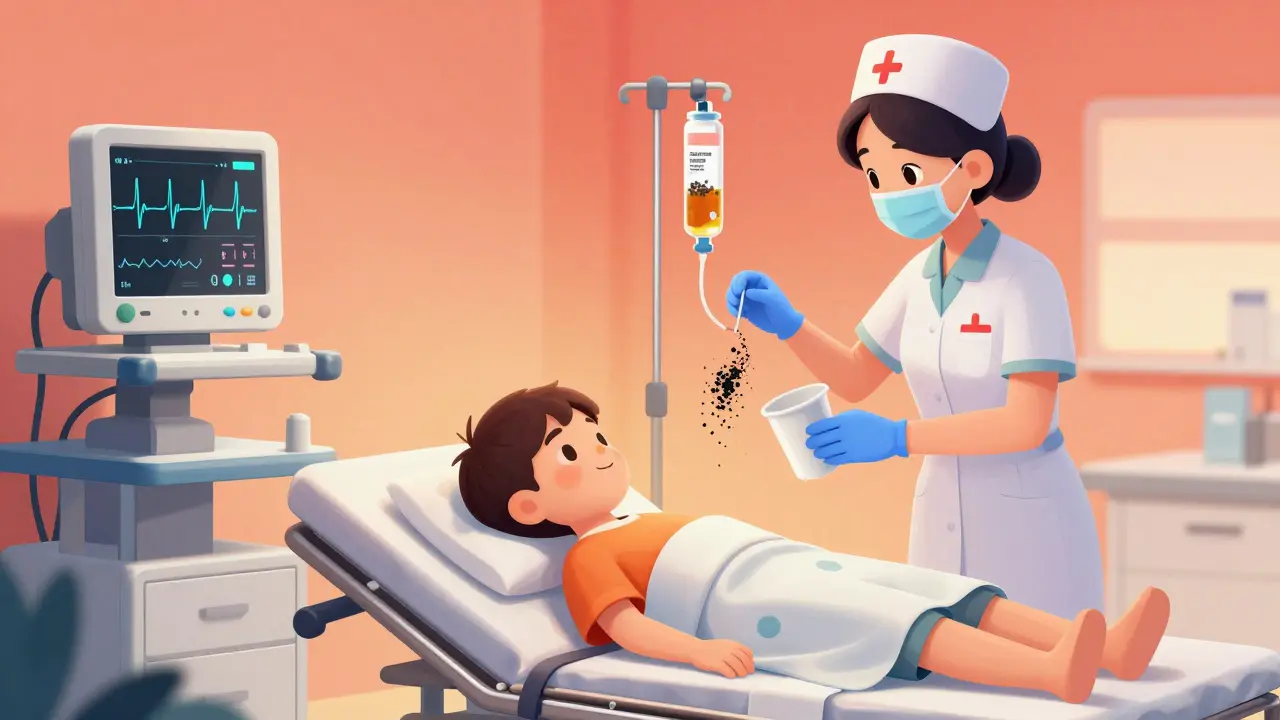
Why You Can’t Just ‘Wait It Out’
A lot of people think, “They’re just sleepy. They’ll wake up.” That’s the deadliest myth. The peak of cardiac toxicity happens between 4 and 6 hours after ingestion. That’s when the heart’s electrical system gets most unstable. Someone might seem fine at hour two, then suddenly develop ventricular tachycardia at hour five. That’s why even if you’re told to monitor at home, you need to watch closely for:- Rapid heartbeat (over 120 bpm)
- Difficulty urinating or no urine output
- Blurred vision or dilated pupils
- Confusion, hallucinations, or delirium
- Seizures or unresponsiveness
If any of these show up, go to the ER. Don’t wait. Don’t call back poison control first. Go.
Who’s Most at Risk
Children under six account for nearly half of all antihistamine exposures. Two-year-olds are the most common. They’re curious, fast, and can open child-resistant caps if they’ve seen an adult do it. A 2023 study found that 42% of pediatric cases happened because parents misread dosing cups or gave double doses thinking the first one didn’t work. Adults aren’t safe either. Many take diphenhydramine as a sleep aid, sometimes doubling up because they don’t sleep. Others combine it with alcohol or other sedatives. That’s a recipe for respiratory depression. And here’s something few know: some “natural” allergy remedies sold online contain hidden diphenhydramine. People think they’re taking herbal supplements, but they’re ingesting a potent drug they didn’t know was there. The National Poison Data System is already seeing a 15% yearly spike in these cases.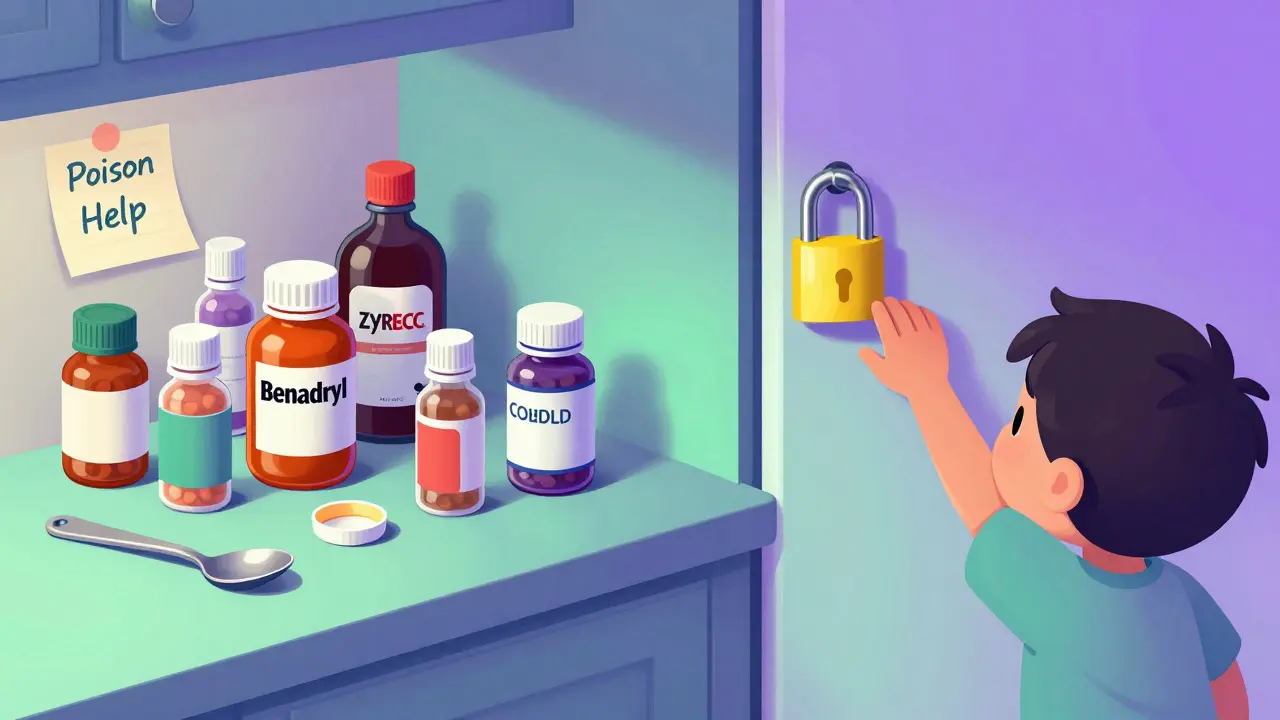
How to Prevent It
Prevention is simple, but hard to stick to:- Keep all medications locked up. Not on the counter. Not in a purse. Not in a drawer the kid can reach. Use child-resistant caps, but don’t rely on them.
- Use the dosing tool that comes with the bottle. Never use a kitchen spoon. They’re inaccurate. Liquid antihistamines often come with syringes or cups-use those.
- Read labels. Always. Many cold, flu, and sleep meds contain diphenhydramine. Don’t stack them.
- Never give first-gen antihistamines to kids under two. The FDA banned this in 2008. It’s not just risky-it’s deadly.
- Save poison control numbers in your phone. 1-800-222-1222 (U.S.), 13 11 26 (Australia). Set it as a contact labeled “Poison Help.”
One nurse in Perth told me about a case where a grandmother gave her grandchild Benadryl because she thought it would help with a cold. The child was fine the next day. But the grandmother didn’t know she’d given 20 times the right dose. That’s the problem. We think we’re helping. We’re not. We’re risking everything.
What to Expect After Treatment
Most people who get timely care go home in 24 to 48 hours. They’re monitored for heart rhythm changes. They might feel tired for a day or two. But they recover fully. The key is early intervention. The longer you wait, the more damage the drug can do to your heart and brain.There’s no antidote. No magic pill. Just supportive care: charcoal, IV fluids, EKG monitoring, and benzodiazepines if needed. That’s it. And it works. The survival rate for those who reach care in time is 99.9%. That’s not luck. That’s protocol.
Can I make someone vomit after an antihistamine overdose?
No. Never induce vomiting unless a poison control expert or doctor tells you to. People who’ve overdosed on antihistamines are often drowsy or confused. Vomiting increases the risk of choking or inhaling stomach contents into the lungs, which can cause pneumonia or death. Instead, remove any remaining pills from the mouth and call poison control immediately.
Is it safe to wait and see if symptoms develop?
Only if poison control says it’s safe. For small doses of second-generation antihistamines like cetirizine or loratadine, observation at home may be okay. But for first-generation antihistamines like diphenhydramine-even if the person seems fine-you must seek medical help. Cardiac effects can peak 4-6 hours after ingestion. Waiting could mean missing the window for life-saving treatment.
What’s the difference between first and second-generation antihistamines in overdose?
First-generation antihistamines like diphenhydramine cross into the brain and block sodium channels in the heart, causing severe symptoms like seizures, high heart rate, and dangerous EKG changes. Second-generation ones like cetirizine rarely cause serious effects-even in large doses. They’re much safer, but massive overdoses can still cause dizziness or QT prolongation. Never assume any antihistamine is harmless.
Can activated charcoal help after more than two hours?
Activated charcoal is most effective within one to two hours of ingestion. After that, most of the drug has already been absorbed. While some hospitals may still give it later in large overdoses, its benefit drops significantly. The focus then shifts to monitoring, IV fluids, and treating symptoms like heart rhythm problems or agitation.
Is sodium bicarbonate dangerous?
When used correctly under medical supervision, sodium bicarbonate is safe and life-saving in antihistamine overdose. It’s given as an IV infusion to correct the widened QRS complex on an EKG. It’s not used for every overdose-only when the QRS is over 100-120 milliseconds and the heart rate is high. Doctors monitor blood pH closely to avoid complications. It’s not something you can give at home.
How long should someone be monitored after an overdose?
For mild cases, 4-6 hours of observation is usually enough. For moderate to severe cases, especially with EKG changes, monitoring lasts 24-48 hours. The heart can develop dangerous rhythms even after symptoms seem to fade. Hospitals keep patients until they’re completely stable and their EKG returns to normal.


Ashley Porter on 25 January 2026, AT 22:55 PM
First-gen antihistamines are essentially CNS depressants with a side of sodium channel blockade. The QRS widening is the real red flag-once it hits 120ms, you’re looking at ventricular arrhythmia territory. It’s not just drowsiness; it’s electrophysiological chaos. Poison control is your first line, not Google. And no, activated charcoal after 3 hours is mostly symbolic. The window’s narrow, and the clock starts ticking the second the pill hits the stomach.
Also, don’t forget: some ‘natural’ sleep aids on Amazon? Loaded with unlabeled diphenhydramine. People think they’re taking chamomile. They’re not.
TL;DR: If it’s Benadryl, assume it’s a cardiac event until proven otherwise.