

The U.S. generic drug market is changing faster than most people realize. Between 2023 and 2025, the FDA didn’t just tweak its rules-it rebuilt the foundation of how generic medicines get approved. If you’re a patient relying on low-cost medications, a pharmacist stocking shelves, or a manufacturer trying to get a drug to market, these changes directly affect you. The goal? Fewer drug shortages, more medicines made in America, and faster access to first generics. But it’s not all good news. There are costs, delays, and tough trade-offs that come with this shift.
Why the FDA Changed the Rules
It started with a simple question: Why are we still dependent on other countries for life-saving pills? During the pandemic, when supply chains broke down, hospitals ran out of antibiotics, sedatives, and even basic painkillers. The U.S. imported over 80% of its active pharmaceutical ingredients (APIs) from just two countries: India and China. By 2025, only 9% of API makers were based in the U.S. That’s not just risky-it’s dangerous. In September 2023, Executive Order 14080 forced the FDA to act. The goal was clear: reduce reliance on foreign suppliers for critical drugs. The result? The ANDA Prioritization Pilot Program, launched on October 3, 2025. This isn’t a minor update. It’s the biggest overhaul of the generic approval process since 2012. The FDA now gives faster reviews to companies that make their drugs-and test them-in the United States.How the ANDA Prioritization Pilot Works
The program has four tiers, based on how much of the drug is made and tested in the U.S. The top tier, Tier 1, requires 100% domestic manufacturing and testing. That’s the only way to get the fastest review timeline: 8 months instead of the usual 12 to 15. Here’s what you need to qualify:- APIs sourced from U.S. facilities (or verified equivalent foreign sites)
- Bioequivalence studies done in FDA-registered U.S. labs
- Manufacturing sites compliant with U.S. Current Good Manufacturing Practices (CGMP)
- Applications for drugs on the FDA’s Drug Shortage List (147 drugs as of September 2025)
Who Benefits the Most
The biggest winners are manufacturers making high-margin, low-volume generics. Think drugs like nimodipine solution or azilsartan-chlorthalidone tablets. These aren’t mass-market pills-they’re critical, hard-to-source medicines. For these, the cost of setting up a U.S. facility is worth it. Teva Pharmaceuticals reported bringing nimodipine to market 8 months faster under the pilot. That’s huge. First generics now hit the market in an average of 11.2 months under the pilot, compared to 15.6 months before. That’s a 28% speed-up. The FDA’s data shows pilot applicants have a 33% higher chance of approval on the first try. And only 41% of them get major deficiency letters-compared to 68% for traditional applications. But it’s not easy. Setting up a U.S. manufacturing line costs $120 million to $180 million. For small companies, that’s impossible. Even mid-sized firms struggle with the $1.2 million to $1.8 million extra cost per application for verification and testing.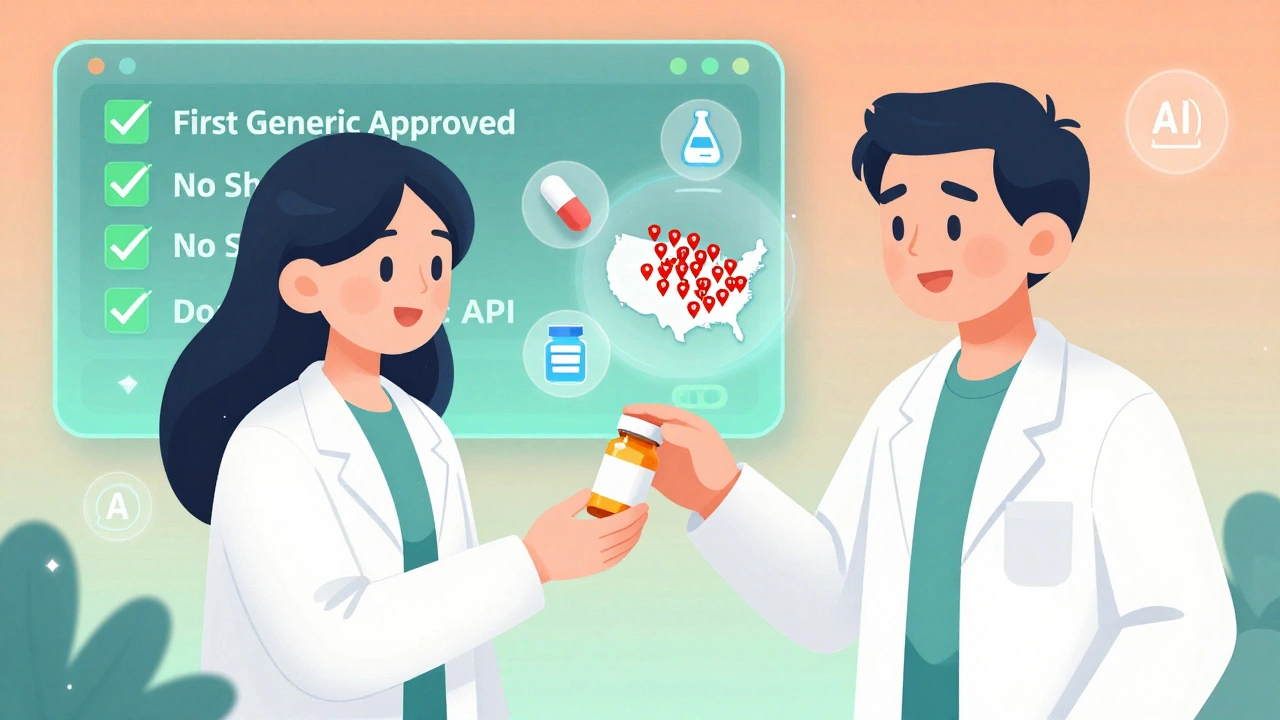
The Catch: What’s Left Out
The pilot doesn’t cover everything. Complex generics-like transdermal patches, nasal sprays, or ophthalmic suspensions-are still stuck in the slow lane. These are harder to copy, and the FDA is waiting until January 2026 to open the pilot to them. Also, not every drug qualifies. Only those on the Drug Shortage List or flagged by the Department of Health and Human Services as essential. If your drug isn’t on that list, you’re back to the old 12-15 month wait. And here’s the irony: while the program pushes for domestic production, the U.S. still can’t supply enough APIs for many complex drugs. Sixty-three percent of manufacturers say sourcing U.S.-made APIs for advanced formulations is their biggest hurdle.Price Impact: Will Generics Get More Expensive?
This is the question everyone’s asking: Will my prescription cost more? MedPAC, the Medicare advisory group, estimates generic prices could jump 12-18% in the short term. That’s because domestic manufacturing is more expensive. Foreign factories still have a 25-30% cost advantage. But here’s the flip side: first generics still slash prices. When a first generic hits the market, prices drop an average of 78.3% within six months. That’s unchanged. The FDA’s push to approve more first generics is still driving down costs-just not as fast as before. The Congressional Budget Office projects that by 2030, the program will save $4.2 billion a year by preventing drug shortages and emergency imports. That’s the long-term win.What Manufacturers Are Saying
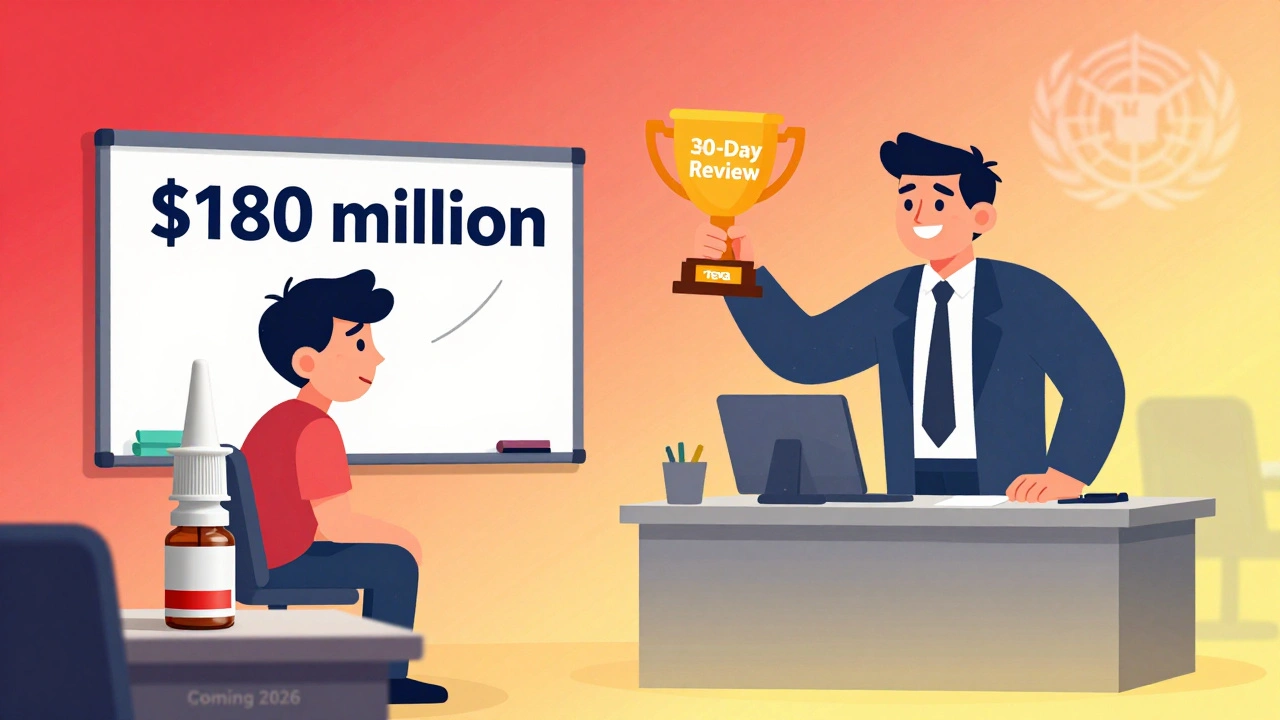
On the FDA’s industry forum, Teva called the 30-day initial review a game-changer. But they also said finding U.S. API suppliers for complex drugs is nearly impossible. A survey of 127 generic manufacturers by the Association for Accessible Medicines found:- 54% started expanding U.S. facilities
- 31% delayed product launches because of costs
- 87% praised FDA’s communication
- 63% complained about documentation-averaging 217 hours per application
What’s Next: AI, Expansion, and Global Pushback
The FDA isn’t stopping. By late 2025, they’ll release new guidance for complex generics like nasal sprays and patches. Starting January 2026, those will be eligible for the pilot. They’re also testing AI tools to speed up reviews even more-projecting another 25% reduction in processing time. That could cut approval timelines to under 6 months for top-tier applicants. But there’s pushback. The European Generic Medicines Association filed a formal complaint in July 2025, arguing the program violates international trade rules. The FDA says it’s not blocking imports-it’s just rewarding domestic production. The World Trade Organization hasn’t ruled yet.What This Means for Patients
If you take a generic drug, here’s what you can expect:- More first generics hitting the market faster
- Fewer sudden shortages of critical meds
- Potentially higher prices on some generics in the next 2-3 years
- Same safety and effectiveness-studies show no drop in therapeutic outcomes
How to Stay Informed
If you’re a patient or caregiver:- Check the FDA’s Drug Shortage List regularly
- Ask your pharmacist if your generic is a first approval
- Don’t assume price changes mean lower quality
- Review the updated Product-Specific Guidances (78 revised since 2024)
- Use the FDA’s new Generic Drug Facilities Inspection Database for real-time site checks
- Apply for the pilot if your drug is on the shortage list
Are FDA-approved generic drugs still safe under the new rules?
Yes. The FDA maintains the same safety and efficacy standards for all generics, whether approved under the pilot or the old system. A March 2025 study in JAMA Internal Medicine found no difference in therapeutic outcomes between generics approved through the prioritization program and those approved traditionally. The 95% confidence interval for effectiveness was 0.97 to 1.03-meaning they work just as well.
Will my generic medications become more expensive?
Potentially, in the short term. Domestic manufacturing costs more than overseas production, and the FDA estimates generic prices could rise 12-18% initially. However, first generics still cause massive price drops-78.3% on average-when they enter the market. The long-term goal is to reduce shortages and emergency imports, which cost far more. Experts predict prices will stabilize after 3-5 years as U.S. capacity grows.
What drugs are affected by the new FDA prioritization rules?
Only generics on the FDA’s Drug Shortage List (147 drugs as of September 2025) and essential medicines flagged by the Department of Health and Human Services qualify for the fast-track pilot. This includes antibiotics, heart medications, insulin, and other critical drugs. First generics of these drugs get priority. Non-essential or high-volume, low-cost generics (like basic pain relievers) are not yet included unless they’re on the shortage list.
Can I tell if my generic drug was approved under the new pilot program?
Not directly from the label. The FDA doesn’t mark approved drugs with their approval pathway. But if your drug was approved after October 2025 and is on the Drug Shortage List, there’s a good chance it went through the pilot. You can check the FDA’s First Generic Drug Approvals list or ask your pharmacist if the manufacturer confirmed domestic production.
Why aren’t all generics covered by the fast-track program?
The FDA is focusing first on drugs where shortages pose the biggest health risks. Complex generics-like patches, nasal sprays, and injectables-are harder to manufacture and test. The pilot doesn’t include them yet, but expanded guidance is coming in November 2025, with full inclusion starting January 2026. The agency is also prioritizing drugs where U.S. production is feasible, not just theoretically possible.




Larry Lieberman on 7 December 2025, AT 12:33 PM
So let me get this straight - we’re spending $180M to make a pill in Ohio instead of India… just so we can feel patriotic? 🤡