
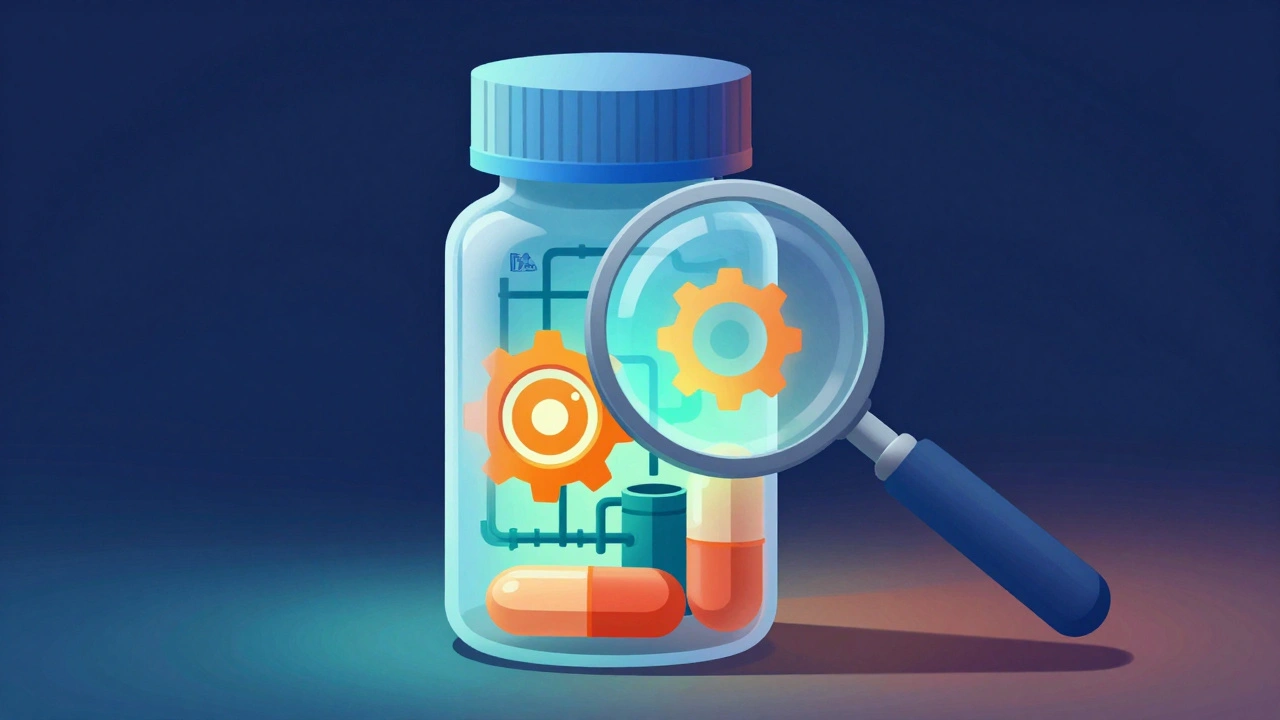
When a generic drug hits the market, it’s not the end of the story-it’s just the beginning. The FDA doesn’t just approve a drug and walk away. If the manufacturer changes how it’s made-even slightly-the FDA might demand a full re-evaluation. And that can mean months, sometimes years, of delays, extra costs, and uncertainty. So what actually triggers that re-evaluation? And why does it matter so much for patients, pharmacies, and manufacturers?
Why Manufacturing Changes Even Matter
Generic drugs are supposed to be identical to their brand-name counterparts in safety, strength, and effectiveness. That’s the whole point. But here’s the catch: they’re not made by the same company, in the same factory, or with the same equipment. Even small tweaks in the manufacturing process can affect how the drug behaves in your body. A change in the particle size of an active ingredient, a switch in the tablet press, or moving production from one country to another might seem minor. But if it alters how quickly the drug dissolves or how consistently it’s absorbed, it could mean the difference between a drug that works and one that doesn’t.The FDA’s job isn’t to stop innovation-it’s to make sure nothing changes in a way that compromises safety or effectiveness. That’s why every manufacturing change, no matter how small, has to be classified and reviewed. The system is built on trust: you trust that the generic you pick up at the pharmacy is just as good as the brand. That trust only holds if the FDA is watching every step.
Three Types of Changes: What Gets Approved Fast, What Gets Held Up
Not all manufacturing changes are treated the same. The FDA sorts them into three buckets, based on risk:- Prior Approval Supplements (PAS): These are the big ones. You can’t make the change until the FDA says yes. This includes switching to a new active ingredient supplier, changing the drug’s chemical synthesis route, or moving production to a brand-new facility. These submissions require full data packages-stability studies, bioequivalence tests, detailed process validation. The average review time? 10 months. Some complex cases take over a year.
- Changes Being Effected (CBE): These are medium-risk changes. You can implement them right away, but you still have to notify the FDA within 30 days. Examples include adjusting in-process controls or changing packaging materials. There are two types: CBE-30 (30-day notice) and CBE-0 (immediate implementation). The FDA can still reject these after the fact if they find a problem.
- Annual Reports (AR): The lowest risk. These are tiny tweaks-like updating a label, changing a supplier’s name, or minor equipment calibration. You just report them once a year. No prior approval needed.
Here’s the kicker: 68.4% of PAS submissions get a complete response letter from the FDA asking for more data. That’s not a rejection-it’s a request for clarification. But it still delays the change. Common reasons? Analytical methods that don’t match the original, unclear stability data, or incomplete process validation.
What Specifically Triggers a Full Re-Evaluation?
The FDA doesn’t guess. They have clear triggers based on science. Here’s what actually makes them hit the pause button:- Changing the drug substance synthesis route: If you switch from a 5-step chemical process to a 3-step one, even if the final product is the same, you need a PAS. Why? New impurities might form. The FDA requires you to prove those impurities are safe-and below 0.5% for complex drugs like peptides.
- Transferring manufacturing to a new facility: Moving production from a plant in India to one in Ohio? That’s a PAS. Different equipment, different environment, different operators-all can change how the drug behaves. The FDA will want comparative data from both sites and likely schedule an inspection.
- Scaling up or down production: Making 10,000 tablets a day? Fine. Now you want to make 100,000? That’s not just bigger batches-it’s different mixing, different drying times, different pressure on tablets. A 30% increase in batch size triggered a 14-month approval delay in one 2022 case study.
- Changing excipients (inactive ingredients): Even if the active ingredient stays the same, swapping out one filler for another can alter dissolution rates. The FDA requires bioequivalence testing if the change affects how the drug releases in the body.
- Using a new analytical method: If you switch from HPLC to UPLC for testing purity, you need to prove both methods give the same results. Otherwise, you can’t prove the product hasn’t changed.
These aren’t hypotheticals. In 2023, 15.9% of all post-approval CMC submissions were for manufacturing process changes. Another 15.9% were for changes in controls-like specifications or stability protocols. That’s nearly one-third of all changes that trigger a full review.

Why So Many Changes Are Delayed (And Why It Costs Money)
It’s not just about paperwork. The cost of a PAS submission averages $287,500 per application. That includes consulting, testing, data generation, and FDA user fees. For a generic drug that sells for pennies per pill, that’s a huge investment. Many small manufacturers avoid making improvements altogether-because the risk doesn’t pay off.One quality assurance professional on Reddit described how a simple tablet press upgrade took 18 months to approve-even though the final product met all specs. The FDA kept asking for more data. The company didn’t have the resources to respond fast. So they kept using the old machine, even though it was outdated and less reliable.
That’s the paradox: the system is designed to protect patients, but it can also discourage innovation. Companies that could improve efficiency, reduce waste, or make drugs more stable often don’t bother. Why risk $300,000 and a year of delay for a drug that makes $50,000 a year in profit?
How Smart Companies Are Beating the System
Some manufacturers aren’t waiting for the FDA to catch up-they’re getting ahead of it.Companies using Quality by Design (QbD) principles during initial ANDA development are seeing fewer PAS submissions later. QbD means understanding the process so well you know exactly which variables matter-and which ones don’t. If you design your process with a wide “design space,” you can make small adjustments later without triggering a full review.
Another trick? Process Analytical Technology (PAT). This means using real-time sensors during manufacturing to monitor temperature, pressure, moisture, and particle size. One company reported a 32.6% drop in PAS submissions over five years after adopting PAT. Why? They caught issues before they became problems.
Teva’s approval of amlodipine using continuous manufacturing in 2022 is a textbook example. Instead of making batches, they made the drug in a constant flow. It’s faster, more precise, and less prone to variation. But to get approval, they held five pre-submission meetings with the FDA, shared every bit of data, and ran months of stability tests. Result? Approval in 8 months-less than half the average.

The New Rules: What’s Changing in 2025
The FDA is trying to fix the system. In 2023, they launched the ANDA Prioritization Pilot Program. If you make your drug in the U.S., use U.S.-sourced active ingredients, and test it on U.S. patients, your review time drops from 30 months to 8 months. That’s a game-changer.Also in 2024, the FDA introduced PreCheck-a two-phase facility inspection system. Instead of waiting for an inspection after you submit, you can get your facility pre-approved. That cuts facility transfer timelines from 18 months to 9.
And the next round of GDUFA (Generic Drug User Fee Amendments) negotiations are happening in 2025. Industry groups are pushing for standardized rules on what counts as a PAS vs. a CBE. Right now, one FDA reviewer might call a change moderate, while another calls it major. That inconsistency causes delays and confusion.
What This Means for You
If you’re a patient: your generic drug is still safe. The FDA hasn’t let a single unsafe generic reach the market. But if your drug suddenly becomes unavailable or costs more, it might be because a manufacturer hit a regulatory wall.If you’re a pharmacist: don’t assume all generics are the same. Two versions of the same drug might have different release profiles if one manufacturer made a change and the other didn’t. If a patient reports a new side effect or reduced effectiveness after switching generics, it might be worth checking if a manufacturing change occurred.
If you’re in the industry: stop treating post-approval changes as an afterthought. Build your ANDA with change in mind. Use QbD. Invest in PAT. Get early feedback from the FDA. The companies that plan ahead don’t just survive-they thrive.
The system isn’t perfect. It’s slow, expensive, and sometimes inconsistent. But it’s also the reason you can trust that the $4 generic you buy today is just as good as the $40 brand-name version from five years ago. The real question isn’t whether the FDA should regulate manufacturing changes-it’s whether the system can evolve fast enough to keep up with modern science.
What manufacturing changes require FDA prior approval for generic drugs?
Changes that require a Prior Approval Supplement (PAS) include switching the drug substance synthesis route, transferring manufacturing to a new facility, scaling up production by more than 25%, changing critical excipients, or using a new analytical method. These changes must be approved by the FDA before implementation because they could affect the drug’s safety, strength, or bioequivalence.
How long does FDA review take for a manufacturing change?
Review times vary by change type. Prior Approval Supplements (PAS) average 10 months, but complex cases can take over a year. CBE-30 supplements take about 3 months, and CBE-0 changes are implemented immediately with a 30-day notice. Under the 2023 ANDA Prioritization Pilot Program, eligible U.S.-based manufacturers can get approval in as little as 8 months.
Why do some generic drug manufacturers avoid making manufacturing improvements?
The cost of a PAS submission averages $287,500, and the approval process can take over a year. For low-margin generic drugs, that investment often doesn’t make financial sense. Many small manufacturers choose to keep outdated equipment or processes rather than risk delays and expenses, even if the change would improve quality or efficiency.
Can a change in packaging trigger FDA re-evaluation?
Usually not. Changing packaging material (like switching from HDPE to blister packs) is typically reported as an Annual Report unless the new packaging affects drug stability or protection from moisture/light. If the change impacts the drug’s shelf life or performance, a CBE or PAS may be required.
What is Quality by Design (QbD) and how does it help with FDA approvals?
Quality by Design (QbD) is a systematic approach to drug development that identifies critical process parameters and defines a safe operating range (design space). By understanding the process deeply upfront, manufacturers can make minor changes later without triggering a full FDA review. Companies using QbD report up to 40% fewer post-approval changes and faster approvals.
Are there any FDA programs to speed up approval of manufacturing changes?
Yes. The ANDA Prioritization Pilot Program (2023) offers 8-month reviews for generics made in the U.S. with U.S.-sourced active ingredients. The PreCheck program (2024) allows manufacturers to get facility inspections approved in advance, cutting transfer timelines from 18 to 9 months. These programs aim to incentivize domestic manufacturing and reduce supply chain risks.
What Comes Next?
The pressure is on. Patients need affordable drugs. Pharmacies need reliable supply. Manufacturers need predictability. The FDA is trying to balance all three. The next few years will show whether the new programs actually reduce delays-or just create more bureaucracy.One thing’s clear: the future of generics isn’t just about copying a brand-name drug. It’s about building smarter, more resilient manufacturing systems. And that’s something worth investing in-even if it’s expensive.



Constantine Vigderman on 12 December 2025, AT 19:05 PM
bro i just got my amlodipine refill and the pills look different 😅 thought i got scammed but now i get it-manufacturing change probably. FDA’s got my back but also kinda killing small pharma 😅