
Every time you pick up a food package, you’re making a life-or-death decision if you or someone in your family has a food allergy. What looks like a simple ingredient list can hide dangerous surprises - and the rules around those labels just changed in 2025. The FDA didn’t just tweak wording. They rewrote the playbook on how allergens must be labeled, and these changes affect every grocery store shelf in the U.S.
What’s Really in Your Food Now?
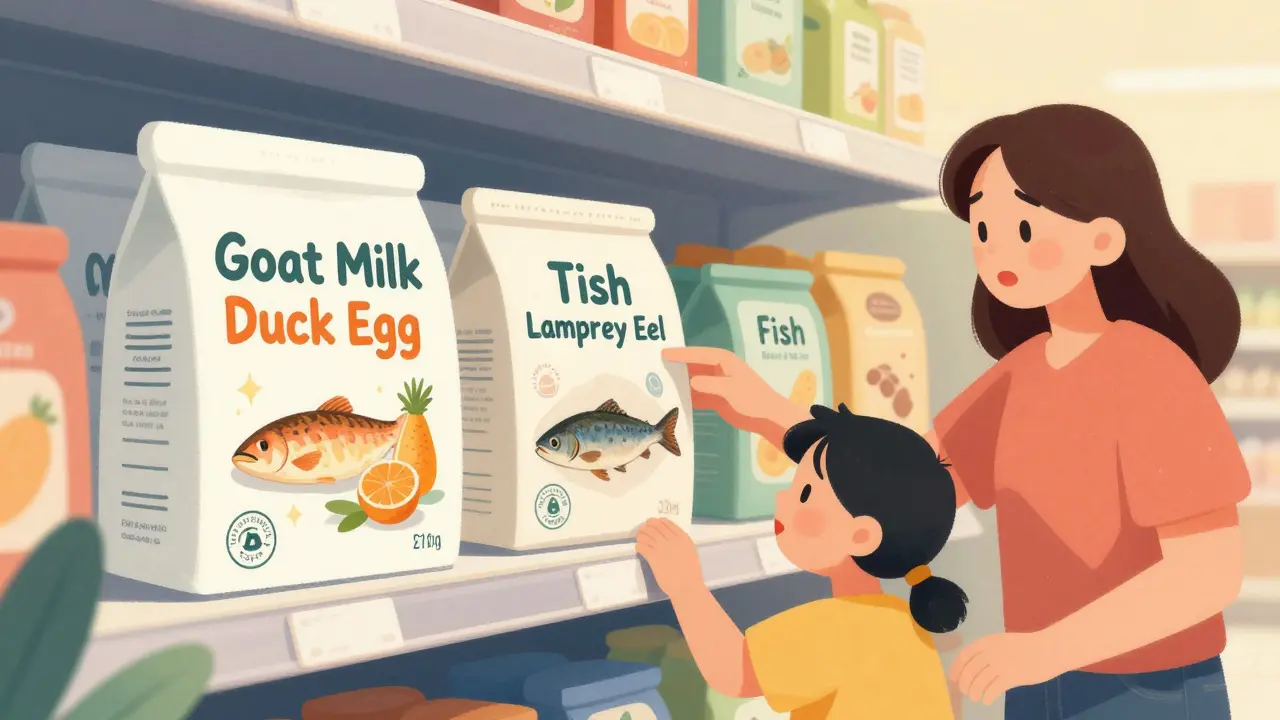
If you thought "milk" meant cow’s milk, think again. As of January 2025, food labels must now say goat milk, sheep milk, or duck egg - not just "milk" or "egg." This isn’t a minor update. It’s a safety fix for people who react to one kind of animal milk but can safely eat another. Before this rule, someone allergic to cow’s milk had to call the manufacturer to ask if the milk came from a goat. Now, the answer is right on the package.
Same goes for fish. Labels can no longer just say "fish." You’ll now see "trout," "shark," or "lamprey eel." That matters because a person might be allergic to salmon but fine with tuna. Previously, they had to guess - now they know.
Coconut Is No Longer a Tree Nut - Here’s Why
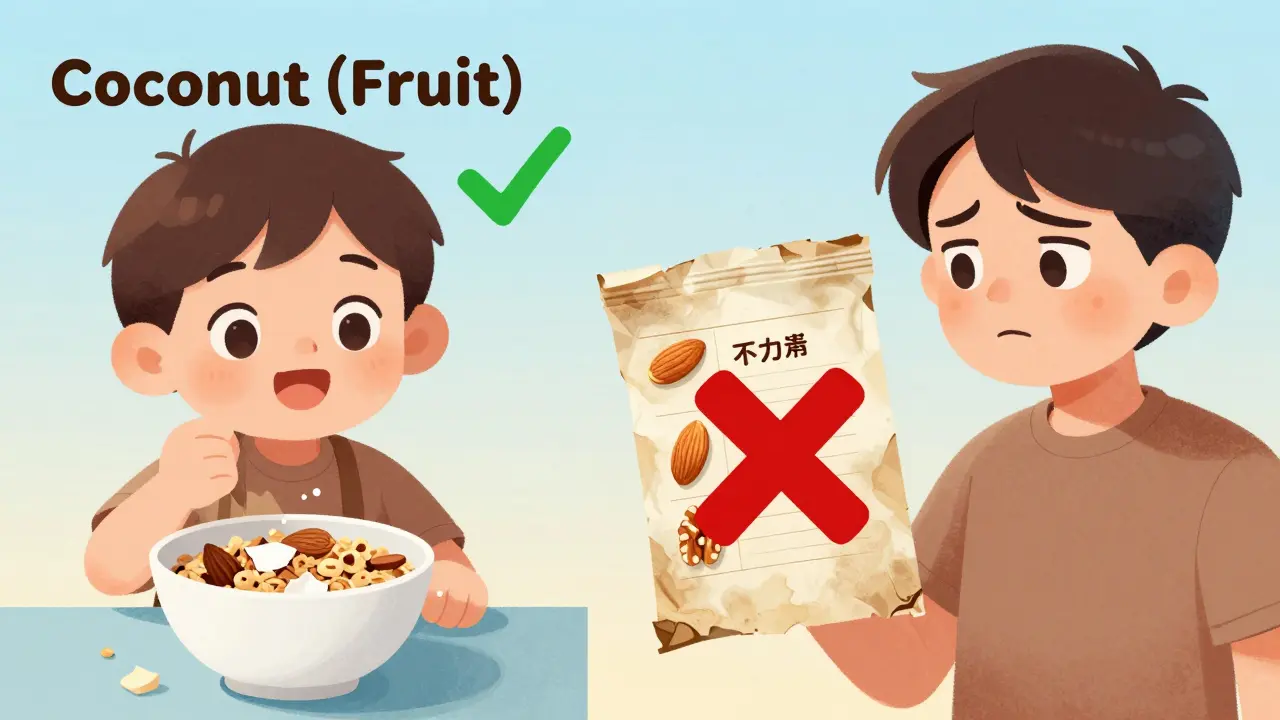
Coconut used to be grouped with almonds, cashews, and walnuts on food labels. But in the 2025 update, the FDA removed coconut from the list of major tree nut allergens. Why? Because science shows coconut is a fruit, not a nut. More importantly, people with tree nut allergies rarely react to coconut - and unnecessarily avoiding it just limits food choices without adding safety.
For families managing multiple allergies, this change means fewer panic moments in the snack aisle. You can finally buy coconut water or granola with coconut flakes without wondering if it’s safe. But don’t get complacent. If you’re allergic to coconut, you still need to check labels - it’s just not required to be listed under "tree nuts" anymore.
Shellfish Just Got More Confusing
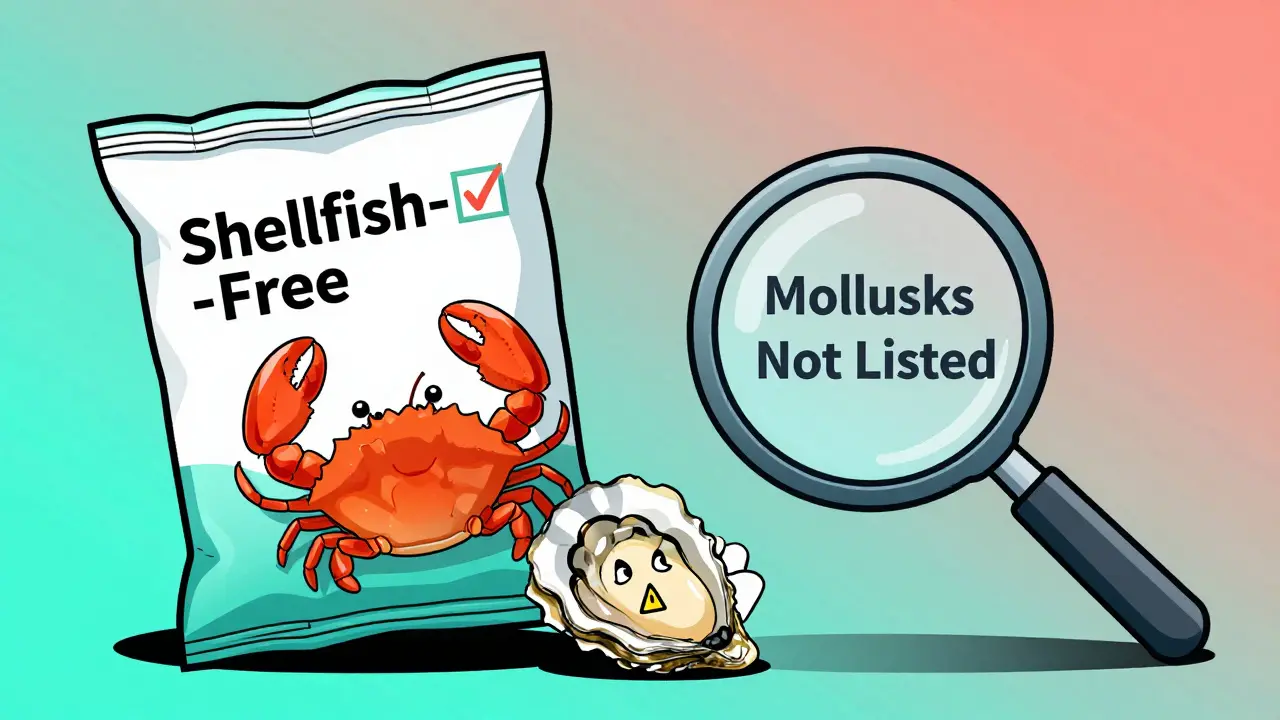
Shellfish now only means crustaceans: crab, lobster, and shrimp. Mollusks like oysters, clams, scallops, and mussels are no longer covered under the same label rule. That’s a big deal. Around 1.5 million Americans are allergic to oysters or clams - but their allergies won’t show up on a label unless the manufacturer chooses to include it voluntarily.
This creates a dangerous blind spot. Someone who’s had a severe reaction to oysters might assume "shellfish-free" means safe. But if the product contains clams, there’s no legal requirement to say so. That’s why allergy groups like FARE are pushing for more transparency. Until the law changes again, if you’re allergic to mollusks, you need to call manufacturers - or stick to whole, unprocessed foods.
"Free-From" Claims Can’t Mix With "May Contain" Warnings
Ever seen a box that says "Milk-Free" at the top and "May Contain Milk" on the bottom? That used to be legal. Now it’s not. The FDA says you can’t make a claim that a product is free of an allergen if you also warn that it might contain it. It’s contradictory - and dangerous.
Imagine a parent buying "peanut-free" cereal for their child, trusting the label, then finding out it’s made on the same line as peanut butter. The "May Contain" warning was there, but the "Free-From" claim made them feel safe. That’s exactly what the FDA wanted to stop. If a product claims to be free of an allergen, the manufacturer must prove it - no cross-contact, no shared equipment, no ambiguity.
What About Cross-Contact?
Cross-contact happens when a tiny bit of an allergen gets into a food that wasn’t meant to have it. A spoon used for peanut butter, then dipped into jelly - that’s cross-contact. The FDA says these accidental traces are real risks. But here’s the catch: warning labels like "May Contain Tree Nuts" or "Processed in a Facility with Soy" are still voluntary.
Manufacturers aren’t forced to use them. But if they do, they can’t lie. A company can’t say "May Contain Peanuts" if their facility has never had peanuts near that product. The FDA is cracking down on misleading statements. And while these warnings aren’t mandatory, many companies now use them because consumers demand them. If you’re highly allergic, treat every "May Contain" label as a red flag - even if it’s not required by law.
Sesame Is Now a Major Allergen - But You Already Knew That
The FASTER Act of 2021 added sesame to the list of top nine allergens. By 2026, you’ll see it clearly labeled everywhere - "contains sesame" or listed in ingredients. But sesame was already showing up on labels before the law changed, thanks to consumer pressure. Now, it’s official. You’ll find it in everything from hummus to bread, sauces, and snacks. If you’re allergic, you’re no longer playing a guessing game.
What’s surprising is how often sesame hides. It’s not always called "sesame." It can be listed as "tahini," "benne," "gingelly oil," or "oriental seed." The 2025 guidance now requires manufacturers to use the common name - so "tahini" must be followed by "(sesame)" in parentheses. That’s a huge win for clarity.
Why This Matters More Than Ever
Over 32 million Americans have food allergies. That’s one in ten people. Five million of them are children. And the number keeps rising - up 50% in kids since 1997. Every label change isn’t just paperwork. It’s about preventing hospital visits, EpiPen uses, and even deaths.
Small manufacturers are struggling with the cost. Reprinting labels, updating supplier contracts, and retraining staff can cost $5,000 to $15,000 per product line. That’s why some companies are slow to adopt. But big brands? They’re already there. Walmart, Kroger, and Nestlé have updated their entire lines. The market is pushing them - because consumers are demanding it.
What You Should Do Right Now
- Check your pantry. Look for old labels that say just "milk" or "egg." Replace them if you’re unsure.
- If you’re allergic to mollusks, avoid processed seafood products unless you confirm the ingredients with the company.
- Never assume "free-from" means 100% safe unless you’ve verified the manufacturer’s process.
- Teach kids to read labels - not just for "peanuts," but for "tahini," "goat milk," and "crab" in sauces.
- Use apps like Fig or SpoonfulOfMixes to scan barcodes and get real-time allergen alerts.
What’s Next?
The FDA is already studying other potential allergens - like mustard, celery, and lupin. These aren’t big in the U.S. yet, but they’re common in Europe. The agency says they’ll add new allergens to the list if the science supports it. That means the rules won’t stop changing.
By 2027, experts predict 75% of major food makers will fully follow the 2025 guidelines - not because they have to, but because customers won’t buy from brands that don’t get it right.
For now, the best defense is knowledge. Know what’s changed. Know what’s still missing. And never stop asking questions - even if the label says "safe."
Is coconut still considered a tree nut on food labels in 2026?
No. As of January 2025, the FDA removed coconut from the list of major tree nut allergens because it’s botanically a fruit, not a nut. While coconut allergies still exist, they’re rare, and removing it from the tree nut label helps people with tree nut allergies avoid unnecessary restrictions. However, coconut must still be listed in the ingredients if it’s present - just not under the "tree nuts" category.
If a product says "milk-free," can it still have traces of milk?
No. If a product claims to be "milk-free," it must not contain any milk - even in trace amounts from cross-contact. The FDA now prohibits companies from using both "milk-free" and "may contain milk" on the same package. This prevents misleading claims. If you see both, avoid the product - it’s a violation of the 2025 guidelines.
Are oysters and clams labeled as shellfish now?
No. As of 2025, "shellfish" on food labels only refers to crustaceans: shrimp, crab, and lobster. Mollusks like oysters, clams, scallops, and mussels are no longer required to be labeled under the shellfish allergen category. This is a new risk for the 1.5 million Americans allergic to mollusks. Always check the full ingredient list or contact the manufacturer if you’re unsure.
Do all food labels have to follow these new rules?
Not all. The FDA’s rules apply to packaged foods, infant formula, dietary supplements, and medical foods. But meat, poultry, and processed egg products are regulated by the USDA - and they don’t have to follow the same standards. Alcohol beverages also have separate rules. Always check the agency that regulates the product - and when in doubt, call the manufacturer.
What should I do if I find a food label that’s misleading?
Report it. The FDA has a system for reporting misleading or unsafe food labels. Go to fda.gov/reportbadfood and submit a complaint. Include the product name, brand, lot number, and a photo of the label. Your report helps the FDA track violations and push for enforcement - especially since they only inspect about 10% of food plants each year.


Dolores Rider on 24 January 2026, AT 10:19 AM
I swear the FDA is just playing us. One day coconut’s safe, next day sesame’s the new peanut, and now they’re splitting shellfish like it’s a divorce court. 🤡 I’ve seen labels that say 'may contain traces' but the product has a whole bag of shrimp in the ingredient photo. Who’s even checking this? I think big food is bribing inspectors. 🍔💣