
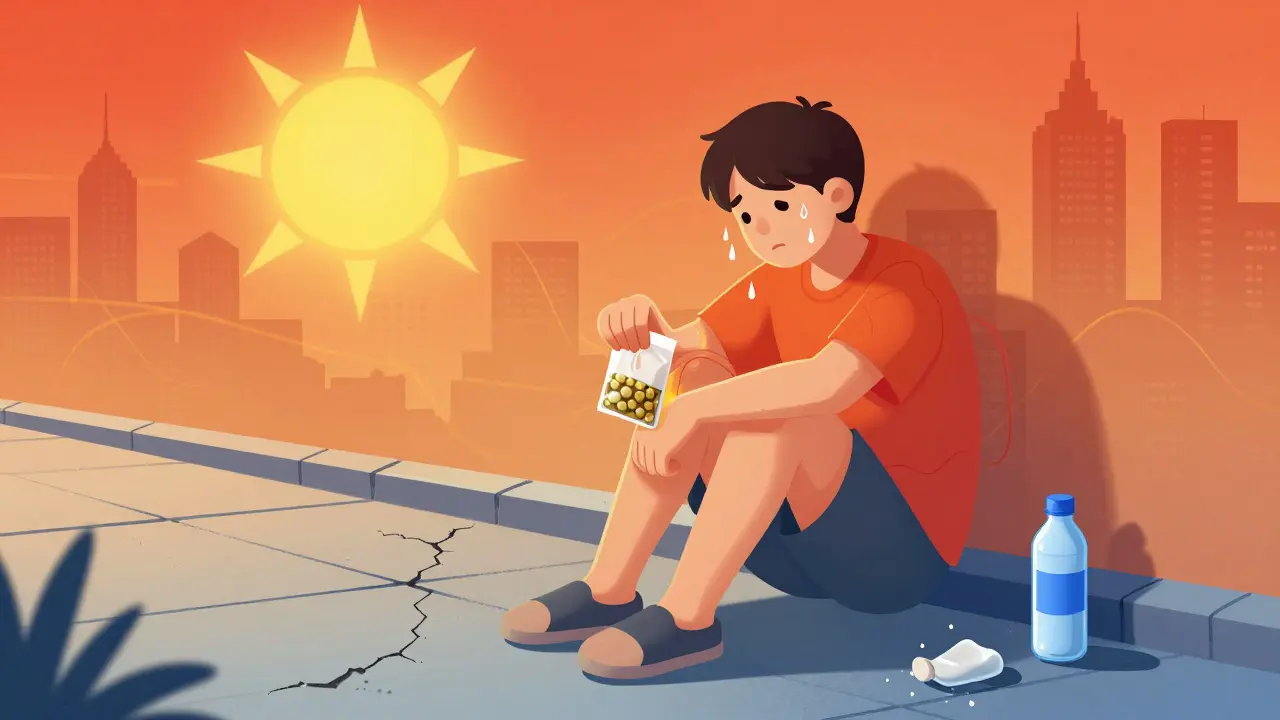
When the temperature climbs above 24°C (75.2°F), the risk of overdose doesn’t just stay the same-it goes up. For people who use drugs, extreme heat isn’t just uncomfortable. It’s deadly. In cities like New York, Philadelphia, and Phoenix, emergency calls for overdoses spike during heatwaves. The body doesn’t handle heat and drugs the same way. When you’re hot, your heart works harder. Your blood thickens. Your brain gets foggy. And if you’re using substances, those changes can push you over the edge-without you even realizing it.
Why Heat Makes Overdose More Likely
Heat doesn’t just make you sweat. It changes how your body processes drugs. When you lose just 2% of your body weight in fluids-something that happens quickly in hot weather-your blood becomes more concentrated. That means the same dose of cocaine, meth, or even opioids hits harder. A drug that normally gives you a buzz might now trigger a heart attack or respiratory failure.
Stimulants like cocaine and meth are especially dangerous in heat. They already raise your heart rate by 30-50%. Heat adds another 10-25 beats per minute. Your heart is working overtime, and it can’t keep up. A 2010 study from Columbia University found that on days when temperatures hit 24°C or higher, overdose deaths in New York City jumped significantly. Cocaine-related deaths showed the strongest link to heat.
Opioids are no safer. Heat reduces your body’s ability to compensate for slowed breathing-the main cause of opioid overdose. Studies show respiratory compensation drops by 12-18% in high heat. That means the gap between a safe dose and a lethal one gets smaller. Even people who’ve used opioids for years without incident can overdose in extreme heat because their body’s safety buffer is gone.
And it’s not just the drugs. Many people taking medications for mental health-like antipsychotics or antidepressants-experience worse side effects in heat. About 70% of antipsychotics and 45% of antidepressants lose effectiveness or become more toxic when it’s hot. This creates a dangerous mix: someone managing depression or schizophrenia may feel worse, use more drugs to cope, and then face a body that can’t handle the stress.
Who’s Most at Risk
It’s not just people who use drugs. It’s people who use drugs and have nowhere to cool down.
Homelessness is one of the biggest risk factors. In the U.S., about 580,000 people experience homelessness on any given night. Nearly 40% of them have a substance use disorder. They don’t have air conditioning. They don’t have access to water. They can’t take a shower to cool off. When the heat hits, they’re stuck outside-exposed, dehydrated, and alone.
People living in cities are also at higher risk because of the urban heat island effect. Concrete, asphalt, and buildings trap heat. Temperatures in the middle of a city can be 3-5°C hotter than just a few miles away. That means someone living in downtown Chicago or Perth’s inner suburbs faces a much hotter environment than someone in the suburbs or countryside.
And then there’s the isolation. Many people who use drugs avoid shelters because they’re turned away for being actively using. Some shelters even confiscate water bottles or cooling towels, thinking they’re drug paraphernalia. That leaves people with no safe place to go-even when the temperature hits 40°C.
What You Can Do: Practical Harm Reduction Steps
You don’t need to stop using drugs to stay safe in the heat. But you do need to change how you use them.
- Reduce your dose by 25-30% when it’s above 24°C. Your body isn’t processing the drug the same way. What felt normal yesterday might kill you today.
- Drink water, even if you don’t feel thirsty. Aim for one cup (8 ounces) every 20 minutes. Cool water, between 50-60°F, is best. Don’t wait until you’re dizzy or nauseous. Dehydration happens fast.
- Avoid using alone. If you’re using, have someone nearby who knows how to use naloxone and can call for help. If you’re worried about being judged, find a harm reduction service-they won’t turn you away.
- Use in a cool place. If you can’t get to an air-conditioned space, find shade. Use a damp towel on your neck. Sit near a fan. Even a basement or garage can be cooler than the street.
- Know the signs of heat exhaustion: dizziness, headache, nausea, confusion, rapid pulse, dark urine. If you have these, stop using, cool down, and hydrate. Don’t wait for an overdose to happen.
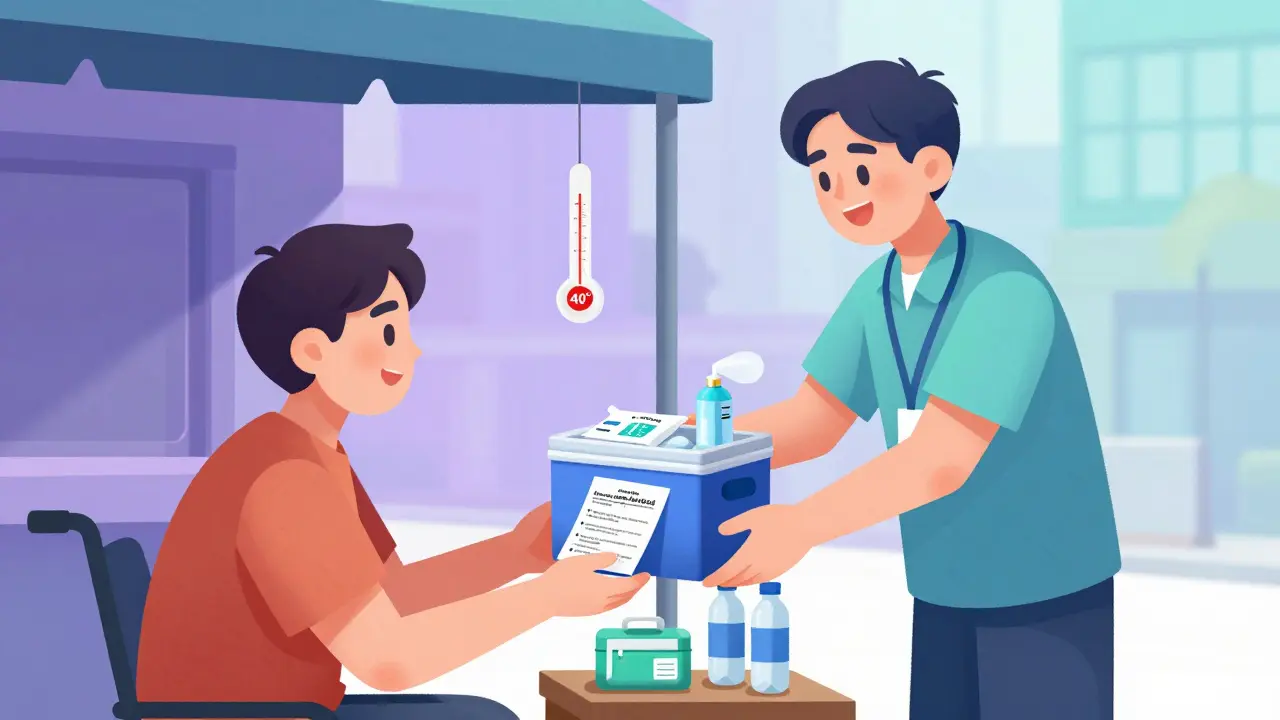
Some harm reduction groups have started handing out cooling kits: electrolyte packets, misting spray bottles, ice packs, and info cards. These aren’t fancy. But they save lives. In New York, after outreach workers started giving out water and cooling towels during heat advisories, heat-related overdose calls dropped by 17% in just one summer.
What Communities and Services Should Do
Individual action isn’t enough. Systems need to change.
Only 12 out of 50 U.S. states have official heat emergency plans that include people who use drugs. That’s not just a gap-it’s a death sentence.
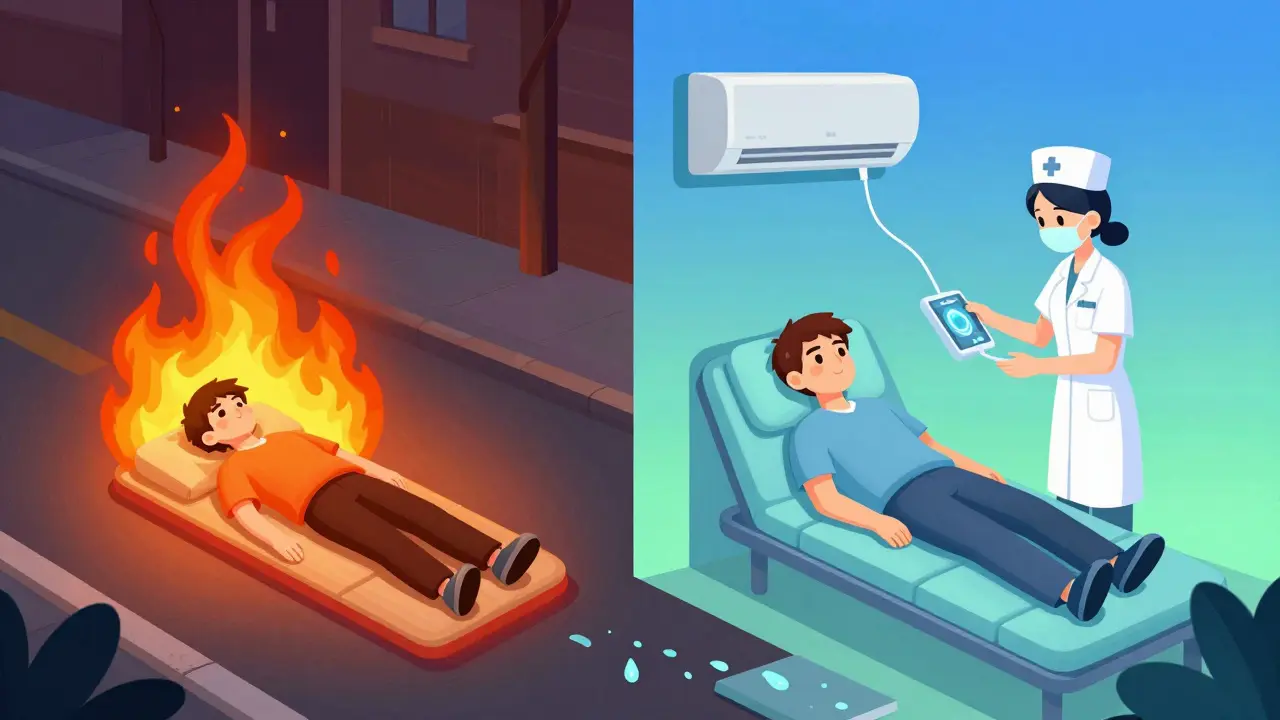
Effective models already exist. Vancouver set up seven air-conditioned respite centers next to supervised consumption sites during the 2021 heat dome. Those centers didn’t just offer water and AC-they had nurses, naloxone, and peer support. Overdose deaths dropped by 34% compared to previous years.
Philadelphia distributes over 2,500 cooling kits every summer. Maricopa County, Arizona, trained volunteers to check on people living on the streets. They made over 12,000 wellness checks in one heat season and intervened in 287 overdoses.
But progress is slow. Too many shelters still ban people who are actively using. Too many police still take away water bottles. Too many health departments still don’t train staff to recognize the link between heat and overdose.
The Biden administration pledged $50 million in 2023 to fix this. By December 2025, every state health department is supposed to include overdose risk in their heat emergency plans. That’s a start. But real change needs local action-community groups, pharmacies, clinics, and churches stepping up to offer cool spaces, water, and naloxone.
What’s Coming: Climate Change Makes This Worse
By 2050, we’re expected to have 20-30 more days each year where temperatures exceed the 24°C overdose risk threshold. Heatwaves won’t be rare events anymore. They’ll be the norm.
Researchers are now looking at how heat affects the gut microbiome-and how that might change how drugs are broken down in the body. Early findings suggest a 15-20% shift in gut bacteria during extreme heat could alter drug metabolism. That means even familiar doses could become unpredictable.
The World Health Organization now recommends that treatment centers adjust medication doses during heat events. For example, buprenorphine-a common treatment for opioid dependence-loses 23% of its effectiveness above 30°C. If you’re on this medication and it’s hot, your dose might need to be adjusted. Talk to your provider before the next heatwave.
This isn’t just a public health issue. It’s a moral one. When the temperature rises, the most vulnerable people suffer first. And too often, they’re left behind because we don’t see them-or we decide they don’t deserve help.
Final Thoughts
Managing overdose risk during heatwaves isn’t about abstinence. It’s about survival. It’s about recognizing that your body is under stress-and adjusting accordingly.
If you use drugs: reduce your dose. Drink water. Don’t use alone. Find shade. Know the signs. Ask for help.
If you work with people who use drugs: carry naloxone. Offer water. Don’t judge. Push your agency to include heat in your safety plans.
If you’re part of a community: open your doors. Share your AC. Check on your neighbors. Even a few hours in a cool room can save a life.
Heat doesn’t care who you are. But we can choose to care for each other.


Phoebe McKenzie on 2 January 2026, AT 03:46 AM
This is why people like you shouldn't be allowed to use drugs at all. You think you're being 'harm-reduced'? You're just delaying the inevitable. If you can't control your addiction, why should society waste resources on you? I've seen too many lives ruined by this mindset. Stop pretending it's about 'survival'-it's about personal failure.
And don't even get me started on the 'cooling kits.' That's just enabling. Give them a job, not a misting bottle. The government is literally paying people to stay sick.
Wake up. This isn't compassion. It's cowardice.