
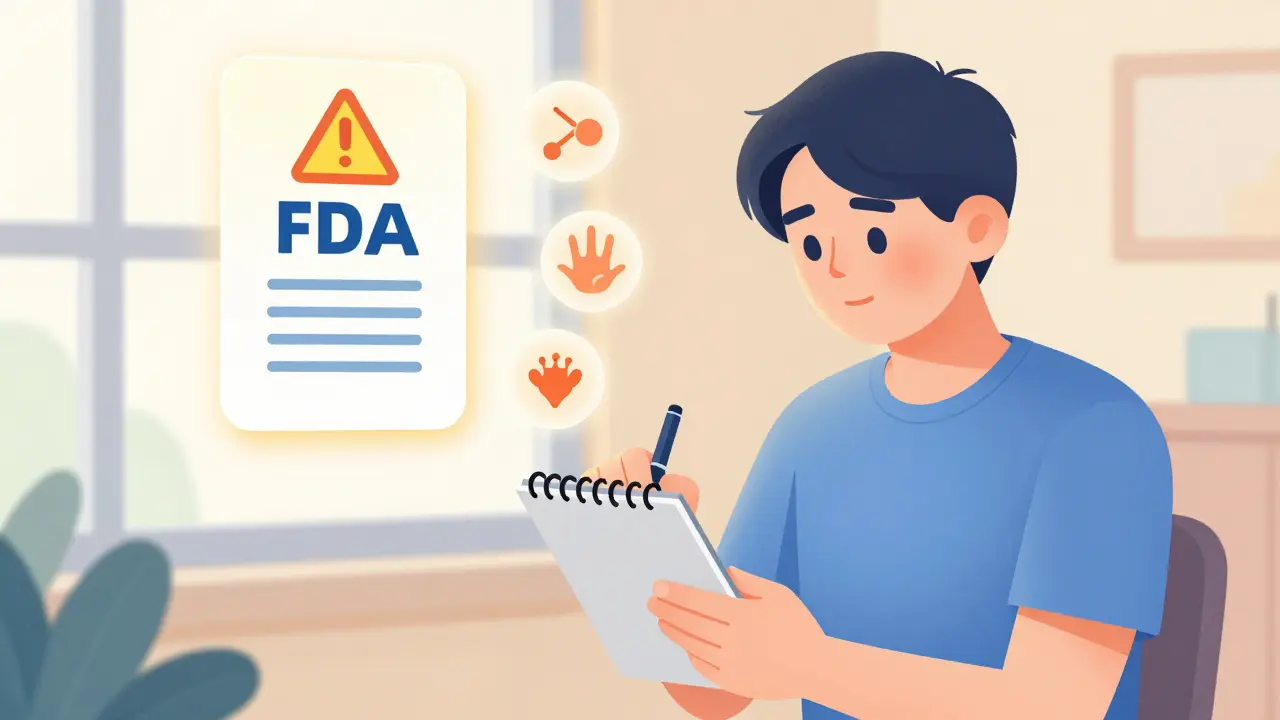
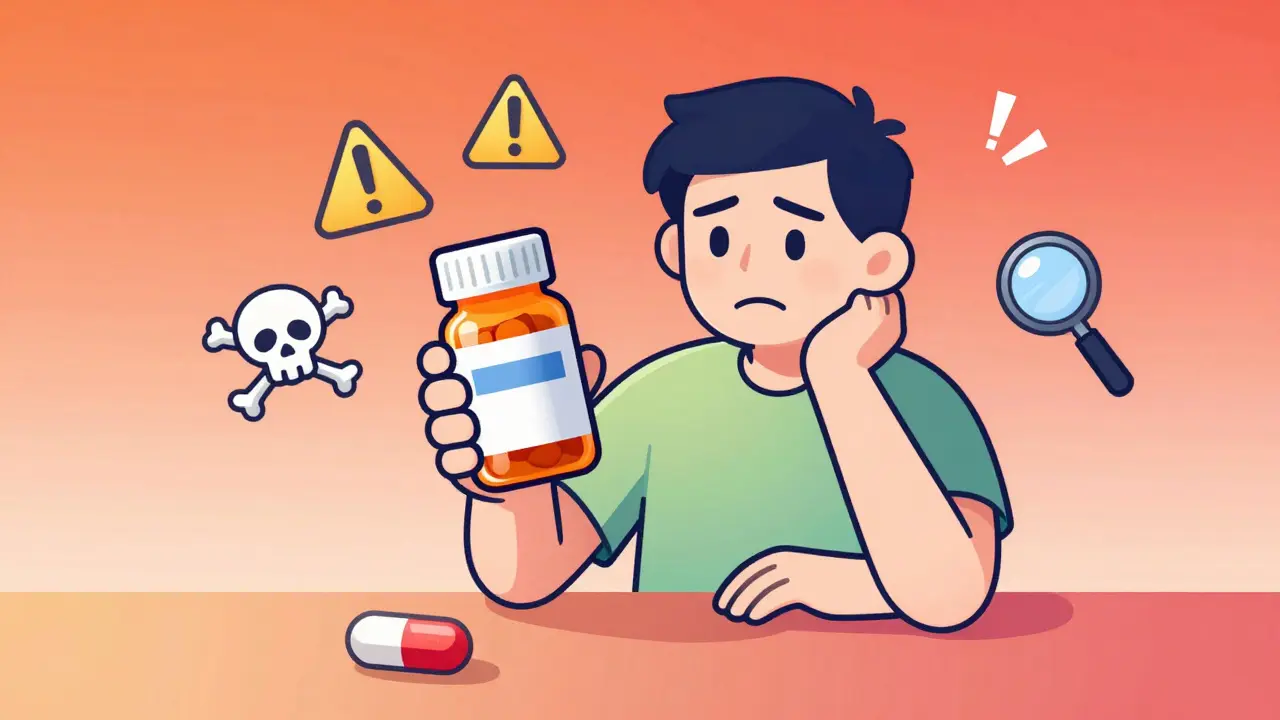
When you get a safety communication about a drug, vaccine, or medical device, it’s not just a notice-it’s a warning that something in your body might be reacting in ways you can’t see yet. These alerts come from the FDA, WHO, or your doctor after reports of unexpected side effects, contamination, or malfunction. But the alert itself doesn’t protect you. Monitoring your symptoms does. If you ignore this step, you risk missing early signs of a reaction that could turn serious. This isn’t about being paranoid. It’s about knowing what to watch for, how to track it, and when to act.
Understand What the Safety Communication Means
Not all safety communications are the same. Some warn about rare but severe side effects. Others point to contamination in a batch of pills. A few flag device malfunctions, like an insulin pump that might stop delivering doses. The first thing you need to do is read the full notice. Look for these key details:- What product is involved? (Brand name, generic name, lot number)
- What specific issue was found? (e.g., "increased risk of liver inflammation," "battery failure in model X7")
- What symptoms should you watch for? (They usually list them clearly)
- Who is affected? (e.g., "patients using this for more than 6 months," "those over 65")
If the communication came from your pharmacy or doctor, ask them to explain it in plain terms. Don’t assume you understand it. A 2022 study from the Agency for Healthcare Research and Quality found that 42% of patients misinterpreted safety alerts because they skipped this step. If you’re unsure, call your provider. Write down the key points. Keep the notice handy.
Know What Symptoms to Track
The safety communication will list symptoms linked to the issue. But you need to know what those mean in real life. For example:- If the alert mentions "unexplained fatigue," don’t just think "I’m tired." Track if you’re napping more than usual, struggling to get out of bed, or feeling dizzy when standing.
- If it says "abnormal bruising," note where the bruises appear, how big they are, and if they show up without injury.
- If it warns of "heart palpitations," record when they happen-after meals? During stress? At night? How long do they last?
Use the CDC’s standardized symptom severity scale: rate each symptom from 0 to 10. Zero means no change. Five means it’s noticeable and interrupts your day. Eight or higher means you need to call your doctor immediately. Don’t rely on memory. Write it down every day. Even if nothing seems wrong, record "no symptoms." That data matters.
Choose Your Monitoring Method
There are three ways to track symptoms: passive, active, and digital.Passive monitoring means you check yourself daily and only report if something changes. This works well for low-risk situations. You can use a notebook, a notes app, or a printable checklist from your health provider. The CDC found that 83% of people prefer this method for low-risk exposures because it’s simple and doesn’t feel invasive.
Active monitoring means someone-your doctor, a nurse, or a system-checks in with you regularly. This is used for high-risk situations. You might get a daily text asking, "Any new symptoms?" or a phone call every 24 hours. The Veterans Health Administration reduced missed follow-ups by 28% using this method. If you’re told you need active monitoring, don’t ignore the check-ins. They’re there to catch problems early.
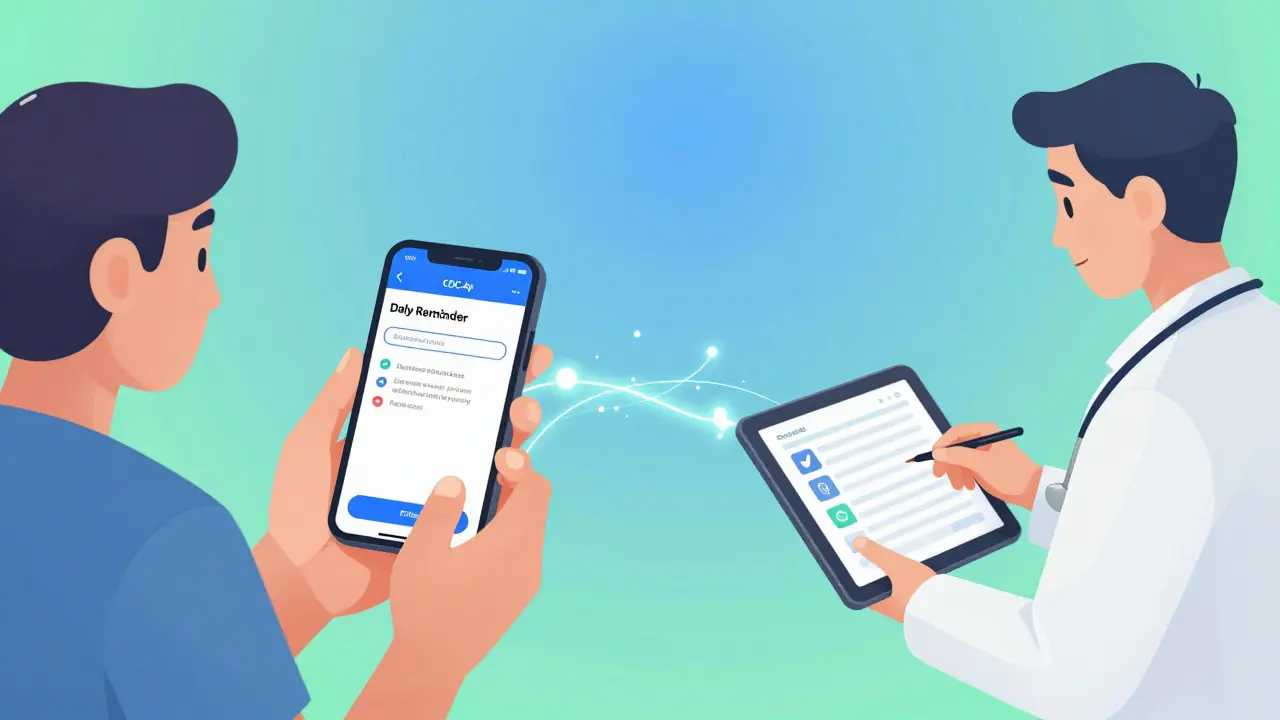
Digital tools like Symptomate or CDC’s v-safe system can help. These apps auto-fill symptom checklists, send reminders, and let you log severity with a tap. But not all apps are safe. A 2021 HHS report found 67% of symptom-tracking apps didn’t meet HIPAA privacy standards. If you use one, make sure it’s from a trusted source like your hospital, the CDC, or FDA-approved partners. Avoid random apps from the app store.
Set a Routine That Works
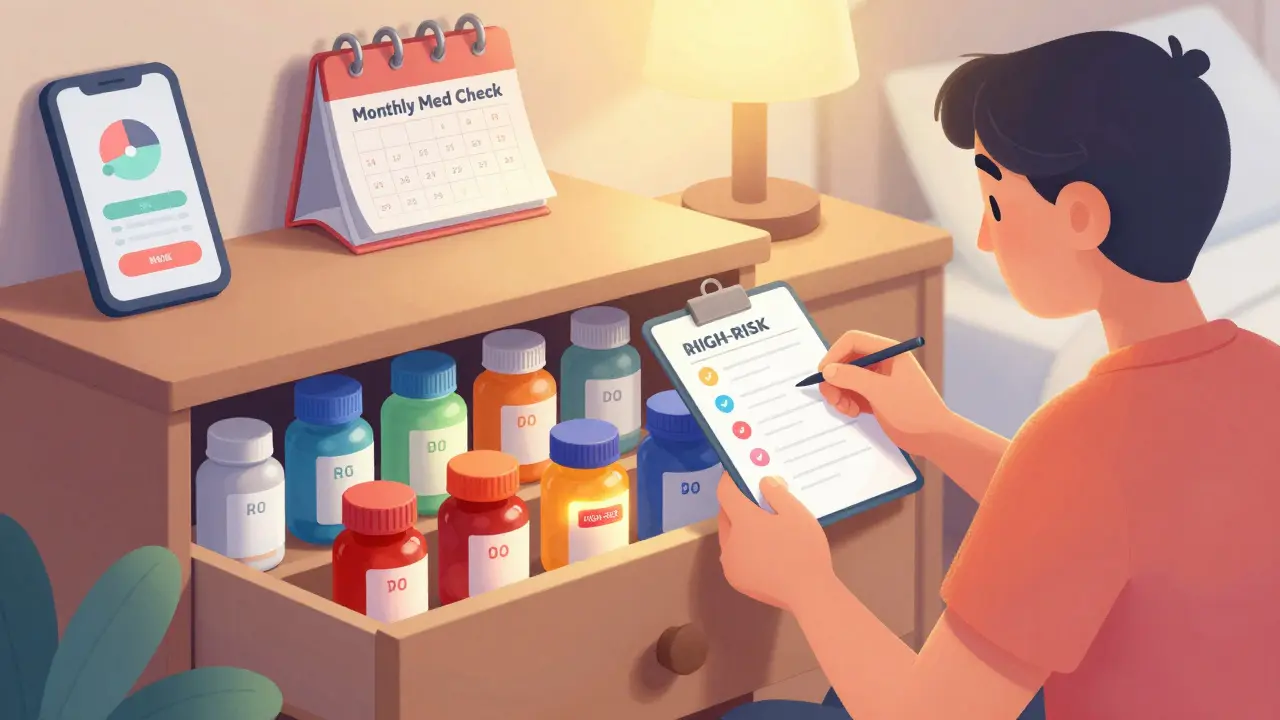
Monitoring works best when it’s part of your day. Pick a time that sticks. Maybe it’s right after brushing your teeth in the morning. Or before bed. Consistency matters more than perfection.Here’s a simple daily routine:
- Take 2 minutes to review how you felt since the last check.
- Rate any symptoms on a 0-10 scale.
- Write down triggers: Did you eat something new? Sleep less? Take the medication at a different time?
- Log any new symptoms-even small ones.
- Mark "no change" if nothing’s different.
Don’t wait for something scary to happen. Early signs are often subtle. A slight headache. A change in appetite. A new rash that fades quickly. These aren’t "normal." They’re clues.
Know When to Call for Help
You don’t need to panic every time you feel off. But you do need a clear action plan. The CDC and FDA agree: if any symptom hits a 7 or higher on your scale, or if you have two or more symptoms at 5 or above, call your provider. Don’t wait. Don’t wait until tomorrow. Don’t wait until your next appointment.Also call if:
- A symptom gets worse over 24 hours
- You develop a new symptom that wasn’t listed but feels wrong
- You feel dizzy, confused, or have trouble breathing
- You’re unsure and feel uneasy
Trust your gut. A 2023 study in Health Affairs showed that patients who trusted their instincts and called early had 41% better outcomes than those who waited for "clear signs." Your body knows when something’s off before you can name it.
Document Everything
Keep a record. Not just for yourself. For your doctor. For future reference. Write down:- Date and time of each symptom entry
- Severity rating
- What you were doing when it happened
- Medications taken that day
- Any changes in diet, sleep, or stress
Use a simple spreadsheet, a notebook, or a secure app. OSHA requires employers to keep exposure records for 30 years. The FDA requires manufacturers to keep symptom data for 2 years. You should keep yours at least that long. You never know when this data will be needed.
Watch for Red Flags in Monitoring Systems
Not all monitoring is helpful. Some systems create more stress than safety.Watch out for:
- Too many alerts. If you’re getting 8+ notifications a day, you’ll start ignoring them. The average optimal number is 4-5 per day.
- Apps that don’t let you export your data. If you can’t download your logs, you’re stuck if you switch providers.
- Systems that don’t connect to your EHR. If your doctor can’t see your logs, they’re useless.
- Language barriers. If the app or form isn’t in your native language, you’re more likely to miss symptoms. A Johns Hopkins study found automated checkers were 22% less accurate for non-English speakers.
If a system feels overwhelming or confusing, ask your provider for alternatives. You have a right to a monitoring plan that works for you.
What Happens After You Report?
Once you report symptoms, your provider will likely:- Review your logs
- Order a blood test or imaging if needed
- Adjust or stop the medication
- File a report to the FDA’s MedWatch system
You might be asked to stop using the product. That’s not a failure. It’s a smart move. The goal isn’t to prove you’re right-it’s to protect your health.
And here’s the thing: your report matters. The FDA received over 120,000 symptom reports from patients in 2023. Nearly 40% of those led to updated safety labels or product recalls. Your voice changes the system.
What if I don’t have symptoms after a safety communication?
Even if you feel fine, you still need to monitor. Many serious reactions develop slowly. A symptom might not show up for days or even weeks. Stopping monitoring because you feel okay is like ignoring a smoke alarm because the kitchen isn’t on fire yet. Log "no symptoms" daily. That data helps your provider know you’re safe-or spot a change early.
Can I use a regular notes app to track symptoms?
Yes, but only if you’re careful. Use a password-protected app like Apple Notes (with iCloud encryption) or Google Keep (with 2-factor auth). Avoid public apps like Evernote or OneNote unless you’ve turned on private sharing. Never use a shared device or unsecured cloud service. A 2021 HHS report found that 67% of symptom-tracking apps failed HIPAA compliance. Your health data isn’t public.
How long should I keep monitoring?
Follow the guidance in the safety communication. If it says "monitor for 30 days," do it. If it says "monitor for 6 months," do that. Some reactions, like liver damage or nerve changes, take time to show up. The FDA requires manufacturers to track symptoms for at least 2 years after a safety alert. You should too. Keep your logs for at least 3 years.
What if I miss a day of monitoring?
Don’t panic. Just resume the next day. But if you miss more than two days in a row, tell your provider. Gaps in tracking can hide patterns. If you’re having trouble remembering, set a daily alarm. Or ask a family member to remind you. Consistency matters more than perfection.
Do I need to report every small symptom?
Yes-if it’s new, unusual, or persistent. A mild headache you’ve had for 10 years? Probably not. A headache that started yesterday and won’t go away? Yes. The goal isn’t to report everything. It’s to report changes. Your provider is trained to spot patterns. Even small changes can signal something bigger.
Can symptom monitoring be automated?
Some systems can. AI tools are being tested to predict reactions based on your health history, sleep patterns, and symptom logs. But they’re not reliable yet. A 2023 Johns Hopkins study found these tools had 22% lower accuracy for older adults and non-English speakers. Don’t rely on automation. Use it as a helper, not a replacement. Always verify alerts with your provider.



Robert Petersen on 10 February 2026, AT 15:12 PM
Love this breakdown. Seriously, most people treat safety alerts like spam emails and scroll past. But this? This is the kind of info that could save your life. I’ve been using a simple Google Sheet to log symptoms after my last vaccine boost - even just noting "no change" every day. It’s weirdly calming. Like keeping a diary for your body. And yeah, if something hits 7 or above? I call my doc. No hesitation.