
If you’ve ever opened a pill bottle and thought something felt off-maybe the color’s wrong, the label looks blurry, or the pills taste strange-you’re not imagining things. Counterfeit drugs are real, dangerous, and more common than most people realize. In 2022, over $230 billion worth of fake medicines were sold globally. These aren’t just ineffective-they can kill. A counterfeit antibiotic might have no active ingredient, leaving you vulnerable to a deadly infection. A fake painkiller could contain fentanyl, causing an overdose. And a fake insulin? That’s a death sentence waiting to happen.
What Exactly Counts as a Counterfeit Drug?
A counterfeit drug is any medicine that’s been deliberately and fraudulently mislabeled. That means it could have:- The wrong active ingredient-or none at all
- Too little or too much of the right ingredient
- Contaminants like rat poison, paint, or industrial chemicals
- Wrong packaging, misspelled names, or fake batch numbers
Why Reporting Matters
Reporting a fake drug isn’t just about getting your money back. It’s about stopping someone else from getting hurt-or worse. Every report helps authorities track where these drugs are coming from, shut down illegal operations, and pull dangerous products off the market. In 2022, the FDA’s Office of Criminal Investigations opened over 1,800 counterfeit drug cases. Those cases led to arrests, seizures, and the removal of millions of fake pills from circulation. If no one reports fake drugs, they keep flowing. Your report could be the one that stops a deadly batch from reaching a hospital, a nursing home, or a teenager buying pills online.How to Report: Step-by-Step
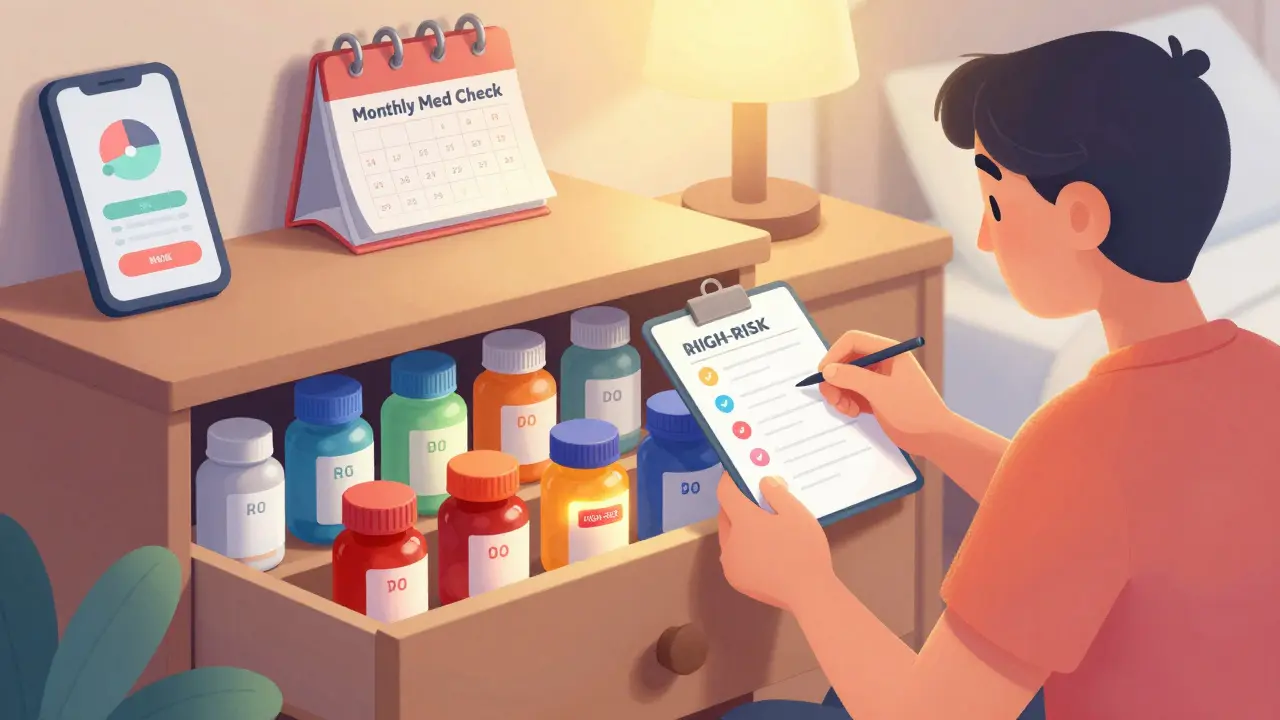
Here’s what to do if you suspect a drug is fake. Don’t wait. Don’t throw it away. Act.- Keep the product. Don’t take it. If you’ve already taken it and feel sick, call a doctor immediately. But if you haven’t, leave the pills, bottle, and packaging exactly as they are. This is your evidence.
- Take clear photos. Snap pictures of the entire package, the label, the pills themselves, and any odd markings. Include a ruler or coin next to the pill for scale. If the label has typos, blurry text, or mismatched fonts-get it on camera.
- Write down everything you know. What’s the drug name? Strength? Lot number? Where did you buy it? Online? In person? From a website? A friend? A street vendor? When did you buy it? Did you experience any side effects?
- Report it to the right place. This is where most people get stuck. Here’s how to choose:
If You’re in the United States
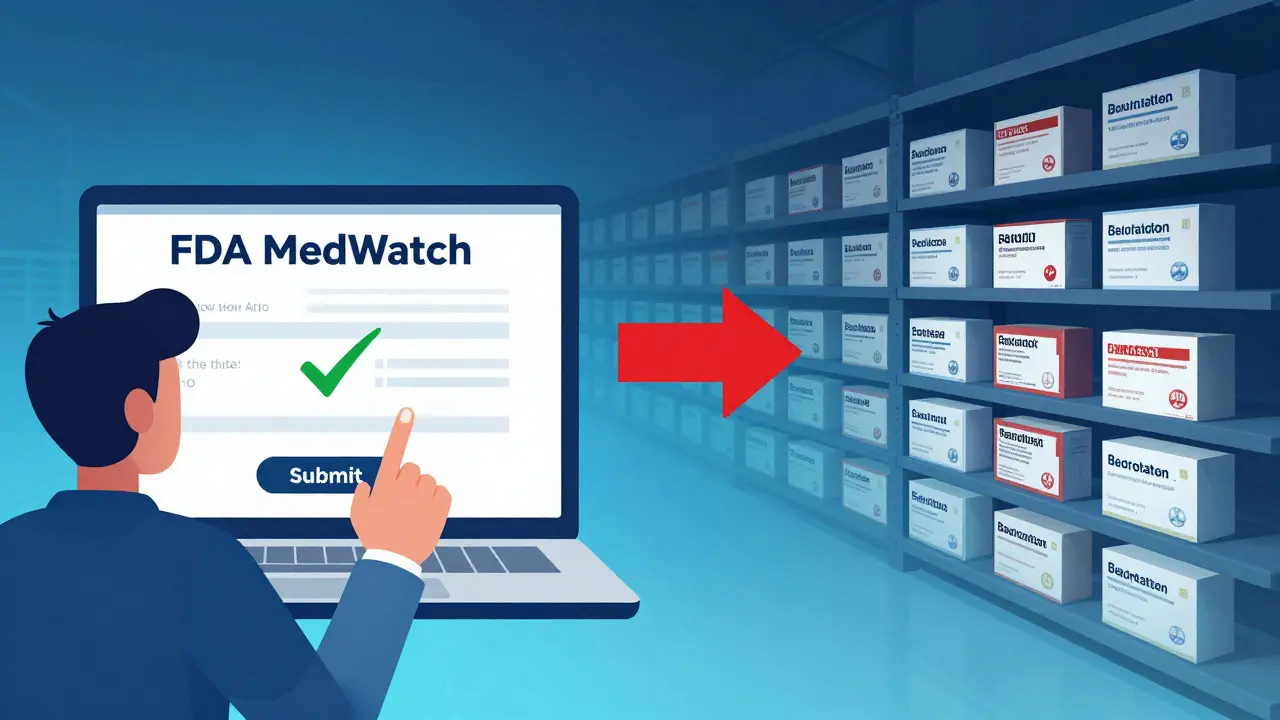
- For health effects or general concerns: Use the FDA’s MedWatch program. Go to www.fda.gov/medwatch and fill out Form 3500 online. You can also call 1-800-FDA-1088. This is the fastest way to get your report into the system. Most electronic submissions get a confirmation within 72 hours.
- If you think it’s a criminal operation: Report to the FDA’s Office of Criminal Investigations (OCI) at www.fda.gov/oci. This is for cases where you suspect a network-like a fake website, a warehouse, or a distributor. You’ll need more detail: dates, locations, names if you have them.
- If it’s a controlled substance (like Adderall, Xanax, or opioids): Also report to the DEA at www.dea.gov/submit-tip. They handle illegal drugs and can act faster on these.
If You’re Outside the U.S.
- Use your country’s national drug regulator. In Australia, report to the TGA (Therapeutic Goods Administration). In the UK, contact the MHRA. In Canada, use Health Canada’s adverse reaction reporting system.
- For global tracking: The World Health Organization (WHO) has a global reporting system. Submit details at who.int/sfmeds. They don’t investigate locally, but they share data across borders.
- For pharmaceutical companies: If you bought a brand-name drug (like Pfizer’s Viagra or Roche’s Tamiflu), contact the manufacturer directly. Many have 24/7 hotlines. Pfizer responds to reports within 4 business hours.
What Happens After You Report?
After you submit, here’s what you can expect:- You’ll get a case number (if you report online). Keep it.
- It may take days or weeks to hear back. Don’t assume silence means nothing’s happening.
- Authorities may contact you for more info. They might ask for the original packaging. Don’t throw it out.
- If your report leads to a seizure or investigation, you won’t always be told. That’s normal. Law enforcement protects its sources and methods.
Red Flags: How to Spot a Fake Drug
You don’t need to be a pharmacist to spot danger. Look for these common signs:- Spelling errors on the label - “Advil” misspelled as “Advil” or “Lipitor” as “Liptor” - happens in 78% of counterfeits.
- Missing or fake lot numbers - Legitimate drugs always have them. If it’s blank or looks printed with a home printer, be suspicious.
- Unusual color, shape, or texture - If your generic pills are now a different shade or crumble easily, that’s a warning.
- Packaging that looks cheap - Flimsy blister packs, mismatched fonts, or holograms that don’t change when you tilt the box.
- Buying from websites without a physical address or license - The National Association of Boards of Pharmacy found 96% of online pharmacies operating without proper credentials.
What NOT to Do
- Don’t destroy the product. Evidence matters. Keep it sealed.
- Don’t report to the wrong agency. Calling your local police about a fake blood pressure pill won’t help. They don’t handle pharmaceutical fraud.
- Don’t assume it’s a one-off. Fake drugs are part of a supply chain. One report can stop hundreds of others.
- Don’t wait until someone gets hurt. Report as soon as you suspect.
What’s Being Done to Stop This?
Governments and companies are fighting back. The U.S. Drug Supply Chain Security Act now requires every prescription drug to have a digital serial number by 2023. The WHO launched a global alert system. The Pharmaceutical Security Institute uses AI to verify fake reports in under 5 hours-down from 3 days. The FDA now works with manufacturers to put QR codes on packaging so you can scan and verify authenticity in seconds. But technology alone won’t fix this. It needs people. It needs you.Final Thoughts
Reporting a fake drug feels small. But it’s not. In 2022, the FDA intercepted 1.2 million counterfeit pills at U.S. ports-because someone reported one. That’s the ripple effect. One report. One bottle. One pill. It can save a life. If you’re unsure whether to report, report anyway. Better safe than sorry. The system is built for this. Your voice matters.What should I do if I’ve already taken a counterfeit drug?
Stop taking the medication immediately. Contact your doctor or go to the nearest emergency room if you feel unwell. Tell them you suspect a counterfeit drug and bring the packaging with you. Then report it to your national drug regulator-like the FDA in the U.S. or the TGA in Australia. Even if you feel fine, it’s important to report so authorities can track the product and warn others.
Can I report a fake drug I bought online?
Yes-and you should. Online pharmacies are the #1 source of counterfeit drugs. Report the website to your country’s regulator and also to the FBI’s Internet Crime Complaint Center (IC3) if you’re in the U.S. Provide the URL, screenshots of the site, payment details, and any communication you had with the seller. Authorities use this to shut down illegal operations.
Do I need proof to report a counterfeit drug?
You don’t need hard proof-just reasonable suspicion. Authorities don’t expect you to be a forensic expert. If the packaging looks wrong, the pills don’t match your usual prescription, or the price was suspiciously low, that’s enough to report. Photos and notes help, but even a verbal description can trigger an investigation.
Will I get in trouble for reporting a fake drug I bought illegally?
No. Reporting systems are designed to protect public health, not punish consumers. Authorities understand people buy from unverified sources out of necessity or ignorance. Your report helps them catch the criminals-not you. Your identity is kept confidential unless you choose to share it.
How long does it take for authorities to act after I report?
It varies. For urgent cases-like a fake insulin or opioid-the FDA’s criminal investigations team can respond within 48 hours. For general MedWatch reports, you’ll get an acknowledgment in 3 days. Full investigations can take weeks or months, especially if the fake drug came from overseas. But every report adds to the data that eventually leads to busts and seizures.



John O'Brien on 27 January 2026, AT 05:38 AM
This is straight-up life-saving info. I had no idea fake insulin could be out there. I just checked my meds and the bottle looked a little off. Going to snap pics and report today. No more guessing.