

Medication Nausea Prevention Calculator
How to Use This Tool
Enter your medication details and symptoms to get personalized recommendations to prevent and relieve nausea.
Enter your information above to see personalized recommendations
Many people start a new medication expecting it to help - but end up feeling sick instead. Nausea and vomiting from drugs aren’t just annoying; they can make you skip doses, delay treatment, or even quit your medicine altogether. If you’ve ever felt queasy after taking an antibiotic, painkiller, or even a daily vitamin, you’re not alone. About 1 in 3 people on common medications experience nausea, and for those on chemotherapy, it’s as high as 80% without proper prevention. The good news? You don’t have to just suffer through it. There are clear, proven ways to stop it before it starts - and ways to feel better fast when it does.
Why Do Medications Make You Nauseous?
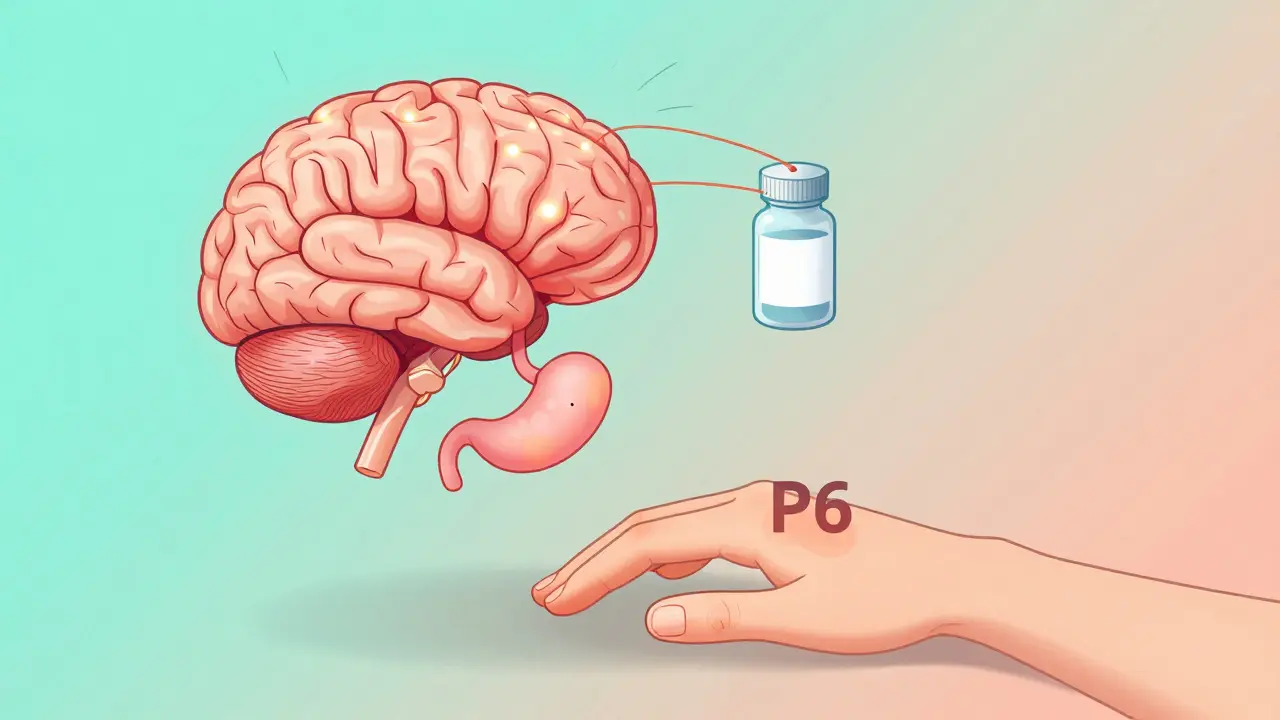
It’s not just your stomach being picky. Nausea from meds happens because of how drugs interact with your body’s natural systems. Some medications irritate the lining of your stomach directly - think NSAIDs like ibuprofen or aspirin. Others trigger the chemoreceptor trigger zone in your brain, a spot that acts like a poison detector. When it senses certain chemicals, it sends a signal to your vomiting center, and boom - you feel sick. Chemotherapy drugs are notorious for this. But even everyday pills like antibiotics, SSRIs, or multivitamins can set it off.
Timing matters too. Taking a pill on an empty stomach makes nausea worse for many drugs. So does taking multiple meds at once. And if you’ve had nausea before with a certain drug, your brain can start anticipating it - even before you take the pill. That’s called anticipatory nausea, and it’s real. It’s not just in your head; it’s your nervous system learning to react.
First-Line Prevention: Simple, Free, and Effective
Before you reach for a prescription antiemetic, try these no-cost, no-side-effect strategies. They work for most people, especially with common offenders like antibiotics, NSAIDs, and iron supplements.
- Take meds with food - unless your doctor says otherwise. A small snack like toast, crackers, or yogurt can buffer your stomach and reduce irritation. Don’t wait until you’re hungry - eat something light 20-30 minutes before your pill.
- Avoid heavy, greasy, or spicy meals around medication time. These are harder to digest and can make nausea worse.
- Eat small, frequent meals instead of three big ones. Your stomach doesn’t have to work as hard, and keeping it slightly full helps prevent that empty, queasy feeling.
- Stay hydrated - but sip slowly. Chugging water can trigger vomiting. Try ice chips, clear broths, or diluted juice. Dehydration makes nausea worse and harder to recover from.
- Avoid your favorite foods during treatment. If you eat your favorite meal right before you get sick, your brain may link the food to nausea. You could end up losing your taste for it permanently.
One patient on Reddit shared that ginger chews every two hours cut her chemo nausea from an 8 out of 10 down to a 3. Ginger isn’t a miracle cure, but dozens of studies show it works as well as some prescription drugs for certain types of nausea. Try ginger tea, ginger ale (real ginger, not just flavoring), or capsules - 250-500 mg up to four times a day.
Environmental and Behavioral Tricks
Your surroundings can make nausea better or worse. When you feel queasy, try these:
- Get fresh air - open a window, step outside, or sit near a fan. Stuffy rooms make nausea feel worse.
- Use cool compresses on your neck or forehead. Lowering your skin temperature can calm your nervous system.
- Practice slow breathing - inhale for 4 counts, hold for 4, exhale for 6. Repeat for 2 minutes. This signals your body to relax and reduces the stress response that worsens nausea.
- Try acupressure - press the P6 point, located about three finger-widths below your wrist crease on the inside of your forearm. Wristbands like Sea-Bands apply pressure here and are backed by clinical studies for motion sickness and post-op nausea.
For people who get anticipatory nausea - the kind that hits just thinking about taking their meds - behavioral techniques like guided imagery or cognitive behavioral therapy (CBT) can be game-changers. Studies show CBT reduces anticipatory nausea by up to 50% in cancer patients. It’s not a quick fix, but it’s one of the few treatments that actually targets the brain’s learned response.
When You Need Medication to Stop the Nausea
If simple fixes don’t work, your doctor can prescribe anti-nausea drugs. Not all are the same - they target different pathways. Here’s what’s actually used in real clinical practice:
- 5-HT3 antagonists - like ondansetron (Zofran) or granisetron (Kytril). These block serotonin in the gut and brain. They’re the go-to for chemo and post-surgery nausea. One 4mg dose can reduce vomiting by 60-70%. Side effects? Headache or constipation.
- NK-1 antagonists - like aprepitant (Emend) or rolapitant (Varubi). These are stronger, used for highly emetogenic chemo. Often paired with ondansetron and dexamethasone. They’re more expensive - up to $300 per dose without insurance - but they cut delayed nausea by 75%.
- Mirtazapine - an antidepressant that also blocks nausea signals. Used off-label at low doses (15-30mg) for post-op or chronic nausea. Helps with appetite too.
- Low-dose tricyclic antidepressants - like nortriptyline or amitriptyline. These aren’t for acute nausea. They’re for people with long-term, unexplained nausea (functional nausea). One study showed 51% of patients had complete relief, but another found no benefit for gastroparesis. Use only under supervision.
Don’t assume the newest drug is best. For many, ondansetron alone is enough. For others, combining two drugs - like ondansetron with dexamethasone - works better than either alone. Your doctor should match the drug to your risk level, not just your symptoms.
What Not to Do
Some common advice actually makes things worse:
- Don’t stop your medication without talking to your doctor. Many people reduce or skip doses because they’re nauseous. One survey found 35% of patients doing this - and it can make their main condition worse.
- Don’t rely on over-the-counter motion sickness pills like meclizine for drug-induced nausea. They work for motion, not for chemo or antibiotics. They’re often ineffective and can cause drowsiness.
- Don’t take anti-nausea meds with grapefruit juice. It can interfere with how your body breaks down drugs like ondansetron and increase side effects.
- Don’t ignore other causes. Nausea could be from an infection, dehydration, anxiety, or another condition. If nausea starts weeks after beginning a drug, or if it’s worse at night, your doctor should check for other triggers.

Special Cases: Chemo, Surgery, and Kids
For chemotherapy patients, guidelines are clear: use a triplet regimen - NK-1 antagonist + 5-HT3 antagonist + dexamethasone - for highly emetogenic drugs like cisplatin. For moderate-risk chemo, just the 5-HT3 drug and dexamethasone is enough. Prophylaxis should start before the first treatment, not after nausea hits.
In surgery, a simple rule: if you’re a non-smoking woman, you’re at higher risk for post-op nausea. Many hospitals now use a two-point risk score to decide who gets preventive meds. Triple prophylaxis (dexamethasone + ondansetron + another drug) cuts nausea by nearly half in high-risk patients.
For children, rolapitant (Varubi) was approved for ages 2-17 in 2023. It’s a big step forward - kids weren’t always treated the same as adults. Always ask if the drug is approved for your child’s age. Dosing is weight-based, so never guess.
Tracking Progress and When to Call Your Doctor
Keep a simple log for a few days: note the time you took your meds, what you ate, how bad the nausea was (1-10 scale), and if you vomited. This helps your doctor spot patterns. Did nausea start only after lunch? Did it improve after you started ginger? Did it get worse when you skipped breakfast?
Call your provider if:
- Nausea lasts more than 48 hours after starting a new drug
- You can’t keep fluids down for 12 hours
- You lose 5% or more of your body weight in a week
- You feel dizzy, confused, or have a rapid heartbeat
These could mean dehydration, an electrolyte imbalance, or a reaction needing urgent care.
What’s Next for Nausea Management?
The future of nausea control is personal. Researchers are testing drugs like HTL0022261 - a new 5-HT3 blocker with fewer heart risks. Apps like Nausea Tracker are being piloted in 42% of top cancer centers to log symptoms in real time. And pharmacogenomics - testing your genes to predict which antiemetic will work best for you - is moving from labs to clinics.
But for now, the most powerful tools are still simple: eat before you take your pill, sip ginger tea, breathe slowly, and speak up if you’re struggling. You don’t have to suffer in silence. Your meds are meant to help you - not make you feel worse. With the right plan, you can take them without the nausea.
Can I take ginger with my anti-nausea medication?
Yes, ginger is generally safe to take with most anti-nausea drugs like ondansetron or dexamethasone. Studies show it works through different pathways than prescription meds, so it can add extra relief. Try 250-500 mg of ginger powder or a few ginger chews every 2-4 hours. Avoid large doses if you’re on blood thinners - ginger can slightly affect clotting.
Why does my nausea get worse at night?
Nighttime nausea can happen because your stomach is empty after hours without food, or because lying flat slows digestion. It can also be tied to anxiety or stress that builds up during the day. Try a small, bland snack before bed - like crackers or toast. Elevate your head slightly with an extra pillow. If it’s new and persistent, talk to your doctor - it could signal another issue like acid reflux or a medication interaction.
Are generic anti-nausea drugs as good as brand names?
For most drugs like ondansetron, yes - generics work just as well. The active ingredient is identical. But for complex combinations like Akynzeo (netupitant + palonosetron), there’s no generic yet. Cost can be a big factor: generic ondansetron costs under $10 per dose, while brand-name aprepitant can run over $200. Always ask your pharmacist if a generic is available and appropriate.
Can stress make medication nausea worse?
Absolutely. Stress activates your nervous system in ways that slow digestion and heighten sensitivity to nausea. If you’re anxious about taking your meds - especially if you’ve had bad nausea before - your body may react even before you swallow the pill. Breathing exercises, meditation, or talking to a counselor can reduce this effect. Some cancer centers now include behavioral health as part of standard care for nausea.
What if nothing works? Should I stop my medication?
Never stop a prescribed medication without talking to your doctor. If nausea is severe and doesn’t improve with standard strategies, your provider can switch your drug, adjust the dose, or try a different anti-nausea combo. There are often alternatives. For example, if one antibiotic causes nausea, another might not. Or if chemo is too much, your team can change the regimen. Your health depends on sticking with treatment - and there are always more options than quitting.



Jeremy Hendriks on 22 December 2025, AT 14:29 PM
Let’s be real - nausea isn’t just a side effect, it’s your body’s way of screaming that your chemistry is being hijacked. We treat meds like magic bullets, but they’re more like sledgehammers in a china shop. Your brain didn’t evolve to handle synthetic molecules from a pill bottle. It evolved to spit out poison. So when you feel queasy after taking that ‘miracle’ antibiotic? That’s not weakness. That’s your ancient survival system doing its job. We need to stop pathologizing the body’s natural defense and start listening to it.