
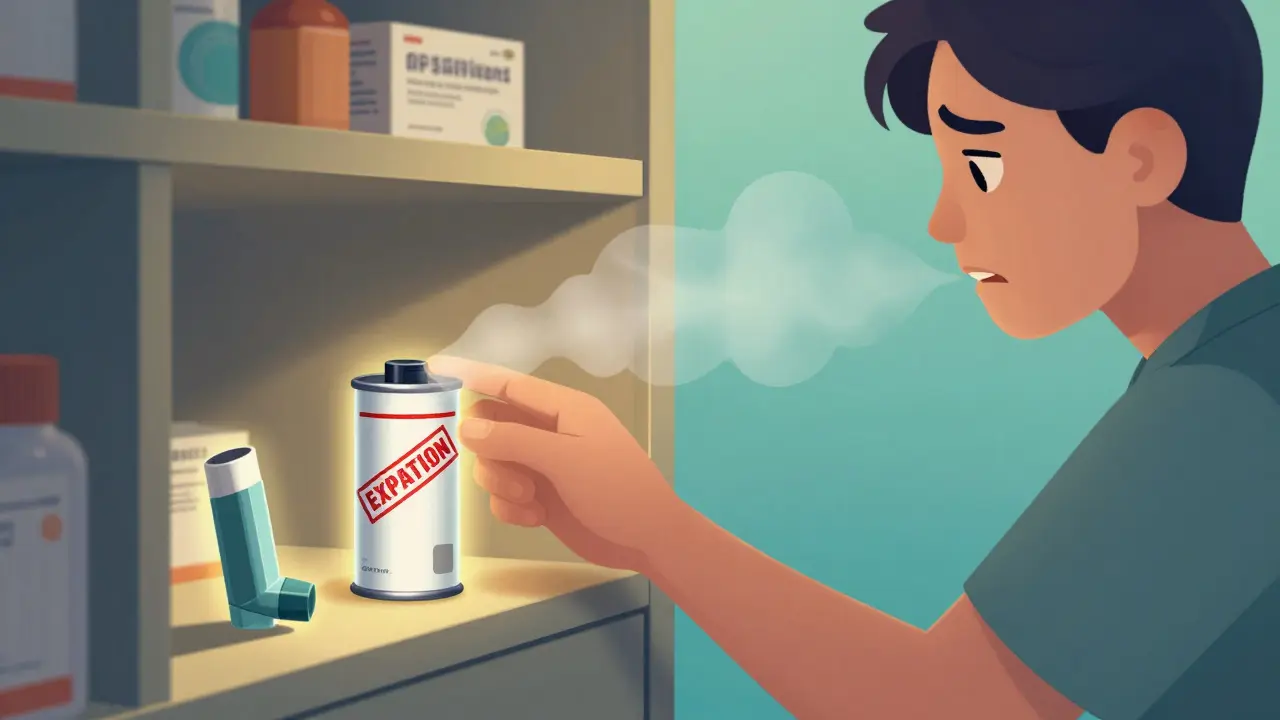
Most people don’t think twice about grabbing an old inhaler, eye drop bottle, or cream from the medicine cabinet when they need it. But using expired medications isn’t just a bad habit-it can be dangerous. Especially when it’s your only defense during an asthma attack or a sudden eye infection. The expiration date isn’t just a suggestion. It’s the last day the manufacturer guarantees the medicine will work as intended. And for some drugs, that difference can mean the difference between life and death.
Why Expired Inhalers Are a Serious Risk
Inhalers like Ventolin, ProAir, or Advair are life-saving tools for people with asthma or COPD. But once they expire, they don’t just lose strength-they become unpredictable. A 2021 study in the Chest Journal found that inhalers used more than 12 months past their expiration date delivered only 60-70% of the labeled dose. That means if you need a full puff to open your airways, you might get less than half. In an emergency, that gap can be fatal.
What makes inhalers especially risky is their design. Metered-dose inhalers (MDIs) use pressurized propellants to spray medication. Over time, those propellants leak or break down. A 2020 FDA stability report showed that 18 months after expiration, pressure in Combivent Respimat drops by 25%. That doesn’t just make the spray weaker-it can cause the device to misfire or deliver no dose at all. And here’s the scary part: even when the inhaler feels like it’s working, you might not be getting the right amount. One study found dose variability jumped from 5% in fresh inhalers to 35% in expired ones.
And don’t assume your inhaler is safe just because it’s been stored in a cool, dry place. Once you remove it from its original foil packaging, degradation speeds up. ProAir RespiClick, for example, is only guaranteed to work for 13 months after you open the pouch. After that, potency drops fast-even if the canister still makes a hissing sound.
Eye Drops: A Hidden Risk of Infection
Eye drops seem harmless. You squeeze a few drops, you feel better. But expired eye drops aren’t just ineffective-they’re contaminated. A 2022 study in Clinical Ophthalmology tested over 200 expired artificial tear bottles. At 30 days past expiration, 42% showed signs of bacterial growth. That’s more than five times higher than unexpired bottles. And those bacteria? They can cause serious eye infections, corneal ulcers, or even permanent vision damage.
Unlike pills, eye drops are sterile liquids. Once you open the bottle, you’re introducing germs every time you use it. Preservatives slow this down, but they break down after the expiration date. Even if the solution looks clear and smells fine, it’s no longer safe. The American Academy of Ophthalmology warns that using expired drops is one of the most common causes of preventable eye infections in adults over 50.
And here’s the catch: some people keep eye drops for months after opening, thinking they’re still good. But the expiration date isn’t just about age-it’s about how long the product stays sterile after opening. Most bottles say “discard after 28 days” on the label. If you’re still using a bottle from last winter, you’re risking your eyes.
Topical Medications: Less Risk, But Still Not Safe
Topical creams like hydrocortisone or antifungal ointments are less dangerous than inhalers or eye drops, but they’re not harmless. When these products expire, they don’t turn toxic-they just lose strength. A 2019 analysis found hydrocortisone cream retained 90% of its potency for six months after expiration if stored below 25°C. But at 30°C-like in a hot bathroom-potency dropped to 65%.
That means if you’re using an expired cream for eczema or a rash, you might not be getting enough medicine to work. You’ll keep applying it, thinking it’s not working, and end up using way more than you should. That can lead to skin thinning, irritation, or even systemic absorption if used over large areas.
Also, creams can separate, change color, or develop an odd smell. If your hydrocortisone looks grainy, smells rancid, or has changed from white to yellow, toss it. That’s not just a sign of age-it’s a sign of chemical breakdown. And while it won’t poison you, it won’t help you either.
What Happens When You Use Expired Medications
Some people swear they’ve used expired meds and got by fine. And yes, for a few non-critical drugs-like antihistamines or pain relievers-there’s some evidence they stay effective longer under ideal conditions. The FDA’s Shelf Life Extension Program found that 88% of tested drugs maintained potency for years beyond their expiration date… but only if stored perfectly.
Here’s the problem: that program didn’t test inhalers, eye drops, or insulin. Those are the ones you can’t afford to gamble with. And even if your old albuterol inhaler gives you a little relief, it’s not reliable. A Reddit survey of 428 asthma patients found that 32% had a flare-up they couldn’t control with an expired inhaler. One 24-year-old ended up in the ER because his “still-working” inhaler didn’t open his airways during a severe attack.
And if you think you’re saving money by reusing old meds, think again. A 2022 survey by the Asthma and Allergy Foundation of America found that 41% of low-income patients used expired inhalers because they couldn’t afford new ones. But the cost of an ER visit for an uncontrolled asthma attack? It’s over $1,500 on average. A new inhaler costs $25-$50. The math doesn’t add up.
How to Dispose of Expired Medications Properly
Don’t flush them. Don’t throw them in the trash. Don’t pour them down the sink. That’s how pharmaceuticals end up in rivers, lakes, and drinking water. The U.S. Geological Survey found medication residues in 80% of U.S. waterways.
The safest way? Use a drug take-back program. There are over 11,000 authorized collection sites across the U.S., including pharmacies like CVS and Walgreens. Most offer free drop-off bins year-round. Just bring your expired inhalers, eye drops, or creams in their original containers.
For inhalers specifically, some states like Washington offer free prepaid mailers. Amazon Pharmacy launched a free mail-back program in late 2023, and more are following. You can also call the Medicine Safe Disposal Hotline at 1-800-222-1222 to find the nearest drop-off point.
If you absolutely must dispose of them at home:
- Remove the medication from the device if possible (e.g., take the powder out of a DPI).
- For inhalers: remove the metal canister from the plastic mouthpiece. The plastic part goes in recycling; the metal canister is hazardous waste and must be taken to a collection site.
- For liquids and creams: mix them with coffee grounds, cat litter, or dirt to make them unappealing.
- Seal everything in a plastic bag and throw it in the trash.
Never recycle inhalers. The propellant inside is flammable and classified as hazardous waste under federal law. Throwing one in the trash can cause explosions in waste trucks.
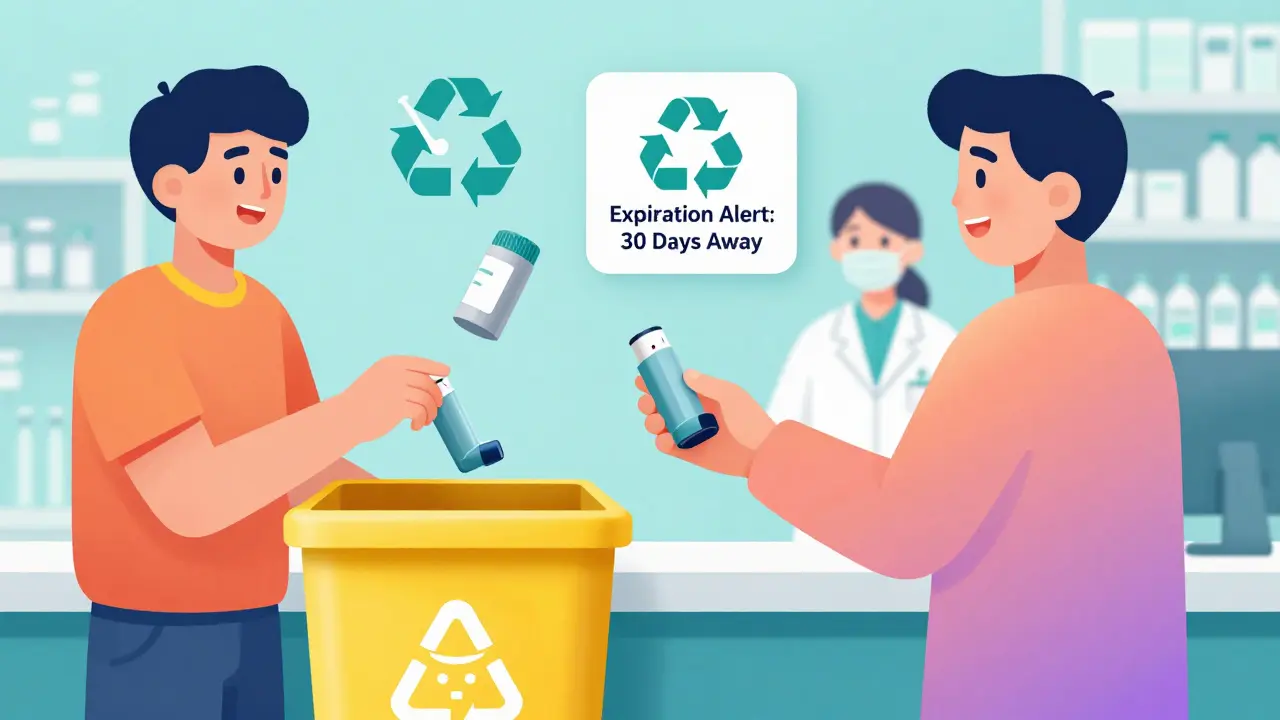
How to Prevent Expired Medications in the First Place
One of the best ways to avoid expired meds is to buy only what you need. Don’t stockpile. Ask your pharmacist for a 30-day supply instead of a 90-day one if you’re not sure you’ll use it all.
Check your medicine cabinet every six months. Put a sticky note on the date you opened each bottle or package. Set a phone reminder 30 days before expiration. Use apps like Medisafe or MyTherapy to track expiration dates automatically.
And if you’re on a tight budget, ask about patient assistance programs. Many drugmakers offer free or low-cost inhalers to qualifying patients. The Asthma and Allergy Foundation of America partners with over 1,200 clinics to give out free disposal kits and new inhalers to people who can’t afford them.
What’s Changing in 2026
Things are improving. By 2027, 90% of major pharmacies are expected to offer full medication disposal services, thanks to new state laws and federal funding from the Inflation Reduction Act. Smart inhalers like Propeller Health’s GPS-enabled cap now alert you 30 days before expiration and guide you to nearby drop-off locations.
Even the FDA is reconsidering expiration dates for some respiratory drugs. A 2023 draft guidance suggests that under controlled storage, certain inhalers might safely last longer. But until those rules are finalized, treat every expiration date as absolute.
Bottom line: expired inhalers, eye drops, and topical meds aren’t worth the risk. They might seem harmless, but the consequences of using them when you need them most can be irreversible. Keep your meds fresh. Dispose of them safely. And never gamble with your health-or your life-on an old bottle.
Can I still use an expired inhaler in an emergency if I have no other option?
Only as a last resort. If you’re having an asthma attack and your inhaler is expired, using it is better than doing nothing-but it’s not reliable. Studies show expired inhalers may deliver only 60-70% of the correct dose. If you use it, still call 911 or go to the ER immediately. Don’t rely on it to control the attack. Keep a fresh inhaler on hand at all times.
Are expired eye drops dangerous even if they look fine?
Yes. Even if the solution looks clear and smells normal, bacteria can grow inside after expiration. A 2022 study found 42% of expired eye drops tested positive for harmful microbes. These can cause serious eye infections, corneal ulcers, or even blindness. Never use eye drops past their expiration date, regardless of how they look or feel.
Why can’t I just throw expired inhalers in the trash?
Because they contain pressurized gases like HFA propellants, which are flammable and classified as hazardous waste. When crushed in trash compactors or incinerated, these canisters can explode. They also pollute the air and soil. The FDA and EPA require special disposal. Always use a take-back program or mail-back service designed for inhalers.
Do all expired medications lose potency at the same rate?
No. Inhalers and eye drops degrade quickly because of their delivery systems and exposure to air. Creams degrade more slowly but are affected by heat and humidity. Pills and capsules tend to last longer if kept dry and cool. But expiration dates are set for the worst-case scenario-so never assume any drug is safe past its date.
Is there a way to tell if a medication is still good after expiration?
No reliable way exists for the average person. You can’t test potency at home. Even if a pill looks unchanged or an inhaler still sprays, it may not contain the right amount of active ingredient. The only safe rule: if it’s expired, dispose of it. Don’t risk your health on guesswork.


Colin Pierce on 27 January 2026, AT 14:27 PM
Used to keep my old Ventolin just in case-until my buddy had a full-blown attack and his expired inhaler gave him maybe a quarter puff. Ended up in the ER. Lesson learned: if it’s expired, it’s not a backup, it’s a liability. Just got my new one through a patient assistance program. No excuses anymore.
Also, never thought about how the metal canister is hazardous waste. Just tossed mine in the trash for years. Yikes.