
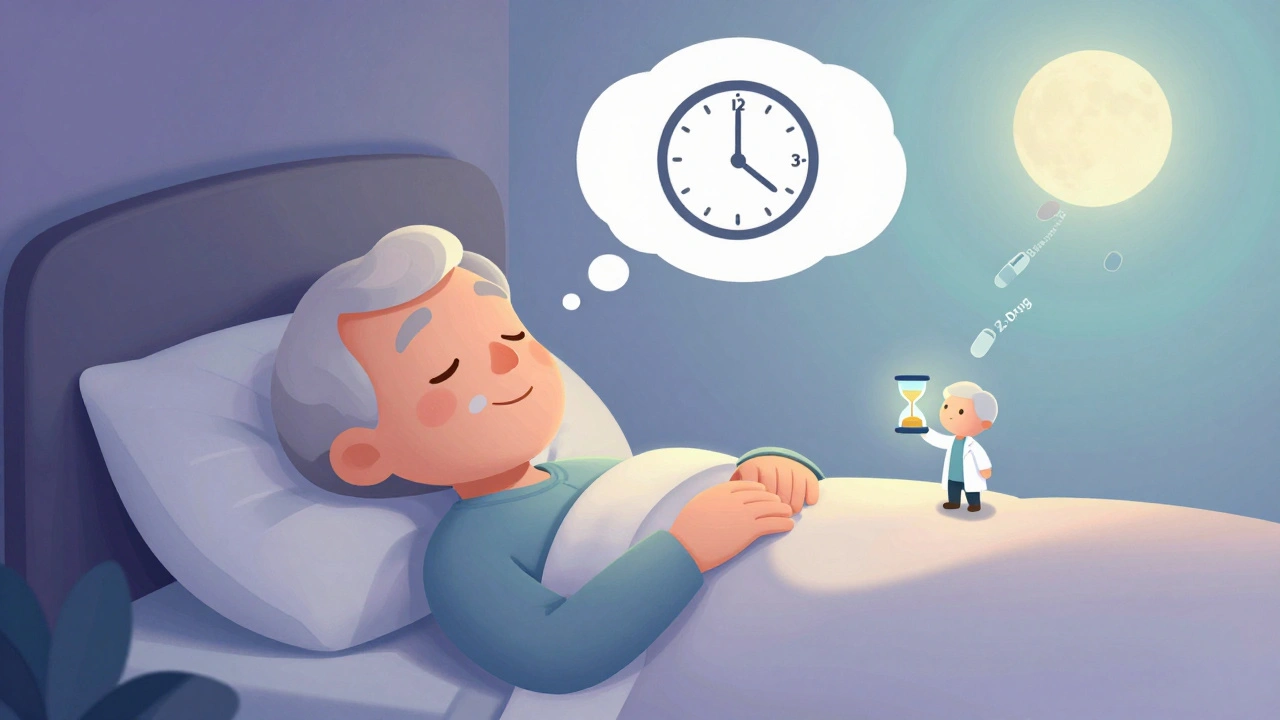
More than one in three adults over 65 struggle with insomnia. It’s not just about lying awake at night - it’s about waking up tired, feeling foggy all day, and fearing a fall when you get up to go to the bathroom. For years, doctors reached for sleeping pills like benzodiazepines or z-drugs, thinking they were harmless fixes. But the truth is, those pills can do more harm than good in older adults. The real goal isn’t just to fall asleep faster - it’s to stay safe, stay sharp, and sleep well without risking a broken hip or memory loss.
Why Older Adults Are at Higher Risk
As we age, our bodies change in ways that make sleep harder and medications riskier. The liver and kidneys don’t clear drugs as quickly. That means a pill that’s safe for a 40-year-old can build up in a 75-year-old’s system, causing next-day drowsiness, confusion, or loss of balance. Many older adults are also taking five or more medications daily - and some of those can interact badly with sleep drugs. A common painkiller or blood pressure pill might double the sedative effect of a sleeping tablet, turning a minor side effect into a dangerous fall.Studies show that older adults on traditional sleeping pills are 50% more likely to break a hip and 60% more likely to have a car accident or fall at home. Cognitive decline also speeds up. One 2024 study found that people over 65 who took benzodiazepines for more than three months had a 30% higher risk of developing dementia within five years.
What Medications Are No Longer First Choice?
The American Geriatrics Society made it clear in 2019: benzodiazepines like diazepam (Valium), lorazepam (Ativan), and triazolam (Halcion) should be avoided in older adults. Even short-acting ones like triazolam can cause memory blackouts and next-day grogginess. Z-drugs - zolpidem (Ambien), eszopiclone (Lunesta), and zaleplon (Sonata) - are no better. They may help you fall asleep, but they also increase the risk of sleepwalking, confusion, and falls. In fact, 34% of users report next-day drowsiness, and 8% have had strange behaviors like driving while asleep.Even though these drugs are still prescribed often - nearly half of older adults on sleep meds in Medicare Part D got a benzodiazepine or z-drug in 2023 - experts agree they’re not worth the risk. The benefits are small: maybe 10-20 extra minutes of sleep. The dangers? They’re huge.
The Safer Alternatives
The best sleep aids for older adults aren’t the strongest ones - they’re the safest. Three options stand out based on clinical data and real-world use.Low-Dose Doxepin (3-6 mg)
Doxepin is an old antidepressant, but at very low doses - just 3 or 6 milligrams - it works differently. It blocks histamine receptors, the same ones that make you feel sleepy after taking allergy medicine. This makes it ideal for sleep maintenance - the kind of insomnia where you wake up in the middle of the night and can’t fall back asleep.It’s been FDA-approved specifically for this use since 2010. A 2024 analysis found it improved sleep efficiency by over 6% - more than any other sleep medication studied. In patient reviews, 58% said it helped them stay asleep, and only 12% felt groggy the next day. It’s also cheap - generic doxepin costs about $15 a month. One Reddit user wrote: “Doxepin 3mg gave me 5 extra hours of solid sleep without the hangover I got from Ambien - wish my doctor had tried this first.”
Ramelteon (8 mg)
Ramelteon works by mimicking melatonin, the hormone that tells your body it’s time to sleep. It doesn’t sedate you - it helps reset your internal clock. That makes it perfect for people who have trouble falling asleep at the right time, especially if their sleep schedule is out of sync.It’s not strong - it reduces sleep onset time by about 10 minutes on average - but it’s extremely safe. No risk of dependence, no next-day drowsiness, no interaction with other drugs. It’s been called the “gentle” sleep aid. Dr. Karl Doghramji, a leading sleep specialist, says it’s a valuable first-line option because it “has a minimal adverse effect profile.”
Lemborexant (5-10 mg)
Lemborexant (brand name Dayvigo) is one of the newest options, approved in 2019. It works by blocking orexin, a brain chemical that keeps you awake. Unlike older drugs, it doesn’t shut down your whole nervous system - it just turns down the “wake signal.”Studies show it helps older adults fall asleep 15 minutes faster, stay asleep 21 minutes longer, and get nearly 43 extra minutes of total sleep. In a 2024 survey of 452 older adults, 72% were satisfied with it. The main downside? Cost. Without insurance, it can run $750 a month. But for people who can afford it, many report a “natural feeling sleep” - no fog, no grogginess, no weird dreams.
What About Melatonin?
Over-the-counter melatonin is popular, but most pills are way too strong - often 3 to 10 milligrams. That’s like dumping a whole night’s worth of hormone into your system at once. For older adults, the body makes less melatonin naturally, so a small, timed dose works better.Controlled-release melatonin (2 mg) is the best choice. It mimics how your body releases melatonin slowly through the night. It’s not a magic fix, but it helps with sleep onset and is safe for long-term use. No dependency. No falls. No cognitive risks. It’s one of the most underused tools in geriatric sleep care.
Why Non-Medication Options Come First
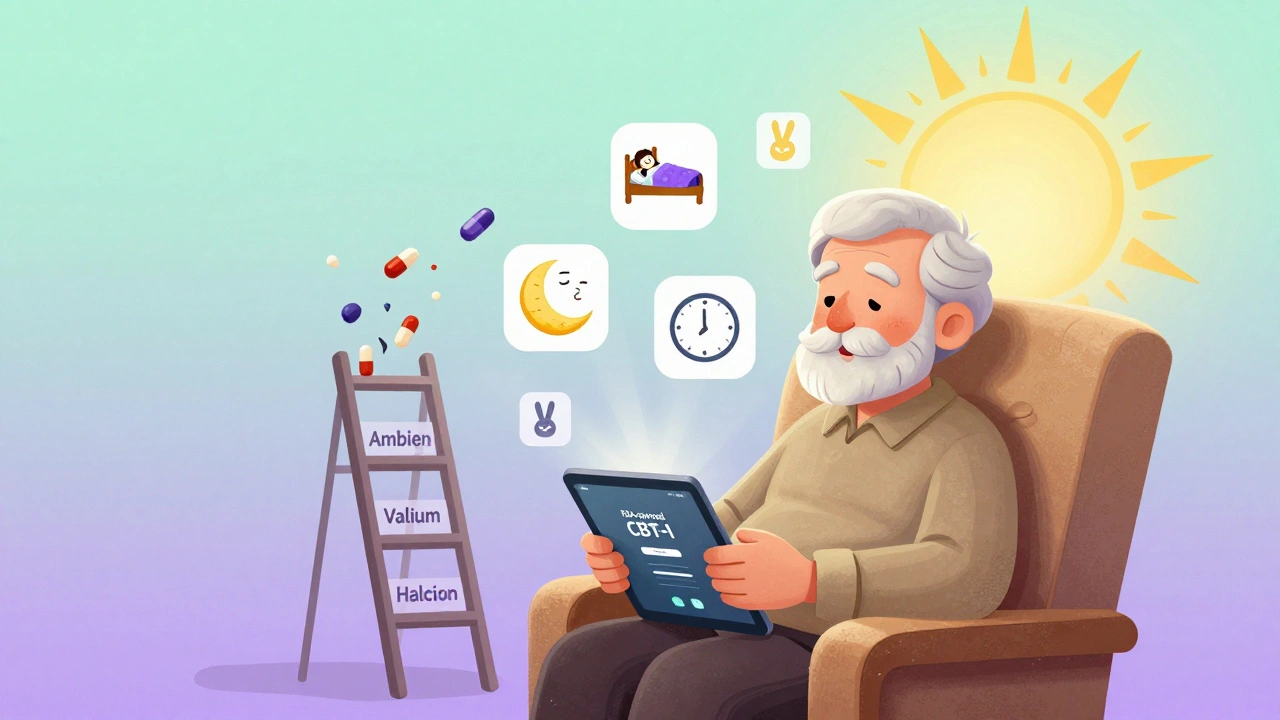
The best sleep aid for older adults isn’t a pill at all. It’s Cognitive Behavioral Therapy for Insomnia - or CBT-I. This isn’t just “sleep hygiene” advice like “avoid caffeine.” CBT-I is a structured program that changes the thoughts and habits keeping you awake.It teaches you how to stop worrying about sleep, how to use your bed only for sleep and sex, how to reset your internal clock, and how to manage nighttime anxiety. Multiple studies show CBT-I is as effective as medication - and lasts longer. People who complete CBT-I still sleep better a year later. Those who take pills? Often need higher doses over time.
The problem? Most doctors don’t offer it. Only 37% of older adults prescribed sleep meds were even told about CBT-I, according to a 2024 national poll. Digital versions - like apps approved by the FDA - are now available and covered by some insurers. If your doctor doesn’t mention it, ask.
How to Talk to Your Doctor
If you’re on a sleeping pill and worried about side effects, don’t stop cold turkey. That can cause rebound insomnia or seizures. Instead, talk to your doctor about switching.Ask these questions:
- “Am I on a medication that increases my fall risk?”
- “Is there a safer alternative like low-dose doxepin or ramelteon?”
- “Can we try CBT-I before changing my medication?”
- “What’s my plan for reducing or stopping this drug?”
Doctors need to know your full list of medications. Many don’t realize how many drugs interact with sleep pills. A simple blood pressure med or anti-anxiety drug can make a sleeping pill much more dangerous.
Also, ask for a sleep diary. Writing down when you go to bed, wake up, and how you feel the next day gives your doctor real data - not guesses.
What to Watch Out For
Even safer medications can cause problems if not used right. Here’s what to monitor:- Dizziness or unsteadiness - especially in the first two weeks. If it lasts, talk to your doctor.
- Next-day drowsiness - if you’re still tired at noon, your dose may be too high.
- Confusion or memory lapses - not normal. Could mean the drug isn’t right for you.
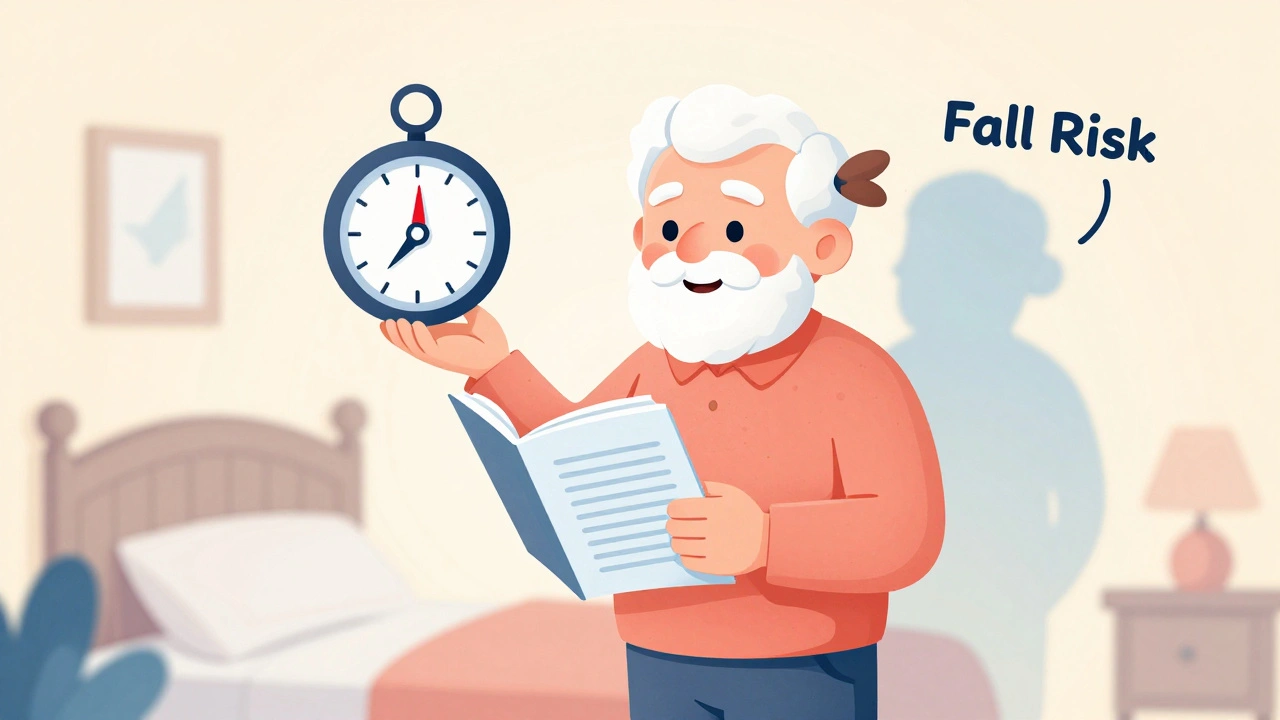
- Increased falls - even one fall is a red flag. Get a fall risk assessment.
Use the Timed Up and Go test at home: stand up from a chair, walk 10 feet, turn, walk back, sit down. If it takes more than 12 seconds, your fall risk is elevated. Tell your doctor.
The Bottom Line
Sleep problems in older adults aren’t just a normal part of aging - they’re treatable. But the old solutions are dangerous. The safest path isn’t about finding the strongest pill - it’s about finding the right one. Low-dose doxepin for staying asleep. Ramelteon for falling asleep. Controlled-release melatonin for gentle support. And CBT-I to fix the root cause.Cost matters. Doxepin costs $15 a month. Lemborexant costs $750. But the cost of a fall, a hospital stay, or a decline in memory? That’s priceless.
Ask for safer options. Push for CBT-I. Track your sleep. Your future self will thank you.
Are benzodiazepines safe for older adults with insomnia?
No. Benzodiazepines like Valium, Ativan, and Halcion are not safe as first-line treatments for older adults. They increase the risk of falls, hip fractures, confusion, and memory problems. The American Geriatrics Society explicitly recommends avoiding them due to a 50% higher risk of fractures and up to a 30% increased dementia risk with long-term use. Even short-term use can cause dangerous side effects in people over 65.
What is the safest sleep medication for seniors?
Low-dose doxepin (3-6 mg) is considered one of the safest options for sleep maintenance insomnia in older adults. It has minimal next-day drowsiness, no risk of dependence, and improves sleep efficiency more than most other medications. Ramelteon is also very safe for sleep onset issues, with no sedative effects or interaction risks. Both are preferred over benzodiazepines and z-drugs.
Can melatonin help older adults sleep better?
Yes, but only if it’s the right kind. Over-the-counter melatonin is often too strong (5-10 mg), which can disrupt natural sleep cycles. Controlled-release melatonin (2 mg) is better because it mimics how your body naturally releases melatonin. It’s safe for long-term use, helps with falling asleep, and has no risk of dependence or falls. It’s not a cure-all, but it’s one of the safest tools available.
Is CBT-I really better than sleeping pills?
Yes - and it’s backed by science. Cognitive Behavioral Therapy for Insomnia (CBT-I) improves sleep as well as medication, but the benefits last longer. People who complete CBT-I still sleep better a year later. Those on pills often need higher doses over time. CBT-I also has zero side effects and reduces anxiety around sleep. It’s the first-line recommendation by the American Academy of Sleep Medicine - yet most older adults are never offered it.
Why do doctors still prescribe risky sleep meds to seniors?
Many doctors don’t have time to explore alternatives, or patients ask for “something strong.” Insurance often covers cheap benzodiazepines but not CBT-I or newer drugs like lemborexant. A 2024 study found that 68% of inappropriate prescriptions happened because doctors skipped a proper sleep assessment. Also, 63% of older adults weren’t told about non-drug options. Change is slow, but awareness is growing.
How long should older adults take sleep medications?
Most sleep medications - even safer ones - should be used short-term, for 2-4 weeks, while working on long-term solutions like CBT-I. Low-dose doxepin is an exception; it can be used longer-term if needed, since it has low risk of dependence. Always have a plan to taper off. Long-term use of any sleep aid increases the risk of tolerance, falls, and cognitive decline. The goal is to reduce or stop medication, not rely on it forever.



James Kerr on 2 December 2025, AT 17:42 PM
This is the kind of post that actually helps. I was on Ambien for years and woke up feeling like a zombie. Low-dose doxepin changed my life. No grogginess, just sleep. 🙌