
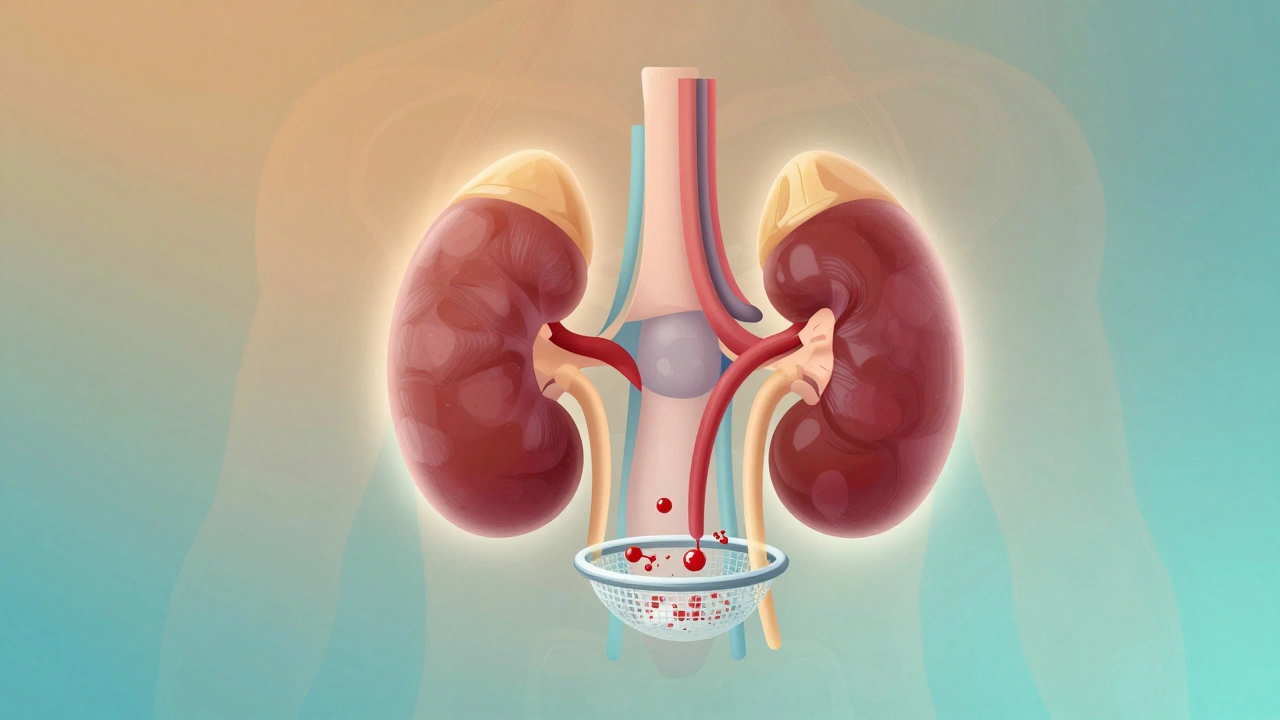
Most people don’t think about their kidneys until something goes wrong. But here’s the truth: your kidneys filter about 120 to 150 quarts of blood every day. That’s roughly 2000 cups. If they start slipping, you won’t feel it - not until it’s too late. That’s why kidney function tests aren’t just for people with symptoms. They’re a quiet shield against silent damage.
What Your Kidneys Are Really Doing
Your kidneys aren’t just waste disposals. They regulate your blood pressure, balance electrolytes like sodium and potassium, make red blood cells, and activate vitamin D. When they’re healthy, they clean your blood efficiently. When they’re not, toxins build up, fluids swell, and your body starts to break down.
The problem? Kidneys can lose up to half their function before any sign shows up in blood tests. That’s why waiting for swelling, fatigue, or dark urine is like waiting for a car to stop before checking the brakes. By then, the damage is already done.
The Three Pillars of Kidney Testing
Doctors don’t rely on one test. They use three key tools together: serum creatinine, estimated GFR (eGFR), and urinalysis. Each tells a different part of the story.
Creatinine: The Late Warning Sign
Creatinine is a waste product made by your muscles. Healthy kidneys flush it out. When kidney function drops, creatinine builds up in your blood.
But here’s the catch: creatinine doesn’t rise until you’ve lost about half your kidney function. That’s why it’s called a late marker. A normal creatinine level doesn’t mean your kidneys are perfect - just that they’re still managing.
Normal ranges vary by age, sex, and muscle mass. For most adults, it’s between 0.6 to 1.2 mg/dL. But if you’re very muscular or under 18, your creatinine might be higher even with healthy kidneys. That’s why doctors don’t look at creatinine alone.
eGFR: The Real Measure of Kidney Performance
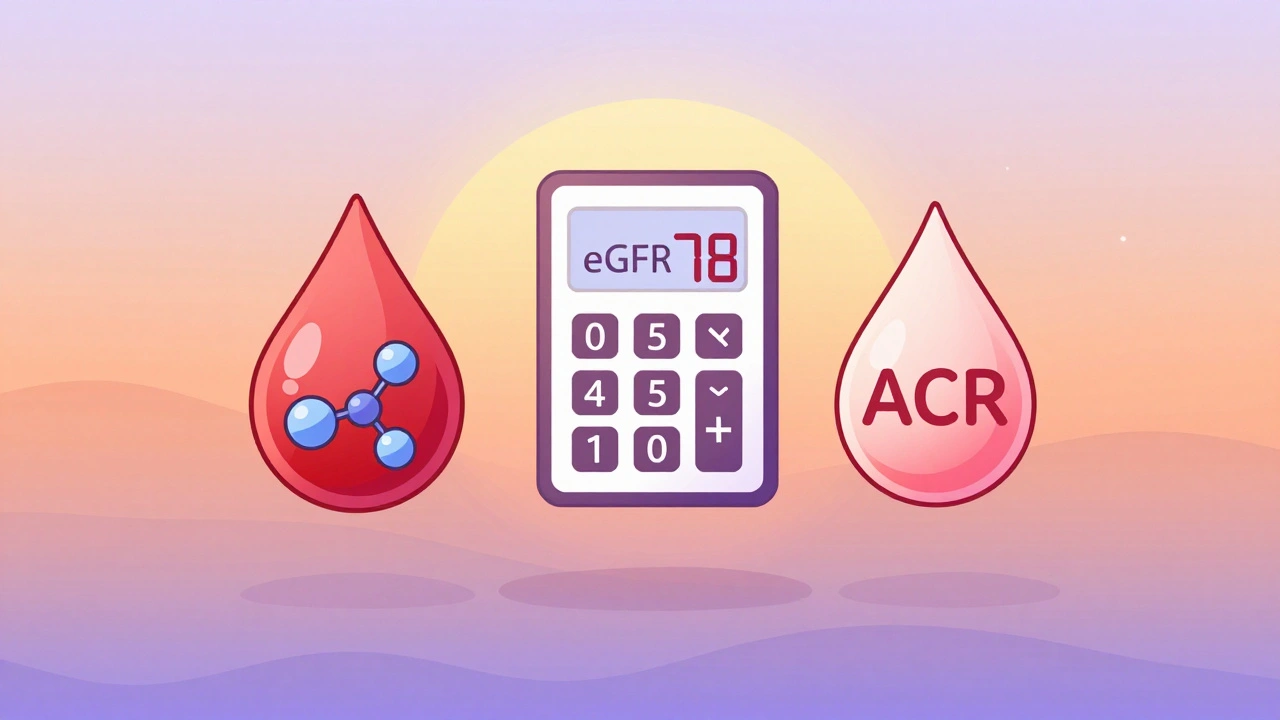
Estimated Glomerular Filtration Rate (eGFR) is the best single number to show how well your kidneys filter blood. It’s not measured directly. It’s calculated using your creatinine level, age, sex, and sometimes race.
The formula used today is the CKD-EPI equation - it replaced the older MDRD method because it’s more accurate, especially for people with near-normal kidney function.
Here’s what eGFR numbers mean:
- 90 or above: Normal kidney function (or mild damage)
- 60-89: Mildly reduced function
- 45-59: Moderately reduced
- 30-44: Severely reduced
- 15-29: Very severely reduced
- Below 15: Kidney failure (dialysis or transplant needed)
These stages are used worldwide by doctors to track kidney disease. If your eGFR drops below 60 for three months or more, it’s classified as chronic kidney disease (CKD).
But eGFR has limits. It’s less accurate if you’re pregnant, very overweight, very muscular, or under 18. In those cases, doctors may order a cystatin C test - a different blood marker that doesn’t depend on muscle mass. It’s not routine yet, but it’s becoming more common in high-risk patients.
Urinalysis: The Earliest Red Flag
While creatinine and eGFR tell you how well your kidneys are filtering, urinalysis tells you what’s leaking out. And that’s often the first sign of trouble.
Healthy kidneys hold onto proteins like albumin. When they’re damaged, even tiny amounts leak into urine. This is called proteinuria - and it’s one of the earliest signs of kidney disease, often showing up before creatinine rises.
The gold standard now isn’t the old dipstick test you might remember from school. It’s the Albumin-to-Creatinine Ratio (ACR). This test measures how much albumin is in your urine compared to creatinine. It’s more precise and less affected by how concentrated your urine is.
Here’s what ACR values mean:
- Below 3 mg/mmol: Normal
- 3-70 mg/mmol: Mild to moderate protein leakage (needs retesting)
- Above 70 mg/mmol: Significant protein loss (high risk of kidney damage)
If your ACR is in the 3-70 range, your doctor will ask you to repeat the test on an early morning sample. One high result could be from dehydration, infection, or even intense exercise. Two or three high results over weeks confirm real damage.
Urinalysis also checks for blood in urine (haematuria). If red blood cells show up without infection or injury, it’s another red flag for kidney disease.
Who Needs These Tests - And How Often?
You don’t need to be sick to get tested. In fact, that’s when it matters most.
People at higher risk should get checked yearly:
- Those with diabetes (type 1 or type 2)
- People with high blood pressure
- Anyone with heart disease
- People with a family history of kidney failure
- Those who’ve had acute kidney injury in the past
- People over 60
The UK Kidney Association and CDC both recommend that everyone over 60 - even without symptoms - get an eGFR and ACR test at least once a year. For high-risk groups, testing every 6 months is common.
And here’s something many don’t realize: you might already have these tests done. Most annual blood panels include creatinine and eGFR. But unless your doctor specifically checks for ACR, you’re missing half the picture. Ask for it.
What Happens If Results Are Abnormal?
A single abnormal result doesn’t mean you have kidney disease. It means you need more tests.
If your eGFR is low or your ACR is high, your doctor will likely:
- Repeat the tests in 3-6 months
- Check your blood pressure
- Order imaging like an ultrasound
- Look for signs of diabetes or autoimmune disease
If kidney disease is confirmed, the goal isn’t to cure it - it’s to slow it down. That’s where lifestyle changes matter more than pills:
- Control blood sugar if you have diabetes
- Keep blood pressure below 130/80
- Reduce salt intake
- Avoid NSAIDs like ibuprofen unless approved by your doctor
- Stop smoking
- Stay active - even walking 30 minutes a day helps
Medications like ACE inhibitors or ARBs are often prescribed. They don’t just lower blood pressure - they protect the kidneys by reducing pressure inside the filtering units.
What About 24-Hour Urine Tests?
You might hear about collecting urine for 24 hours. It’s messy. You have to save every drop in a big container for a full day. It’s not fun.
But it’s still used sometimes - especially if protein loss is very high, or if doctors need to measure other substances like sodium, potassium, or oxalate. For most people, though, ACR is enough. It’s easier, cheaper, and just as accurate for detecting early kidney damage.

Why This Matters More Than You Think
Kidney disease doesn’t just mean dialysis. It’s linked to heart attacks, strokes, and early death. People with CKD are five times more likely to die from heart disease than from kidney failure.
But here’s the good news: if caught early, you can stop or delay kidney damage for decades. Many people with stage 1 or 2 CKD live full, normal lives - as long as they’re monitored and manage their risks.
That’s why these three tests - creatinine, eGFR, and urinalysis - are so powerful. They’re not fancy. They’re cheap. And they’re the only tools we have to catch kidney disease before it steals your health.
What to Do Next
If you’re over 40, or have diabetes, high blood pressure, or a family history of kidney problems, ask your doctor for your latest eGFR and ACR numbers. Don’t just accept “your kidneys are fine.” Ask: What’s my eGFR? What’s my ACR?
If you’ve never had them checked, schedule a basic metabolic panel this year. Make sure it includes creatinine. And ask for a urine ACR test - it’s often free or low-cost.
Early detection isn’t glamorous. But it’s the difference between living well and needing dialysis by 55.
What’s the difference between creatinine and eGFR?
Creatinine is a substance in your blood that comes from muscle breakdown. When your kidneys aren’t working well, creatinine builds up. eGFR is a number calculated from your creatinine level, age, sex, and sometimes race. It estimates how well your kidneys filter waste. Think of creatinine as the raw material and eGFR as the score that tells you what it means.
Can I check my kidney function at home?
There are home urine test strips that claim to detect protein or blood, but they’re not reliable enough for diagnosis. They can give false positives or miss early damage. The only accurate way to check kidney function is through a blood test for creatinine and eGFR, and a lab urine test for ACR. These require a doctor’s order and lab processing.
Why does my doctor want to retest my urine ACR?
One high ACR result could be due to dehydration, infection, fever, or even a hard workout. Kidney damage doesn’t show up in a single test. Doctors look for consistent results over time - usually two or three elevated readings over several weeks. That’s how they confirm real kidney damage, not a temporary spike.
Is cystatin C better than creatinine for eGFR?
Cystatin C is a protein made by all cells, not just muscles. That means it’s not affected by muscle mass, diet, or age as much as creatinine. For people who are very muscular, very thin, under 18, or pregnant, cystatin C can give a more accurate eGFR. It’s not used for everyone yet, but it’s becoming more common in high-risk cases.
Can I reverse kidney damage?
Once kidney tissue is scarred, it can’t heal. But early damage - like protein leakage or mild eGFR drop - can often be stopped or slowed. Controlling blood pressure, managing diabetes, quitting smoking, and avoiding NSAIDs can prevent further harm. Many people with early-stage kidney disease never progress to dialysis if they act early.
What foods should I avoid if my kidney tests are abnormal?
If your eGFR is low or ACR is high, reduce salt, processed meats, canned soups, and packaged snacks. These are loaded with sodium and phosphorus, which strain your kidneys. Avoid excessive protein intake - too much can make your kidneys work harder. Focus on fresh vegetables, whole grains, lean meats, and unsalted nuts. A dietitian can help tailor this if you’re diagnosed with kidney disease.



Reshma Sinha on 12 December 2025, AT 14:33 PM
Just had my annual labs done and my eGFR dropped to 58 - panicked at first, but then I remembered this post. Got my ACR tested next day - 4.2 mg/mmol. Turns out I was dehydrated from hiking all weekend. Re-tested two weeks later: back to 72. So much of this is about trends, not single numbers. Don’t freak out over one result. Track it. Talk to your doc.
Also - yes, ask for ACR. Most labs don’t auto-add it. You gotta request it like a boss.