
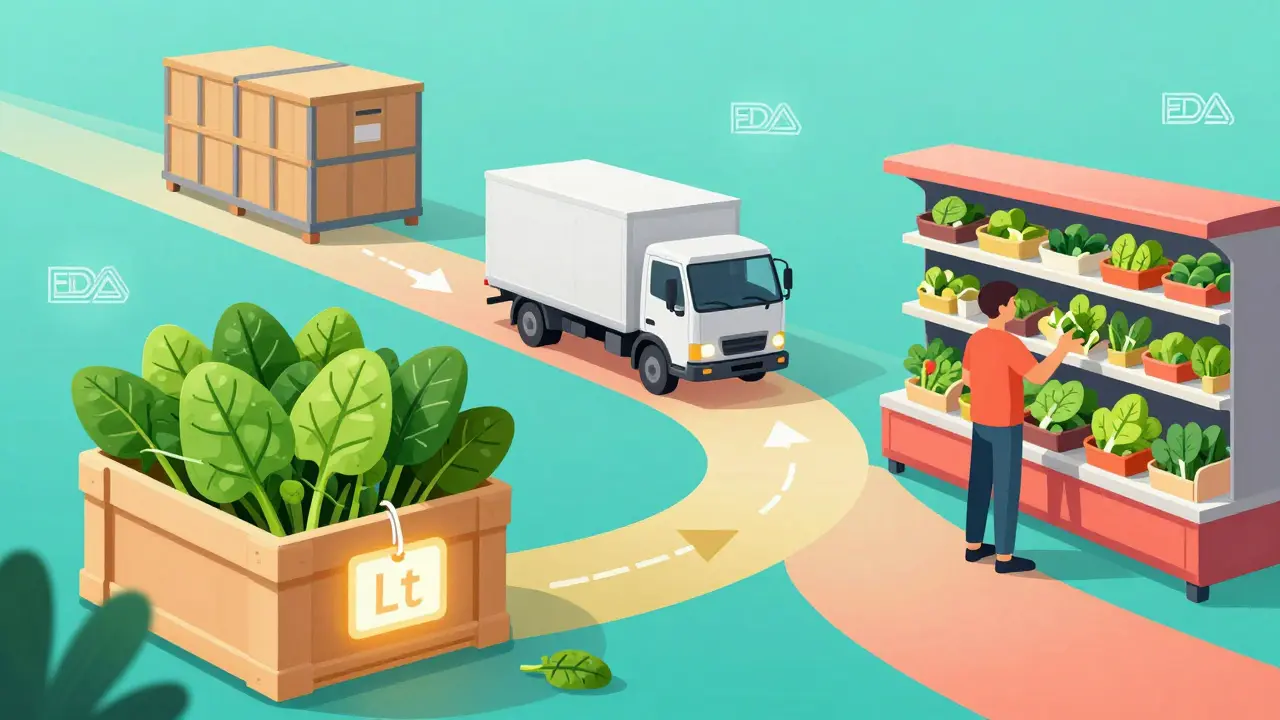
When a batch of contaminated spinach causes a nationwide outbreak of E. coli, the FDA doesn’t guess where it came from. They don’t call every farm, distributor, and grocery store. They pull up a single code - a lot number - and trace the entire path of that product in hours, not weeks. This isn’t science fiction. It’s the reality of the FDA’s Traceability Lot Code (TLC) system, a mandatory rule that changed how food safety works in the U.S.
Why Lot Numbers Matter More Than Ever
Before 2022, tracing contaminated food was like finding a needle in a haystack made of paper files. Investigators had to chase down invoices, shipping logs, and handwritten notes across multiple companies. A single outbreak could take 10 to 14 days to contain. During that time, people got sick. Some died. The FDA knew this system was broken. The Food Safety Modernization Act (FSMA) Food Traceability Rule, finalized on November 15, 2022, fixed that. It created a single, standardized way to track high-risk foods from farm to table using lot numbers. These aren’t just any lot codes. They’re Traceability Lot Codes (TLCs) - unique alphanumeric identifiers assigned at specific points in the supply chain. Once assigned, that code travels with the product. If something goes wrong, the FDA can follow that code backward to the source - fast.What Foods Are Covered?
Not every food needs a TLC. The FDA focused on the riskiest items - the ones most often linked to outbreaks. The Food Traceability List (FTL) includes:- Leafy greens (like romaine and iceberg lettuce)
- Tomatoes
- Onions
- Fresh-cut fruits and vegetables
- Cheeses (especially soft cheeses like brie)
- Eggs
- Nut butters
- Specific seafood products (like shrimp and catfish)
When and How Are TLCs Assigned?
You can’t just slap a lot number on a product whenever you feel like it. The FDA says TLCs must be assigned at only three key moments:- When raw agricultural commodities (like lettuce or tomatoes) are first packed - unless they come from a fishing vessel.
- When seafood from fishing vessels reaches land for the first time.
- When food is transformed - meaning it’s processed, cooked, chopped, or repackaged into something new.
The Seven Key Data Elements
A TLC alone isn’t enough. The FDA requires each code to be tied to seven pieces of information - called Key Data Elements (KDEs). These include:- The TLC itself
- The location where the TLC was assigned (TLC Source)
- Product description (e.g., “organic baby spinach”)
- Quantity and unit of measure (e.g., 500 lbs)
- Date of production or packing
- Transaction information (who received it and when)
- Previous TLC (if the product was transformed)

How Is This Different From Old Lot Codes?
Many companies already used lot numbers - but for internal quality control, not government tracking. Those old codes were often based on production shifts or batch numbers. They didn’t travel with the product across companies. The TLC system changes that. It’s mandatory. It’s standardized. And it’s designed to work across the entire supply chain. A farmer’s TLC must connect to a distributor’s record, which must connect to a retailer’s inventory. No gaps. No confusion. The FDA made it clear: your existing internal lot code can be your TLC - if it meets the rules. You don’t need two separate systems. But if your old code doesn’t include the required KDEs or can’t be passed along, you’ll need to update it.Who Has to Comply - and When?
The rule applies to anyone who manufactures, processes, packs, or holds food on the FTL. That includes farms, processors, warehouses, distributors, and retailers. Roughly 15,000 U.S. facilities are affected. The original compliance date was January 20, 2026. But after hearing from industry groups struggling with implementation, the FDA proposed a 30-month extension - pushing the deadline to July 20, 2028. This gives small businesses more time to adapt. Still, many companies are already preparing. A survey by the United Fresh Produce Association found that 78% of member companies had already modified their lot coding systems. Large firms mostly updated their ERP systems. Smaller ones are using low-cost software or even spreadsheets - as long as they can produce the data when asked.What Happens During an Outbreak?
Imagine a hospital reports 12 cases of Salmonella linked to packaged salad. The CDC alerts the FDA. Investigators pull the product’s UPC, find the lot number on the label, and request the TLC records from the retailer. Within hours, they get the data: the salad was packed on March 10, from onions supplied by Farm A and lettuce from Farm B. The FDA contacts both farms, pulls their records, and discovers Farm A’s irrigation water tested positive for Salmonella. They issue a recall - only for that specific lot, not every salad in the country. That’s the power of TLCs. Instead of recalling millions of units, they recall 12,000. Less waste. Less cost. Fewer people exposed.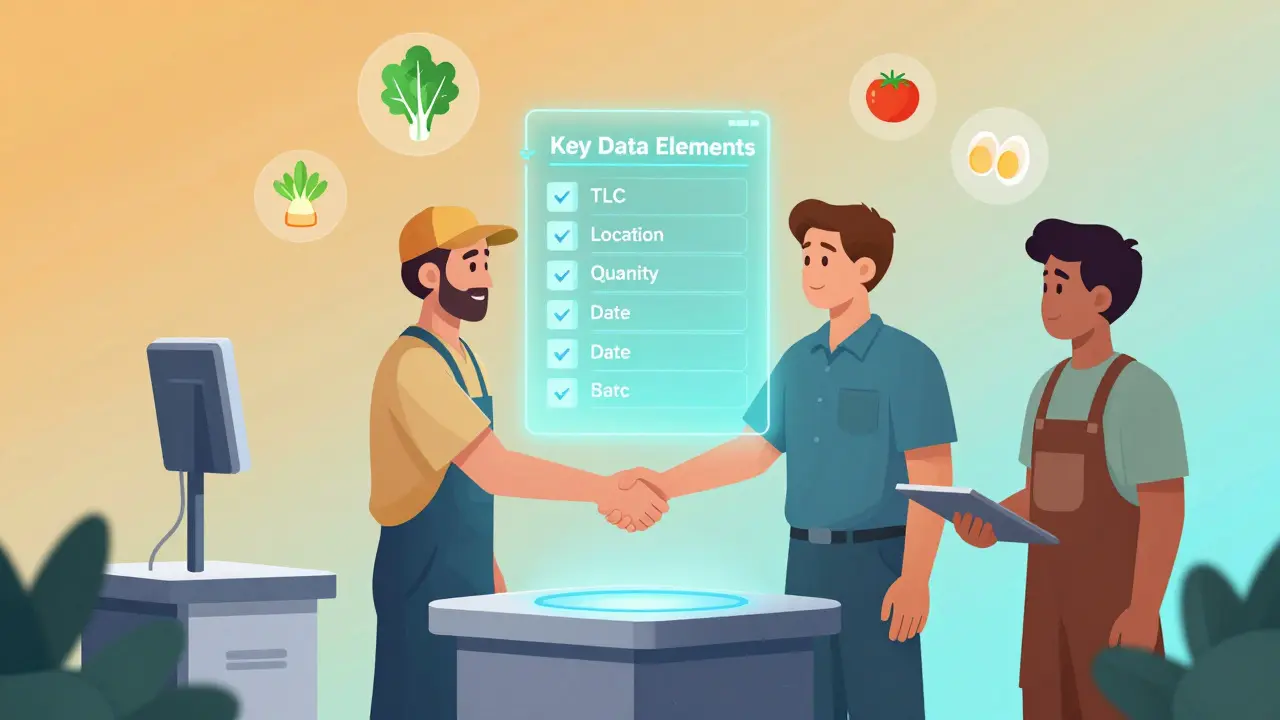
Challenges and Criticisms
The system isn’t perfect. Critics say the FTL is too narrow. Melons, for example, have caused major outbreaks - but they’re not on the list. Consumers Union pointed out this gap in a 2022 report. The FDA admits melons are under review for future inclusion. Another issue? Data silos. Just because every company has a TLC doesn’t mean they can talk to each other. Some use different software. Others still rely on manual entry. Industry expert Mike Taylor called the system “necessary but insufficient” without standardized data formats. The FDA is working on it. Draft standards for electronic KDE exchange are expected in mid-2024. Pilot projects are testing blockchain and IoT sensors to automate data capture. But for now, human accuracy still matters most.The Bigger Picture
The TLC system is part of a global shift toward smarter food safety. The European Union launched its Digital Product Passport in early 2023. China and Canada are watching closely. The U.S. isn’t leading - but it’s catching up. The economic impact is clear. The FDA estimates the rule will cost the industry $6.5 million a year to implement - but save $60 million annually by reducing outbreaks. That’s a 9x return. And it’s not just about money. It’s about lives. Pilot programs between 2019 and 2021 showed that faster traceability could reduce foodborne illness by 20-30%. That’s tens of thousands of people who won’t get sick each year.What’s Next?
The FDA is expanding its support. They’ve created 12 free training modules. The Traceability Assistance Program helps small farms and businesses navigate the rules. The 2023 Farm Bill allocated $25 million for implementation aid. The next phase? More foods on the list. Better technology. Stronger international alignment. For now, the system works. It’s not magic. It’s methodical. It’s built on a simple idea: if you can’t trace it, you can’t fix it. And with lot numbers, the FDA finally can.What is a Traceability Lot Code (TLC)?
A Traceability Lot Code (TLC) is a unique alphanumeric identifier assigned to a specific batch of food on the FDA’s Food Traceability List. It’s used to track that batch through every step of the supply chain, from farm to retail. Unlike internal lot codes, a TLC must be passed along to the next handler and linked to seven key data elements, including location, quantity, and transaction details.
Which foods require a TLC?
The FDA’s Food Traceability List (FTL) includes high-risk foods linked to outbreaks, such as leafy greens, tomatoes, onions, fresh-cut fruits and vegetables, cheeses, eggs, nut butters, and certain seafood. These represent about 15% of the U.S. food supply by volume. Foods not on this list, like apples or bread, do not require a TLC under the current rule.
Can I use my existing lot code as a TLC?
Yes - if it meets the FDA’s requirements. Your current internal lot code can serve as the TLC as long as it’s unique, passed along through the supply chain, and linked to all seven Key Data Elements (KDEs). You don’t need to create a second code. The FDA clarified this in response to industry concerns about "tandem coding."
When does the TLC rule become mandatory?
The original compliance date was January 20, 2026. However, in September 2023, the FDA proposed a 30-month extension to July 20, 2028, due to industry feedback. This gives businesses more time to update systems. The extension is still pending final approval, but most companies are preparing for the 2028 deadline.
What happens if I don’t comply with the TLC rule?
Non-compliance can lead to enforcement actions by the FDA, including warning letters, product seizures, or import refusals. During a foodborne illness investigation, failure to provide TLC records within 24 hours of request can delay containment efforts and increase public health risks - which may result in penalties or loss of market access, especially with major retailers who require compliance.
Do small businesses have help with TLC compliance?
Yes. The FDA launched the Traceability Assistance Program in January 2023 to help small farms and businesses. It offers free technical guidance, training modules, and resources to simplify implementation. Additionally, the 2023 Farm Bill allocated $25 million specifically for small business support. Industry groups like FMI and United Fresh also provide workshops and templates.



Virginia Seitz on 16 December 2025, AT 19:28 PM
Finally! 🙌 No more guessing when spinach kills people. This is basic stuff, but it’s life-saving. 👏