
When you pick up a prescription at the pharmacy, you might be told, "Keep this in the fridge." But what does that really mean? Not all medications are the same. Some can sit on your bathroom counter without a problem. Others? If they get too warm or freeze, they can stop working - and that’s not just inconvenient, it’s dangerous.
What Medications Need Refrigeration?
Not every cold medicine or pill needs to be chilled. But a growing number do. These include:- Insulin - Used by millions with diabetes. Most types must be refrigerated until opened, then can last 28-30 days at room temperature.
- Biologic drugs - Like Humira®, Enbrel®, and Remicade®. These are made from living cells and break down quickly if not kept cold.
- Vaccines - From flu shots to COVID boosters. These are extremely sensitive. Even a few hours at room temperature can ruin them.
- Some antibiotics - Especially liquid forms like amoxicillin clavulanate. Once mixed, they often need refrigeration.
- Injectable hormones - Such as growth hormone or certain fertility treatments.
- Some eye drops and injectables - Especially those labeled "store in refrigerator" on the box.
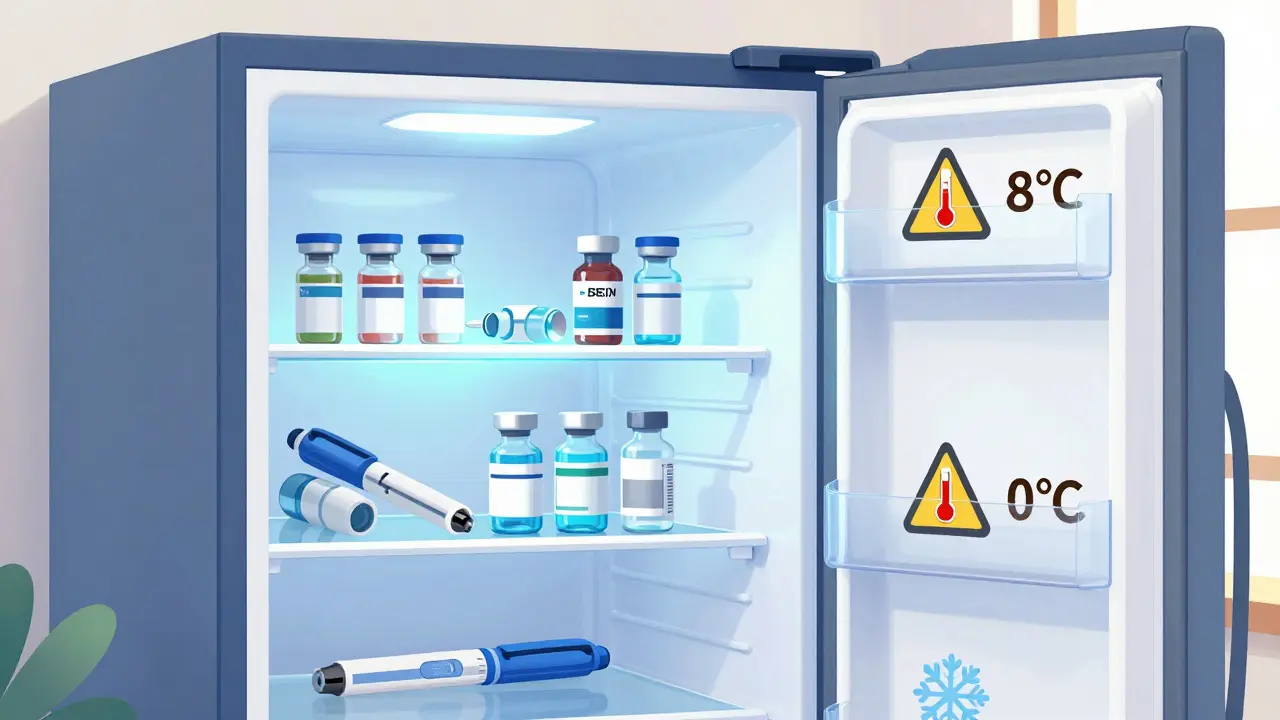
The standard temperature range for all of these is 2°C to 8°C (36°F to 46°F). That’s not "cool" - it’s specifically controlled. Too cold (below 0°C) freezes the medication. Too warm (above 8°C) makes it break down. Both ruin effectiveness.
Why Temperature Matters So Much
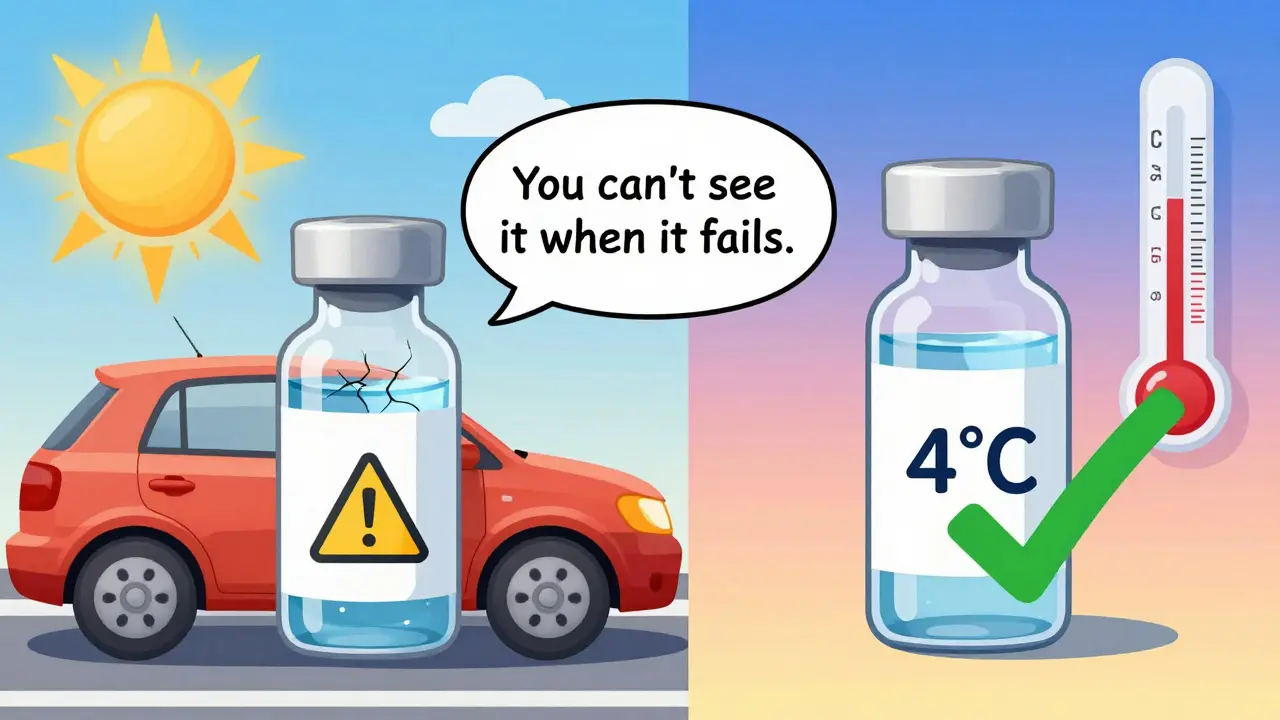
You might think, "I left my insulin in the car for two hours - it’s probably fine." But studies show otherwise. A 2023 report from GoodRx found that insulin exposed to 25°C (77°F) for just 24 hours can lose up to 50% of its potency. At 37°C (98°F), that number jumps to 30-40% loss in under 48 hours. For someone with diabetes, that means unpredictable blood sugar spikes - and real risk of hospitalization.One FDA report from 2021 documented a case where a patient developed diabetic ketoacidosis because their insulin had been left in a hot car. The medication looked fine. No discoloration. No lumps. But it was no longer working. That’s the scary part - you can’t always tell when it’s failed.
Freezing is just as bad. If insulin or a biologic freezes, even briefly, the proteins inside get damaged. Thawing it doesn’t fix it. The medication is permanently ruined. And you won’t know until you use it - and your body doesn’t respond.
Household Fridges Are Not Reliable
Most people just toss their meds into the main fridge compartment. Big mistake. A 2022 study in the Journal of the American Pharmacists Association found that the temperature inside home refrigerators varies wildly:- Back middle shelf: 3.4°C - ideal
- Door shelves: up to 11.3°C - too warm
- Crisper drawers: can dip below 0°C - risk of freezing
That means if you keep your insulin on the door, it’s sitting at 10°C for hours - outside the safe range. And if you put it near the freezer, it might freeze overnight. Even the fridge’s own thermostat isn’t precise enough. Most home units swing ±3°C. For medications? That’s a red zone.
And what about power outages? In Perth, summer storms can knock out electricity for hours. If your fridge hits 15°C for 6 hours, your biologic could be compromised.
How to Store Medications Safely at Home
You don’t need a hospital-grade fridge. But you do need a smart system. Here’s how:- Use the middle shelf - Not the door. Not the crisper. The center of the fridge is the most stable. Avoid areas near the freezer vent.
- Buy a dedicated thermometer - A digital thermometer with a min/max readout costs under $30. Place it next to your meds. Check it once a week. If it’s ever above 8°C or below 2°C, move the meds immediately.
- Don’t overcrowd - Air needs to circulate. Pile too many bottles together and the center gets warm.
- Label your meds - Use a sticky note: "Insulin - Do Not Freeze" or "Vaccine - Keep Cold." Make it obvious.
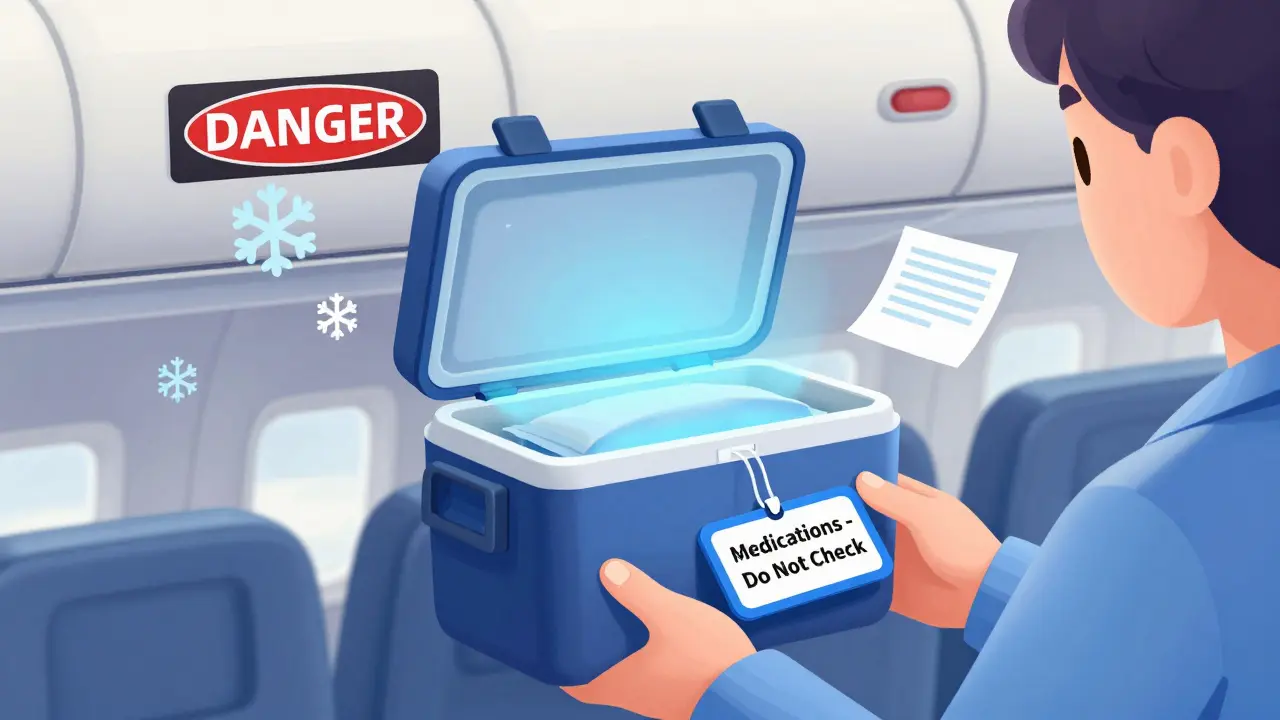
- Keep a backup - If you’re traveling or worried about power, get a small insulated cooler with a reusable ice pack. Some are designed specifically for meds (like TempAid MediCools) and hold 2°C-8°C for 48 hours.
Some people invest in a medication-specific fridge. Brands like Whynter or Helmer Scientific make units that maintain 2°C-8°C with alarms if temps go out of range. They cost $150-$2,500. For someone on daily biologics or insulin, it’s worth it. For occasional use? A thermometer and smart placement are enough.
Traveling With Refrigerated Medications
Flying? Driving? Going on vacation? You can’t just carry your meds in a regular bag.- Use an insulated travel case with phase-change gel packs. These stay cold for 24-48 hours without needing ice.
- Never check your meds in luggage. Always carry them in your hand luggage. Airplane cargo holds can drop below freezing.
- Ask your airline if they offer refrigerated storage for passengers. Some do.
- Carry a doctor’s note. It helps if security asks why you’re carrying a cooler.
For short trips (under 24 hours), insulin can often be kept at room temperature. Check your product’s label. Most insulins are stable up to 30°C for 28 days after opening. But if it’s 35°C outside? Play it safe. Use a cooler.
What to Do If Your Medication Gets Too Warm or Freezes
If you suspect your medication was exposed to bad temperatures:- Look for changes - Cloudiness, clumps, crystals, or discoloration? Throw it out.
- Don’t use it - Even if it looks fine. You can’t see degradation.
- Contact your pharmacist - They can tell you if it’s safe to use or if you need a replacement.
- Report it - If it happened during delivery or pharmacy handling, report it to the FDA’s MedWatch system. It helps improve safety.
One Reddit user shared: "I left my Humira pen in a hot car for 3 hours. It looked normal. I used it. My flare-up got worse. I had to go to the ER. I didn’t know until later it was the meds." Don’t wait for a crisis.
What’s Changing in 2026?
The rules are slowly evolving. In June 2023, Novo Nordisk announced that newer insulin formulations can now stay stable at 37°C (98.6°F) for up to 7 days - much longer than the old 28-day rule. That’s a big win for travelers and people in hot climates.Some smart fridges now have a "medication mode" - Samsung’s Family Hub, for example, locks a drawer at exactly 4°C with humidity control. It’s still rare, but it’s coming.
And the CDC updated its guidelines in March 2023: now, all vaccines must be stored with digital data loggers - not just manual thermometers. That’s the future. More precision. Less guesswork.
Final Advice: When in Doubt, Throw It Out
Medications are not like milk. You can’t smell or taste if they’ve gone bad. You can’t assume it’s still safe just because it looks right. If you’re unsure about temperature exposure - replace it.It’s cheaper than a hospital visit. Safer than a blood sugar crash. And better than risking a flare-up from a failed biologic. Your health isn’t worth gambling on.
Check your fridge. Check your thermometer. Check your meds. And if you’re ever confused - call your pharmacist. They’ve seen it all. They’ll tell you what to do.
Can I store all my refrigerated meds together in one fridge?
Yes, but only if they all need the same temperature range (2°C-8°C). Don’t mix vaccines with insulin if they’re stored in different compartments - temperature varies by location. Use a single, consistent spot on the middle shelf. Label everything clearly to avoid mix-ups.
What happens if my medication freezes?
If any biologic, insulin, or vaccine freezes, it’s permanently damaged. The proteins inside unfold and can’t be restored. Even if you thaw it slowly, it won’t work properly. Never use frozen medication. Discard it and get a new one. Always store meds where they won’t freeze - away from freezer vents and back walls.
Do I need a special fridge for my meds?
Not necessarily. Most people can safely store meds in the middle shelf of a standard fridge using a digital thermometer. But if you take multiple refrigerated drugs daily, or if you live in a hot climate, a dedicated medication fridge ($150-$500) reduces risk. It’s not a luxury - it’s insurance.
Can I leave insulin out at room temperature?
Yes - after opening, most insulin can be kept at room temperature (up to 30°C) for 28-30 days. But check the label. Newer insulins like Fiasp or Humalog can last 40 days at room temp. Still, avoid heat. Don’t leave it on a windowsill or in a hot car. If it’s above 30°C, use a cooler.
How do I know if my fridge is too warm for meds?
Use a digital thermometer with a min/max function. Place it next to your meds. Check it once a week. If the max temperature ever goes above 8°C, or the min goes below 2°C, adjust placement or consider a cooler. Don’t rely on the fridge’s built-in display - it’s not accurate enough for meds.
Are generic biologics as stable as brand-name ones?
Generally, yes - but check the label. Some generics have less detailed storage instructions. If the packaging says "store at 2°C-8°C" without exceptions, treat it like the brand-name version. If you’re unsure, call your pharmacist. They can compare the stability data.
What should I do during a power outage?
Keep the fridge closed. A full fridge can stay cold for up to 4 hours. If the outage lasts longer, move meds to a cooler with ice packs. If you’re unsure how long they were exposed, contact your pharmacist. Don’t use meds if you suspect they’ve been above 8°C for more than 6 hours.




Kancharla Pavan on 17 February 2026, AT 05:32 AM
Let me get this straight - you’re telling people to just stick their life-saving meds in the fridge like a damn six-pack of beer? No wonder so many people end up in the ER. I’ve seen this exact scenario play out in rural India where families share one fridge and half the meds get frozen or spoiled because someone put milk in the wrong shelf. This isn’t a suggestion - it’s a public health crisis waiting to happen. The fact that we’re still relying on $30 thermometers and sticky notes while corporations push biologics that need lab-grade storage is a joke. Why isn’t the FDA mandating temperature-controlled packaging? Why aren’t pharmacies required to give you a calibrated mini-fridge with your prescription? Because profit > patient safety. And don’t even get me started on how vaccine distribution in low-income countries is a death sentence wrapped in a PowerPoint slide. Someone needs to burn this whole system down.