The Legal Tug-of-War: Hatch-Waxman and Exclusivity
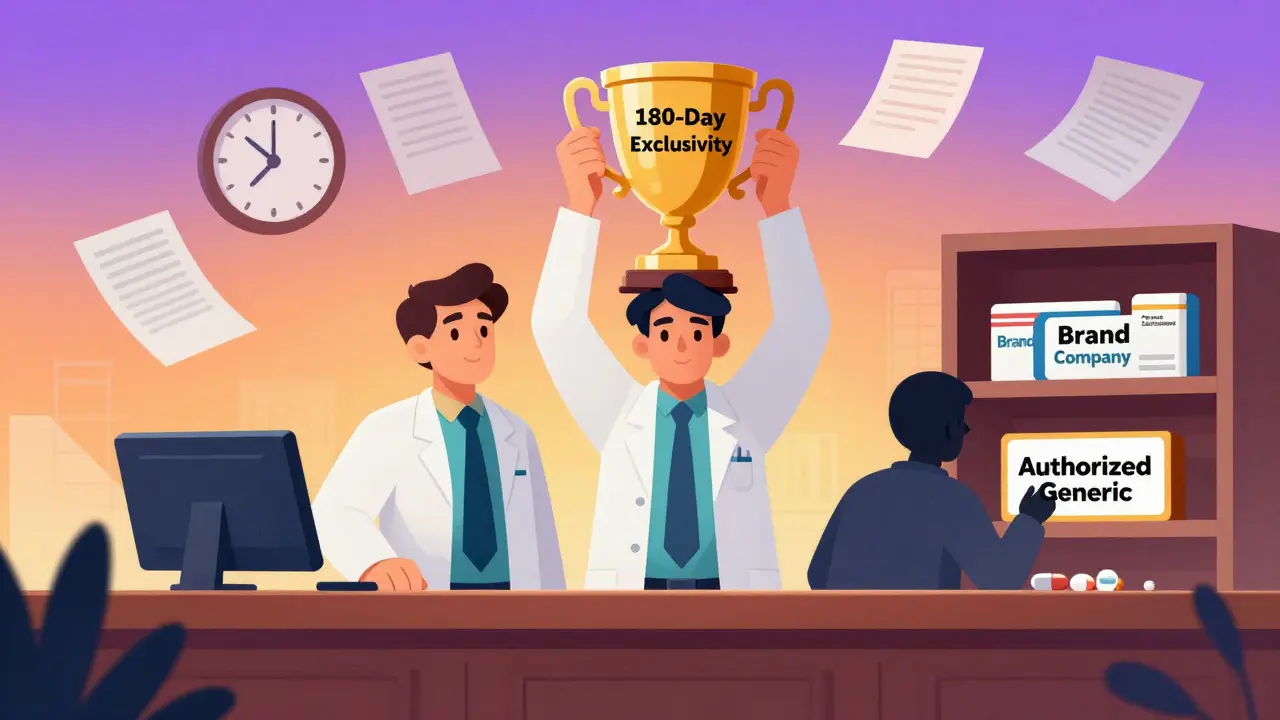
To understand why authorized generics are so controversial, we have to look at the Hatch-Waxman Act. This 1984 law was designed to balance two things: giving brand companies time to recover their R&D costs and getting cheaper generics to patients faster. One of its biggest carrots is the 180-day marketing exclusivity period. The first generic company to successfully challenge a patent via an Abbreviated New Drug Application (or ANDA) gets six months of near-monopoly pricing before other generic players can join in. Here is the catch: the FDA has consistently ruled that this law doesn't stop the brand company from launching its own authorized generic during that same 180-day window. Because the authorized generic is identical to the branded drug-just in a different bottle with a different name-it doesn't need a new FDA approval process. It’s essentially a repackaging job. This allows the brand company to effectively "dilute" the exclusivity period that the independent generic company fought so hard to win.The Financial Hit to Generic Competitors
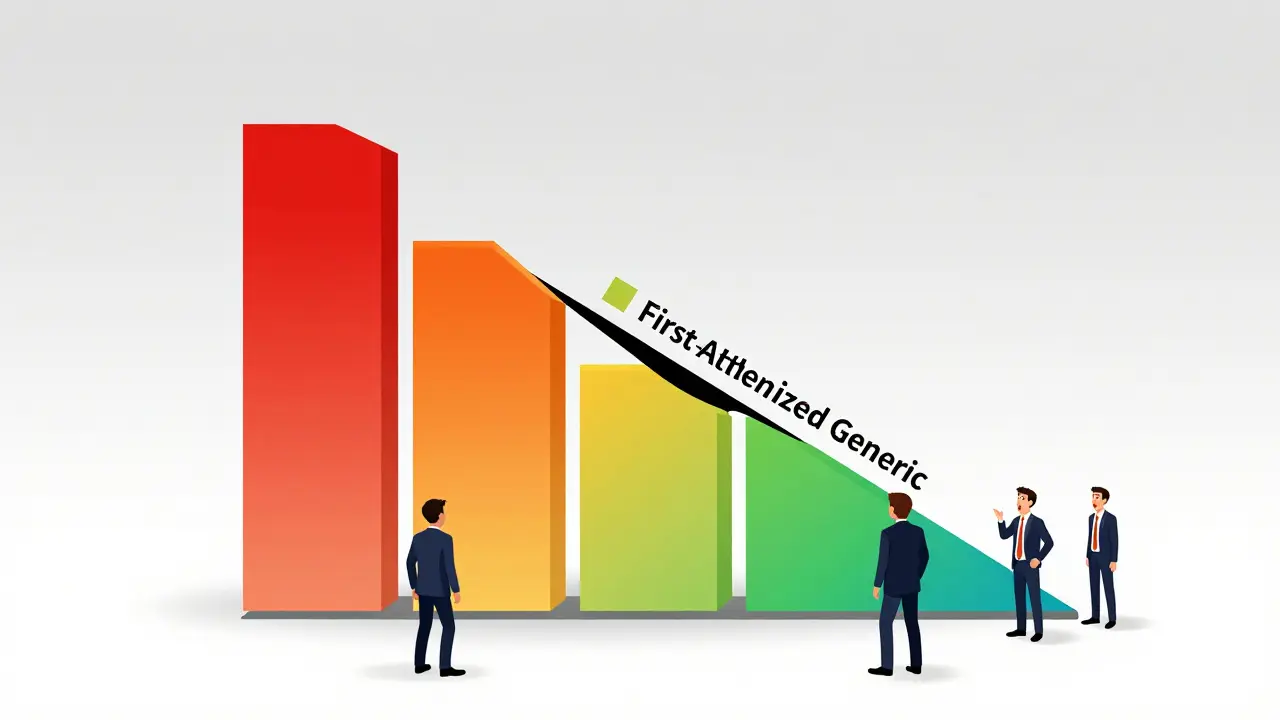
When an authorized generic enters the fray, the financial landscape shifts instantly. It isn't just a minor annoyance for the first-filer generic; it's a revenue crash. According to an FTC report, authorized generics can snap up 25-35% of the market share during that critical exclusivity window. This translates to a massive loss for independent firms, with revenues often dropping by 40-52% during the first 180 days. But the pain doesn't stop when the exclusivity ends. The data shows a lasting sting, with first-filers seeing 53-62% lower revenues for the next 30 months compared to markets where no authorized generic appeared. For a company like Teva Pharmaceutical, this isn't just a theoretical problem; they've reported revenue shortfalls as high as $275 million for specific products due to this kind of competition.| Metric | Without Authorized Generic | With Authorized Generic |
|---|---|---|
| First-Filer Market Share (Exclusivity) | 80-90% | 65-75% |
| First-Filer Revenue Loss (180 Days) | 0% | 40-52% Loss |
| Long-term Revenue Impact (30 Months) | Baseline | 53-62% Reduction |
The "Pay-for-Delay" Connection
Things get even murkier when you look at patent litigation settlements. In many cases, a brand company and a generic company will settle their court battle out of court. Sometimes, these deals include a "handshake agreement" where the brand company promises not to launch an authorized generic if the generic company agrees to stay out of the market for a few more years. These are often called "reverse payment" settlements. The Federal Trade Commission (FTC) hates these. They view them as anti-competitive because they essentially pay a competitor to stop competing. Between 2004 and 2010, about 25% of patent settlements for drugs worth over $23 billion included these kinds of agreements. These deals pushed back generic entry by an average of nearly 38 months, keeping drug prices high for patients far longer than necessary.
Who Actually Wins?
If you ask different people in the industry, you'll get completely different answers. Independent generic manufacturers argue that authorized generics kill the incentive to challenge patents. Why spend millions on a lawsuit if the brand company can just undercut your exclusivity period anyway? They argue this slows down the overall arrival of cheaper drugs. On the flip side, branded companies and some Pharmacy Benefit Managers (PBMs) claim they actually help. PBMs often like having more options to negotiate prices. Some research suggests that when an authorized generic is available, the prices pharmacies pay for new generics can actually drop by 13-18%. In their eyes, more players in the market-even the brand company acting as a generic-means more downward pressure on prices.The Future of Regulatory Pressure
Regulators are starting to tighten the screws. The FTC has become much more aggressive, opening 17 investigations since 2020 into anti-competitive authorized generic deals. There's also a push in the US Senate via the Preserve Access to Affordable Generics and Biosimilars Act, which aims to explicitly ban agreements that delay these generic entries. Interestingly, the industry is already shifting. A 2023 study in JAMA Internal Medicine found that authorized generic launches dropped from 42% of relevant markets in 2010 to just 28% in 2022. This suggests that brand companies are becoming more cautious about how they use this tool to avoid attracting the attention of antitrust lawyers.What is an authorized generic exactly?
An authorized generic is the exact same drug as the branded version, manufactured by the same company, but sold without the brand name. Because it is chemically identical and produced by the original manufacturer, it doesn't need a separate FDA approval process through a new drug application.
How do authorized generics differ from regular generics?
Regular generics are made by third-party companies that must prove their version is bioequivalent to the brand through an ANDA and often challenge the brand's patents in court. Authorized generics are simply the brand's own product relabeled as a generic, bypassing the patent challenge process entirely.
Why do brand companies launch them?
It's a strategic move to maintain revenue. By launching an authorized generic, the brand company can capture a portion of the generic market share, specifically during the 180-day exclusivity period of the first-filing generic, effectively reducing the competitor's profit.
Do they lower prices for patients?
It's a mixed bag. While they provide an extra source of supply which can lower pharmacy costs, they can also discourage other generic companies from challenging patents, which might delay the arrival of even cheaper, "true" generics in the long run.
Are they legal?
Yes, the FDA and courts have generally held that the Hatch-Waxman Act does not prohibit them. However, the *agreements* surrounding them-such as promising not to launch one in exchange for a delay in generic entry-are often targeted by the FTC as anti-competitive.