
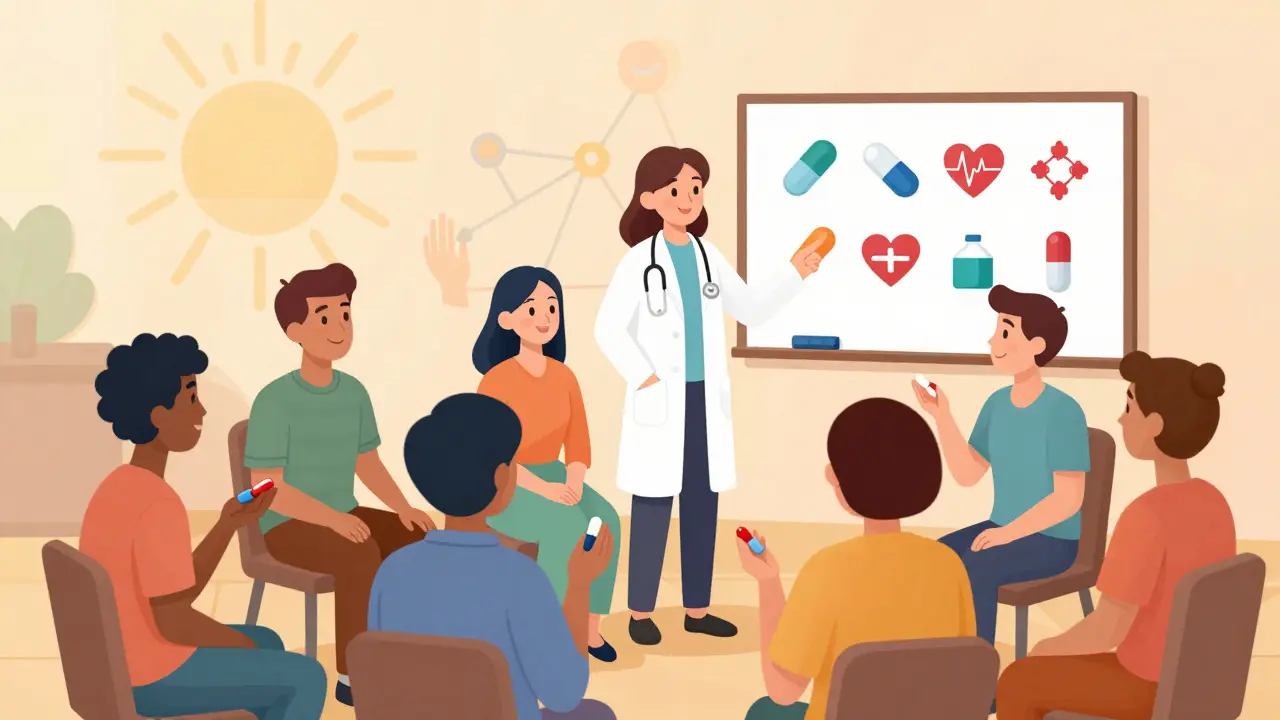
Switching from a brand-name drug to a generic can feel like stepping into the unknown. You’ve taken the same pill for years, and now your pharmacist hands you a different-looking tablet. Same active ingredient. Same dose. But the color, shape, or even the name on the label is different. You wonder: Is this going to work the same? That’s where patient support groups come in-not as medical advisors, but as real people who’ve been there.
Why People Doubt Generics
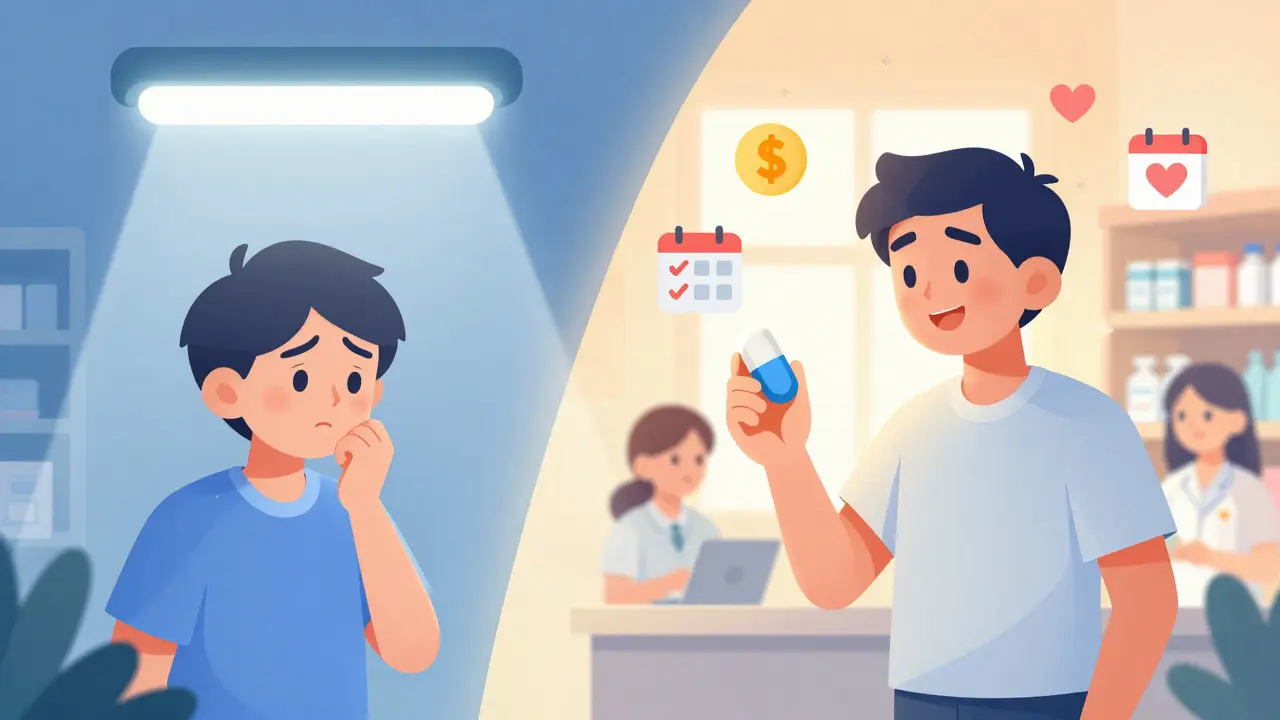
It’s not about being stubborn. It’s about feeling something change. People report side effects after switching: dizziness, nausea, fatigue. Some say the pill just doesn’t “feel right.” The truth? Many of these changes aren’t caused by the drug itself. They’re caused by expectation. The FDA requires generics to be bioequivalent-meaning they deliver the same amount of medicine into your bloodstream within 80% to 125% of the brand-name version. That’s not a guess. It’s science. But science doesn’t always quiet the voice in your head that says, “This isn’t the same.”That’s where support groups step in. Instead of reading a pamphlet that says, “Generics are safe,” you hear from someone who switched from Lipitor to atorvastatin and felt shaky at first. Then they talked to their pharmacist, tracked their blood pressure for two weeks, and realized their symptoms were stress, not the drug. That kind of story sticks.
How These Groups Work
These aren’t chat rooms full of rumors. The most effective ones have structure. Online forums like PatientsLikeMe or Facebook groups like “Generic Medication Users United” (with over 14,000 members) use moderators-often pharmacists or nurses-who verify claims. If someone says, “My generic blood pressure pill made me faint,” the group doesn’t just nod along. They ask: Did you change your diet? Start a new supplement? Miss a dose? Then they link to studies, like the 2019 JAMA analysis of 47 trials showing no difference in outcomes between brand and generic cardiovascular drugs.In-person groups meet at community clinics, libraries, or hospitals. In rural areas, where driving 40 miles to see a specialist isn’t an option, these groups are lifelines. One study from the CDC found that in parts of the rural South, African American patients who joined culturally tailored support groups were 40% more likely to trust generics than those who just got brochures.
The magic isn’t in the facts. It’s in the rhythm of sharing. You say, “I’m scared.” Someone else says, “I was too-here’s what happened.” Then you learn how to talk to your doctor. How to ask for a 30-day trial. How to track symptoms in a journal. That’s how confidence builds.
The Numbers Don’t Lie
In 2022, 90% of all prescriptions filled in the U.S. were generics. But they only cost 12% of what brand-name drugs do. That’s a $313 billion annual savings for patients. Yet, nearly 1 in 10 people still refuse to switch-even when their insurance forces it. Why? Fear. Uncertainty. Lack of trusted voices.Research from the University of Chicago Medicine found that patients in support groups were 27% more confident in generics. For every standard increase in how comfortable someone felt talking about substitution, generic use went up by 6.3%. That’s not a small number. That’s a shift in behavior. And it’s not just about money. Better adherence means fewer hospital visits. Fewer complications. For people with diabetes, hypertension, or high cholesterol, that’s life-changing.
One case from Howard’s Pharmacy in Ohio showed a diabetes support group helping members switch from expensive insulin analogs to biosimilars. The average monthly savings? $327. That’s not a luxury. That’s groceries. Rent. Fuel.
Where Things Go Wrong
Not all groups are created equal. Reddit threads, unmoderated Facebook groups, or anonymous forums can spread misinformation. A 2009 study found that 34% of online discussions about generics contained false claims-like “generic seizure meds cause seizures.” That’s not true. But when you’re scared, a single post like that can make you quit your medicine.One group in 2019 blamed worsening symptoms on a generic antidepressant. It turned out the patient’s condition was progressing, not the drug failing. Seventeen people stopped taking their meds because of it. That’s why oversight matters. Groups that partner with pharmacists cut misinformation by 75%. A verified group doesn’t just listen-it checks.
What Makes a Good Group
A strong support group has three things:- Professional input-at least one pharmacist or nurse moderates discussions weekly.
- Structured sharing-members are guided to describe symptoms, timing, and changes, not just say “I felt weird.”
- Access to real data-they link to FDA studies, clinical trials, and drug databases, not anecdotes.
The IMPROVE project, led by the University of Chicago, showed that when doctors were given summaries of patient experiences from these groups, they prescribed generics 18% more often. That’s huge. It means your story isn’t just heard-it changes practice.
Where to Find One
You don’t need to start one. There are already good ones out there:- PatientsLikeMe-a platform with over 1 million users sharing real-time data on medications.
- Association for Accessible Medicines-launching a verified directory of support groups in mid-2024.
- Your local pharmacy-many now host monthly “Medication Q&A” sessions with pharmacists.
- Condition-specific groups-search Facebook for “[Your Condition] Generic Users” (e.g., “Hypertension Generic Users”).
If you’re on Medicare, ask your plan about patient support programs. Over half of Medicare beneficiaries already use them. If you’re privately insured, ask your doctor to refer you. More than 67 of the top 100 U.S. hospital systems now include these groups in their chronic disease plans.
What You Can Do Today
If you’re switching to a generic-or thinking about it-here’s what to do:- Don’t panic if you feel different. It might be your body adjusting, not the drug failing.
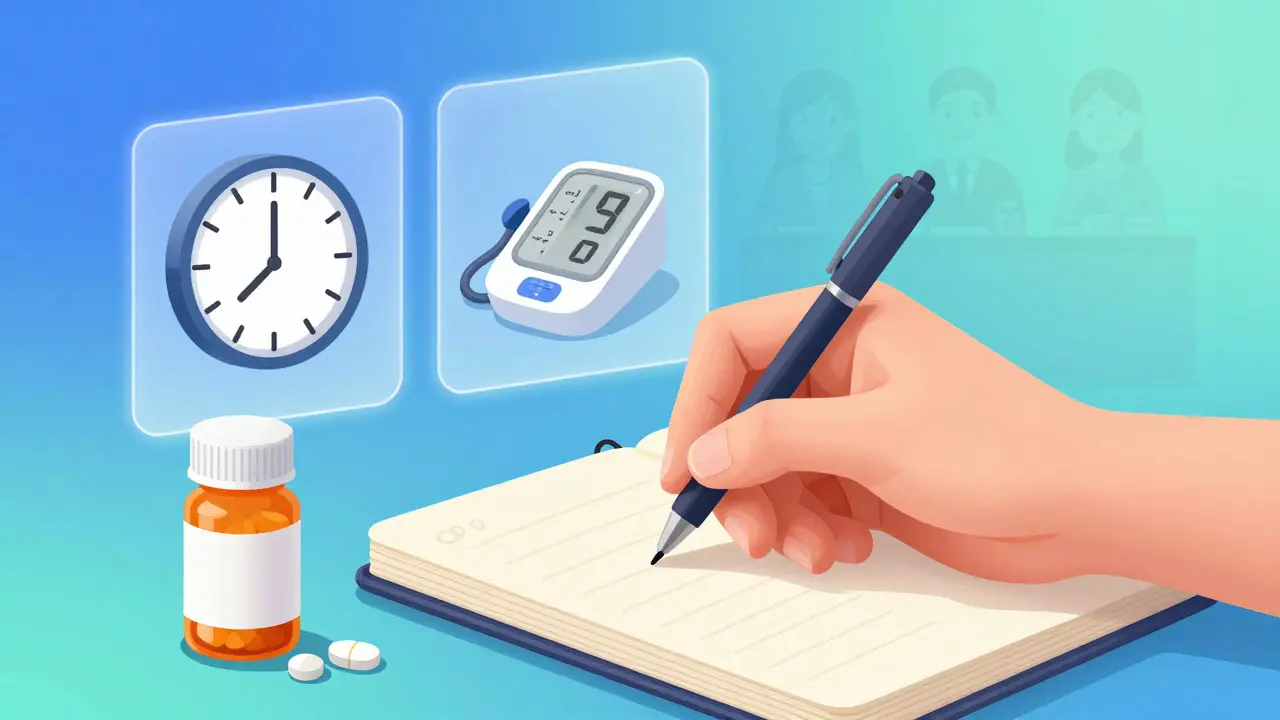
- Keep a simple journal: note how you feel each day for two weeks.
- Join one online group. Look for one with a pharmacist listed as a moderator.
- Ask your pharmacist: “Has anyone else had this experience?” They’ve heard it before.
- Give it time. Most people adapt within 10-14 days.
You’re not alone. Thousands of people have walked this path. And they’re waiting to tell you: it’s okay. You’ll be fine.
Are generic medications really as effective as brand-name drugs?
Yes. The FDA requires generics to prove they deliver the same amount of active ingredient into your bloodstream as the brand-name drug, within a range of 80% to 125%. This is called bioequivalence. Over 47 clinical trials reviewed by JAMA Internal Medicine in 2019 found no meaningful difference in effectiveness for heart disease, epilepsy, and depression medications. The difference isn’t in the drug-it’s in your expectations.
Why do some people feel worse after switching to a generic?
Often, it’s not the drug. It’s the nocebo effect-when expecting a negative outcome causes real symptoms. Changing the pill’s shape, color, or size can trigger anxiety. Many patients report side effects right after switching, even though tests show no change in how their body processes the medicine. Support groups help by normalizing these feelings. One Reddit thread with 472 comments found 76% of people who felt strange after switching to a generic statin felt better within two weeks.
Can patient support groups help me save money?
Absolutely. Generics cost 80-85% less than brand-name drugs. For someone on chronic medication like insulin, statins, or blood pressure pills, switching can save hundreds per month. A diabetes support group in Ohio helped members switch to biosimilars and saved an average of $327 per person each month. That’s not pocket change-it’s groceries, gas, or rent.
Are online support groups safe to join?
It depends. Unmoderated forums can spread false claims. But groups with pharmacist moderation-like those linked by the Association for Accessible Medicines or PatientsLikeMe-are safe. Look for groups that cite FDA guidelines, link to studies, and have a clear policy on verifying medical claims. If no health professional is involved, be cautious.
How do I find a support group near me?
Start with your pharmacy. Many now host monthly meetings. Check with your local hospital or community health center. Online, search Facebook for “[Your Condition] Generic Support.” The Association for Accessible Medicines will launch a verified directory in mid-2024. For now, PatientsLikeMe and condition-specific Reddit communities (like r/Pharmacy) are reliable starting points.
Do doctors even support these groups?
Yes. The American College of Physicians officially recommends that doctors prescribe generics whenever possible-and they cite patient support groups as key tools for helping patients feel confident. A 2016 pilot program showed that when doctors received summaries of patient experiences from these groups, they increased generic prescribing by 18%. Your story isn’t just heard-it’s changing how medicine is practiced.



Justin Archuletta on 18 March 2026, AT 20:26 PM
Switched to generic lisinopril last year. Felt weird for three days-like my head was full of cotton. Then? Zero issues. Seriously. Just give it two weeks. Your body’s not broken, it’s just confused.
Also, pharmacists aren’t just cashiers. Talk to them. They’ve seen this a thousand times.