
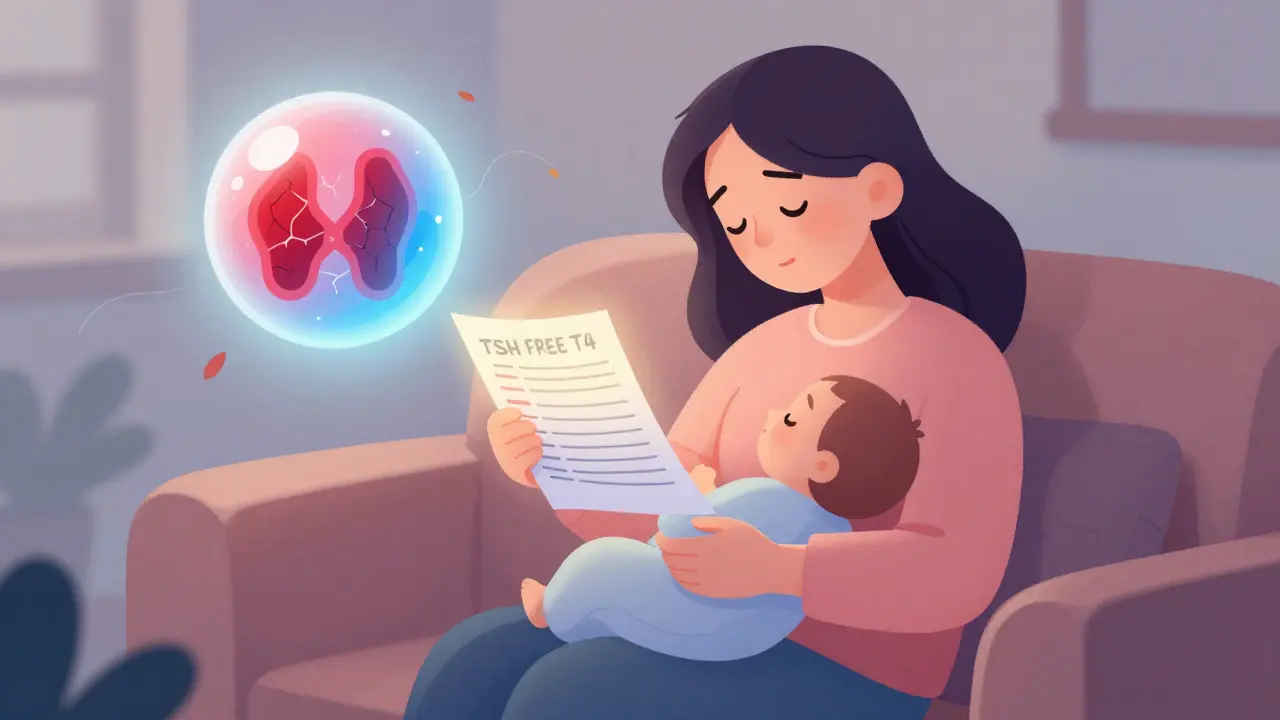
What Is Postpartum Thyroiditis?
Postpartum thyroiditis is a temporary thyroid problem that happens after giving birth, a miscarriage, or an abortion. It’s not caused by infection or stress - it’s an autoimmune reaction. Your immune system, which normally protects you, starts attacking your thyroid gland by mistake. This leads to two phases: first, your thyroid releases too much hormone (hyperthyroidism), then it burns out and produces too little (hypothyroidism). About 5 to 10% of women experience this after childbirth, but many never get diagnosed because the symptoms look like normal postpartum exhaustion.
The Two Phases: Hyperthyroidism Then Hypothyroidism
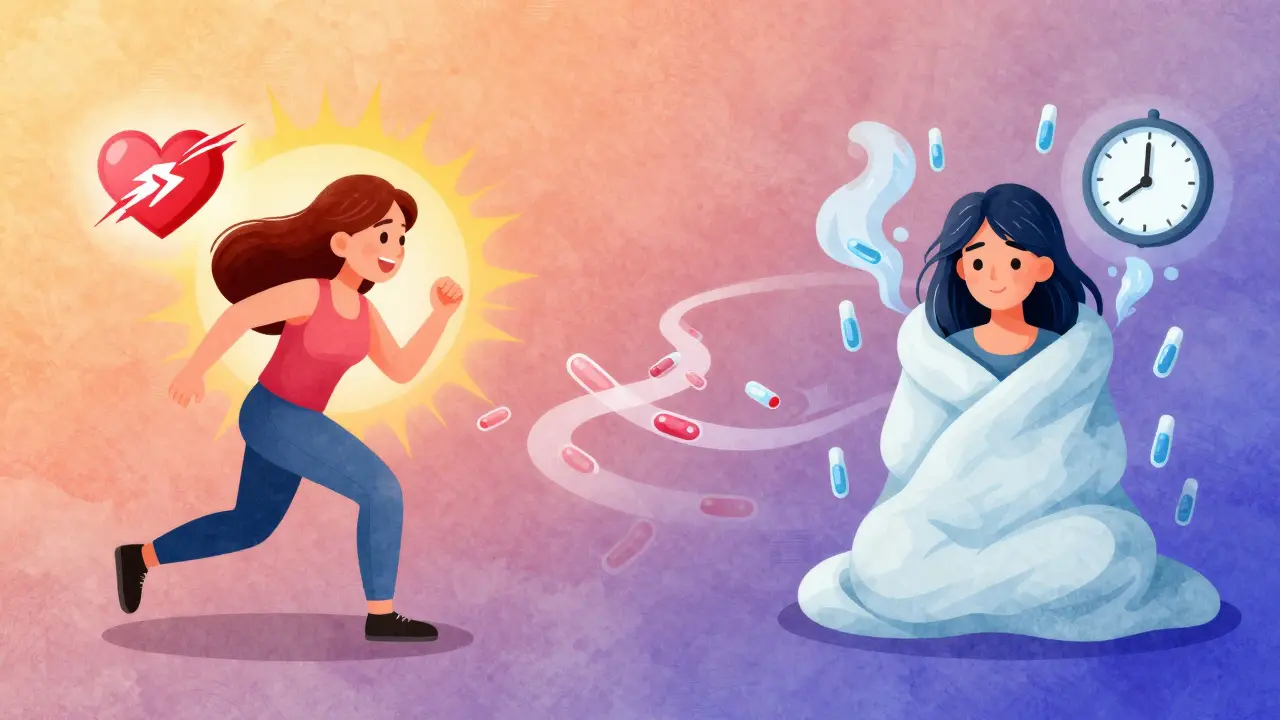
Most women with postpartum thyroiditis go through two clear stages. The first stage, hyperthyroidism, usually starts between 1 and 4 months after delivery. Your thyroid gets inflamed and leaks stored hormones into your bloodstream. You might feel hot, have a racing heart, lose weight without trying, feel shaky, or struggle to sleep. But here’s the catch - up to half of women don’t even notice these symptoms. Doctors often write them off as "just being tired from being a new mom." The second phase, hypothyroidism, hits around 4 to 8 months postpartum. This is when the thyroid is worn out. It can’t make enough hormones anymore. Symptoms here are more obvious and harder to ignore: extreme fatigue, feeling cold all the time, dry skin, hair thinning, constipation, brain fog, and weight gain. Many women report feeling like they’re moving through molasses - even after months of sleep and rest.
Why Does This Happen?
During pregnancy, your immune system gets suppressed so your body doesn’t reject the baby. After birth, it rebounds - sometimes too hard. That surge in immune activity can trigger attacks on the thyroid, especially if you already have thyroid antibodies (TPOAb) in your blood. These antibodies are like faulty security codes that mark your thyroid as an enemy. Women with type 1 diabetes, a history of thyroid problems, or a family history of autoimmune diseases are at much higher risk. In fact, if you had postpartum thyroiditis before, you have a 70% chance of getting it again with your next pregnancy.
How Is It Different From Postpartum Depression?
This is where things get confusing. The symptoms of postpartum thyroiditis - fatigue, mood swings, brain fog, irritability - overlap heavily with postpartum depression. That’s why about 30% of women are misdiagnosed with depression when they actually have thyroid dysfunction. The difference? Thyroid issues come with physical signs: your heart races during the hyperthyroid phase, you’re freezing during the hypothyroid phase, your hair falls out in clumps, and you gain or lose weight without changing your diet. Depression doesn’t cause those physical changes. If you’re on antidepressants and still feel awful, it might be time to check your thyroid.
How Is It Diagnosed?
There’s no single test, but doctors use a combo. First, they check your TSH (thyroid-stimulating hormone) and free T4 levels. In the hyperthyroid phase, TSH is low and free T4 is high. In the hypothyroid phase, TSH is high and free T4 is low. Then they test for TPO antibodies - present in 80 to 90% of cases. If you have these antibodies and your symptoms match, the diagnosis is clear. The best time to test? Between 6 and 12 weeks after delivery, especially if you’re high-risk. Some experts recommend testing all women with persistent fatigue beyond 8 weeks.
What Happens If It’s Left Untreated?
Most women - 70 to 80% - recover on their own within 12 to 18 months. But that doesn’t mean you should wait it out. Untreated hypothyroidism can affect your energy, mood, milk supply, and even your ability to bond with your baby. And here’s the big risk: 20 to 30% of women end up with permanent hypothyroidism. That means lifelong thyroid hormone replacement. The earlier you catch it, the better your chances of avoiding this outcome.
Treatment: What Works and What Doesn’t
During the hyperthyroid phase, treatment is usually not needed unless symptoms are severe. If your heart is racing or you’re anxious, a beta-blocker like propranolol can help calm things down. No antithyroid drugs like methimazole - they won’t fix this because your thyroid isn’t overproducing; it’s leaking.
In the hypothyroid phase, levothyroxine is the standard treatment. It’s safe during breastfeeding and helps restore energy, mood, and metabolism. Many women feel like themselves again within weeks. The key? Don’t stop the medication too soon. Even if you feel better, your thyroid may still be recovering. Your doctor will retest your levels every 6 to 8 weeks and adjust your dose as needed.
Some women wonder about supplements. Iodine? No - it can make it worse. Selenium? A few small studies suggest it might reduce antibody levels, but it’s not standard care yet. Stick to what’s proven: testing and thyroid hormone if needed.
Who Should Get Tested?
Not every new mom needs a thyroid test. But if you have any of these, get checked:
- Type 1 diabetes
- History of thyroid disease or postpartum thyroiditis
- Family history of Hashimoto’s or Graves’ disease
- High TPO antibody levels during pregnancy
- Unexplained fatigue, weight changes, or mood swings beyond 8 weeks postpartum
Even if you don’t fit these categories but feel "off" for months after birth, ask your doctor. Many women only get diagnosed after seeing three different doctors. Don’t let that be you.
What About Breastfeeding?
Levothyroxine is safe while breastfeeding. Only tiny amounts pass into breast milk, and studies show no effect on the baby’s thyroid or development. In fact, untreated hypothyroidism can reduce milk supply. So treating it helps you nurse better, not worse. If you’re worried, talk to your doctor - but don’t skip treatment because you’re nursing.
Long-Term Outlook
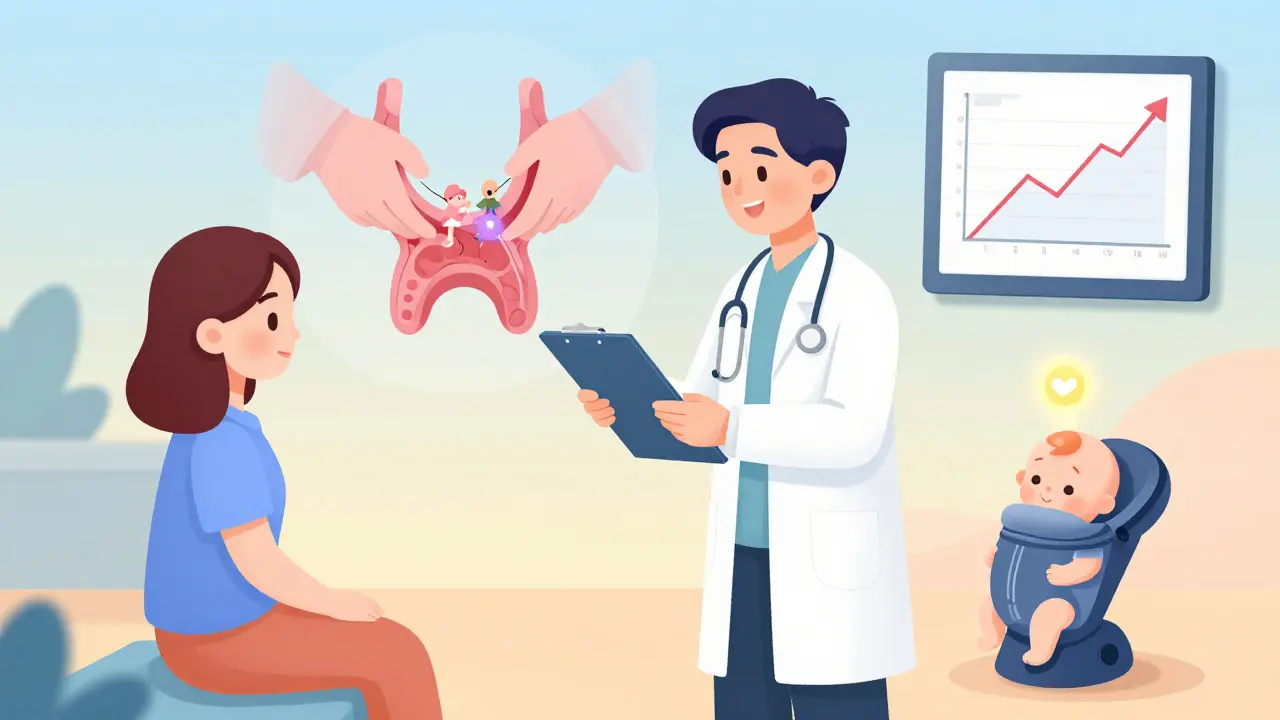
Most women bounce back. But about 1 in 5 will need thyroid medication for life. That’s why follow-up matters. Even if you feel fine after 12 months, get your TSH checked again at 1 year and again at 3 years. Thyroid problems can sneak back. And if you plan another pregnancy, tell your OB and endocrinologist. You’ll need monitoring early on - ideally at 6 weeks postpartum, not waiting for symptoms to show up.
What’s Changing in 2026?
Doctors are starting to catch on. In 2023, the American Thyroid Association updated its guidelines to recommend TPO antibody testing for all pregnant women with type 1 diabetes - not just those with a history. A new digital tool from the Cleveland Clinic, launched in early 2024, helps track symptoms over time and flags when thyroid issues are likely. And research is moving fast: a 2023 study found that interleukin-10 levels might predict who’ll develop postpartum thyroiditis before symptoms even start.
Experts predict universal TSH screening at 6 and 12 weeks postpartum will become standard in the U.S. within the next few years. Why? Because it saves money - $2,300 per case - by avoiding misdiagnosis and unnecessary antidepressants. Right now, only 42% of OB-GYNs routinely test for it. That’s changing.
Real Stories, Real Delays
One woman on Reddit said she was told she had postpartum depression for 8 months - until she found a doctor who ordered a thyroid panel. Her TSH was 18.5. "I cried when I got the results," she wrote. "I wasn’t broken. I was just sick." Another woman with type 1 diabetes got tested at 8 weeks postpartum because her endocrinologist insisted. Her TPO antibodies were high, her TSH was rising. She started levothyroxine before she even felt tired. She avoided the worst of it.
Too many women suffer in silence because their symptoms are dismissed. You’re not lazy. You’re not weak. Your body is doing something complicated - and it needs the right care.
What to Do Next
If you’re a new mom and you’ve felt off for more than 2 months:
- Write down your symptoms - fatigue, cold intolerance, heart palpitations, hair loss, mood changes.
- Ask your doctor for a TSH and free T4 blood test.
- If those are abnormal or you’re high-risk, ask for TPO antibody testing.
- Don’t accept "it’s just stress" as an answer.
- If your doctor says no, ask for a referral to an endocrinologist.
Postpartum thyroiditis isn’t rare. It’s underdiagnosed. And it’s fixable.
Can postpartum thyroiditis come back in future pregnancies?
Yes. If you’ve had it once, you have a 70% chance of getting it again with your next pregnancy. That’s why it’s critical to tell your OB and endocrinologist before you conceive. Testing for TPO antibodies early in pregnancy - even before 6 weeks - can help catch it before symptoms start.
Does postpartum thyroiditis affect my baby?
Not directly. The condition doesn’t pass to your baby. However, if your hypothyroidism is left untreated, it can reduce your milk supply and affect your energy levels, which may impact your ability to care for your baby. Treating it helps you be more present and physically capable of parenting.
Is postpartum thyroiditis the same as Hashimoto’s?
They look identical under a microscope - both are autoimmune attacks on the thyroid. The difference is timing and outcome. Postpartum thyroiditis happens after pregnancy and often resolves. Hashimoto’s is a lifelong condition. But if you had postpartum thyroiditis, you’re at higher risk of developing Hashimoto’s later. That’s why long-term monitoring matters.
Can I take supplements like iodine or selenium?
Avoid iodine supplements - they can make thyroid inflammation worse. Selenium has shown some promise in small studies for lowering antibody levels, but it’s not yet a standard treatment. Don’t self-treat. Always talk to your doctor before taking anything.
Why do some women only get the hypothyroid phase?
The body doesn’t always follow the textbook pattern. About 10 to 25% of women skip the hyperthyroid phase entirely and go straight into hypothyroidism. This is more common in women with higher TPO antibody levels. It’s still the same condition - just a different path. The key is recognizing the symptoms and testing for them, regardless of the order.
Will I need thyroid medication forever?
Not necessarily. Most women recover fully. But 20 to 30% end up with permanent hypothyroidism. The only way to know is to get regular TSH tests - at 6 months, 1 year, and then every 1 to 2 years after that. If your levels stay normal, you won’t need meds. If they drift up, you’ll need to restart treatment.
How long does it take to feel better after starting levothyroxine?
Many women notice improved energy and mental clarity within 2 to 4 weeks. But full recovery can take 6 to 8 weeks as your body adjusts to the right dose. Don’t expect overnight results. Your doctor will check your levels every 6 to 8 weeks and adjust your dose until your TSH is in the ideal range - usually between 0.5 and 2.5 mIU/L for postpartum women.




Kerry Howarth on 4 January 2026, AT 12:25 PM
This is exactly what I needed. My TSH was 12 at 10 weeks postpartum. I thought I was just a tired mom. Turns out I was hypothyroid. Levothyroxine changed everything.