Liver Health: What You Need to Know About Toxins, Medications, and Natural Support
When it comes to liver health, the liver is your body’s main filter, processing everything you eat, drink, and take as medicine. Also known as the body’s chemical factory, it breaks down alcohol, clears drugs like acetaminophen, and stores vital nutrients—all without you ever noticing until something goes wrong. Most people don’t think about their liver until they feel tired, get jaundiced, or see a lab result that says "elevated enzymes." But the truth is, your liver is quietly working every minute, and it’s surprisingly vulnerable to everyday habits.
Take acetaminophen overdose, a leading cause of acute liver failure in the U.S.. Many don’t realize that Tylenol, NyQuil, and other cold meds all contain the same active ingredient. Mixing them—even a little extra—can overload your liver. The same goes for long-term use of certain antibiotics, antifungals, or even herbal supplements like kava or green tea extract in high doses. Your liver doesn’t shout before it breaks. It just stops working. And it’s not just about pills. chronic hepatitis b, a silent virus that can live in your liver for decades without symptoms. It spreads through blood, needles, or from mother to child at birth. Left untreated, it leads to cirrhosis or liver cancer. Vaccination and regular screening can stop it in its tracks—but most people never get tested until it’s too late. Even your diet matters. Sugar-heavy foods, especially high-fructose corn syrup, turn into fat in the liver. That’s how non-alcoholic fatty liver disease (NAFLD) hits people who never drink alcohol.
There’s no magic detox tea or juice cleanse that fixes a damaged liver. What actually helps? Cutting back on alcohol, avoiding unnecessary meds, eating real food, and moving your body. If you’re on long-term medication, ask your doctor if it’s hard on your liver. Get your ALT and AST levels checked yearly. If you’ve ever had a blood transfusion, tattoo, or unprotected sex before 1992, get tested for hepatitis B and C. Your liver doesn’t need fancy supplements—it needs respect. Below, you’ll find real, practical advice on how medications, infections, and daily choices impact this quiet powerhouse—and what you can do to keep it working for decades.
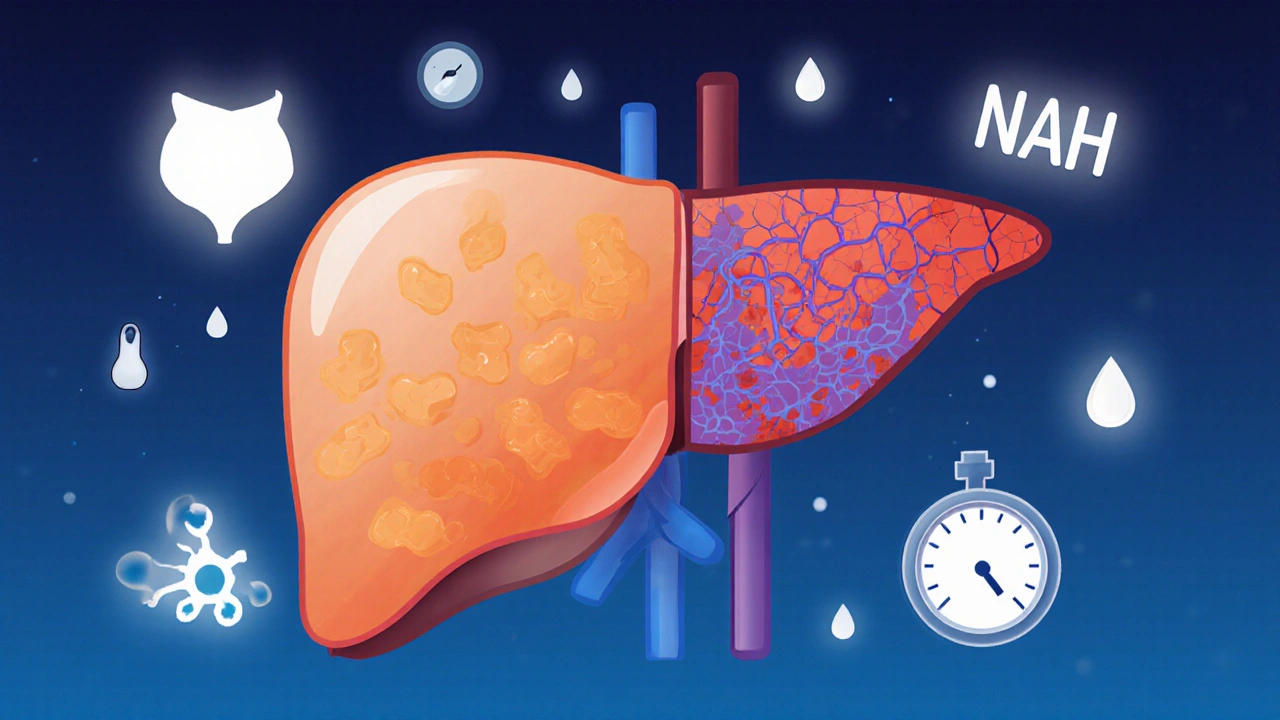
NAFLD and NASH are part of the same liver spectrum-simple fat buildup vs. inflamed, damaged liver tissue. Understanding fibrosis risk is key to preventing cirrhosis and liver cancer. Early action can reverse damage.