Medication Stickers: What They Are, Why They Matter, and How to Use Them Safely
When you pick up a prescription, you might not notice the small medication stickers, adhesive labels applied by pharmacies to help patients take drugs correctly. Also known as pill labels, these are more than just reminders—they’re safety tools designed to cut down on mistakes that land people in the hospital. A misplaced sticker, a missing dose time, or a confusing abbreviation can lead to overdose, missed treatments, or dangerous drug interactions. For seniors juggling five pills a day, parents giving medicine to kids, or anyone on a complex regimen, these stickers are the quiet heroes of daily health.
Medication stickers aren’t just about writing ‘Take with food’ or ‘Take at bedtime.’ They’re part of a bigger system that includes medication adherence, how consistently a patient takes their drugs as prescribed, and drug safety, the practices that prevent harm from medicines. Studies show that up to half of people don’t take their meds right—and stickers are one of the simplest fixes. They help you remember when to take a pill, warn you about mixing drugs, and even flag allergies or side effects. Some pharmacies now use color-coded stickers: red for high-risk meds, green for daily maintenance, blue for as-needed use. That visual cue alone cuts confusion.
But stickers only work if they’re clear and accurate. A sticker that says ‘1 tab daily’ is useless if the pill is actually a 50mg tablet and you’re supposed to split it. That’s why pharmacy labeling, the process of designing and applying drug labels matters so much. Good labeling avoids jargon, uses large fonts, and includes the reason for the drug—like ‘for high blood pressure’ instead of just ‘HTN.’ Some clinics even let patients customize their stickers with notes like ‘Don’t take if dizzy’ or ‘Call if rash appears.’ It turns a passive label into an active safety plan.
You’ll find real examples of this in the posts below—how people use stickers to avoid double-dosing kids, how mail-order pharmacies simplify multi-drug regimens, and how older adults manage complex heart meds with visual aids. These aren’t just tips—they’re life-saving habits. Whether you’re managing your own meds, helping a parent, or just trying to stay safe with prescriptions, the right sticker can mean the difference between feeling better and ending up in the ER.
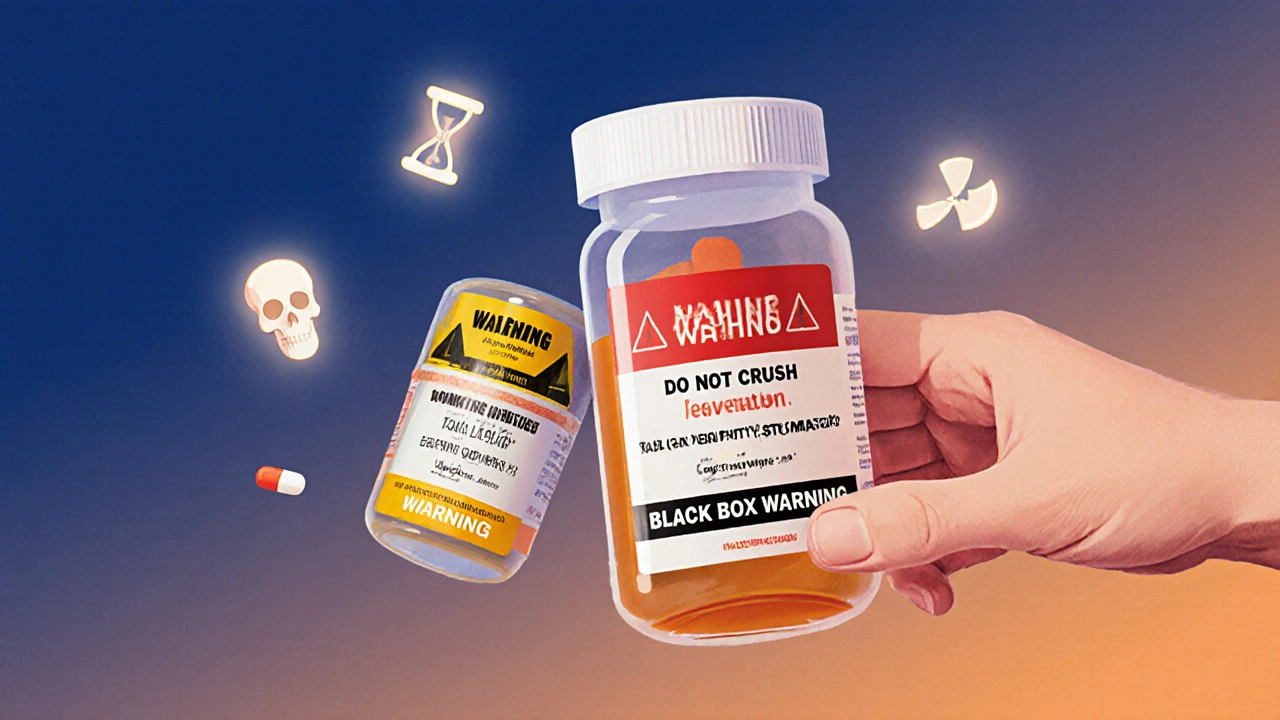
Prescription label warnings are critical safety tools that prevent deadly medication errors. Learn what red, yellow, and black box labels really mean, why ignoring "take with food" or "swallow whole" can be dangerous, and how to understand your pills correctly.