
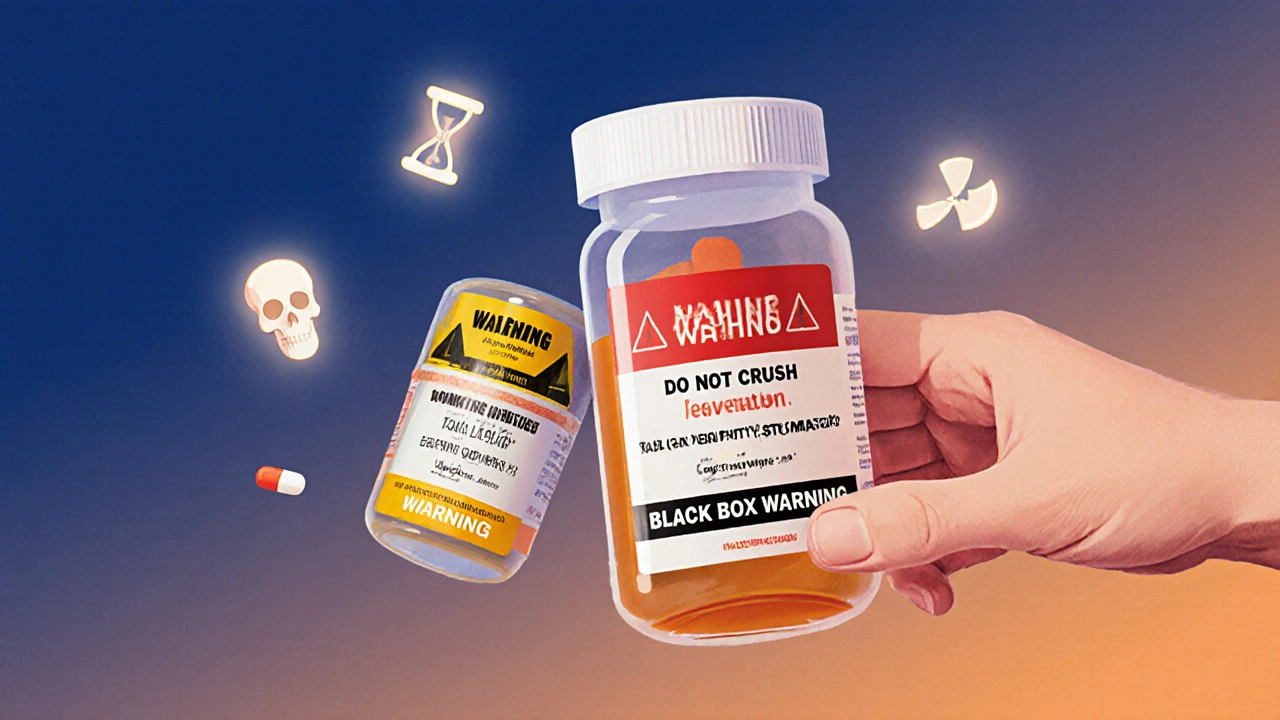
Every time you pick up a prescription, there’s a small sticker on the bottle. It might say do not crush, take with food, or avoid alcohol. You glance at it, nod, and toss the bottle in your bag. But what if that sticker is the only thing standing between you and a serious health crisis?
Why These Warnings Exist
Prescription label warnings aren’t just bureaucracy. They’re the last line of defense against medication errors. In the U.S., about 1.3 million people are injured each year because of mistakes with pills - and 7,000 die. Many of those errors happen because patients don’t understand what the labels mean. The FDA requires these warnings because they’ve seen time and again that clear instructions save lives.These stickers come from years of research. After the 1962 Kefauver-Harris Amendment, drug makers had to prove their medicines were safe and effective. Today, every prescription container must carry warnings that prevent injury. That’s not a suggestion - it’s the law. And yet, only about 55% of patients understand what the labels actually say.
The Different Types of Warnings You’ll See
Not all warnings are created equal. Some are urgent. Others are reminders. Here’s what each one really means:- Black Box Warning: This is the FDA’s highest alert. It’s printed in a black border on the drug’s official prescribing guide and sometimes copied onto the label. It means the drug can cause serious injury or death - like liver failure, heart problems, or suicidal thoughts. About 40% of new drugs approved between 2013 and 2017 had one. If your pill has this, you need to talk to your doctor before taking it.
- Red Labels: These mean danger. If you see red text or a red sticker, it’s not a suggestion. It’s a hard stop. Examples: Do not take if pregnant, May cause severe allergic reaction. A study found 85% of patients correctly understood red meant immediate risk.
- Yellow Labels: These are caution signs. They’re not emergencies, but ignoring them can lead to trouble. May cause drowsiness, Take on empty stomach, Refrigerate. About 60% of patients misread yellow as "just a recommendation."
- Blue, White, or Green Labels: These are usually instructions, not warnings. Take with food, Swallow whole, Shake well. People often ignore these - but they matter. A 2022 survey found 42% of patients skipped "take with food" even though it can prevent stomach bleeding or reduce absorption.
What "Take on Empty Stomach" Really Means
This one trips up more people than you’d think. "Take on empty stomach" doesn’t mean "don’t eat breakfast." It means: at least one hour before eating, or two hours after. Why? Some drugs are absorbed too slowly if food is in the way. Others get destroyed by stomach acid unless taken on an empty stomach.Take antibiotics like amoxicillin. If you take it with a big bowl of oatmeal, the drug might not reach the right level in your blood. That means the infection doesn’t clear - and you could end up with a stronger, resistant strain. Same with thyroid meds like levothyroxine. Food can block absorption completely. That’s why your doctor tells you to take it first thing in the morning, before coffee.
Why "Swallow Whole" Is Not a Suggestion
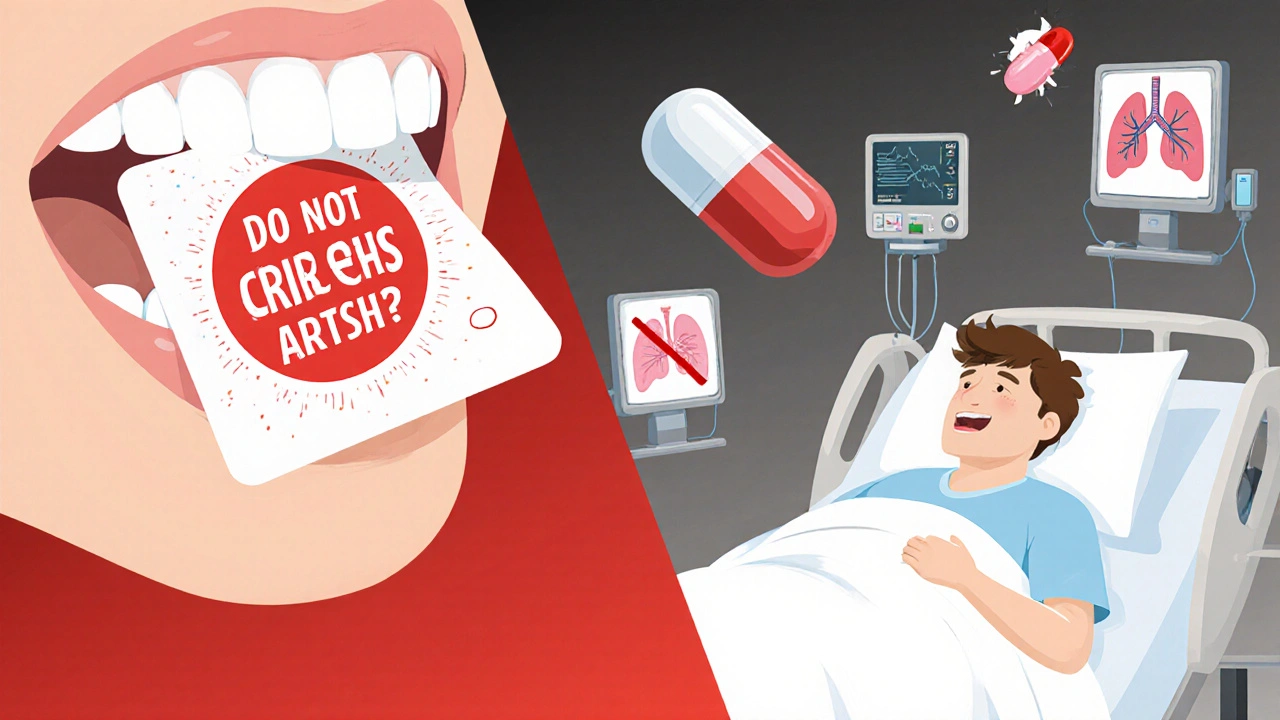
You’ve probably seen this one: Do not crush, chew, or break. Many patients think it means "chew it up so it works faster." That’s wrong. These pills are designed to release medicine slowly. Crushing them can dump the full dose into your system at once.Think of opioids like oxycodone extended-release. Crush one, and you get the same effect as injecting a high dose - which can stop your breathing. Or take blood pressure pills like verapamil SR. Crushed, they can cause your heart rate to drop dangerously low. A Reddit thread from 2022 had over 200 comments from pharmacists who said 30% of patients misinterpreted this warning. That’s not a small number. That’s a public health problem.
Color Matters - But Not How You Think
You might assume red = danger, yellow = caution, green = okay. That’s what most people think. And it’s mostly right. But here’s the catch: pharmacies don’t always follow the same color rules. Some use red for "take with food." Others use yellow for "avoid alcohol." There’s no national standard.A 2017 study in U.S. Pharmacist found patients got confused when the same warning was printed in different colors at different pharmacies. One person might see "avoid grapefruit" in red at CVS, then see it in blue at Walgreens. They think blue means "it’s fine." It’s not. The color doesn’t matter - the words do. Always read the text, not just the color.
What Happens When You Ignore a Warning
People ignore warnings all the time. Why? Because they think they know better. Or they’re in a hurry. Or they don’t understand the language.Take the grapefruit juice warning. It’s on dozens of drugs - statins, blood pressure meds, anti-anxiety pills. Grapefruit blocks an enzyme in your gut that breaks down these drugs. Result? Your body absorbs way too much. One patient in Perth told me she took her cholesterol pill with grapefruit juice for months. She ended up in the ER with muscle damage so severe she couldn’t walk for weeks.
Or the "avoid sunlight" warning. Some antibiotics and acne meds make your skin hypersensitive. One woman skipped this warning, went to the beach, and got second-degree burns in under an hour. She didn’t realize the warning meant "don’t go outside without heavy sunscreen and long sleeves."
And then there’s the "do not drive" warning. Sedatives, painkillers, and even some antidepressants can make you drowsy. One man ignored this after starting a new anxiety med. He fell asleep at the wheel and totaled his car. He survived. But his daughter didn’t.
Why You Shouldn’t Trust the Paper Insert
That thick booklet that comes with your pills? Most people throw it away. A 2020 study found 68% of patients never even open it. But that’s where the real details are - drug interactions, rare side effects, what to do if you miss a dose.Here’s the problem: the insert is written for doctors. It uses terms like "hepatic metabolism" and "CYP450 inhibition." The average American reads at a 7th-grade level. The insert? Written at a 12th-grade level. That’s why the FDA launched the "Facts Label" program in 2022. By June 2025, 20 high-risk drugs will have simplified, one-page summaries with icons and plain language. It’s a start.
How to Actually Understand Your Labels
You don’t need a pharmacy degree. You just need three habits:- Check the pill. Does the color, shape, and imprint match what’s on the label? If not, ask the pharmacist. Fake pills are a growing problem.
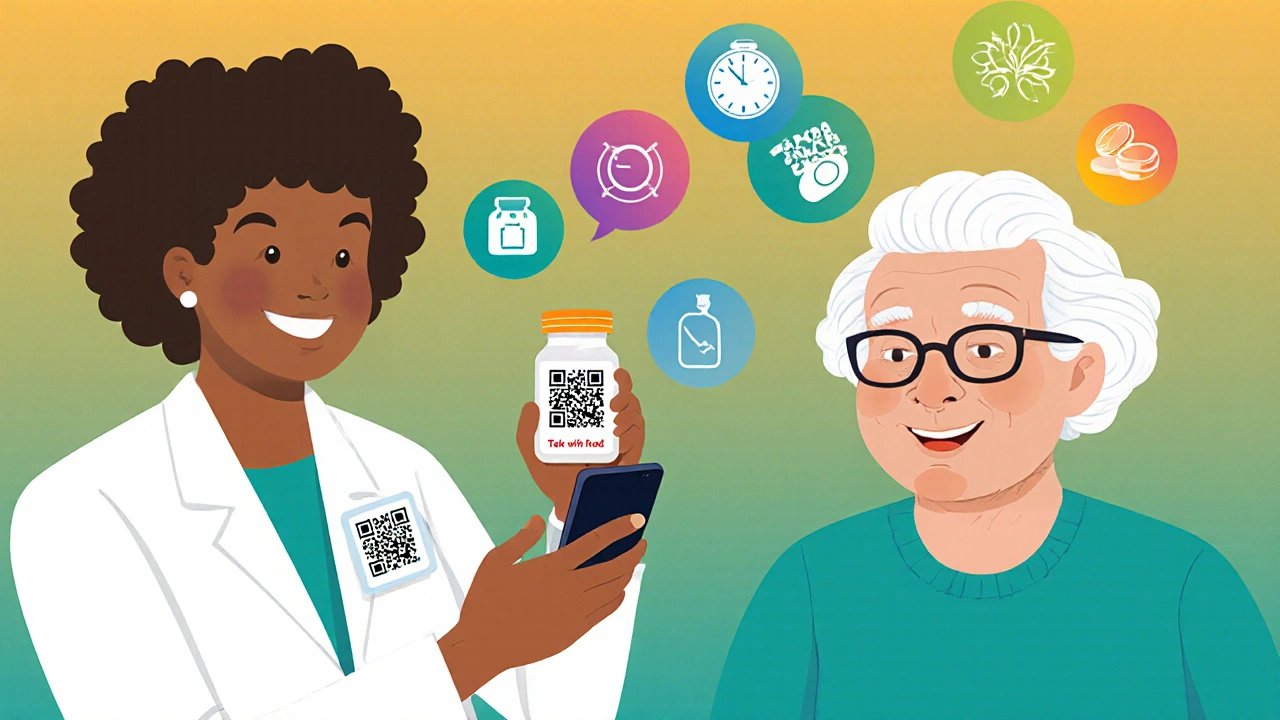
- Ask for the "teach-back". When the pharmacist gives you instructions, say: "Can you help me explain this back to you?" Then say it in your own words. If you get it wrong, they’ll fix it. Studies show this improves understanding by 47%.
- Take a photo. Snap a picture of the label with your phone. Review it at home. If you’re unsure, call your pharmacy. Most have 24/7 phone lines.
And if you’re over 65, have diabetes, or take five or more pills a day - ask for a medication review. Many pharmacies now offer free consultations. They’ll check for interactions, duplicate prescriptions, and unclear labels.
What’s Changing in 2025
The system is finally waking up. In 2023, the FDA approved the first universal icon for "do not crush" - a pill with a red X through it. In clinical tests, misinterpretation dropped from 31% to just 8%. That’s huge.By 2026, most pharmacies will be required to use simplified labels. QR codes on bottles will link to short videos explaining the warning in plain English. One pilot at Mayo Clinic showed comprehension jumped from 58% to 90%.
It’s not perfect. But it’s better. And it’s coming fast.
Final Thought: Your Label Is Your Lifeline
These stickers aren’t clutter. They’re not filler. They’re the difference between healing and harm. You don’t have to be a scientist to read them. You just have to slow down. Read the words. Ask questions. Don’t assume. And if you’re ever unsure - call your pharmacist. They’re paid to help you understand this stuff.One small label. One big decision. Make sure you get it right.
What does a black box warning mean on a prescription label?
A black box warning is the strongest safety alert the FDA requires. It means the medication carries a serious risk of death or severe injury - like liver failure, heart problems, or suicidal behavior. It’s printed in a bold black border on the drug’s official prescribing guide and sometimes copied to the label. If your prescription has this, talk to your doctor before taking it. Never ignore it.
Why do some pill labels say "take on empty stomach"?
This means you should take the medication at least one hour before eating or two hours after a meal. Food can block how well your body absorbs the drug. For example, thyroid meds like levothyroxine won’t work properly if taken with food. Antibiotics like amoxicillin may not reach the right level in your blood. Ignoring this can make the treatment ineffective or lead to resistant infections.
Can I crush a pill if it’s hard to swallow?
Only if the label or your doctor says it’s okay. Many pills are designed to release medicine slowly. Crushing them can cause a dangerous overdose. For example, crushing extended-release opioids like oxycodone can release the full dose at once, leading to breathing problems or death. If swallowing is hard, ask your pharmacist for a liquid version or a different form.
What do the colors on prescription labels mean?
Red usually means danger - like "do not take if pregnant" or "risk of severe allergic reaction." Yellow means caution - like "may cause drowsiness" or "take with food." Blue, white, or green are often just instructions, not warnings. But colors aren’t standardized across pharmacies. Always read the words, not just the color. A red label at one pharmacy might mean something different at another.
What should I do if I don’t understand a warning?
Call your pharmacy. Most have a 24/7 hotline. Ask them to explain the warning in plain language. Use the "teach-back" method: repeat what they said in your own words. If you get it wrong, they’ll correct you. You can also ask for a printed one-page summary - many pharmacies now offer these. Never guess. A misunderstanding can lead to serious harm.
Are prescription warning labels the same in Australia as in the U.S.?
Australia follows similar safety standards through the Therapeutic Goods Administration (TGA), but the format and color codes aren’t identical. Australian labels often include more pictograms and simpler language. The "black box" warning doesn’t exist in Australia - instead, they use bold red text for serious risks. If you’re taking a U.S.-prescribed drug in Australia, always check with your local pharmacist. They’ll know how to interpret it correctly.
Why do some pharmacies give better explanations than others?
Big chains like Walgreens and CVS have standardized training and safety programs like the "Medication Safety Check," which boosts patient understanding to 92%. Independent pharmacies often lack time, funding, or training. A 2022 study showed only 68% of patients understood warnings at small pharmacies. If you’re unsure, ask for a consultation. Many pharmacies now offer free, one-on-one reviews - especially for seniors or those on multiple medications.
Can I ignore a warning if I’ve taken the medicine before without problems?
No. Warnings are based on science, not personal experience. Just because you didn’t have side effects before doesn’t mean it’s safe. Your body changes. You might start taking a new drug that interacts with it. Or your liver function might decline with age. A warning like "avoid grapefruit" applies every time - even if you’ve taken the pill for years. Never assume past safety means future safety.



stephen idiado on 1 December 2025, AT 08:46 AM
Black box warnings? That's just regulatory theater. Real pharmacovigilance requires real-time biomonitoring, not static stickers. You're reducing complex pharmacokinetics to a color-coded toddler chart.