NAFLD: What It Is, How It Develops, and How to Manage It
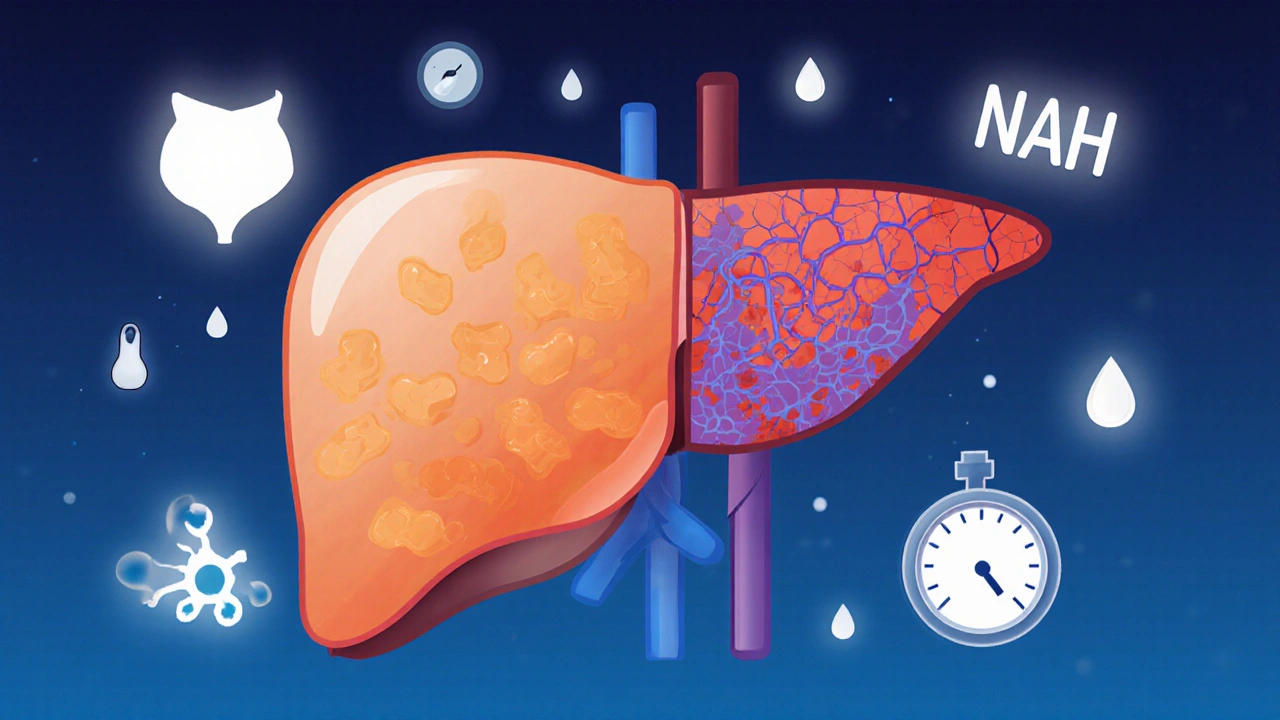
When your liver starts storing too much fat—not from alcohol, but from sugar, refined carbs, and excess calories—you’re looking at NAFLD, a condition where fat builds up in liver cells without alcohol being the cause. Also known as nonalcoholic fatty liver disease, it’s the most common liver disorder in the U.S. and affects nearly one in three adults. Most people don’t feel it. No jaundice, no pain, no warning signs—just a quiet buildup that can turn into inflammation, scarring, and even liver failure if ignored.
NAFLD doesn’t happen alone. It’s tied to insulin resistance, when your body stops responding properly to insulin, causing blood sugar to rise and fat to pile up in the liver. That’s why it often shows up with metabolic syndrome, a cluster of conditions including belly fat, high blood pressure, high triglycerides, and elevated blood sugar. These aren’t just separate problems—they’re parts of the same system breaking down. The liver isn’t just storing fat; it’s struggling to process it because your metabolism is out of sync.
What makes NAFLD dangerous isn’t the fat itself—it’s what happens next. If inflammation kicks in, it becomes NASH: nonalcoholic steatohepatitis. That’s when liver cells start dying, scar tissue forms, and your liver loses function. And here’s the kicker: most people with NAFLD never get tested. Blood work often looks normal. Ultrasounds catch it early, but only if you’re screened. The good news? You don’t need a drug to fix it. You need to change how you eat and move.
Studies show that losing just 5% of your body weight can reduce liver fat. Losing 10% can reverse scarring. It’s not about extreme diets or supplements. It’s about cutting out sugary drinks, reducing processed carbs, and moving daily—even a 20-minute walk helps. Medications like vitamin E or pioglitazone are sometimes used, but they come with side effects. The real treatment? Lifestyle. It’s not glamorous, but it’s the only thing proven to work long-term.
Below, you’ll find clear, no-fluff guides on how NAFLD connects to medications, diet, and other conditions like diabetes and obesity. You’ll see what actually helps—based on real patient data and clinical practice—not theory. No hype. Just what works when you’re trying to protect your liver before it’s too late.
NAFLD and NASH are part of the same liver spectrum-simple fat buildup vs. inflamed, damaged liver tissue. Understanding fibrosis risk is key to preventing cirrhosis and liver cancer. Early action can reverse damage.