Red Yeast Rice: What It Is, How It Works, and What You Need to Know
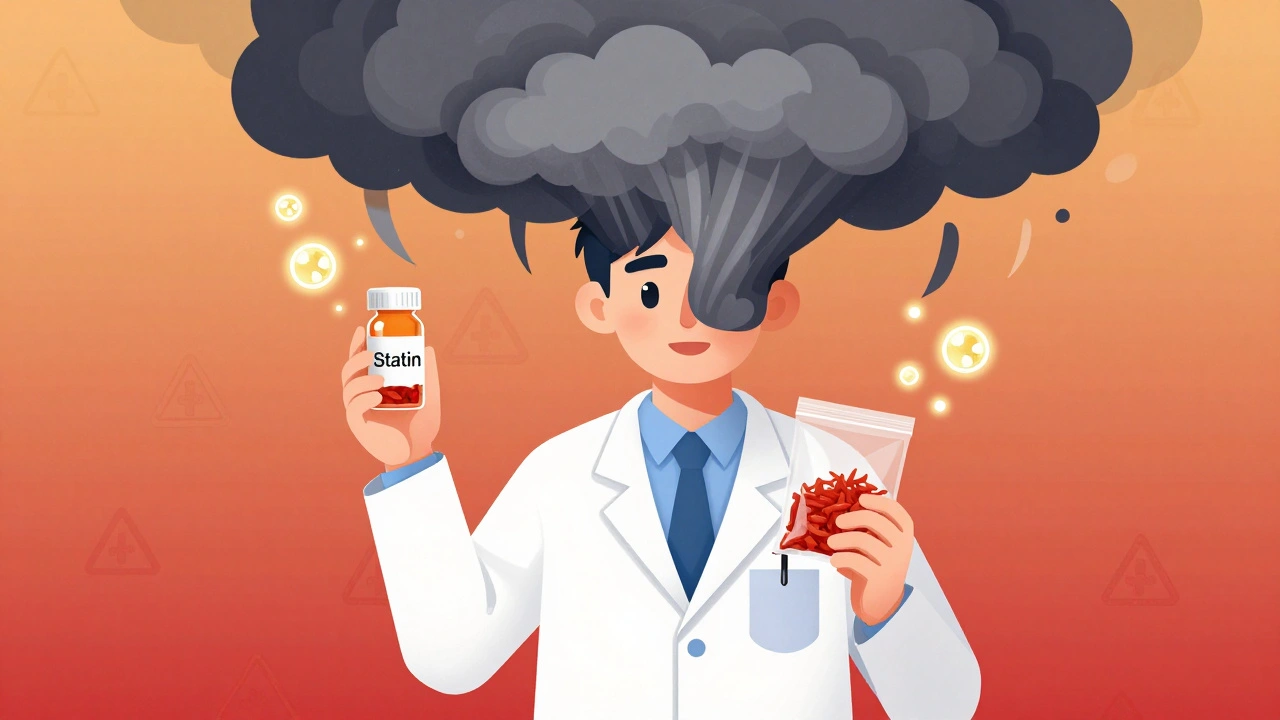
When you hear red yeast rice, a fermented rice product used in traditional Chinese medicine to support heart health. Also known as red fermented rice, it's been used for over a thousand years—not just as a food coloring, but as a way to help manage cholesterol levels. Today, it’s sold in supplement form in the U.S. and Europe, often marketed as a natural alternative to statins. But here’s the catch: it doesn’t just mimic statins—it contains the same active compound, monacolin K, a substance chemically identical to the prescription drug lovastatin. That means if you’re taking red yeast rice, you’re essentially taking a natural version of a pharmaceutical cholesterol-lowering drug.
Why does this matter? Because monacolin K works just like prescription statins: it blocks an enzyme in your liver that makes cholesterol. Studies show it can lower LDL (bad) cholesterol by 15–25% in 8–12 weeks. But unlike pills you get from a pharmacy, red yeast rice supplements aren’t tightly regulated. One brand might have enough monacolin K to work, while another might have none at all—or worse, contain a toxic contaminant called citrinin. The FDA has warned several brands for containing unsafe levels of this mold byproduct. So if you’re thinking about trying it, you’re not just choosing a supplement—you’re choosing a product with real drug effects and real risks.
It’s also not safe for everyone. If you’re already on a statin, mixing it with red yeast rice can raise your risk of muscle damage, kidney issues, or liver stress. People with liver disease, pregnant women, or those taking certain antibiotics or antifungals should avoid it entirely. And if you’re planning surgery, stop it at least two weeks ahead—just like you would with any other medication. The biggest surprise? Many people don’t realize red yeast rice acts like a drug. They think "natural" means "harmless." But nature doesn’t care about your dosage. A mushroom can be medicine or poison, depending on how much you take.
So what’s the real story? Red yeast rice isn’t a magic herb. It’s a potent, inconsistent, and potentially risky way to lower cholesterol. Some people find it helps when they can’t tolerate statins. Others use it because they want to avoid prescriptions. But if you’re going to use it, treat it like medicine—not a vitamin. Talk to your doctor. Get your liver and muscle enzymes checked. Know exactly what’s in the bottle. And don’t assume that because it’s sold in a health food store, it’s safe to use without oversight.
Below, you’ll find real-world insights from people who’ve used red yeast rice, compared it to statins, or dealt with side effects. Some found relief. Others had unexpected reactions. Every post here is grounded in science, patient experience, or pharmacy practice—not marketing claims. Whether you’re considering it, already using it, or just curious, these articles will help you make sense of what’s actually happening when you take it.
Red yeast rice contains the same active ingredient as statins, making it dangerous to take together. Learn why combining them raises your risk of muscle damage and liver injury-and what safer alternatives exist.