
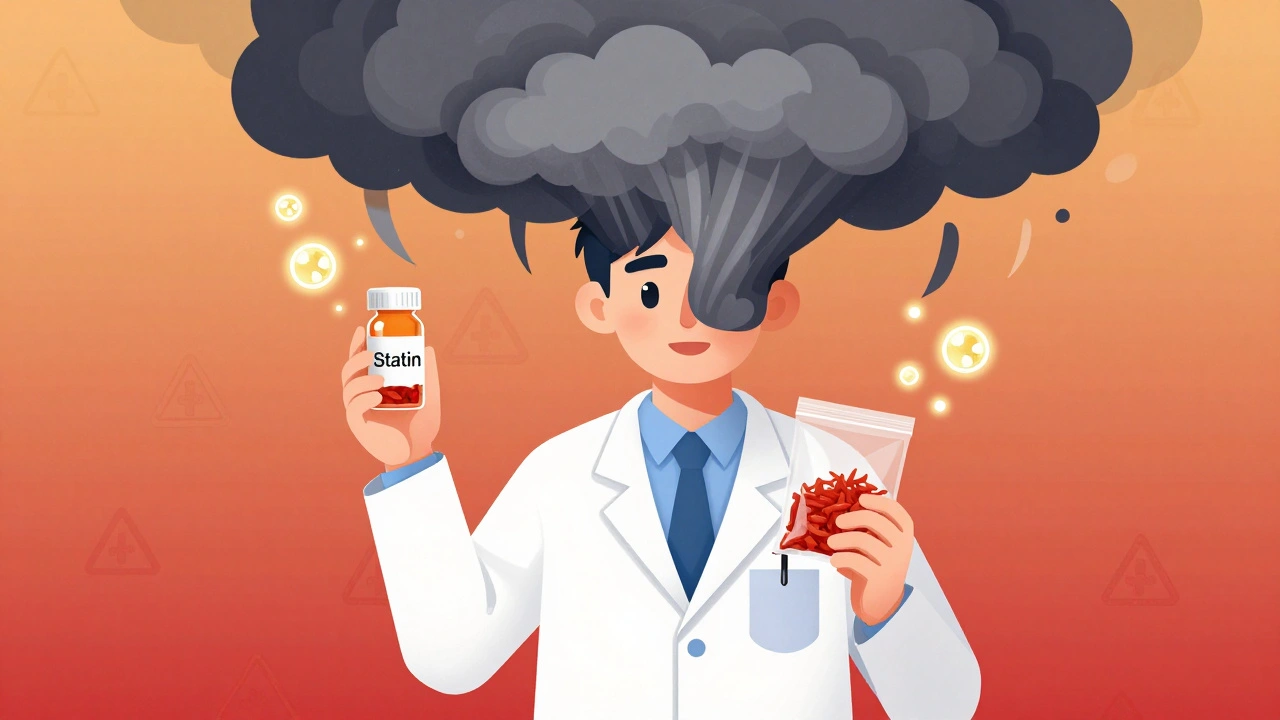
Statin and Red Yeast Rice Safety Checker
Critical Warning
The FDA and American Heart Association strongly warn against combining red yeast rice with statins. Both contain monacolin K (identical to lovastatin) which causes duplicate therapy and significantly increases risk of muscle breakdown (rhabdomyolysis), liver damage, and severe health complications.
Check Your Risk
Many people turn to red yeast rice because they believe it’s a "natural" way to lower cholesterol-especially if statins made them feel awful. But here’s the hard truth: if you’re already taking a statin, adding red yeast rice isn’t a smart upgrade. It’s a dangerous overlap. And it’s happening more often than you think.
What Exactly Is Red Yeast Rice?
Red yeast rice isn’t some new health fad. It’s been around for over a thousand years in China, used traditionally to aid digestion and circulation. But modern science uncovered something startling: the active ingredient in red yeast rice is chemically identical to lovastatin-the very first statin drug ever made. That’s not a coincidence. It’s the same compound, same mechanism, same effect. The key player is monacolin K. This is the molecule that blocks HMG-CoA reductase, the enzyme your liver uses to make cholesterol. Prescription statins do the exact same thing. So when you take red yeast rice, you’re not taking a gentle herbal aid. You’re taking a statin-just one that’s unregulated, inconsistently dosed, and potentially contaminated.Why the Dose Doesn’t Matter
You might think, "I’m only taking 600 mg of red yeast rice. That’s not much." But here’s the problem: you have no idea how much monacolin K you’re actually getting. A 2022 ConsumerLab.com analysis found only 30% of red yeast rice products matched their label claims. One bottle might have 2 mg of monacolin K. Another might have 15 mg-equivalent to a full prescription dose of lovastatin. Some products even contain citrinin, a toxic mold byproduct linked to kidney damage. That’s not just inconsistent-it’s unpredictable. Prescription statins? You know exactly what you’re getting. Atorvastatin 20 mg means 20 mg. Rosuvastatin 10 mg means 10 mg. No guessing. No surprises. Red yeast rice? It’s a lottery ticket with your muscles and liver on the line.The Real Danger: Duplicate Therapy
Combining red yeast rice with a statin is like pouring two cups of gasoline into the same engine. Both are HMG-CoA reductase inhibitors. Both reduce cholesterol. Both carry the same risks: muscle pain, muscle breakdown (rhabdomyolysis), and liver damage. The American Heart Association says it plainly: "Concomitant use of red yeast rice and statins should be avoided." Why? Because the risk of severe muscle injury jumps dramatically. Case reports from the FDA’s adverse event database show patients with CK levels over 10,000 U/L-normal is under 200. One Reddit user, taking 1,200 mg of red yeast rice alongside 20 mg of atorvastatin, ended up in the hospital with CK levels at 18,500 U/L. He needed IV fluids, kidney monitoring, and weeks of recovery. And it’s not just muscle. WebMD’s user forums document over two dozen cases of liver enzyme spikes (ALT levels over 400 U/L) when red yeast rice was added to statins. Normal ALT? Below 40. These aren’t rare outliers. They’re predictable outcomes of doubling down on the same drug.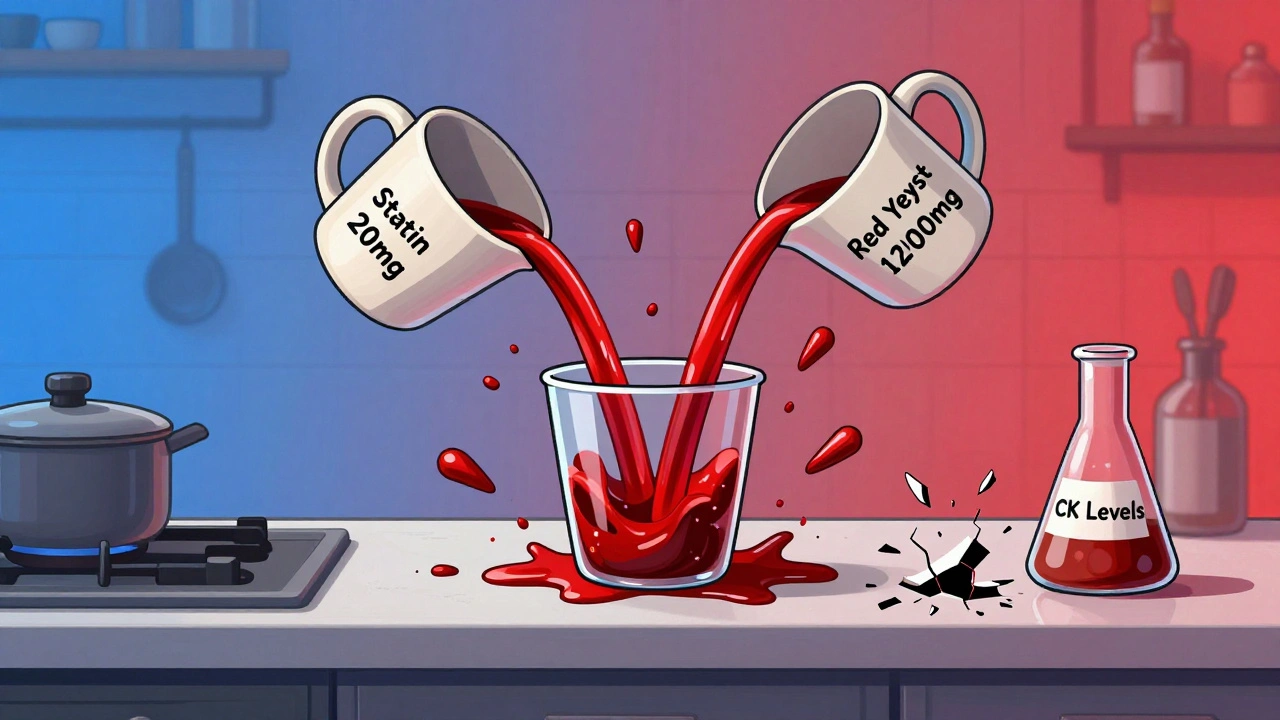
Who Actually Uses Red Yeast Rice?
About 3.2 million Americans took red yeast rice in 2022, according to NHANES data. Nearly 70% of them had stopped statins because of side effects-mostly muscle aches. That’s understandable. Statin intolerance affects up to 29% of users. For those people, red yeast rice can be a lifeline… but only if used alone. Studies show that when taken by itself, red yeast rice lowers LDL cholesterol by 21-30%. That’s comparable to low-dose statins. And in a 2017 trial, 60% of statin-intolerant patients could tolerate a daily 1,800 mg dose of red yeast rice without major issues. That’s promising. But here’s the catch: those patients weren’t also taking a statin. The moment you add a statin, the safety profile collapses. There’s no safe threshold. No "low dose" combo that works. It’s all or nothing-and nothing is the only safe choice.What Should You Do Instead?
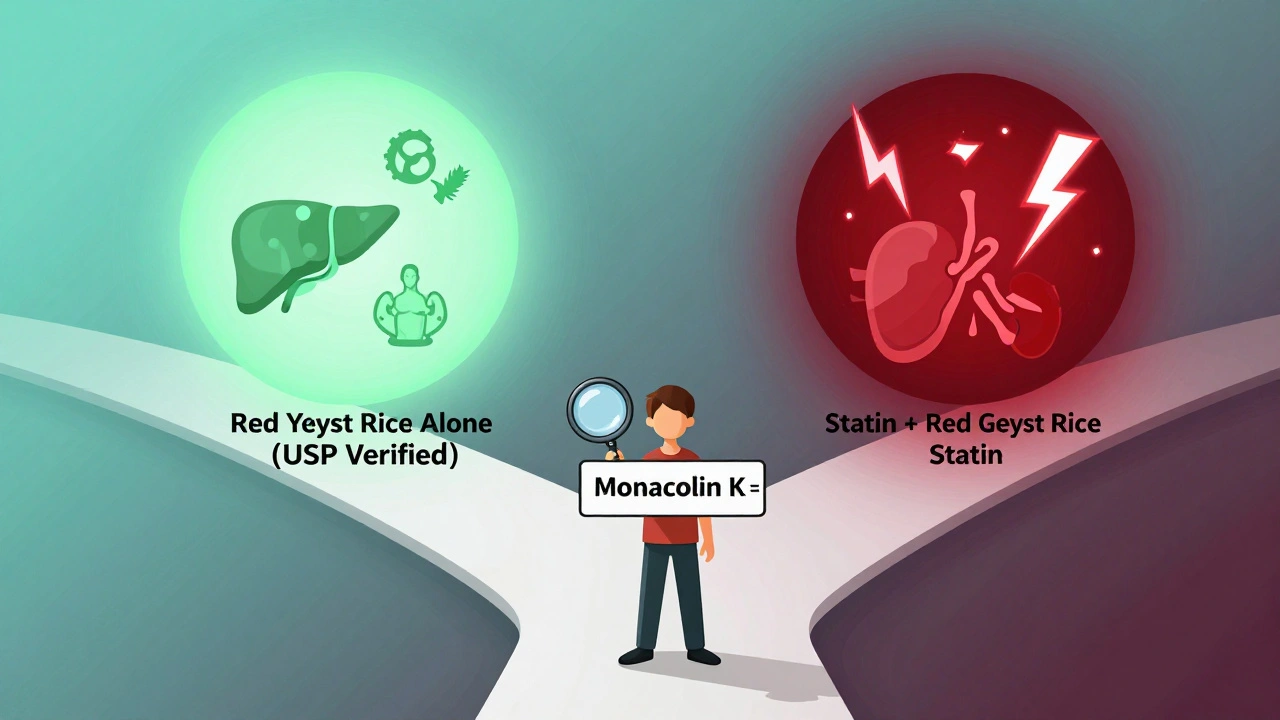
If you’re statin-intolerant and want to manage cholesterol without drugs, here’s what actually works:- Switch to red yeast rice alone-and only if you buy a USP-verified product. Less than 15% of brands meet this standard.
- Try ezetimibe, a non-statin pill that blocks cholesterol absorption in the gut. It’s well-tolerated and works well with or without red yeast rice.
- Consider PCSK9 inhibitors if your risk is high. They’re injectable, expensive, but extremely effective and safe-even for people who can’t handle statins.
- Focus on lifestyle: soluble fiber (oats, beans, apples), plant sterols, regular movement, and weight management. These can drop LDL by 10-15% on their own.
What Your Doctor Should Be Asking
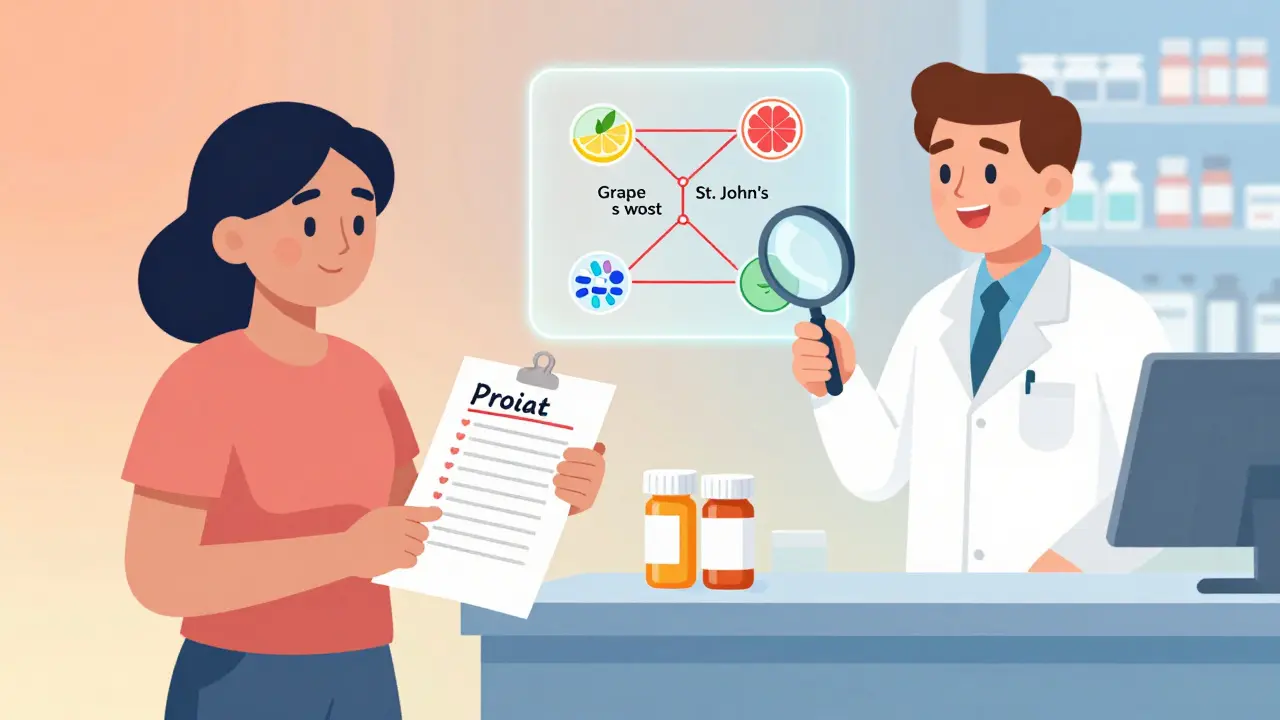
Most doctors don’t ask about supplements. A 2021 Mayo Clinic study found 45% of patients didn’t disclose they were taking red yeast rice. Why? They think it’s "just a supplement." They don’t realize it’s a drug. Your doctor needs to know. Not because they’re judging you. But because they need to protect you. If you’re taking red yeast rice:- Get a baseline CK (creatine kinase) and liver enzyme test.
- Repeat them at 3 months and then annually.
- Avoid grapefruit juice, certain antibiotics (like clarithromycin), and antifungals-they slow down how your body clears monacolin K, making toxicity more likely.
- Stop immediately if you notice unexplained muscle pain, weakness, or dark urine.
The Bigger Picture: Regulation Isn’t Working
The FDA has issued over a dozen warning letters since 2008 to red yeast rice manufacturers for containing active pharmaceutical ingredients. Yet the product remains on shelves. Why? Because of the Dietary Supplement Health and Education Act (DSHEA) of 1994. Under this law, supplements don’t need to prove safety before sale. The FDA has to prove they’re dangerous after people get hurt. That’s backwards. And it’s costing people their health. In 2023, the American Herbal Pharmacopoeia released new standards requiring red yeast rice to contain at least 0.5% monacolin K and no more than 2 ppm citrinin. That’s progress. But it’s voluntary. Only a fraction of brands follow it. Meanwhile, the market keeps growing. Sales hit $150 million in 2022. People are desperate for alternatives. But desperation doesn’t make something safe.Final Take: Don’t Mix. Choose One Path.
Red yeast rice isn’t evil. It’s not magic. It’s a potent, unregulated cholesterol-lowering agent that works-when used correctly. But if you’re on a statin, it’s not an option. It’s a red flag. You can’t have it both ways. You can’t take a prescribed drug and then add a supplement that does the same thing, only less predictably and with more risk. If you’re struggling with statin side effects, talk to your doctor about alternatives-not combinations. There are safer, better-documented paths forward. Red yeast rice has a role-but only as a solo player. Your muscles, your liver, and your future self will thank you.Can I take red yeast rice instead of a statin?
Yes, for some people-especially those who can’t tolerate statins due to muscle pain. Studies show red yeast rice can lower LDL cholesterol by 21-30%, similar to low-dose statins. But only use it if you choose a USP-verified product, start with a low dose (600-1,200 mg daily), and get regular blood tests for liver enzymes and CK levels. Never combine it with a statin.
Is red yeast rice safer than statins?
Not necessarily. Prescription statins are rigorously tested, consistently dosed, and monitored. Red yeast rice varies wildly in potency and may contain toxins like citrinin. While some people tolerate it better than statins, it’s not inherently safer. The lack of regulation makes it riskier overall.
What happens if I accidentally take red yeast rice with a statin?
You significantly increase your risk of rhabdomyolysis-a serious condition where muscle tissue breaks down, releasing toxins into the blood that can damage kidneys. Symptoms include severe muscle pain, weakness, and dark urine. If you’ve combined them, stop the supplement immediately and contact your doctor. Blood tests for CK and liver enzymes are essential.
How do I know if my red yeast rice product is safe?
Look for the USP Verified Mark on the label. This means an independent lab tested the product for correct ingredient levels, absence of contaminants like citrinin, and proper manufacturing practices. Only about 15% of red yeast rice products on the market carry this mark. Avoid brands that don’t disclose monacolin K content or list "proprietary blends."
How long does it take for red yeast rice to work?
You’ll typically see changes in cholesterol levels within 4-8 weeks, with full effects appearing around 12 weeks. A 2018 meta-analysis in Nutrients confirmed that lipid improvements peak at the 12-week mark. Don’t expect overnight results. And always retest your cholesterol after 3 months to see if it’s working.



Ada Maklagina on 4 December 2025, AT 23:34 PM
I took red yeast rice for six months after my statin gave me leg cramps so bad I couldn't walk the dog. Lost 28 points off my LDL. No muscle pain. Just chill. But I never mixed it with anything. Learned that the hard way.