Statins: What They Are, How They Work, and What You Need to Know
When your doctor says you need a statin, a class of medications used to lower LDL cholesterol and reduce the risk of heart attack and stroke. Also known as HMG-CoA reductase inhibitors, they’re among the most prescribed drugs in the world because they work — for millions of people, they’re the difference between a heart attack and a second birthday. But statins aren’t magic pills. They don’t fix poor diet or inactivity. They lower the bad cholesterol your liver makes, and that’s it. If you’re on one, you’re not alone — over 40 million Americans take them. But many don’t know why, how they work, or what else might work just as well.
Statins are part of a bigger picture called cardiovascular drugs, medications designed to protect the heart and blood vessels. They’re often combined with other pills — like blood pressure meds — into single tablets called generic statin combos, combination pills that simplify daily routines for people managing multiple conditions. These combos cut pill burden, improve adherence, and save money. But not everyone needs them. Some people lower cholesterol with diet and exercise alone. Others need stronger tools. The key is knowing your numbers — LDL, HDL, triglycerides — and understanding your personal risk, not just the drug label.
Statins don’t work the same for everyone. Genetics play a role. Some people feel muscle aches, others don’t. Some see their cholesterol drop 50%, others barely move. That’s why pharmacogenomics — testing how your genes affect drug response — is starting to matter. If you’ve had side effects, it’s not just "bad luck." It might be your CYP enzymes. And if you’re over 75, or have diabetes, or a family history of early heart disease, statins might be one of the smartest choices you ever make. But if you’re young, healthy, and just have slightly high cholesterol? The benefit might be tiny. That’s why doctors are shifting from blanket prescriptions to personalized plans.
You’ll find posts here that dig into the real-world stuff: how to save money on statins using mail-order pharmacies, what to watch for when switching generics, and how combination pills can simplify your routine. You’ll also see how statins connect to other issues — like liver health, muscle pain, and even sleep. One post even talks about how timing your dose can reduce side effects. Another explains why some people stop taking them — and what to do if you’re one of them. This isn’t about scare tactics or hype. It’s about facts, trade-offs, and what actually works when you’re trying to live longer without a heart attack.
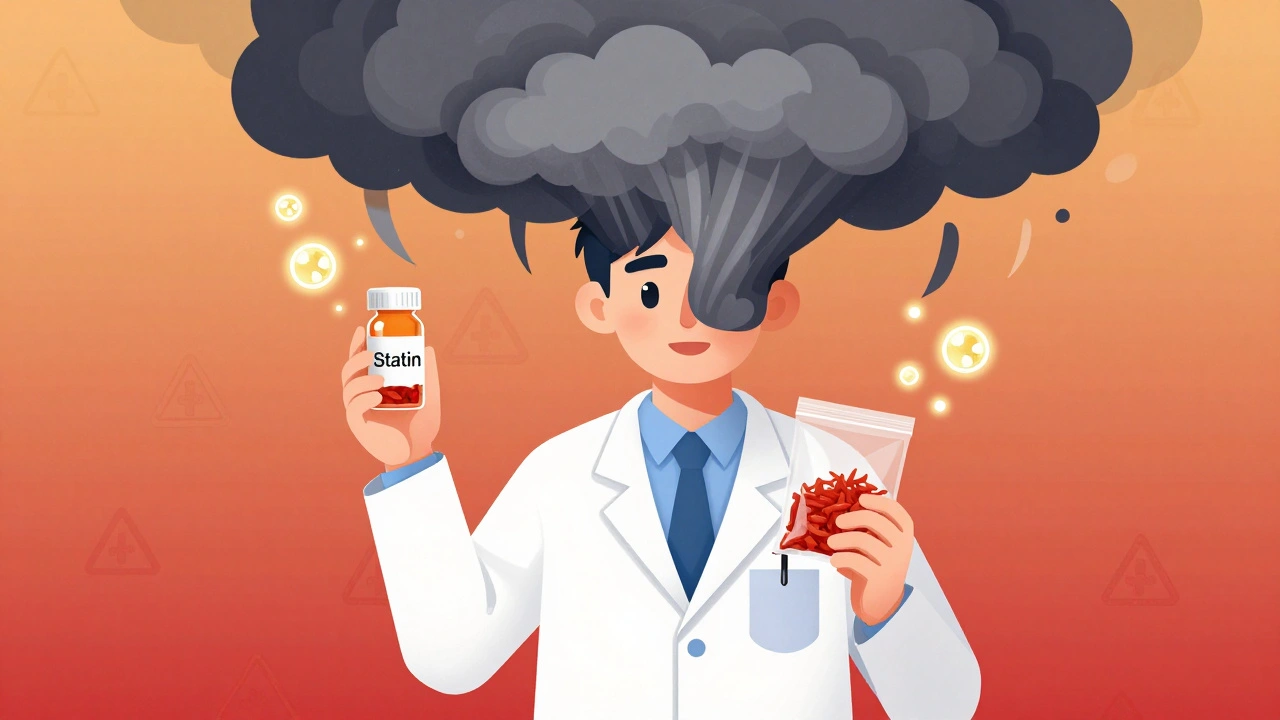
Red yeast rice contains the same active ingredient as statins, making it dangerous to take together. Learn why combining them raises your risk of muscle damage and liver injury-and what safer alternatives exist.