
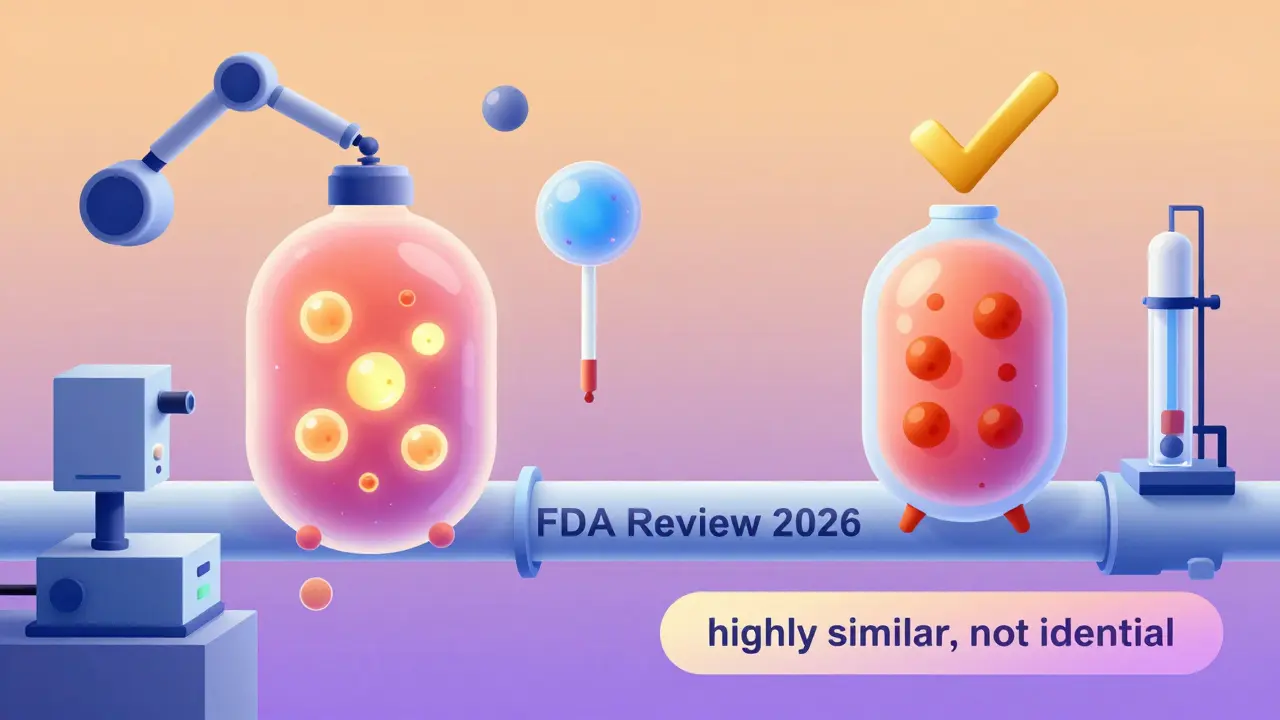
When you hear the word generic, you probably think of a cheap version of a pill you’ve been taking for years-same active ingredient, same shape, same price. But when it comes to biologic drugs-complex medicines made from living cells like antibodies for cancer or rheumatoid arthritis-there’s no such thing as a true generic. Instead, there’s something called a biosimilar. And the way the FDA reviews these drugs changed dramatically in late 2025, opening the door to faster, cheaper access for millions of patients.
What Makes a Biosimilar Different from a Generic?
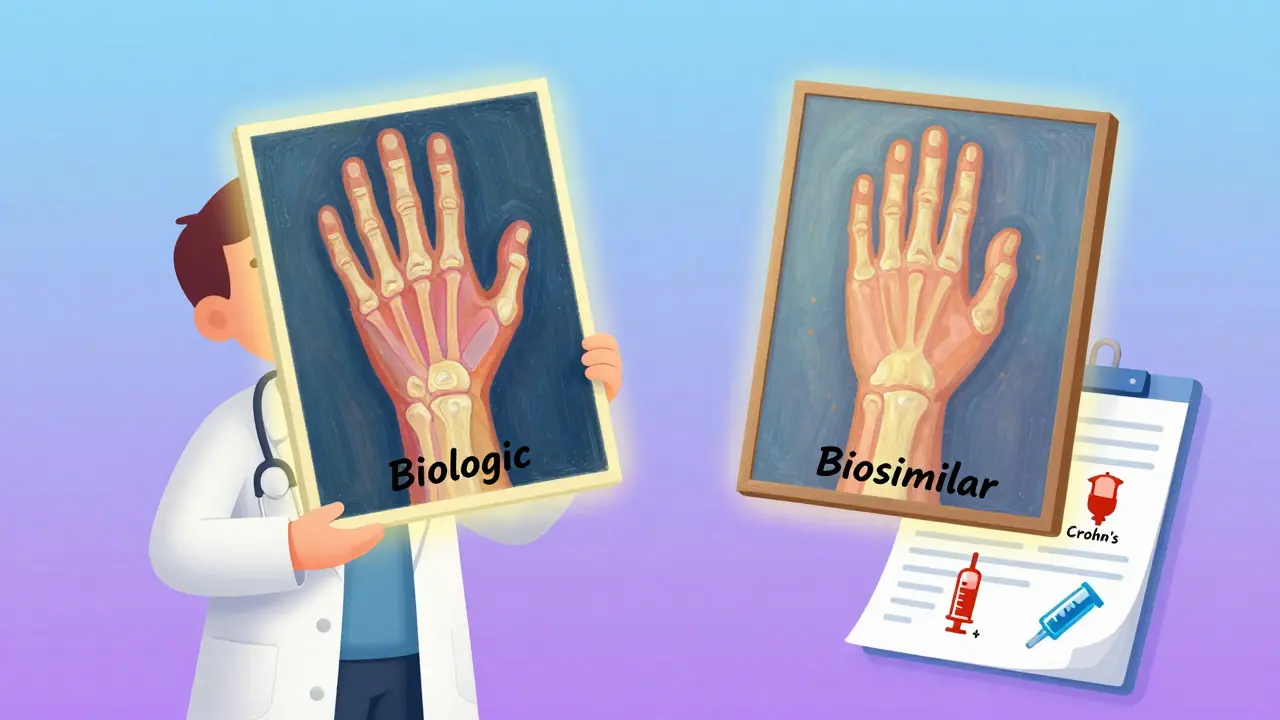
A generic drug is a chemical copy. If your prescription is for lisinopril, the generic is made of the exact same molecules, in the exact same way, in a lab. You can break it down and test it, and it’ll match the brand-name version down to the last atom. A biosimilar? Not even close. Biosimilars are made from living cells-human or animal-and are used to treat serious conditions like Crohn’s disease, diabetes, and certain cancers. Because they’re produced in biological systems, tiny variations happen naturally. Think of it like baking two loaves of sourdough from the same recipe: same ingredients, same oven, same time-but one might rise a little more, have a slightly different crust. That’s biosimilarity. The FDA doesn’t require biosimilars to be identical. They just need to be highly similar to the original biologic, with no clinically meaningful differences in safety, purity, or potency. That’s why the approval process is so much more complex than for generics.The Old Way: Years, Millions, and Too Many Studies
Before October 2025, getting a biosimilar approved meant jumping through a lot of hoops. Companies had to prove biosimilarity using three types of data:- Analytical studies: Comparing the molecular structure of the biosimilar to the reference product using advanced tools like mass spectrometry and chromatography.
- Toxicity assessments: Testing for harmful side effects in animals.
- Comparative clinical trials: Usually one or more human studies showing the biosimilar worked just as well as the original biologic.
The New FDA Guidance: Less Testing, Faster Approval
On October 29, 2025, the FDA dropped a bombshell: it no longer routinely required comparative efficacy studies to approve biosimilars. The new draft guidance, titled Scientific Considerations in Demonstrating Biosimilarity to a Reference Product: Updated Recommendations for Assessing the Need for Comparative Efficacy Studies, said this: if you can prove the biosimilar is analytically identical in structure and function, and you’ve shown it behaves the same way in the body through pharmacokinetic (PK) studies, you don’t need to run a full clinical trial to prove it works. The FDA laid out three conditions where this streamlined path applies:- The reference product and biosimilar are made from the same type of cell line and are highly purified.
- The link between the molecule’s structure and how it works in the body is well understood.
- A human PK study can be done to show the drug enters and leaves the bloodstream the same way.
Interchangeability: The Big Controversy
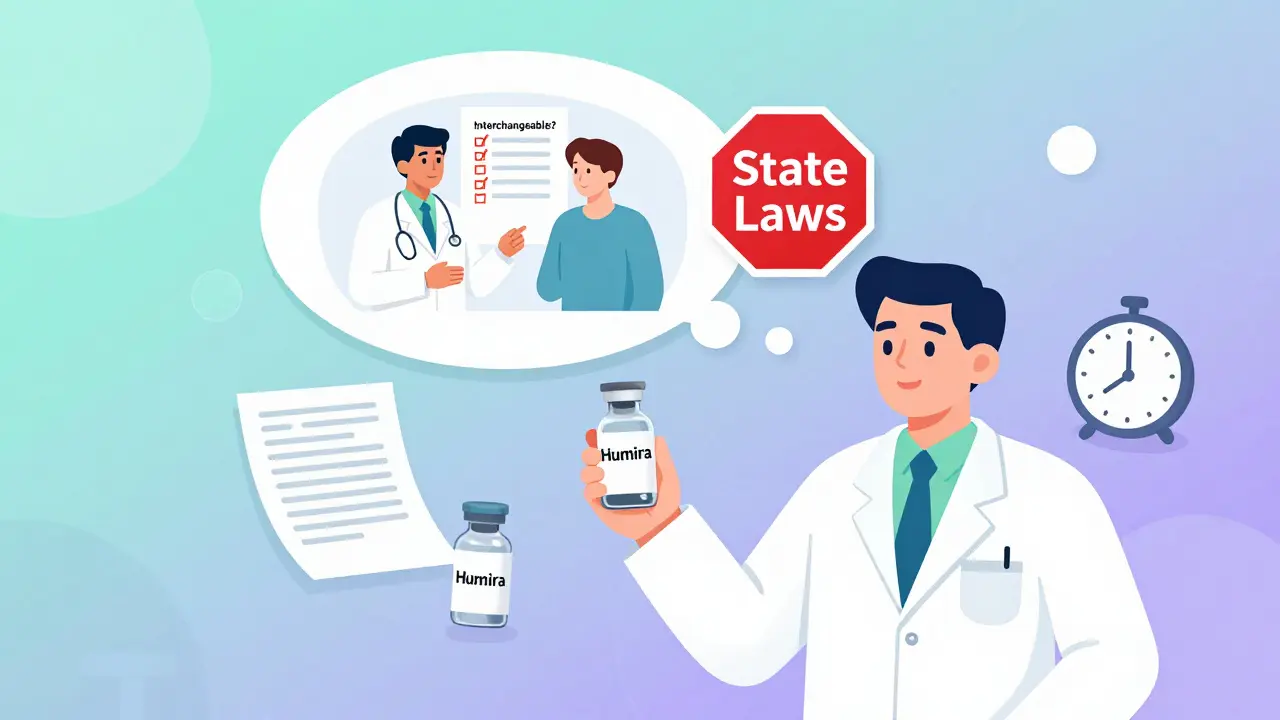
There’s another layer: interchangeability. This means a pharmacist can swap the biosimilar for the brand-name drug without asking the doctor first. It’s like switching from brand-name ibuprofen to generic. Before 2025, the FDA required separate “switching studies” to prove that patients could alternate between the reference product and biosimilar without increased risk. That meant even more clinical trials. In October 2025, FDA Commissioner Marty Makary said something surprising: “Every biosimilar should have the designation of interchangeable.” He called interchangeability “a legislative term, not a scientific term.” And then the FDA approved two denosumab biosimilars-Enoby and Xtrenbo-as interchangeable in the same month. That had never happened before. But here’s the catch: Congress wrote the law. The BPCIA says interchangeability must be proven separately. The FDA can’t just declare all biosimilars interchangeable. So now we’re in a gray zone. Some doctors are nervous. Pharmacists are confused. And 34 states still have laws that block automatic substitution unless the drug is officially labeled interchangeable. Critics like Dr. Paul Baldrick warn that skipping large clinical trials could miss subtle long-term effects, especially in chronic conditions. Others, like former FDA Deputy Director Mark Eisner, say modern analytical tools are so precise they’re better predictors than clinical trials.Who’s Making Biosimilars? And Who’s Using Them?
The market is still dominated by big players: Sandoz (17 approved biosimilars), Pfizer (12), and Amgen (10). But smaller companies like Viatris and Biocon are gaining ground. Only 12 of the 76 approved biosimilars came from companies with fewer than 100 employees. Why? Because the analytical testing needed-mass spectrometry, bioassays, chromatography-is expensive and requires specialized labs. It’s not something a startup can easily set up. The biggest adoption? Oncology. Biosimilars for cancer drugs like bevacizumab and rituximab now make up 31% of the market in the U.S. Hospitals like Mayo Clinic report savings of 37% on biologic drug costs-$18 million a year just for their system. For autoimmune diseases like rheumatoid arthritis, adoption is slower-only 18%. Why? Patients and doctors are cautious. A Reddit thread from November 2025 with 87 comments showed 63% of users reported no difference in effectiveness. But 22% noticed more injection site reactions. A September 2025 Arthritis Foundation survey found 78% of patients were satisfied, but 41% were initially scared. And awareness? Barely there. Just 32% of patients know what a biosimilar is, according to the National Biosimilars Survey.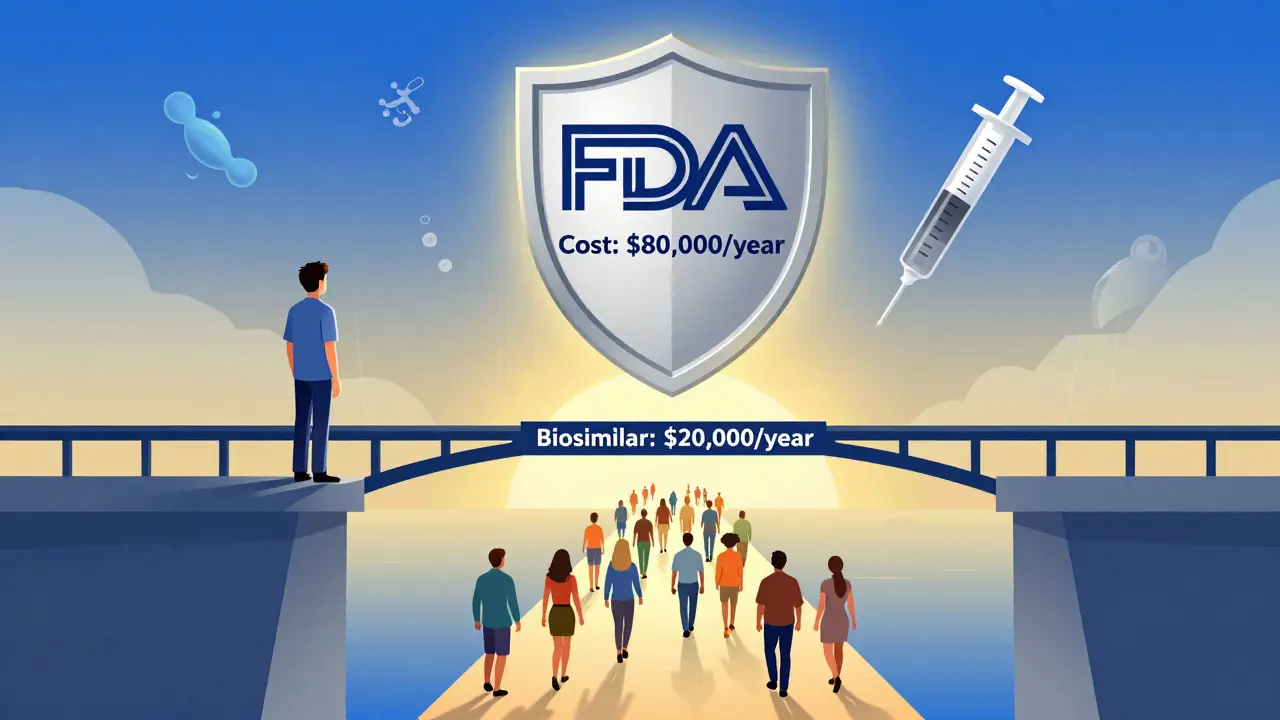
What’s Next? Market Growth and Roadblocks
The U.S. biosimilar market was worth $18.7 billion in 2024. Experts predict it’ll hit $62.3 billion by 2029. That’s a 27% annual growth rate. The FDA’s new guidance could push annual approvals from 8-10 to 15-20. McKinsey forecasts biosimilars could capture 40-50% of the market for major biologics by 2030. That could save the healthcare system $150 billion a year. But there are still roadblocks:- Patent litigation: The FTC reported 68% of approved biosimilars face legal delays before they can launch.
- Interchangeability confusion: Until Congress updates the law, pharmacists will keep hesitating.
- Complex molecules: Antibody-drug conjugates (like Kadcyla) are harder to replicate. The FDA’s guidance doesn’t yet offer clear pathways for these.
How to Get Started with a Biosimilar
If you’re a company looking to develop a biosimilar, here’s what you need to do:- Meet with the FDA early. The new guidance encourages sponsors to have “pre-submission meetings” to agree on a development plan.
- Invest in analytical capabilities. You’ll need to characterize over 200 quality attributes. This isn’t cheap.
- Focus on well-understood molecules first. Monoclonal antibodies are your safest bet.
- Use the FDA’s Biosimilars Community Resource Center. It had over 12,000 visitors in October 2025.
- Plan for regulatory delays. Even with the new guidance, 42% of applications still get “complete response letters” asking for more data.
What This Means for Patients
If you’re on a biologic drug that costs $80,000 a year, a biosimilar might cost $20,000. That’s not just a savings-it’s access. For many, it’s the difference between treatment and no treatment. The FDA’s 2025 changes are the biggest step toward making biosimilars mainstream in the U.S. But real change won’t happen until doctors feel confident prescribing them, pharmacists feel confident substituting them, and patients feel confident using them. The science is there. The savings are real. Now it’s about trust.Are biosimilars the same as generics?
No. Generics are chemically identical copies of small-molecule drugs. Biosimilars are highly similar, but not identical, copies of complex biologic drugs made from living cells. Because of their biological nature, tiny variations are normal and expected-but they must not affect safety or effectiveness.
How long does it take to get a biosimilar approved by the FDA?
Before October 2025, it took 8-10 years and $100-300 million. With the new guidance, it’s now expected to take 5-7 years and $50-150 million, because many clinical efficacy studies are no longer required if analytical and pharmacokinetic data are strong.
Can pharmacists automatically switch me to a biosimilar?
Only if the biosimilar has an official “interchangeable” designation from the FDA. As of late 2025, only a few have received this status. Even then, 34 states still have laws that require prescriber approval before substitution, so it’s not automatic everywhere.
Why are biosimilars cheaper than the original biologics?
Because they don’t need to repeat expensive clinical trials proving the drug works. Instead, they rely on advanced analytical testing and smaller pharmacokinetic studies. That cuts development costs by up to 70%, which allows manufacturers to price them lower.
Are biosimilars safe for long-term use?
Yes. The FDA requires biosimilars to show no clinically meaningful differences in safety, purity, or potency. Real-world data from patients using biosimilars for rheumatoid arthritis and cancer show similar safety profiles to the original biologics. Some report minor injection site reactions, but serious side effects are rare and comparable to the reference product.
What therapeutic areas have the most biosimilars approved?
Oncology leads with the highest adoption-biosimilars make up 31% of the market for drugs like bevacizumab and trastuzumab. Autoimmune diseases like rheumatoid arthritis and Crohn’s disease have lower adoption (around 18%) due to physician caution and patient concerns. Diabetes and osteoporosis are growing areas with recent approvals.
How many biosimilars has the FDA approved as of 2026?
As of January 2026, the FDA has approved 76 biosimilars. The new guidance from October 2025 is expected to increase that number to 15-20 per year, up from the previous average of 8-10.
What’s the biggest barrier to biosimilar adoption in the U.S.?
The biggest barrier is not science-it’s trust. Patients and doctors are unfamiliar with biosimilars. Pharmacists face confusing state laws. And patent litigation delays market entry for 68% of approved products. Even with lower prices and FDA approval, real change requires education and legal clarity.



Jake Kelly on 10 January 2026, AT 02:36 AM
Finally, some real progress. I’ve been waiting years for this. The old system was a bureaucratic nightmare that only big pharma could afford. This change is going to save lives - especially for folks who can’t afford $80K/year drugs. Kudos to the FDA for listening to the science.