
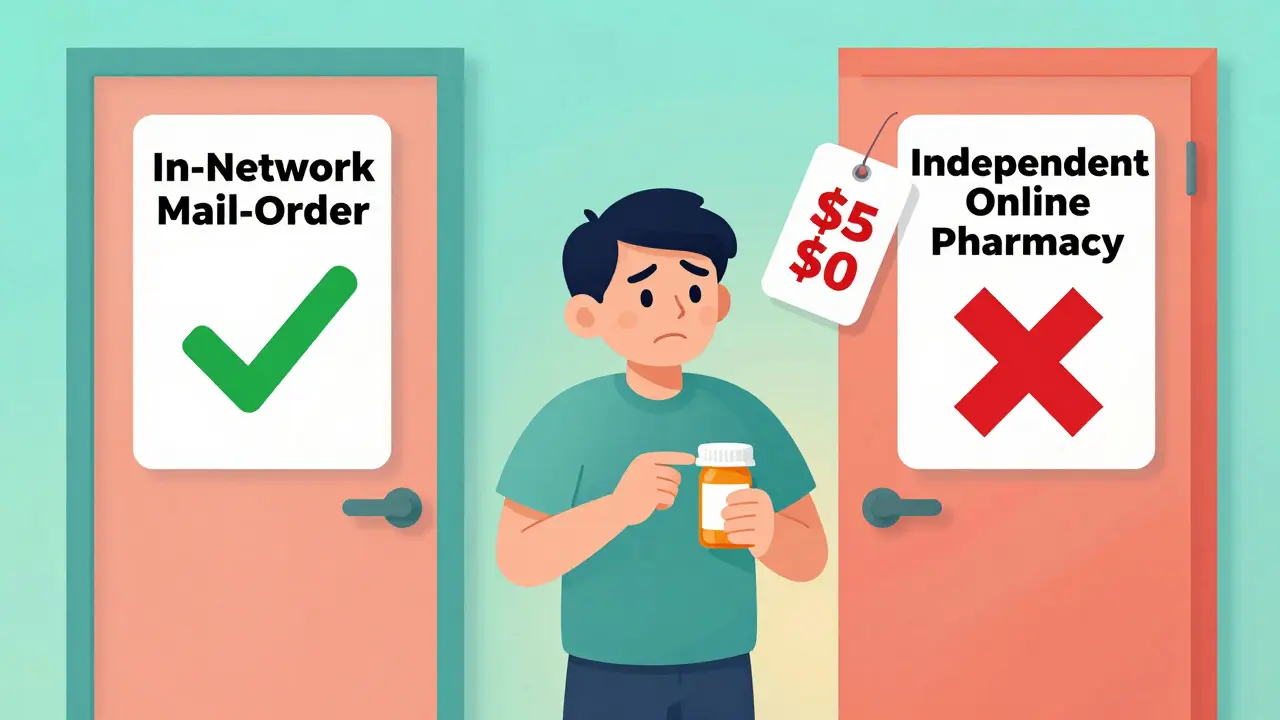
When you buy generic medications from an online pharmacy, your insurance might not cover it - even if the drug is the same one your doctor prescribed. That’s not a glitch. It’s how the system works. Many people assume that if a drug is generic and FDA-approved, insurance will automatically pay for it when ordered online. But that’s not true. Insurance coverage for online pharmacy generics depends on who’s selling the drug, how your plan is structured, and whether the pharmacy is in your network.
How Insurance Handles Generic Drugs
Most health insurance plans organize drugs into tiers. Generic medications usually sit in Tier 1 - the cheapest level. That means your copay could be as low as $5 for a 30-day supply, or $10 for a 90-day supply through mail-order. These aren’t random numbers. They’re designed to push you toward generics because they save the insurer money - and often, you too. But here’s the catch: this only applies if you use a pharmacy in your plan’s network. If you order from an independent online pharmacy that doesn’t work with your insurer, you’ll pay full price upfront. Then you might be able to submit a claim for partial reimbursement - if your plan even allows it. Most don’t. And even if they do, the process takes weeks, and you’ll likely get back less than you paid.Mail-Order vs. Independent Online Pharmacies
There’s a big difference between a mail-order pharmacy run by your insurer’s pharmacy benefit manager (PBM) and a random website you found on Google. Mail-order pharmacies like Express Scripts, CVS Caremark, or Optum Rx are part of your insurance network. They’re built into your plan. You get your 90-day supply delivered to your door, often with lower copays than your local pharmacy. Independent online pharmacies? Those are like Amazon or Walmart’s pharmacy site - they may accept insurance, but only if they’ve signed a contract with your PBM. Most don’t. And even if they say they do, the system might reject your claim at checkout. That’s because PBMs control who gets paid. If the pharmacy isn’t in their system, your insurance won’t recognize the transaction. A 2023 survey found that 61% of patients who ordered generics from non-network online pharmacies ended up paying full price - and 38% didn’t realize until after they’d been charged.Why Your Insurance Might Force a Generic Switch
You might wake up one day to find your brand-name medication replaced with a generic - without your doctor’s approval. This isn’t rare. It’s called “non-medical switching,” and it’s becoming standard practice. Insurers do it to cut costs. If your plan’s formulary excludes your brand-name drug, or makes its copay $150 while the generic is $5, you’re effectively forced to switch. Some patients report side effects after switching. One user on PatientAdvocate.org described severe dizziness after her insurer switched her from Copaxone to a generic version for multiple sclerosis. She ended up in the ER. Her doctor had never approved the change. If this happens to you, you can request a formulary exception. Your doctor needs to submit a letter explaining why the brand drug is medically necessary. It’s not easy, but it’s possible. About 40% of these requests get approved when backed by clinical evidence.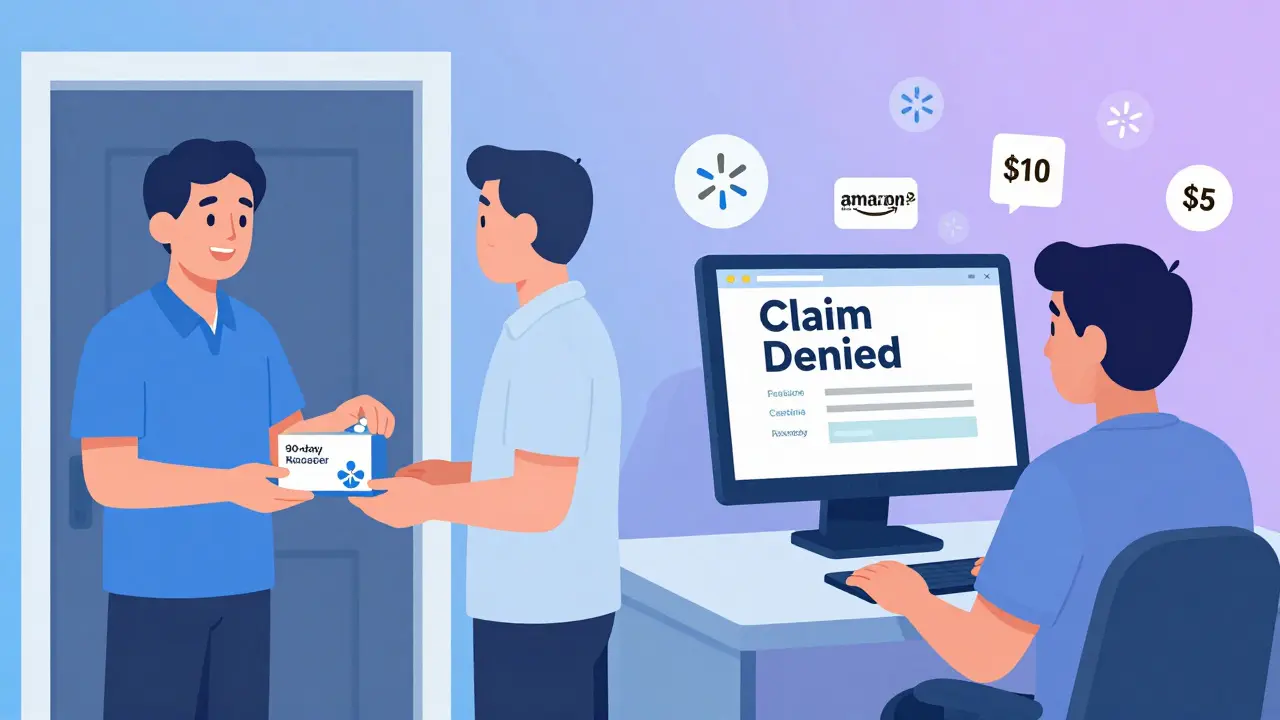
How to Check If Your Insurance Covers a Generic Online
Don’t guess. Verify. Every insurer has a drug lookup tool. Aetna, Blue Cross, UnitedHealthcare - they all have them. Go to your plan’s website. Type in the first three letters of the drug name. The tool will show you:- Which tier the drug is on
- Your exact copay at in-network pharmacies
- Whether it’s available through mail-order
- If a generic alternative exists
When Retail or Mail-Order Is Cheaper Than Insurance
Sometimes, skipping insurance entirely saves you money. Walmart, Costco, and Kroger offer dozens of common generics for $10 or less for a 90-day supply - no insurance needed. If you have a high-deductible plan, you might be paying more in copays than you would out of pocket. For example:- Lisinopril 20mg (generic blood pressure med): $12 at Walmart, $15 copay with insurance
- Metformin 500mg (diabetes): $10 at Walmart, $10 copay with mail-order
- Atorvastatin 20mg (cholesterol): $15 at Costco, $20 copay with insurance
Amazon RxPass and Other New Models
Amazon Pharmacy’s RxPass launched in 2022 and now covers over 100 generic medications for a flat $5 monthly fee. You don’t need insurance. You just need a Prime membership. It’s simple. Predictable. No copays. No formularies. No network restrictions. But it’s not for everyone. RxPass doesn’t cover specialty meds, thyroid drugs, or many antibiotics. It’s great for maintenance drugs like blood pressure, cholesterol, and diabetes meds - the kind you take every day. But if you need something off the list, you’re back to square one. Other companies like Honeybee Health are testing direct-to-consumer generic subscriptions. But as of 2026, these models still cover less than 2% of the generic drug market. They’re alternatives - not replacements - for insurance.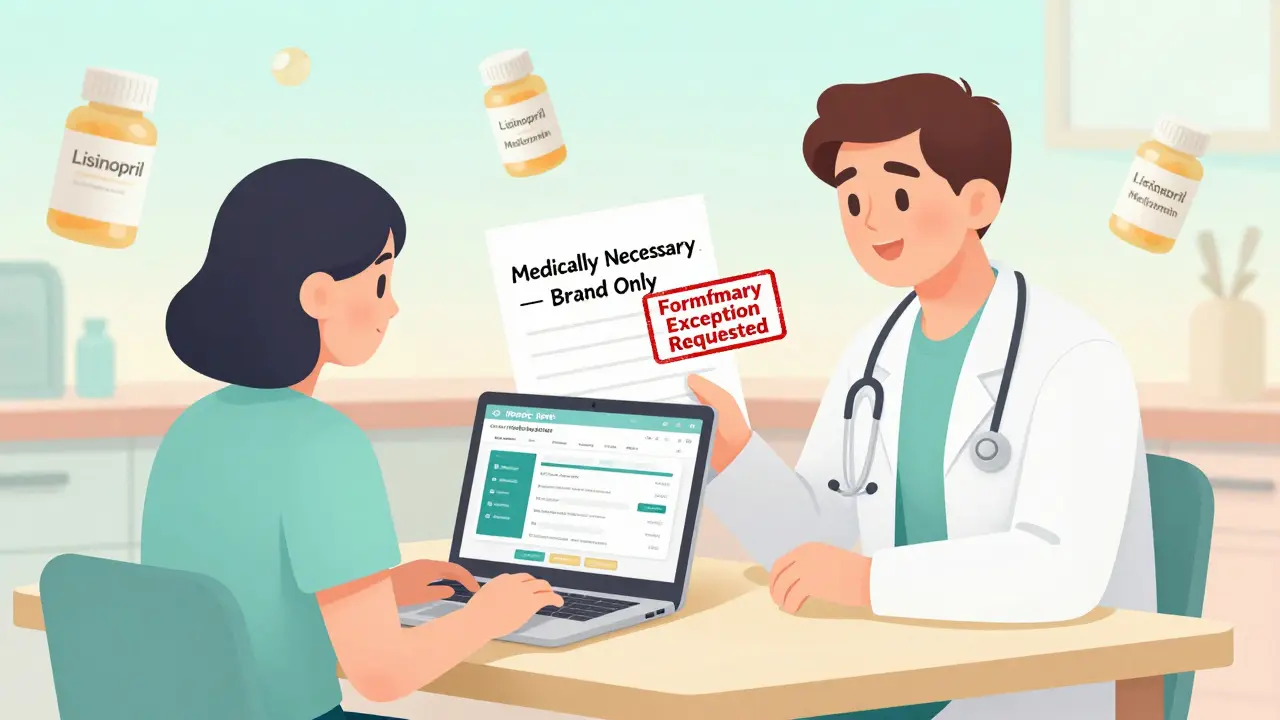
What to Do Before You Order
Before you click “buy” on any online pharmacy:- Check your insurer’s formulary for the exact drug name (including strength and dosage)
- Confirm the pharmacy is in your network - ask for the PBM’s list
- Compare the out-of-pocket cost at the online pharmacy vs. your insurance copay
- Ask if the pharmacy will bill your insurance directly - don’t assume they will
- If you’re switching from a brand drug, talk to your doctor first
What’s Changing in 2026
By 2026, nearly half of all generic maintenance medications will be delivered through mail-order or home delivery - up from 32% in 2022. Insurers are pushing harder for this because it’s cheaper to ship 90-day supplies than to manage 30-day refills. New state laws are also limiting how much you can pay out of pocket for generics. As of 2026, 32 states cap generic copays at $15 or less. That’s good news - but only if you’re using an in-network pharmacy. The real shift? Patients are starting to bypass insurance entirely. More people are using cash-price pharmacies or subscription models like RxPass because they’re simpler, faster, and often cheaper. Insurance isn’t disappearing - but its role is shrinking.Final Advice
Your insurance isn’t your pharmacy. It’s a payment system. And like any system, it has rules, limits, and loopholes. Don’t assume coverage. Verify it. Know your plan. Know your pharmacy. Know your drug. And if you’re paying more than $15 a month for a generic that costs $10 elsewhere - you’re overpaying. The cheapest option isn’t always the one with your insurance card. Sometimes, it’s the one you pay for with cash.Does insurance cover all online pharmacy generics?
No. Insurance only covers generics if they’re purchased through a pharmacy in your plan’s network - usually a mail-order service run by your pharmacy benefit manager (PBM). Independent online pharmacies rarely accept insurance directly. Even if they say they do, your claim may be denied at the last minute.
Can I use my insurance at Amazon Pharmacy?
Amazon Pharmacy doesn’t bill insurance. Instead, it offers RxPass - a $5 monthly subscription for over 100 common generics. You pay nothing per prescription, but you must be a Prime member. If you want to use insurance, you can’t. It’s one or the other.
Why did my insurance switch my medication to a generic without telling me?
This is called non-medical switching. Insurers do it to save money. If a generic version exists and your plan’s formulary excludes the brand-name drug, they’ll automatically substitute it. You may not be notified. If you experience side effects, you can request a formulary exception - your doctor must submit documentation proving the brand drug is medically necessary.
Is it cheaper to buy generics online or through my insurance?
It depends. For 90-day supplies of common generics, mail-order through your insurer might cost $10. But retailers like Walmart and Costco offer the same drugs for $10 or less - no insurance needed. If you have a high-deductible plan, paying cash can be cheaper than your copay. Always compare prices before ordering.
What’s the difference between a mail-order pharmacy and an online pharmacy?
Mail-order pharmacies are part of your insurance plan’s network - they’re run by your PBM (like Express Scripts). They require 90-day prescriptions and deliver to your home. Independent online pharmacies are third-party retailers (like Walgreens.com or CVS.com) that may or may not accept your insurance. Only mail-order pharmacies are guaranteed to work with your plan’s coverage rules.
How do I know if a generic is safe to use?
All FDA-approved generics must contain the same active ingredient, strength, dosage form, and route of administration as the brand-name drug. They’re tested for bioequivalence. The only differences are inactive ingredients like fillers or dyes - which rarely cause issues. If you’ve taken the brand drug without problems, the generic is just as safe - unless your doctor says otherwise.
Can I get reimbursed if I buy generics from an out-of-network pharmacy?
Rarely. Most insurance plans don’t offer out-of-network pharmacy reimbursement for generics. A few high-end plans might, but you’ll need to submit receipts, claim forms, and possibly a letter from your doctor. Even then, you’ll likely get back only a fraction of what you paid. It’s not worth the hassle.



Brendan F. Cochran on 4 January 2026, AT 03:37 AM
So let me get this straight - we’re paying hundreds a month for insurance so we can get ripped off by PBMs who don’t even let us buy cheap generics online? This isn’t healthcare, it’s corporate extortion. I paid $12 for lisinopril at Walmart last week. My copay was $18. I’m done playing along.