
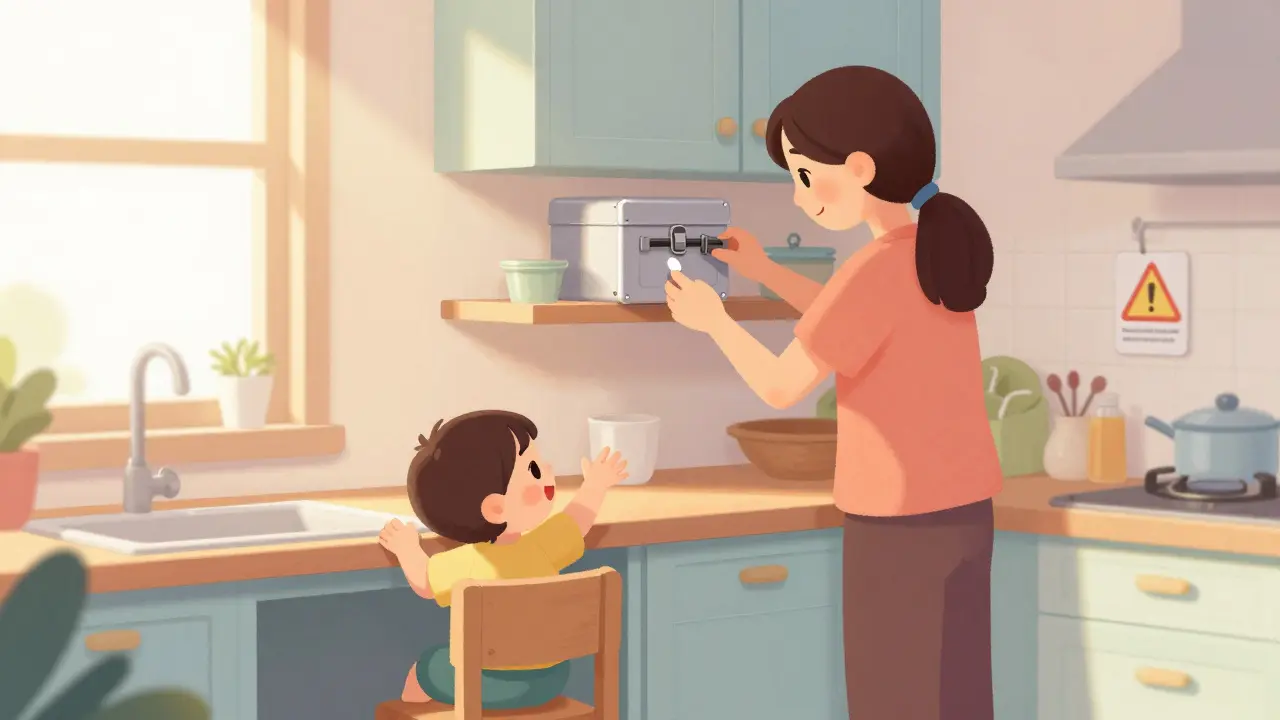
Every year, 60,000 children under five end up in emergency rooms because they accidentally swallowed medication they shouldn’t have. That’s not a rare accident-it’s a preventable crisis. And it’s happening in homes where parents think they’re being careful. You might think, "My child is too young to open bottles," or "I only leave pills out for a minute." But research shows children as young as 18 months can open child-resistant caps, climb to countertops, and find hidden stashes in plain sight. Storing medications safely isn’t optional-it’s as essential as using car seats or installing smoke detectors.
Why "Out of Sight" Isn’t Enough
Many parents assume that if they keep medicine on a high shelf or in a cabinet, their child won’t find it. But here’s the hard truth: 89% of children under 3 can open standard cabinet latches within 30 seconds. A 2022 study from the Journal of Pediatric Health Care tracked 1,200 households and found that high shelves alone stopped only 72% of access attempts. Locked cabinets? That number jumps to 98%. The difference isn’t subtle-it’s life-or-death. Children aren’t just curious. They’re observant. If they see you grab a pill bottle from the bathroom cabinet every morning, they’ll remember. If they’ve ever found a colorful chewable vitamin or a Tums tablet that looks like candy, they’ll go back for more. The American Academy of Pediatrics warns that chewable medications like Tums and aspirin are often mistaken for candy by toddlers because of their shape, color, and taste. One study found a 17% spike in accidental ingestions of these types of pills among children aged 2-4.The Right Way to Store Medications at Home
So where should you store them? The answer isn’t the bathroom. Despite knowing better, 41% of parents still keep medicine in bathroom cabinets because it’s convenient. But bathrooms are warm, humid, and accessible-perfect conditions for kids to find and open bottles. Instead, follow these proven steps:- Use a locked container made of steel or hardened plastic. Size matters: it should be at least 6 inches x 4 inches x 2 inches to fit standard prescription bottles.
- Place it above counter height (at least 36 inches off the ground) and out of reach from any furniture a child could climb on.
- Keep it in a central, low-traffic area like a kitchen cabinet or bedroom dresser-not the living room where visitors might leave pills on a table.
- Store all medications together: prescriptions, over-the-counter pills, vitamins, supplements, and even topical creams. If it can be ingested, it belongs in the lockbox.
Special Cases: Refrigerated, Travel, and Emergency Medications
Not all medications are the same. Some need to be kept cold. Insulin, for example, must stay between 36°F and 46°F. But storing it in the fridge door? That’s risky. Kids can open fridge doors. Instead, use a small, lockable mini-fridge inside your main fridge or a dedicated insulated lockbox with a cold pack. Never leave insulin unsecured-even for a few minutes. Travel is another major risk. The CDC reports a 31% increase in pediatric poisonings during holidays. When you’re on the road, don’t rely on hotel safes-they’re not always reliable. Use a portable lockbox designed for travel. These compact, TSA-friendly boxes (like the Med-Tek brand, rated 4.3/5 on Amazon) fit in a purse, backpack, or suitcase. Keep them in your carry-on, not checked luggage. Emergency meds like asthma inhalers or EpiPens need quick access. Don’t lock them away with everything else. Instead, create a medication triage system:- Emergency meds: Keep in a clearly labeled, easily accessible location-like a hook by the door or a drawer next to the front entrance. Make sure every caregiver knows where it is.
- Daily meds: Locked box, high and out of sight.
- Occasional meds: Store in the main lockbox.
Why Child-Resistant Caps Don’t Work the Way You Think
You’ve probably heard that medicine bottles are "child-resistant." That’s true-but not in the way most people assume. The U.S. Consumer Product Safety Commission tests caps on 200 children aged 42-51 months. To pass, a bottle must be opened by fewer than 20% of them in 10 minutes. Sounds safe, right? But here’s what happens in real life: 50% of children can open those same caps in under a minute when they’re motivated and unsupervised. That’s not a flaw in the design-it’s a flaw in the assumption. Child-resistant doesn’t mean child-proof. It means it’s harder for a child to open than a regular cap. And kids are persistent. They’ll twist, shake, bite, and drop bottles until they get what they want. The CDC’s 2023 report found that relying on child-resistant packaging alone is 3.2 times less effective than using a locked container. Don’t depend on the cap. Depend on the lock.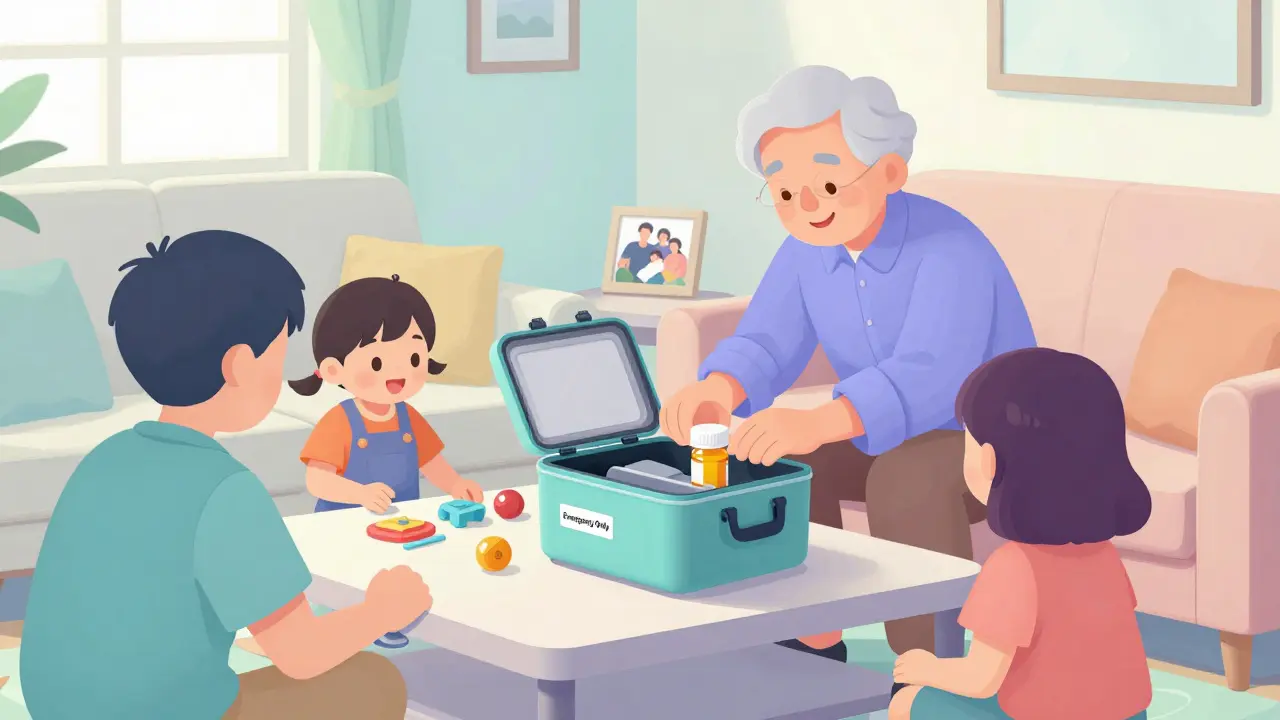
Grandparents, Visitors, and the Hidden Danger Zones
One of the most dangerous myths is that "my grandchild knows not to touch medicine." A 2024 Express Scripts survey found that 76% of grandparents don’t lock up medications when grandchildren visit. Why? They think their grandchild is well-behaved. They think they’re only staying for an hour. They think, "It’s just one pill." But accidents don’t wait for permission. In one documented case, a 22-month-old found an opioid pill in an unsecured overnight bag left by a visiting relative. The child was hospitalized. The bag had been sitting on a couch for 15 minutes. Here’s what to do:- Before any visitor comes over, put all medications in the lockbox-even if they’re not yours.
- Ask guests to store their own meds in the same box. Make it a routine, not a request.
- If someone brings a pill bottle to your home, treat it like a loaded gun: lock it up immediately.
What About Teens and Prescription Misuse?
It’s not just toddlers. Teens are the second biggest group at risk-not from accidental ingestion, but from intentional misuse. The National Association of Pediatric Nurse Practitioners found that households using a monitored medication system (where teens log each dose with adult verification) reduced prescription drug misuse by 67% over a two-year period. If you have teenagers, don’t assume they’re responsible. Even well-behaved teens can be influenced by peers or stress. Set up a simple system:- Keep all prescriptions in the locked box.
- Only give out doses as needed-with a signed log.
- Check the box weekly to make sure nothing is missing.
Disposal: Don’t Flush, Don’t Trash
Old or expired meds shouldn’t sit in a drawer. They’re still dangerous. The FDA recommends mixing pills with something unappetizing-like coffee grounds or cat litter-then sealing them in a plastic bag before tossing them in the trash. Never flush them unless the label says to (a rare exception). Better yet: use a pharmacy disposal kiosk. As of 2023, 78% of U.S. communities have permanent drop-off locations at pharmacies. Find one near you through the DEA’s website or your local pharmacy. It’s free, safe, and easy.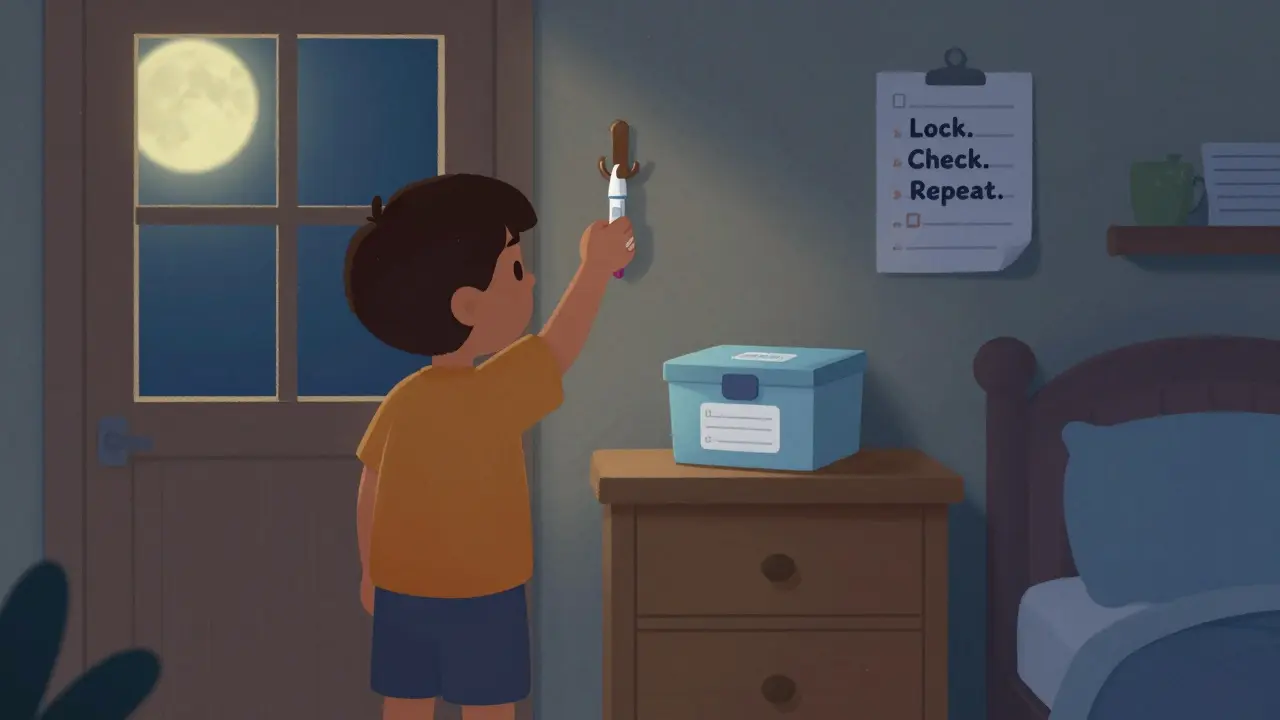
Training and Routine: The Real Game-Changer
The most effective tool isn’t a lockbox. It’s consistency. Families who practice a daily "lock-up routine" reduce accidental access by 83%, according to the American Academy of Family Physicians. That means:- Every time you take a pill, you lock the bottle back up immediately.
- You never leave a pill bottle on the nightstand, kitchen counter, or car console-even for a minute.
- You do a quick check before leaving the house: "Did I lock the meds?"
The Cost of Getting It Wrong
Every accidental ingestion costs an average of $3,217 in emergency care. The total annual cost of pediatric medication poisonings in the U.S. exceeds $67 billion. That’s not just money-it’s time lost from work, stress for families, and trauma for children. But the good news? We know what works. Locked storage, behavioral routines, and education have already cut poisonings in pilot programs by 63%. With universal adoption, experts predict we could prevent 53,700 emergency visits per year within a decade.What You Can Do Today
You don’t need to buy the most expensive safe. You don’t need to overhaul your home. Start with one step:- Find your medicine cabinet. Empty everything inside.
- Get a lockbox (under $50 at most drugstores or Amazon).
- Put every pill, liquid, patch, and inhaler inside.
- Lock it. Put it high. And never, ever leave it open.
Can I just keep medicine in a high cabinet without a lock?
No. Even high cabinets aren’t enough. Children as young as 18 months can climb onto chairs or tables to reach them. A 2022 study found that high shelves alone stop only 72% of access attempts. Locked containers reduce access to just 2%.
Are child-resistant caps enough to keep kids safe?
No. Child-resistant caps are designed to slow kids down-not stop them. Half of children can open them in under a minute when they’re determined. Relying on caps alone is 3.2 times less effective than using a locked box.
Where’s the best place to store medicine in my home?
In a locked container placed above counter height (at least 36 inches), away from windows, furniture, and high-traffic areas. Avoid the bathroom-it’s too humid and too accessible. A locked kitchen cabinet or bedroom dresser is ideal.
What should I do with old or expired medications?
Mix them with coffee grounds or cat litter in a sealed plastic bag, then throw them in the trash. Don’t flush them unless the label says to. Better yet, drop them off at a pharmacy disposal kiosk-78% of U.S. communities now have them.
How do I handle medications when visiting family or traveling?
Always carry a portable lockbox. Never leave pills in a purse, bag, or hotel safe. Even if you’re only staying overnight, lock them up. Travel increases accidental ingestions by 31%. Portable lockboxes (under $40) are designed to fit in suitcases and are TSA-friendly.
Should I store my teen’s prescription meds differently?
Yes. Teens are at risk for misuse, not just accidents. Use a monitored system: keep meds locked, give out doses only with a signed log, and check the box weekly. Families using this method reduced prescription misuse by 67%.
What if I need quick access to an emergency med like an EpiPen?
Keep emergency meds like EpiPens or inhalers in a clearly labeled, easily accessible spot-like a hook by the door or a drawer next to the front entrance. Make sure every caregiver knows where it is. Use a separate, unlocked but secure location for emergencies, while keeping all other meds locked away.



Crystel Ann on 17 January 2026, AT 01:46 AM
My sister almost lost her 2-year-old last year because she left a bottle of children's ibuprofen on the nightstand for 90 seconds. I still get chills thinking about it. Now we lock everything. No exceptions.