
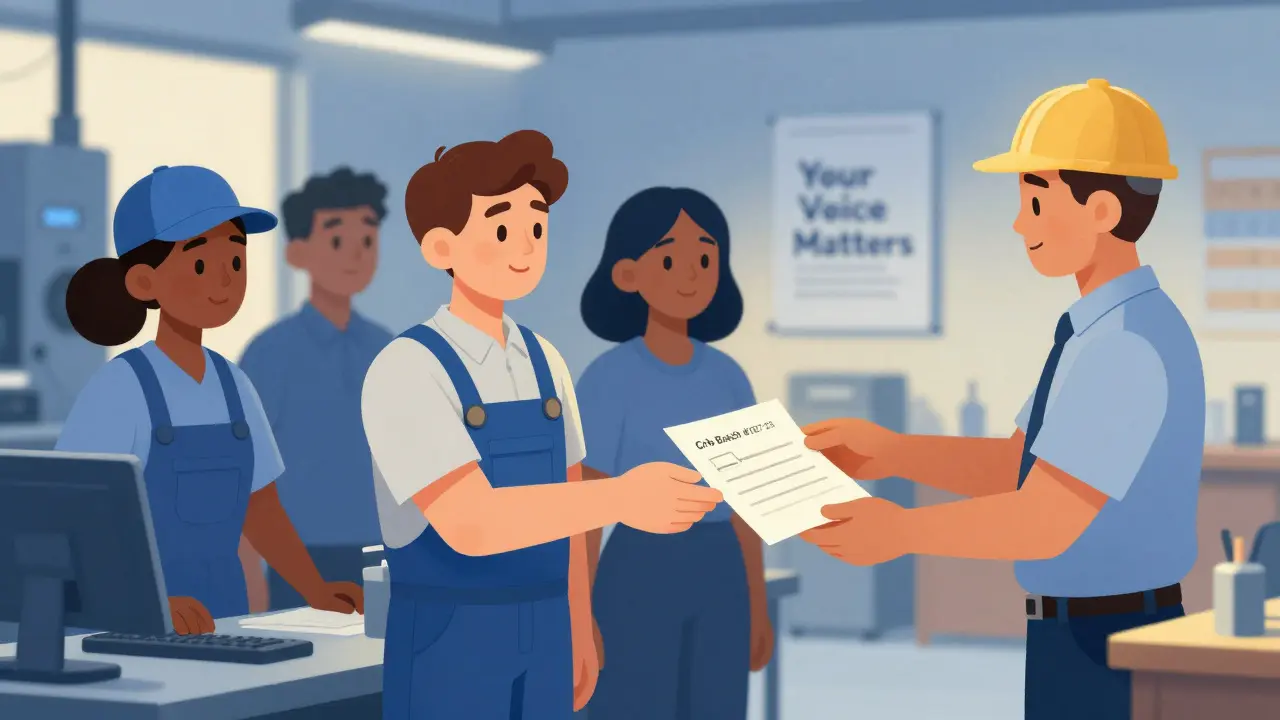
When you work in a factory and notice something wrong-like a batch of baby cribs with loose screws, or medical devices failing quality checks-speaking up can feel risky. You might fear losing your job, being pushed to the sidelines, or worse. But federal law has your back. Whistleblower protections exist specifically to shield workers who report dangerous quality flaws in manufacturing. These aren’t just nice-to-have rules; they’re legal shields backed by decades of law and real-world enforcement.
What Counts as a Protected Report?
You don’t need to be a manager or an engineer to qualify. If you’re an assembly line worker, a quality inspector, a warehouse handler, or even a contractor cleaning machines, you’re covered. The law protects you if you report violations that could hurt consumers, workers, or the public. That includes:- Products with toxic materials (like lead in children’s toys)
- Defective medical devices that fail safety tests
- Food processing plants with unsanitary conditions
- Automotive parts that could cause crashes
- Unsafe chemical handling in production
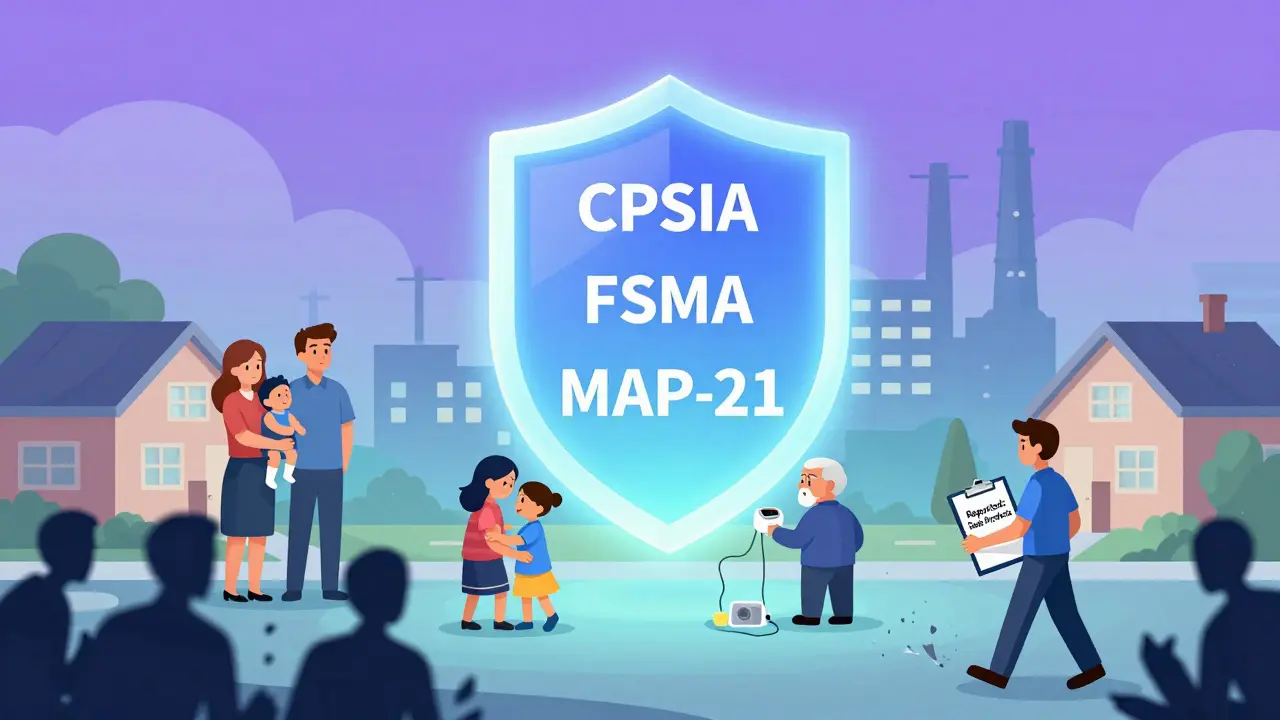
The key is that the issue must violate a specific federal law. For example, the Consumer Product Safety Improvement Act (CPSIA) covers toys, furniture, and household goods. The FDA Food Safety Modernization Act (FSMA) applies to food and drug manufacturing. And if you work for a car parts supplier, the Moving Ahead for Progress in the 21st Century Act (MAP-21) protects you when reporting vehicle defects.
Importantly, you don’t have to prove the violation outright. You just need to have a reasonable belief that something’s wrong. You also don’t need to report to the government first. Reporting internally to your supervisor or compliance officer counts too. In fact, 62% of CPSIA complaints in 2022 were made internally before going outside the company.
Who’s Protected?
The law doesn’t just cover full-time employees. If you’re a temp worker, a subcontractor, a freelance inspector, or even a family member working at a family-owned facility, you’re still protected. The Whistleblower Protection Enhancement Act (WPEA) of 2012 made this clear, especially for those working under government contracts-like companies making military gear or medical equipment for VA hospitals.Even if you’re bound by a confidentiality agreement, you’re still protected. The Department of Energy clarified this in January 2023: signing an NDA doesn’t silence you when public safety is at risk. This was a major win for workers in nuclear component manufacturing, where 37% of past whistleblower cases were blocked by vague confidentiality clauses.
What Counts as Retaliation?
Retaliation doesn’t always mean getting fired. It can be quieter-and just as damaging:- Being moved to a night shift with no notice
- Getting passed over for promotions
- Being excluded from meetings or training
- Receiving unfair performance reviews
- Being forced to resign (called “constructive discharge”)
- Being blacklisted from future jobs in the industry
According to the Department of Justice, 68% of manufacturing whistleblowers still face some form of retaliation-even with the law on their side. And while 29% of complaints get dismissed because the issue doesn’t meet the legal definition of a protected disclosure, that’s often because people don’t know how to frame their report properly.
Deadlines Are Critical
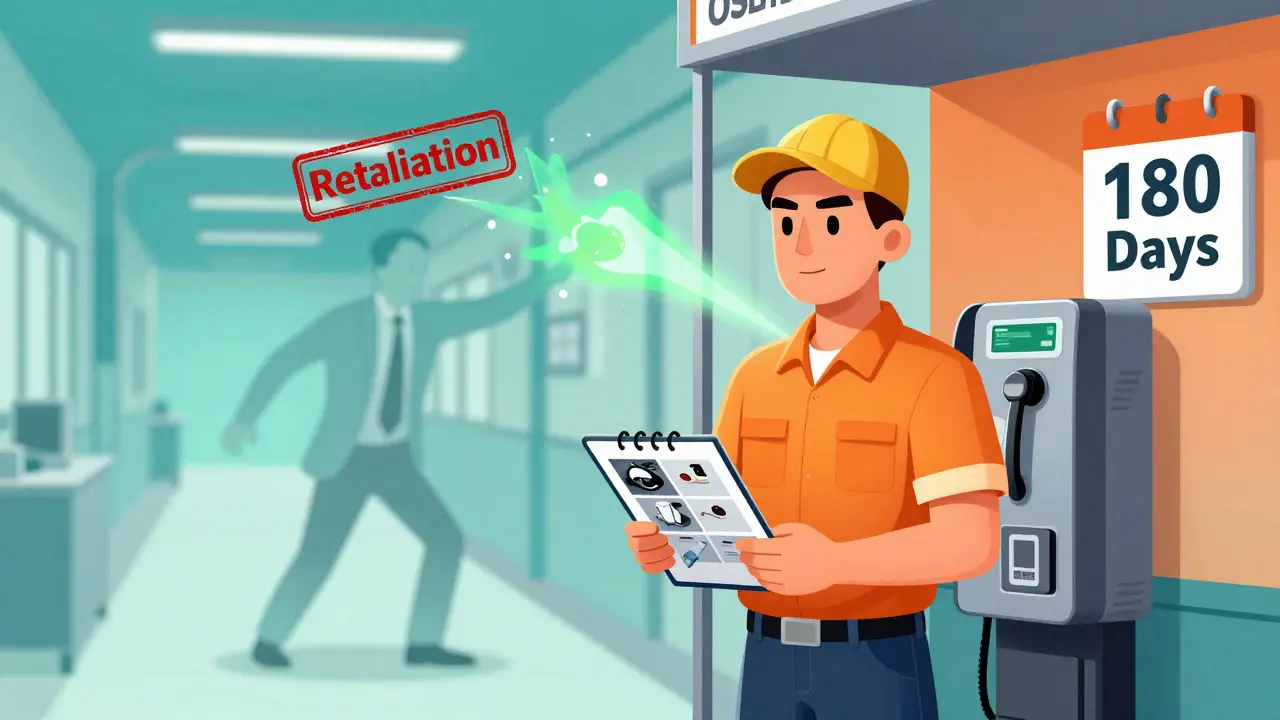
This is where most people slip up. You have a strict time window to file a complaint after retaliation happens. Miss it, and your case is gone.- 30 days for transportation-related issues (like car parts or tires) under MAP-21
- 180 days for consumer products (toys, furniture, electronics) under CPSIA
- 180 days for food and drug manufacturing under FSMA
- 45 days for environmental violations tied to manufacturing
The Government Accountability Office found that 41% of manufacturing whistleblower complaints were thrown out simply because they were filed too late. Don’t wait. If you suspect retaliation, contact OSHA within 10 days. That’s not a suggestion-it’s your best shot at getting help before evidence disappears.
How to File a Complaint
You file with OSHA, the agency that enforces all these laws. You can do it online, by phone, or in person. No lawyer is required, and it’s free. Here’s how to do it right:- Document everything. Write down dates, times, product IDs, batch numbers, and names of people involved. Take photos if safe. Keep emails or texts that mention the issue.
- Use internal channels first. Submit your concern through your company’s compliance hotline or quality department. This strengthens your case under CPSIA and FSMA.
- File with OSHA. Call 1-800-321-OSHA (6742) or visit their website. You can file anonymously, but giving your name helps them investigate faster.
- Wait for OSHA’s response. They’ll contact your employer and investigate. You’ll get a preliminary decision in 60 to 90 days.
- Request a hearing if needed. If OSHA doesn’t rule in your favor, you can ask for a full hearing before a federal administrative law judge.
Remedies can include getting your job back, back pay with interest, compensation for emotional distress, and payment of your legal fees. The average payout for a proven case in 2022 was over $287,500.
What Doesn’t Count
Not every complaint is protected. The National Labor Relations Board ruled in 2022 that posting complaints on social media-like Facebook or LinkedIn-without linking them to workplace safety or legal violations isn’t protected. So if you tweet “This factory is a dump,” you’re not covered. But if you post, “The sterilization process on Model X-7 medical devices fails daily, violating FDA standards,” that’s protected.Also, if you’re just mad about your boss or unhappy with your schedule, that’s not a whistleblower case. The issue must involve a violation of a specific safety, health, or product law.
Why Most People Don’t Report
The Society of Manufacturing Engineers found that 79% of manufacturing professionals think companies should have formal whistleblower programs. But only 34% actually do. That’s a huge gap. Without clear procedures, workers feel lost. They don’t know who to talk to, what to say, or if it’ll even matter.Plus, gathering evidence takes time. The National Whistleblower Center says most people need 8 to 12 weeks to collect enough proof-especially in medical device or automotive manufacturing, where specs are complex and technical. That’s why having a written internal reporting process matters. It gives you a paper trail and makes it harder for employers to deny your report ever happened.
What You Can Do Now
If you’re thinking about speaking up:- Start documenting today-even if you’re not ready to report yet.
- Find out which law applies to your industry (CPSIA? FSMA? MAP-21?).
- Check if your company has a whistleblower policy. If not, ask HR to create one.
- Save OSHA’s number: 1-800-321-OSHA. Keep it in your phone.
- Know your deadlines. Write them on your calendar.
Whistleblowers don’t just protect themselves-they protect families. In 2021, the Consumer Product Safety Commission found that 72% of product recalls started because of an internal report. That’s not luck. That’s people doing the right thing.
You’re not a snitch. You’re a safety net.
Can I be fired for reporting a manufacturing quality issue?
No. Federal law prohibits retaliation for reporting quality violations that could harm public safety. If you’re fired, demoted, harassed, or forced out after reporting, you can file a complaint with OSHA. Remedies include reinstatement, back pay, and damages.
Do I need to report internally before going to OSHA?
No, but it helps. Reporting internally first gives you stronger legal protection under laws like CPSIA and FSMA. It also creates a paper trail. However, you can go straight to OSHA if you fear retaliation or if your company has a history of ignoring complaints.
How long do I have to file a whistleblower complaint?
Deadlines vary by law: 30 days for vehicle defects (MAP-21), 180 days for toys, food, and drugs (CPSIA and FSMA), and 45 days for environmental violations. Missing the deadline means your case will be dismissed, no exceptions.
Can I report anonymously?
Yes. OSHA allows anonymous complaints, but providing your name helps them investigate faster and gives you access to legal support. Even if you stay anonymous, your identity is protected by law during the investigation.
What if my company has a confidentiality agreement?
Confidentiality agreements don’t override whistleblower protections. The Department of Energy confirmed in January 2023 that employees working on government contracts can report safety issues even if they signed an NDA. You’re still protected under federal law.
Can I report through social media?
Only if your post clearly links the issue to a legal violation and workplace safety. Posting vague complaints like “This factory is dangerous” isn’t protected. But stating “The X-7 sterilizer fails daily and violates FDA 21 CFR Part 820” is protected under FSMA.
Do I need a lawyer to file a whistleblower complaint?
No. Filing with OSHA is free and doesn’t require legal help. However, if your case goes to a hearing, you can get free legal assistance through OSHA’s Regional Offices. About 47% of whistleblowers don’t know this resource exists.




Trevor Davis on 15 January 2026, AT 01:43 AM
This is the kind of info every factory worker needs to have saved in their phone. I work at a toy plant and saw a batch of stuffed animals with choking hazards flagged by QA, but no one would listen. I filed with OSHA after hours - took 4 months, but I got my job back with back pay. You’re not a snitch. You’re the only thing standing between a kid and a dead airway.