
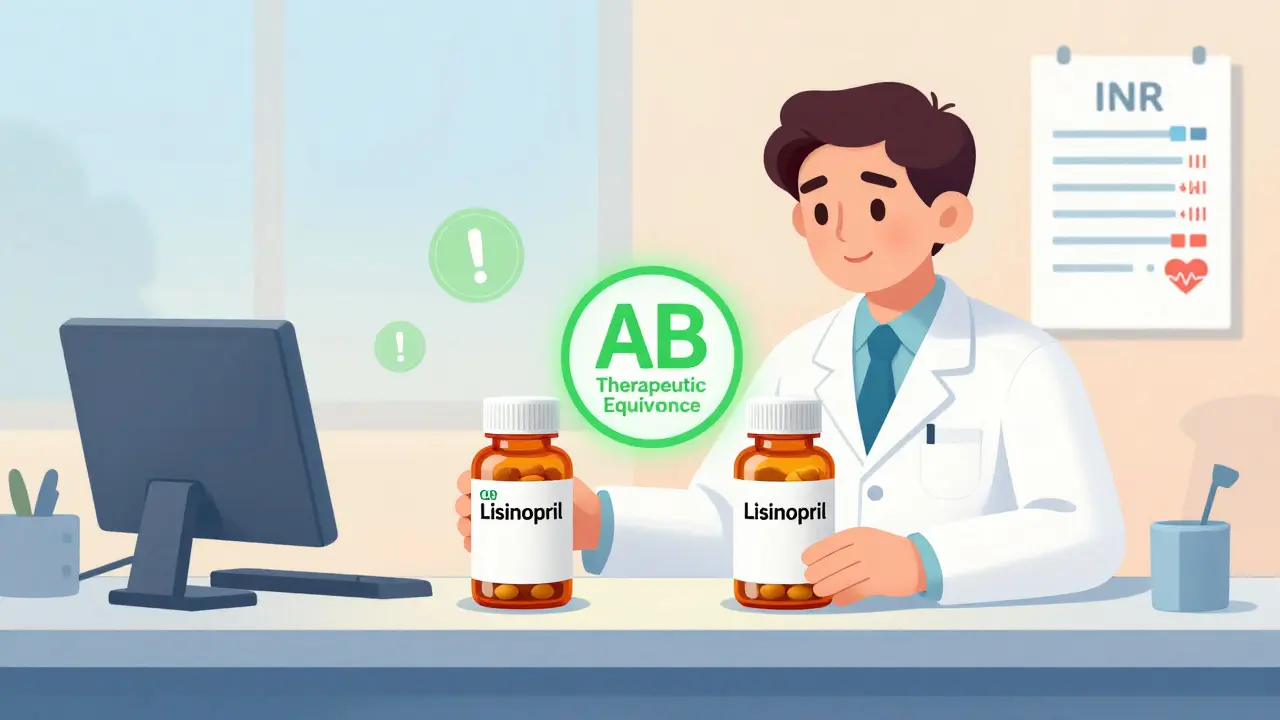
When a pharmacist pulls a prescription off the system, they’re not just filling a bottle. They’re making a decision that affects safety, cost, and trust. The difference between a generic and a brand-name drug might seem simple-same active ingredient, right? But in pharmacy systems, the reality is far more complex. One wrong code, one missed alert, one unmarked authorized generic, and you could be giving a patient a medication that doesn’t match their history, their insurance, or their body’s needs.
Why Generic vs Brand Identification Matters
The U.S. Food and Drug Administration (FDA) says generic drugs must match brand-name drugs in strength, dosage, safety, and performance. That’s the law. But in practice, pharmacy systems don’t always make that clear. A patient on warfarin might switch from a brand to a generic and end up with a dangerous INR spike-not because the generic is inferior, but because the system didn’t flag it as a narrow therapeutic index (NTI) drug. Or a woman on birth control gets a different branded generic because the system didn’t recognize that Sprintec and Tri-Sprintec, while chemically similar, have different hormone ratios that matter to her body. This isn’t theoretical. A 2021 ISMP report documented 147 adverse events over 18 months from inappropriate generic substitutions of NTI drugs like phenytoin and levothyroxine. Most of these happened because pharmacy systems defaulted to generics without proper safeguards.The Building Blocks: NDC Codes and TE Codes
Every drug in the U.S. has a National Drug Code (NDC)-a unique 10- or 11-digit number that identifies the manufacturer, product, and package size. But here’s the catch: brand-name drugs and their generic versions each have their own NDC. A 10mg lisinopril tablet from Pfizer isn’t the same NDC as the 10mg lisinopril from Teva-even if they’re chemically identical. To make sense of this, pharmacy systems rely on the FDA’s Orange Book, which assigns Therapeutic Equivalence (TE) codes. These are two-letter codes like AB, AO, or AN. An 'AB' code means the generic is bioequivalent to the brand and can be substituted. An 'A' code means it’s equivalent but has a different formulation (like a different salt form). An 'N' code means it’s not equivalent-often because it’s a complex drug like an inhaler or topical cream. Systems like Epic, Cerner, and Rx30 pull this data directly from the FDA’s API. But if the system isn’t updated monthly, or if the pharmacy tech doesn’t know how to read the TE code, the patient gets the wrong drug. And it’s not just about substitution-it’s about tracking. If a patient has a reaction to a generic, the system must know which version they took to trace it back.Authorized Generics and Branded Generics: The Hidden Confusion
Not all generics are created equal in the eyes of the system-or the patient. Authorized generics are exact copies of the brand-name drug, made by the same company, just sold under a different label. For example, the brand-name drug Prilosec and its authorized generic are chemically identical. But in the system, they have different NDCs. If a patient has always taken Prilosec and suddenly gets a bottle labeled “Omeprazole” with no explanation, they might think it’s a different drug. Then there are branded generics-drugs like Errin, Jolivette, or Cryselle. These are generics that went through the ANDA process but were given a brand name for marketing. They’re not the original brand, but they’re not labeled as “generic” either. Pharmacists report that 78% of them struggle to tell these apart from the original brand, especially with birth control. A patient might think they’re getting the same pill because the name looks familiar, but the hormone levels could be different.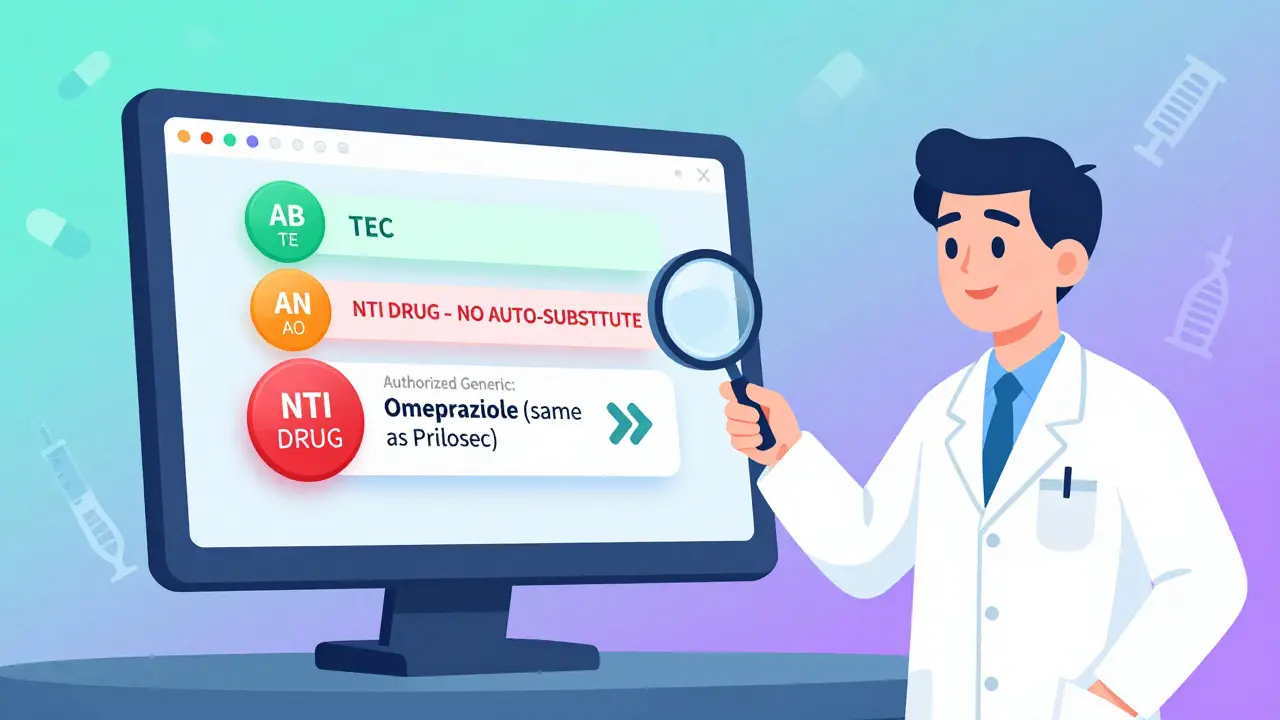
How Systems Should Handle NTI Drugs
Narrow therapeutic index drugs are where things get dangerous. A tiny change in blood concentration-just 5%-can cause seizures, blood clots, or organ failure. Drugs like warfarin, levothyroxine, phenytoin, and cyclosporine fall into this category. Best practice? Never auto-substitute. Systems like Epic’s Beacon Oncology have built-in alerts that block generic substitution for these drugs unless a prescriber explicitly approves it. Kaiser Permanente’s system goes further: it flags any switch to a different manufacturer-even if it’s the same generic-and prompts the pharmacist to confirm with the patient. Yet many independent pharmacies still use older systems that don’t have these alerts. In 2022, a study in the Journal of the American Medical Informatics Association found that 34% of community pharmacy systems still allowed automatic substitution for NTI drugs. That’s not just outdated-it’s risky.State Laws and the Patchwork Problem
Forty-nine states allow pharmacists to substitute generics without prescriber approval-as long as the TE code says it’s okay. But the rules vary wildly. In California, if a patient asks for the brand-name drug, the pharmacist must document the reason in the electronic record. In Texas, no documentation is needed. In New York, the pharmacist must notify the prescriber if a substitution is made for an NTI drug. And in some states, like Georgia, the patient must give verbal consent before a substitution. If your pharmacy system doesn’t auto-adjust for state laws, you’re at risk of violating regulations. Systems like LexID and Medi-Span update their databases monthly to reflect these differences, but smaller pharmacies often rely on manual updates-or worse, guesswork.What Works: Kaiser Permanente and Humana’s Models
Kaiser Permanente doesn’t just rely on technology-they built culture around it. Their system defaults to generics, but it also includes a patient education module that pops up when a substitution is made. It shows a side-by-side comparison of the brand and generic, explains bioequivalence, and lets the patient ask questions before finalizing the fill. Result? A 37% drop in patients requesting brand-name drugs after switching. And a 92.7% generic dispensing rate in 2022-without a single safety incident tied to substitution. Humana’s approach is different. Their system uses AI to suggest therapeutic alternatives. If a patient is on a brand-name statin, the system checks their history, their insurance formulary, and their previous responses to generics. Then it suggests a clinically appropriate generic and sends a notification to the prescriber. This isn’t just substitution-it’s intelligent interchange. They saw a 22% increase in generic use without any drop in adherence.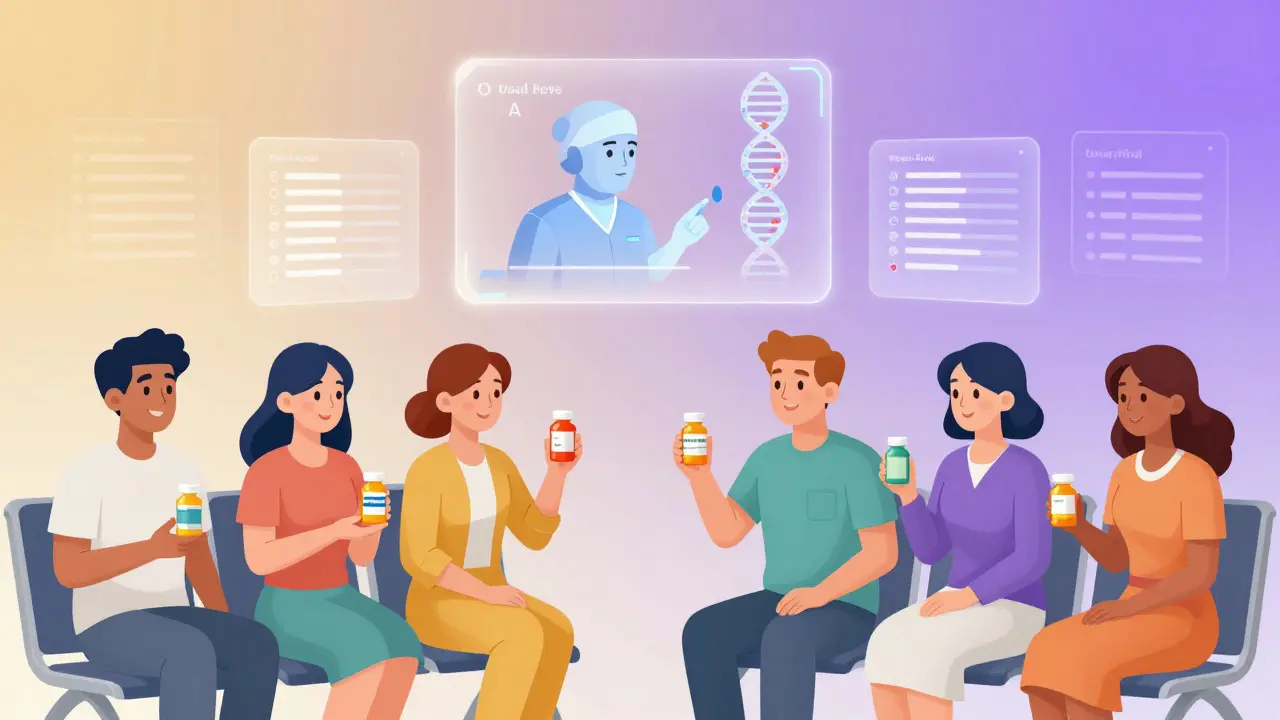
Common Pitfalls and How to Avoid Them
- Not updating NDC databases: The FDA updates its NDC directory over 3,500 times a month. If your system isn’t syncing daily, you’re working with outdated codes. - Ignoring inactive ingredients: A 2019 study found 0.8% of patients had issues after switching generics-often because of a different filler or dye. Systems don’t flag this, but pharmacists should ask: “Has the patient ever had a reaction to a specific dye or preservative?” - Assuming all generics are equal: A generic from Teva isn’t always the same as one from Mylan-even if they have the same NDC. Manufacturing changes happen. If a patient reports a new side effect after a refill, check the manufacturer. - Skipping patient education: A Consumer Reports survey found 89% of patients were satisfied with generics when they understood why the switch was made. Only 63% were satisfied when they weren’t told anything. Talk to your patients.What’s Next: AI, Precision Medicine, and Real-Time Updates
The FDA’s 2023 Orange Book modernization project is finally moving to a real-time API. No more 2-3 week delays between drug approval and system updates. That’s huge. AI tools are now being tested to predict substitution risks. One system analyzed 1.2 million prescriptions and flagged 87.3% of potential NTI issues before they happened. It looked at patterns-like a patient who had a seizure after switching from one phenytoin brand to another-and learned to warn pharmacists before the next refill. And in the future? Pharmacogenomics. The FDA is exploring whether genetic markers could tell us who needs a brand-name drug-even if the generic is technically equivalent. Someone with a slow-metabolizer gene might need the brand version of levothyroxine because their body processes it differently. Systems of the future won’t just identify drugs-they’ll identify patients.Best Practices Checklist for Pharmacy Teams
- Ensure your pharmacy system syncs with the FDA Orange Book API daily.
- Disable automatic substitution for all NTI drugs (warfarin, levothyroxine, phenytoin, cyclosporine, digoxin).
- Train staff to recognize authorized generics and branded generics-don’t assume the name means the same thing.
- Implement state-specific substitution rules into your system settings.
- Use visual aids or digital tools to explain bioequivalence to patients at the point of dispensing.
- Document all brand-to-generic switches in the patient record, even if not required by law.
- Review manufacturer changes on every refill-especially for chronic medications.
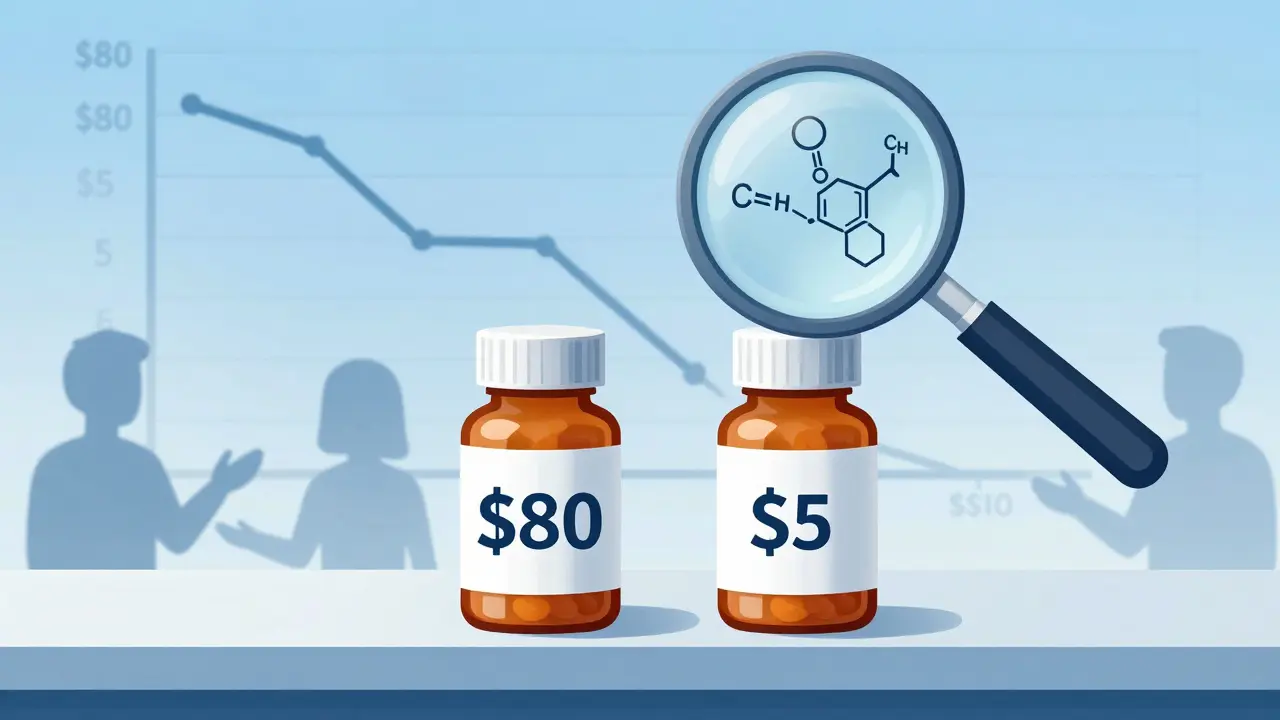
Generic drugs save the U.S. healthcare system billions. But saving money shouldn’t mean sacrificing safety. The technology exists. The guidelines are clear. What’s missing is consistent execution. Pharmacy systems aren’t just tools-they’re gatekeepers. And when it comes to identifying generics versus brands, there’s no room for guesswork.
Are generic drugs really the same as brand-name drugs?
Yes, by FDA standards. Generic drugs must have the same active ingredient, strength, dosage form, and route of administration as the brand-name drug. They must also be bioequivalent, meaning they deliver the same amount of medicine into the bloodstream at the same rate. The FDA requires that generics fall within an 80-125% confidence interval for absorption compared to the brand. But while the active ingredient is identical, inactive ingredients (like fillers or dyes) can differ-and these sometimes cause reactions in sensitive patients.
What’s the difference between an authorized generic and a regular generic?
An authorized generic is made by the same company that produces the brand-name drug, just sold under a different label. It’s chemically identical in every way-same active ingredient, same inactive ingredients, same manufacturing process. A regular generic is made by a different company and must prove bioequivalence, but it can use different fillers or manufacturing methods. Authorized generics are often cheaper than the brand but more expensive than regular generics. Pharmacy systems often don’t clearly label them, which causes confusion for patients and pharmacists alike.
Why do some patients say generics don’t work as well?
Sometimes, it’s not the drug-it’s the switch. Patients who’ve been stable on a brand for years may notice subtle changes when switched to a different generic, especially with narrow therapeutic index drugs like levothyroxine. Small differences in absorption can cause symptoms like fatigue or palpitations. This isn’t because the generic is inferior-it’s because their body adapted to a specific formulation. The solution? Don’t switch unless necessary. If a patient does well on one generic, stick with it. And always document the manufacturer and lot number.
Can pharmacy systems automatically detect if a generic is approved for substitution?
Yes-if they’re properly configured. Modern pharmacy systems pull Therapeutic Equivalence (TE) codes from the FDA’s Orange Book. An 'AB' code means substitution is allowed. An 'A' code means it’s equivalent but not interchangeable without provider approval. An 'N' code means it’s not equivalent. But many systems are outdated, not updated regularly, or configured to ignore these codes. Always verify the TE code in your system before dispensing, especially for high-risk drugs.
What should I do if a patient refuses a generic substitution?
Respect their choice. Even if the generic is approved, the patient has the right to request the brand. Document their reason in the electronic record. If they’re concerned about effectiveness, explain the FDA’s bioequivalence standards. If they’ve had a bad reaction to a previous generic, consider switching to the same manufacturer or keeping them on the brand. Patient trust matters as much as cost savings.
How often should pharmacy systems update their drug databases?
Daily. The FDA updates its National Drug Code (NDC) directory over 3,500 times a month. New generics are approved weekly. Manufacturers change packaging, dosages, or inactive ingredients. If your system updates only monthly or quarterly, you’re at risk of dispensing outdated or incorrect information. Systems like LexID and Medi-Span update in real time. Smaller pharmacies should ensure their vendor provides daily syncs or manually check the FDA’s NDC database before filling high-risk prescriptions.



Jay Ara on 26 December 2025, AT 01:31 AM
man i seen this happen with my mom she was on levothyroxine and they switched her to some generic and she got so tired like daily nap territory then they switched back and boom energy back like magic