
You pick up your prescription at the pharmacy, and the bottle contains a pill that looks nothing like the one you took last month. It's a different color, maybe a different shape, or perhaps it has a strange code stamped on it. It is a common reaction to feel a flicker of doubt. Is this the right medication? Will it work the same way? This visual change is one of the most frequent sources of anxiety for patients managing long-term treatments.
The reality is that while the appearance of your medication might shift, the active ingredient inside remains strictly regulated. Understanding how generic manufacturers operate and why pills look different can turn that anxiety into confidence. This guide breaks down the science behind generic drug approval, the major players in the market, and practical steps to verify your medication's safety and identity.
Why Generic Pills Look Different
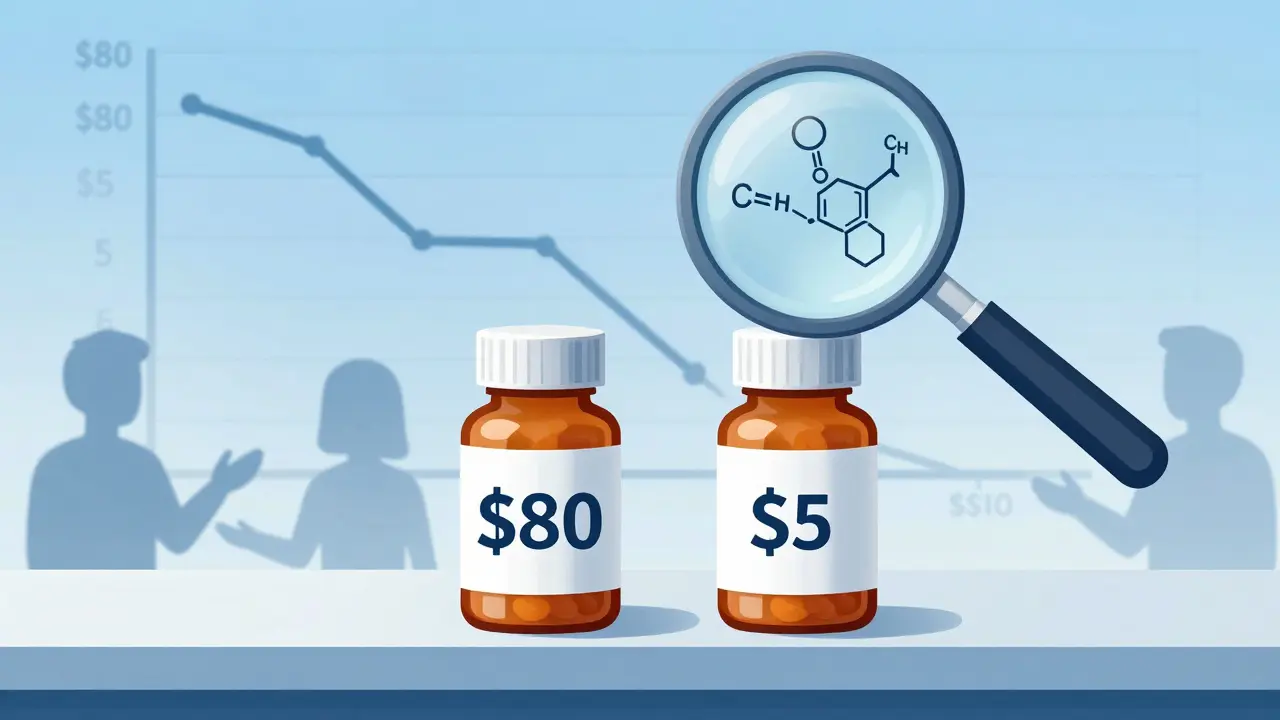
When a brand-name drug's patent expires, other companies can manufacture their own versions. These are known as generic drugs. In the United States, generic pharmaceuticals represent 90% of prescriptions dispensed, yet they account for only about 23% of total spending. This massive shift in market share means you are highly likely to encounter a generic version of your medication.
The primary reason pills look different is trademark law. A generic manufacturer cannot copy the exact look of the brand-name pill because the shape, color, and imprint are often protected trademarks of the original company. If a generic maker produced a pill that looked identical, they could face legal action for trademark infringement. Consequently, manufacturers must choose their own distinct appearance.
Beyond legal restrictions, the physical look is influenced by inactive ingredients. While the active ingredient-the chemical that treats your condition-must be identical, the fillers, binders, and dyes can vary. These inactive components hold the pill together and give it its color. A study published in Nature Scientific Reports in 2020 found that color differences occur in 78% of generic cases, shape variations in 65%, and size differences in 42%. These variations are cosmetic but can be jarring if you are used to a specific look.
Understanding Bioequivalence and Safety Standards
The core question isn't about the color; it is about efficacy. Does the generic work the same as the brand? Regulatory bodies like the U.S. Food and Drug Administration (FDA) enforce a standard called bioequivalence. For a generic to be approved, it must demonstrate that it performs in the same manner as the Reference Listed Drug (RLD), which is the original brand-name product.
Bioequivalence is a regulatory standard requiring generic drugs to deliver the same amount of active ingredient into a patient's bloodstream in the same amount of time as the brand-name drug.Specifically, the FDA requires that the generic's bioavailability falls within a 90% confidence interval of 80-125% compared to the brand. This means the rate and extent of absorption can vary slightly but must remain within a tight range. A landmark study analyzing over 2,000 bioequivalence studies found the average difference in absorption between generic and brand-name drugs was only 3.5%. This is comparable to the natural variation seen between different batches of the same brand-name product.
For most medications, this standard ensures that patients get the same therapeutic effect. However, there is a specific category of drugs known as Narrow Therapeutic Index (NTI) drugs. These medications, such as warfarin or levothyroxine, have a very small margin between a therapeutic dose and a toxic dose. For these drugs, the FDA has tightened the bioequivalence range to 90-111%. If you are taking an NTI drug, maintaining consistency with the same manufacturer is often recommended to avoid any potential fluctuations in blood levels.
Major Generic Manufacturers and Market Dynamics
Knowing who makes your medication can provide additional context. The generic market is dominated by a few large pharmaceutical companies that have established robust quality control systems. These companies invest heavily in manufacturing excellence to compete on price and reliability.
- Teva Pharmaceutical Industries: Founded in 1901 and headquartered in Israel, Teva is the world's largest generic manufacturer. With a 2023 revenue of $16.3 billion, they hold a significant share of the U.S. generic market. Their scale allows them to offer a wide range of products.
- Viatris (formerly Mylan): Formed from the merger of Mylan and Upjohn, Viatris is a global leader with 2023 revenue of $18.9 billion. They are known for both generic drugs and specialty medicines.
- Sandoz: A spin-off of Novartis, Sandoz is another major player with a valuation of over $10 billion. They focus heavily on complex generics and biosimilars.
- Hikma Pharmaceuticals: Specializing in complex generics like injectables and inhalers, Hikma differentiates itself through specialized formulations that take longer to develop.
Market dynamics play a role in which manufacturer you receive. When a patent expires, the first generic company to enter the market often captures 60-70% of the share initially. However, as more competitors enter-sometimes reaching ten or more-the price of the drug can drop by 70-80%. This price war can lead to frequent switches in manufacturers as pharmacies source the most cost-effective option available at the time.
| Manufacturer | Headquarters | 2023 Revenue | Specialty |
|---|---|---|---|
| Teva | Petah Tikva, Israel | $16.3 Billion | Broad range of generics |
| Viatris | Pittsburgh, USA | $18.9 Billion | Generics and Specialty |
| Sandoz | Basel, Switzerland | $10.1 Billion | Complex generics |
| Hikma | London, UK | $2.1 Billion | Injectables and Inhalers |
How to Identify Your Pills and Verify Manufacturers
If your pill looks different, the first step is to verify that it is indeed the correct medication. Every prescription medication in the U.S. must have a unique imprint-letters or numbers stamped on the pill. This is mandated by the Federal Food, Drug, and Cosmetic Act to prevent errors and identify the specific drug and manufacturer.
You can use several tools to check this information:
- Check the Bottle Label: The label on your prescription bottle will list the manufacturer's name and the National Drug Code (NDC). The NDC is a unique identifier for the specific drug product and its packaging.
- Use a Pill Identifier App: Mobile applications like the Drugs.com Pill Identifier allow you to search by shape, color, and imprint. With over 12 million monthly users, these tools can quickly match a visual description to a specific drug.
- FDA Orange Book: The FDA maintains the Approved Drug Products with Therapeutic Equivalence Evaluations, commonly known as the Orange Book. This database lists all approved drug products and their therapeutic equivalence ratings. It is the primary reference for determining if a generic is equivalent to a brand.
- Ask Your Pharmacist: Pharmacists have access to the NDC Directory and can instantly identify the manufacturer and explain why the appearance has changed. They can also check if the new manufacturer is on your insurance formulary.
Pharmacists often report that patients mistake legitimate generic substitutions for medication errors. In a 2023 survey, 37% of community pharmacists indicated that explaining appearance differences was a common issue. If you are unsure, never hesitate to ask. It is better to verify than to assume.

When to Request a Specific Manufacturer
While most generic switches are safe, there are scenarios where consistency matters. The American Medical Association's 2023 policy statement supports generic substitution but recommends maintaining the same generic manufacturer for narrow therapeutic index drugs unless medically necessary.
If you are taking medications like levothyroxine (for thyroid conditions), warfarin (a blood thinner), or certain seizure medications, you may want to request that your pharmacy dispense the same manufacturer every time. This is often done using a "dispense as written" (DAW) code. Specifically, DAW-1 indicates that substitution is not permitted. However, this may affect your insurance coverage or out-of-pocket costs, so discuss the trade-offs with your doctor and pharmacist.
Additionally, if you have experienced side effects after a switch, it could be due to the inactive ingredients. Some patients have sensitivities to specific dyes or fillers like lactose or gluten. If you notice a pattern of stomach upset or allergic reactions coinciding with a change in pill appearance, document the manufacturer and report it to your healthcare provider. They can help determine if an inactive ingredient is the culprit.
Navigating the Future of Generic Medications
The landscape of generic drugs is evolving. The FDA's 2024-2028 strategic plan targets a 30% reduction in approval times for complex generics. This means more specialized treatments will become available at lower costs. However, supply chain vulnerabilities remain a concern. The FDA's 2024 Drug Shortage Report identified 288 active shortages, with 67% involving generic medications.
During shortages, pharmacies may have to switch manufacturers unexpectedly. While this can be frustrating, it is a necessary step to ensure you continue receiving your medication. Understanding the regulatory safeguards in place can help you trust the process. The FDA's Generic Drug User Fee Amendments (GDUFA) require manufacturers to meet strict performance metrics and undergo facility inspections, ensuring that quality remains high even during market fluctuations.
Ultimately, the goal of generic competition is to make life-saving treatments affordable. The average generic drug price falls by approximately 20% with three competitors and 70-80% with ten or more competitors entering the market. This competition drives down costs for patients and healthcare systems alike. By understanding the science of bioequivalence and the role of manufacturers, you can navigate these changes with confidence.
Is it safe to switch between generic manufacturers?
For most medications, yes. The FDA requires all generic drugs to meet strict bioequivalence standards, ensuring they perform the same as the brand-name drug. However, for narrow therapeutic index drugs like warfarin, consistency is preferred.
Why does my pill look different every time I refill?
Pharmacies often source medications from different manufacturers to get the best price. Since generic makers cannot copy the brand-name pill's look due to trademarks, the color, shape, or size may vary between companies.
Pharmacies often source medications from different manufacturers to get the best price. Since generic makers cannot copy the brand-name pill's look due to trademarks, the color, shape, or size may vary between companies.
How can I identify the manufacturer of my pill?
Check the imprint code on the pill using a pill identifier app or the FDA's Drugs@FDA database. The prescription bottle label also lists the National Drug Code (NDC), which identifies the specific manufacturer and product.
Do generic drugs contain the same ingredients as brand names?
They contain the same active ingredient in the same strength. However, inactive ingredients like fillers, binders, and dyes may differ, which can affect the pill's appearance and taste.
What should I do if I feel the generic isn't working?
Consult your doctor. While rare, some patients may react differently to inactive ingredients. Your doctor may recommend staying with a specific manufacturer or switching back to the brand-name drug if necessary.



Katie Putbrese on 25 March 2026, AT 23:27 PM
This whole industry relies too much on foreign manufacturing which is a security risk. We need to bring production back to American soil to ensure quality control standards are actually met. It is infuriating that patients have to worry about safety because of cost cutting measures abroad. The government should mandate domestic production for critical medications immediately. Trust is eroding because we prioritize profit over national health security.